MOBA reports and market data
25 game industry reports, presentations and talks about moba from writers such as Game Developers Conference, PocketGamer.biz and Deconstructor of Fun, newest from 2026. Every document has a summary and key insights with the page they come from, and 152 charts and tables are extracted as data.
Documents
From League of Legends to Deadlock: Understanding MOBAs | Extra Credits
Multiplayer Online Battle Arenas (MOBAs) represent a complex, team-oriented genre that evolved from early real-time strategy (RTS) mods like Aeon of Strife and Defense of the Ancients.
- MOBAs are defined by a two-tiered economy of experience and gold, where experience upgrades character stats and abilities while gold is used to purchase items that provide significant power spikes.
- Minion farming is a critical strategic priority because gold and experience are lost if a player does not land the final hit on a minion, and sharing lanes reduces the total resources available to the team.
- Unlike hero shooters where character power remains relatively static, MOBA characters can become 'fed' by accumulating a disproportionate amount of resources, leading to massive power imbalances that are driven by the underlying economy.

The future of Xbox and Pokémon's 30th anniversary | Week in Mobile Games podcast
Microsoft is undergoing a fundamental leadership transition within its gaming division, marked by the departure of long-standing executives Phil Spencer and Sarah Bond.
- The UK's Advertising Standards Authority (ASA) has issued an enforcement notice requiring mobile game publishers to provide clearer disclosure of loot boxes in advertisements and app store listings, deeming existing 'in-app purchase' labels insufficient.
- Microsoft Gaming is undergoing a leadership restructuring, with Asha Sharma—formerly president of Microsoft's core AI product—taking on a key role, though the company has stated there will be no top-down directive to force AI implementation across its games division.
- Pokémon is preparing for its 30th anniversary, with expectations that the franchise will announce a tenth-generation title to coincide with the launch of the next Nintendo console.
League’s New Control Scheme is a Gamble | Design Club
Riot Games is initiating a fundamental shift in League of Legends by introducing an optional WASD movement scheme, moving away from the traditional click-to-move interface that has defined the title for 16 years.
- Riot Games is introducing a WASD movement control scheme to League of Legends, marking a significant departure from the game's traditional 16-year-old click-to-move interface.
- The shift to WASD movement effectively divorces character movement from target selection, a change that could lower the game's skill floor and alter the competitive landscape.
- Riot is testing this feature on the Public Beta Environment (PBE) with a methodical, long-term rollout strategy to mitigate risks to the game's established competitive ecosystem.
Philosophy of Video Game Combat Design | Design Club
Effective combat design functions as the primary bridge between a game’s mechanical systems and its intended player experience.
- Combat design must fundamentally choose between skill-based mastery, where damage is avoidable through precision, and progression-based systems that rely on mathematical scaling.
- Effective combat relies on managing the action economy by balancing the frequency and impact of player actions against those of opponents.
- Modern combat design is shifting away from linear kill-to-win models toward multifaceted systems that incorporate environmental interaction, elemental weaknesses, and status effects like poise.
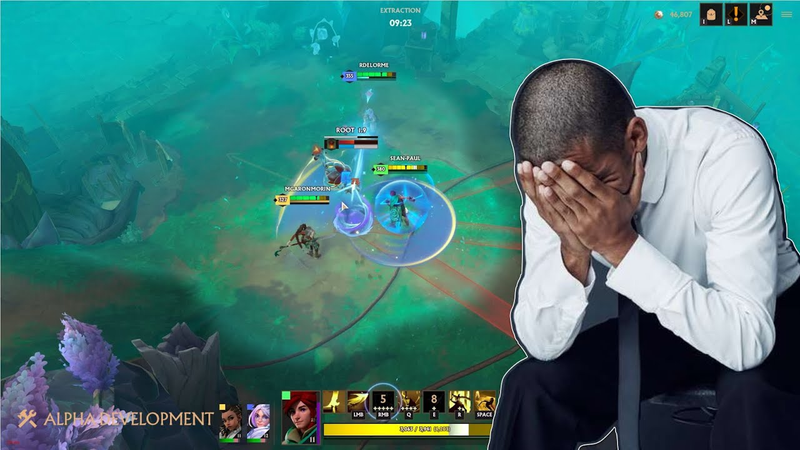
Why VC Bets on ex-Riot & ex-Blizzard Founders Are Failing
Venture capital investment in PC gaming startups founded by former Riot Games and Blizzard Entertainment developers has faced a recurring pattern of failure, characterized by high-budget projects that struggle to gain market traction.
- Venture capital investment in studios led by former Riot and Blizzard developers is failing because high-budget, traditional development models are struggling to gain traction in the current PC gaming market.
- Elodie Games shuttered its studio and cancelled its MOBA extraction title, Seekers of Skyveil, only 18 days after launch despite having secured $32.5 million in funding.
- Founder pedigree is no longer a reliable predictor of success, as modern players prioritize gameplay innovation and accessibility over the historical industry credentials of studio leadership.
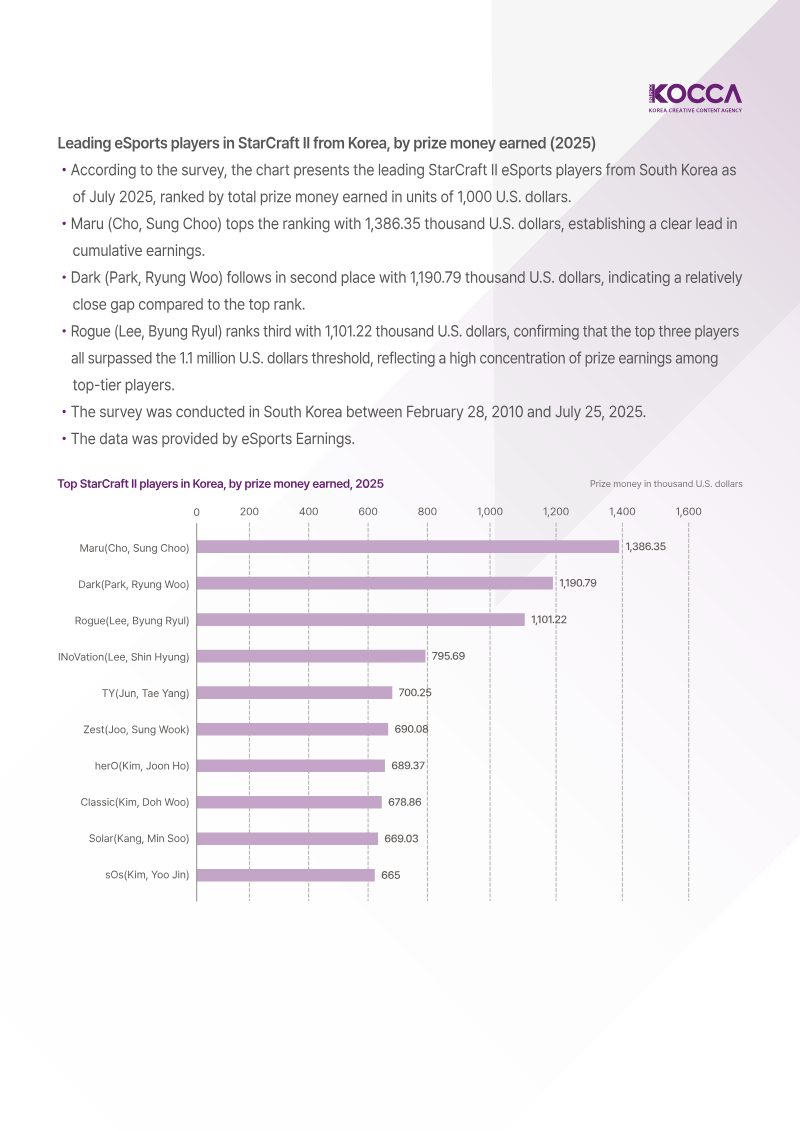
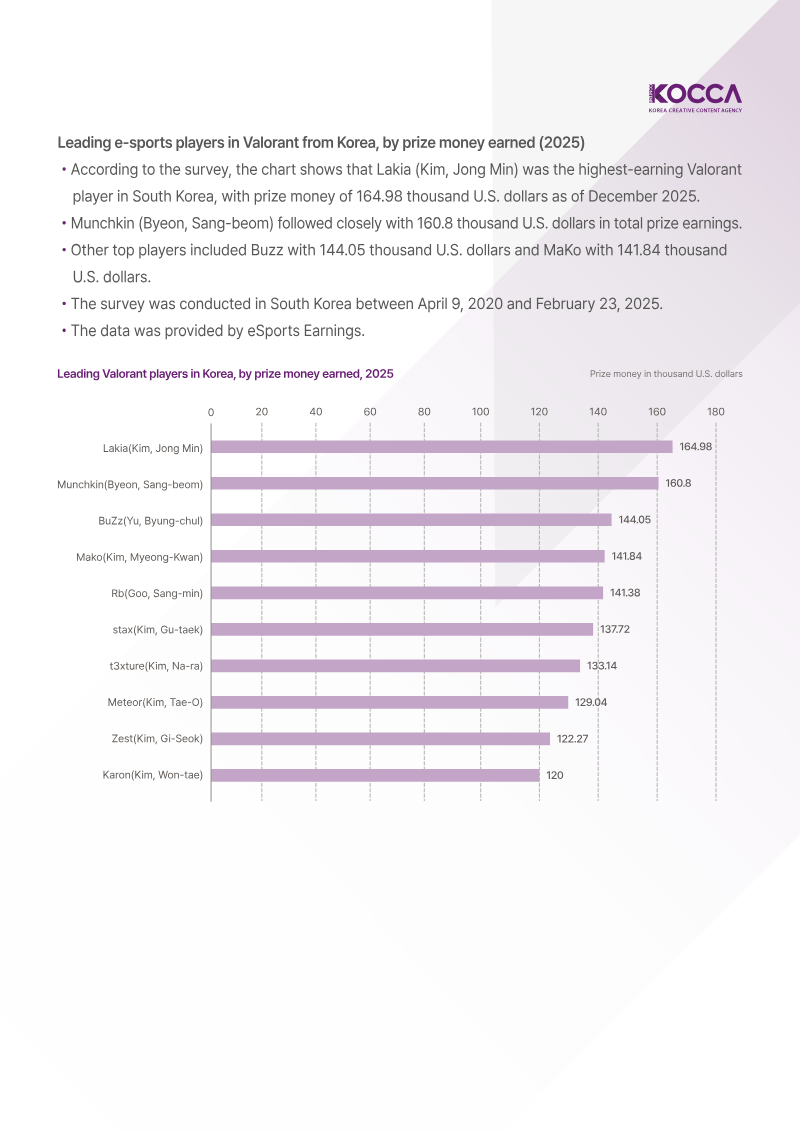
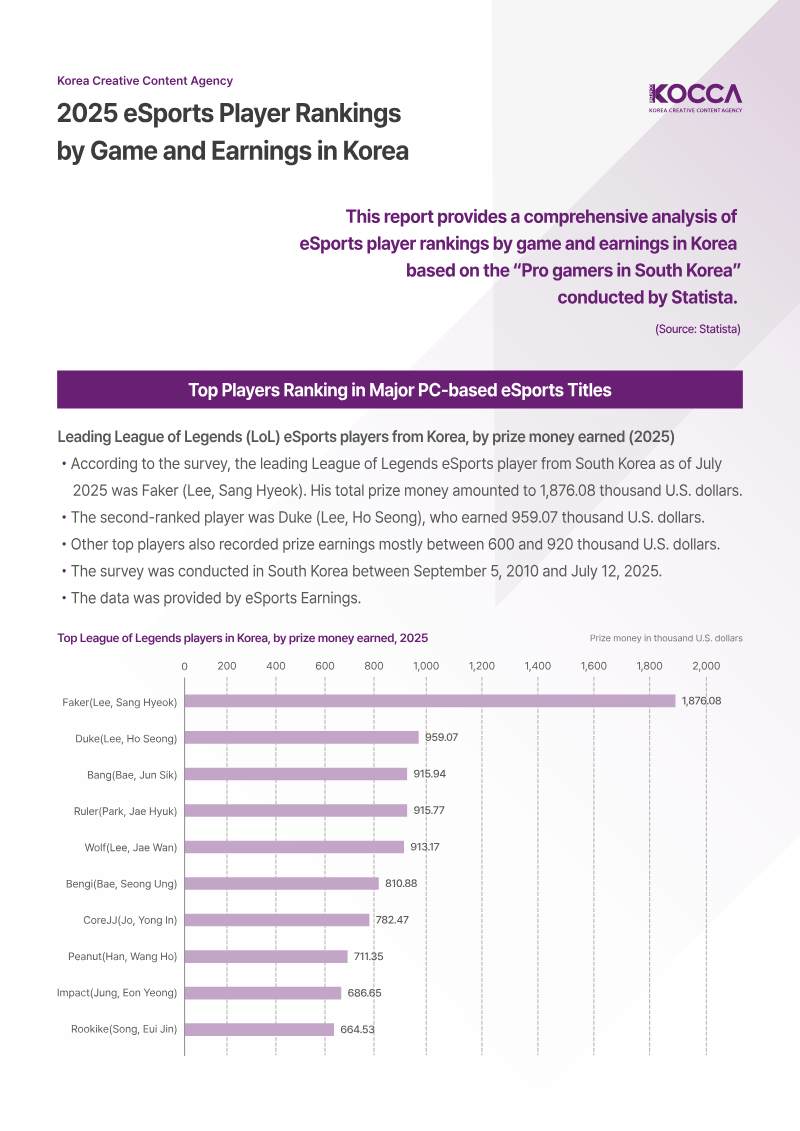
2025 eSports Player Rankings: By Game and Earnings in Korea
South Korea’s professional gaming landscape is characterized by a title-centered evaluation system where prize earnings are highly concentrated among elite players.
- League of Legends remains the most lucrative eSports title in South Korea, with top earner Lee Sang-hyeok (Faker) accumulating $1.88 million in prize money as of July 2025.
- Established titles offer significantly higher financial returns than newer games, as evidenced by StarCraft II leader Cho Sung-choo earning $1.39 million and PUBG leader Park Jung-young earning $1.25 million.
- Newer competitive titles show a substantial earnings gap compared to legacy games, with top Overwatch 2 player Choi Tae-min earning $375,450 and Valorant leader Kim Jong-min earning $164,980.
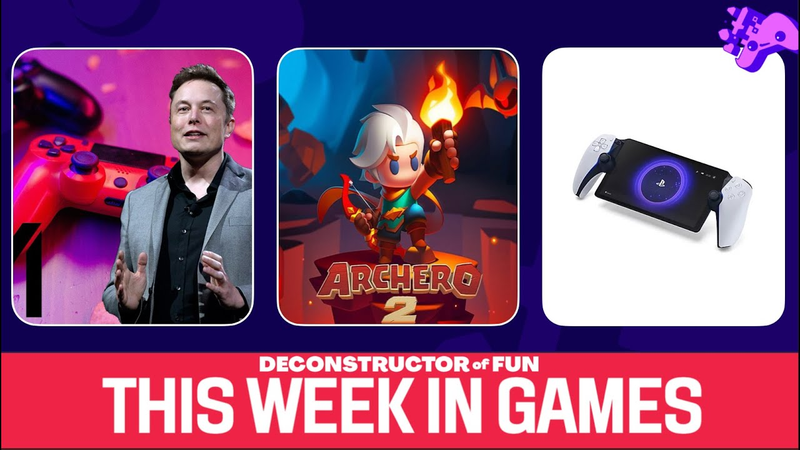
TWIG #311 Musk Enters the Game, Archero 2 Aims for the Bullseye, PlayStation Goes Portable
The gaming industry is undergoing a fundamental shift in consumer behavior, as engagement with gaming-related content now surpasses active playtime, with users averaging 8.5 hours of viewing versus 7.4 hours of playing per week.
- Consumer engagement with gaming content has overtaken active playtime, with users averaging 8.5 hours of viewing per week compared to 7.4 hours of playing.
- The live-service model is facing significant instability, evidenced by the closure of titles like XDefiant and the financial struggles of major consolidators such as Embracer Group.
- Success in the current market requires rigorous data-driven strategies, specifically focusing on hybrid-casual monetization and validating retention metrics before full-scale product launches.
The Art of Not Reinventing the Wheel in 'Wild Rift' Asset Pipeline
Managing the complex asset pipeline for League of Legends: Wild Rift requires a sophisticated approach to oversight as the project scales from a prototype to a global live service.
- To manage the complexity of hundreds of champion skins and their associated animations, effects, and sound assets in 'Wild Rift,' Riot Games developed a custom asset analysis tool to establish a single source of truth for asset dependencies.
- The asset analysis tool was built using Python and designed to be standalone, requiring no Unity installation or project-specific dependencies, which significantly reduced iteration times and increased development flexibility.
- The tool functions by scraping the entire game project and ingesting JSON-based game logic files, utilizing Unity's native prefab and meta file systems to track character configurations and unique asset IDs.

Deconstructing Pokemon Unite with Hadrian Semroud and Javier Barnes
Pokémon Unite serves as a case study in the challenges of balancing accessibility with long-term engagement within the mobile MOBA genre.
- Pokémon Unite achieved 30 million downloads during its launch week but has struggled to maintain long-term player momentum in Western markets.
- The game’s design philosophy prioritizes accessibility by removing traditional MOBA complexities like minion management, which ultimately undermines the strategic depth required for long-term retention.
- A singular late-game objective often renders early-game strategic efforts irrelevant, leading to a lack of competitive variety.
Moonton's Mobile Legends: Bang Bang Secrets to Success! With Chief Designer Skyhook
The success of Mobile Legends: Bang Bang is rooted in a design philosophy that balances the high-stakes strategy of Real-Time Strategy (RTS) games with the immediate, visceral satisfaction of action-oriented gameplay.
- Mobile Legends: Bang Bang achieved success by distilling complex PC-based MOBA mechanics into a mobile-first experience that lowers the barrier to entry while maintaining a high skill ceiling.
- The development team prioritized accessibility by removing high-friction mechanics like last-hit requirements and implementing screen locking to simplify operational complexity.
- Core gameplay design focuses on a hybrid model where visceral action mechanics provide immediate engagement, while deep strategic layers ensure long-term player retention.

TWIG 144: Riot makes $100M on mobile. Micenuts?
Riot Games has generated over $100 million in global mobile player spending across its portfolio, a figure that, while significant in isolation, represents a modest contribution relative to the publisher’s annual PC revenue of $1.5 billion to $2 billion.
- Riot Games has generated over $100 million in total mobile player spending, led by League of Legends: Wild Rift ($65 million), Teamfight Tactics ($28 million), and Legends of Runeterra ($16 million).
- Despite the $100 million mobile milestone, these earnings remain a modest fraction of Riot’s annual PC revenue, which typically ranges between $1.5 billion and $2 billion.
- Mobile adoption remains limited, with Wild Rift reaching 50 million installs, while Teamfight Tactics and Legends of Runeterra have only achieved 6 million and 3 million installs, respectively.
Data Informed Decisions with the Champions of League of Legends
Riot Games employs a sophisticated, data-informed strategy to manage the character roster of League of Legends, balancing quantitative engagement metrics with qualitative sentiment research.
- Riot Games utilizes a 'breadth versus depth' framework to measure champion engagement, where breadth tracks the number of unique players and depth tracks the frequency of play per user.
- Champion updates, such as the rework of Akali, create significant spikes in play rate driven by both existing players and new users attracted by updated visuals and gameplay kits.
- Mass champion surveys are used to collect sentiment data on non-gameplay attributes like personality, voice, and visuals, allowing developers to understand player affinity beyond raw telemetry.