Hearthstone
Documents about Hearthstone
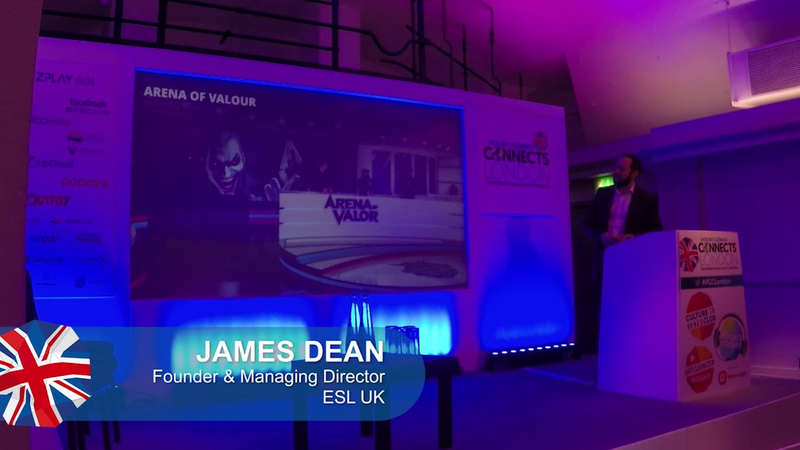
An update on mobile esports progression and opportunities
Mobile esports represents a rapidly evolving sector characterized by high accessibility, a massive global user base, and a unique capacity for rapid community engagement.
- Mobile esports currently accounts for less than 10% of global esports viewership, representing a significant growth opportunity due to its high accessibility and lower hardware barriers compared to PC gaming.
- Mobile titles achieve financial sustainability by moving away from pay-to-win models toward monetization strategies centered on in-game purchases, licensing, and high-production-value tournaments.
- Mobile esports tournaments often achieve immediate cost recovery through in-game microtransactions, a financial efficiency rarely seen in traditional PC-based competitive gaming.
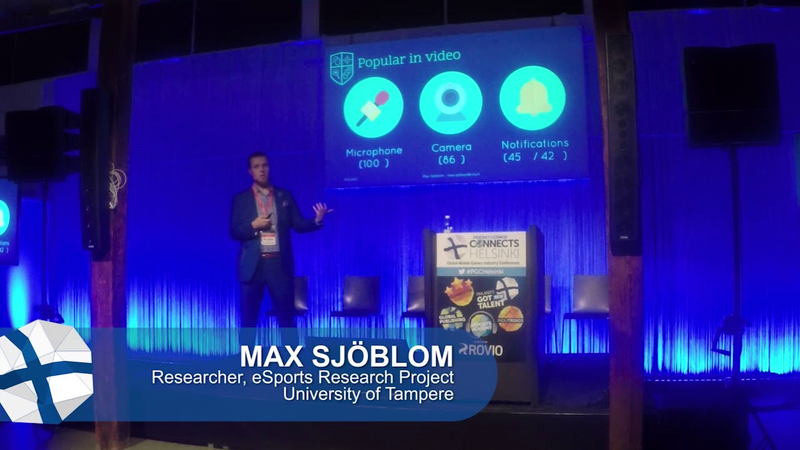
Elements of streaming – How streamers are building their content and why you should care
Streaming has emerged as a critical component of the modern gaming ecosystem, functioning in tandem with the growth of eSports.
- Developers should design for 'streamability' by incorporating downtime for audience interaction and utilizing Twitch API integrations for dynamic overlays.
- Games with minimal user interfaces or 'dead space,' such as Hearthstone, offer superior real estate for streamers to overlay sponsor banners and interactive graphics compared to information-dense titles like League of Legends.
- Successful streamers utilize real-time notifications for subscriptions and donations to trigger competitive viewer behavior, which serves as a primary monetization stream.
4 Reasons Why You Want to Quit Playing Hearthstone
Hearthstone, once a dominant force in the collectible card game (CCG) market, faced significant player attrition by 2017 due to evolving design choices and monetization strategies.
- The reliance on high-variance, random mechanics in Hearthstone has devalued player skill, turning strategic matches into coin flips and alienating both casual and hardcore segments of the player base.
- Hearthstone’s lack of social and cooperative features, such as guilds or in-game community hubs, limits player retention and prevents the game from building the long-term engagement seen in competitors like Clash Royale.
- The shift from 'Adventure' content—which provided a clear path to earning specific Legendary cards—to a standard expansion model has increased the financial barrier to entry, often requiring players to spend $100 or more to remain competitive.
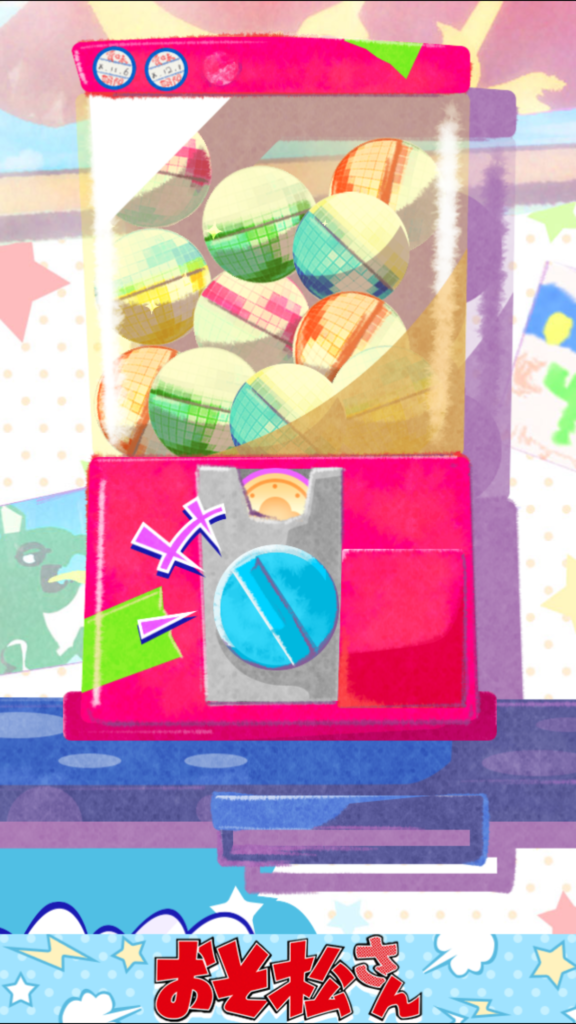
Cultures Combined: Japanese Gachas Are Sweeping F2P Mobile Games in the West
The gacha mechanic, a staple of Japanese mobile gaming since 2011, is increasingly becoming a dominant feature in Western free-to-play (F2P) mobile games.
- Gacha mechanics are increasingly prevalent in Western mobile gaming, with 58% of the top 100 grossing iOS games in the U.S. now utilizing the feature.
- The adoption of gacha mechanics in the U.S. market is accelerating, with the percentage of top 100 grossing games using five or more separate gachas rising from 12% in April 2016 to 17% by November 2016.
- Gachas are highly effective for monetization, as they are estimated to generate over half of the revenue in top-grossing Japanese mobile games and serve as a primary tool for targeting high-spending 'whale' players.
How World of Tanks and World of Warcraft went mobile
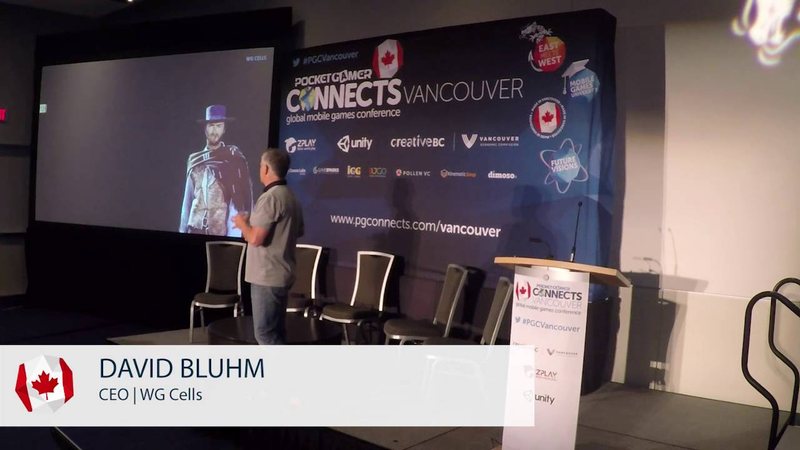
The transition of established PC gaming titles to the mobile platform requires a strategic balance between leveraging existing brand equity and adapting to the unique constraints of mobile consumption.
- Brand equity alone cannot compensate for poor synergy between game design and monetization; success requires tailoring both mechanics and revenue models specifically for mobile constraints.
- Successful mobile adaptations like Hearthstone expand reach by refining mechanics to attract both existing fans and new demographics simultaneously.
- World of Tanks Blitz demonstrates that maintaining core PC gameplay is viable on mobile if developers successfully optimize control schemes for touchscreen interfaces.
Hearthstone: 10 Bits Of Design Wisdom
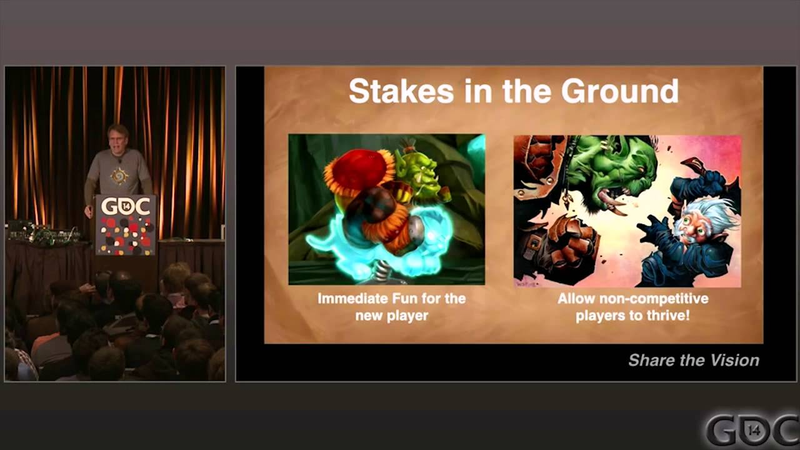
The development of Hearthstone centers on the philosophy that accessibility and emotional resonance are the primary drivers of long-term player engagement.
- Prioritize removing complexity over removing depth; if a simplification reduces strategic depth, introduce new mechanics to restore it, such as the addition of Hero Powers to compensate for simplified card interactions.
- Utilize paper prototyping early in development to iterate on design concepts cheaply before committing to full-team production or engineering resources.
- Establish 'stakes in the ground'—a set of core design principles—early in development to ensure all team members, including artists and engineers, make consistent design decisions.
Biz Daily: Why Activision Blizzard bought King
The acquisition of King by Activision Blizzard for $5.9 billion represents a strategic effort to bridge the gap between traditional console and PC gaming and the high-growth mobile sector.
- Activision Blizzard acquired King for $5.9 billion to bridge the gap between its traditional console/PC business and the high-growth mobile gaming sector.
- The deal establishes Activision Blizzard as the largest pure-play gaming company in the Western market, providing immediate access to a global, gender-balanced mobile audience.
- The transaction is valued at $18 per share, a 20 percent premium over King’s pre-deal valuation, and is financed through $3.2 billion in cash and bank loans.
Future Proofing Your Design - Looking at Hearthstone and Planning Ahead - Extra Credits
Modern game development requires a strategic approach to long-term design, as titles—particularly collectible card games and MMOs—are increasingly expected to maintain a five-year lifecycle.
- Modern game titles, particularly MMOs and collectible card games, must be designed to support a minimum five-year lifecycle.
- Designers must proactively flag 'landmine' cards—those with extreme effects or high-variance mechanics—that could become game-breaking if future content mitigates their current drawbacks.
- To prevent power creep, teams should implement mandates requiring specific ratios of weak-to-strong units in future expansions, ensuring the average power level of card pools remains stable.
Power Creep in Hearthstone - What It Teaches Us About Games - Extra Credits
Power creep is frequently misunderstood in the context of collectible card games, often being misidentified when developers release cards that are numerically superior to older, underpowered versions.
- True power creep occurs when a card is designed so far above the established power curve that it becomes the new baseline, forcing all future content to compete with that outlier.
- Power creep shrinks the available design space by necessitating a continuous, upward shift in the game's overall power level to keep new content relevant.
- The introduction of a dominant card, such as Hearthstone's Piloted Shredder, forces developers to create specific counters in subsequent sets, which further escalates the game's power requirements.

Why a Donald Duck CCG might be a big hit in Scandinavia
The Duckforce Rises represents a strategic expansion of the long-standing partnership between Sanoma Media Finland and Disney, transitioning a legacy print franchise into the mobile gaming sector.
- Sanoma Media Finland and Disney are leveraging a print franchise history dating back to 1952 to launch 'The Duckforce Rises,' a mobile card-battling game.
- The project targets a specific regional market where Donald Duck holds deep cultural significance, particularly in Scandinavia, Germany, and Italy, with a Finnish print readership reaching one million people.
- The game is positioned as a mid-core free-to-play title with RPG elements, intentionally moving away from the casual puzzle genre typically associated with Disney mobile games.
Hearthstone: How to Create an Immersive User Interface
The design philosophy behind Hearthstone centers on the creation of a deeply immersive, tactile user interface that prioritizes thematic cohesion over pure functional efficiency.
- Hearthstone prioritizes thematic immersion and tactile design over pure functional efficiency to establish a distinct brand identity.
- The development process integrates UI designers as equal partners with game designers, allowing visual mockups to directly dictate and refine gameplay mechanics.
- The team intentionally accepts higher resource costs and increased user click counts to maintain a physical, handcrafted aesthetic that enhances player engagement.
Free to Play Is Currently Broken - How High Costs Drive Players Away from F2P Games - Extra Credits
The current free-to-play (F2P) business model is fundamentally flawed and unsustainable due to an over-reliance on a small percentage of high-spending users, commonly referred to as whales.
- The current F2P model is unsustainable because it relies on less than 10 percent of the player base to generate over 90 percent of total revenue.
- Aggressive targeting of 'whales' creates a negative feedback loop where the alienation of non-spending players forces developers to constantly increase advertising spend to replenish the user base.
- Escalating user acquisition costs and development budgets are driven by intense competition for a limited pool of high-value spenders, leading to market instability.