1 free read left. Create a free account for unlimited reading + AI research.
Create free account
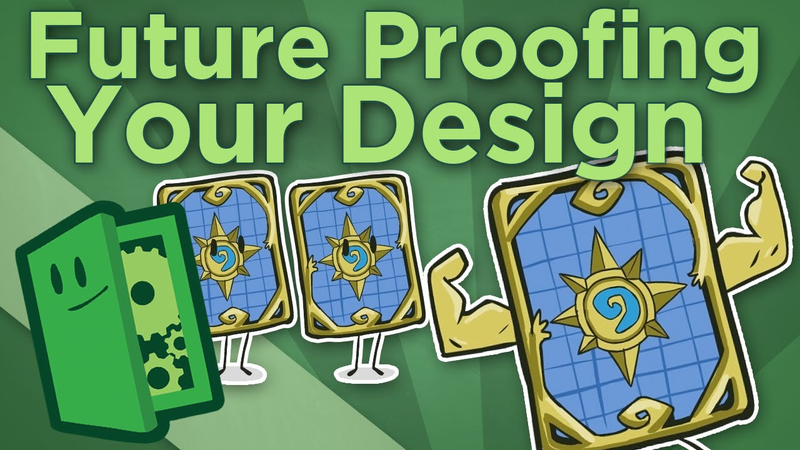
Future Proofing Your Design - Looking at Hearthstone and Planning Ahead - Extra Credits
Key insights
6 takeaways- 01Modern game titles, particularly MMOs and collectible card games, must be designed to support a minimum five-year lifecycle.
- 02Designers must protect the game's 'possibility space' by anticipating how current, balanced cards might become overpowered as the meta-environment shifts over time.
- 03Designers must proactively flag 'landmine' cards—those with extreme effects or high-variance mechanics—that could become game-breaking if future content mitigates their current drawbacks.
- 04To prevent power creep, teams should implement mandates requiring specific ratios of weak-to-strong units in future expansions, ensuring the average power level of card pools remains stable.
- 05Maintaining long-term structural integrity requires rigorous documentation of the rationale behind current design choices to guide future teams who were not part of the original development.
- 06Effective long-term design requires balancing the immediate need for engaging, creative gameplay with the technical necessity of preventing future balance collapse.
Ask AI about this video
Transcript
Last week we talked about power creep and how it can occur when you accidentally let something through playtest that's off your power curve. This week we're going to talk about the other side of this issue. How things that can seem to fit your power curve now can break your design in the long run. Thinking through the long-term ramifications of your design is essential to creating a long-term game. Everything from MMO RPGs to CCGs to shooters are being built to have a 5-year life cycle now. So it's important that you future-proof your design. This comes both in the form of being very careful about what you design in the present and creating strict best practices for future designers. Because three or four years down the road when the people who originally designed the game may have moved on to other projects, you don't want some new designer breaking the game by stepping into a trap you had foreseen and avoided. As with the last episode, I'm going to use Hearthstone's new Grand Tournament expansion to explain most of this. Because it's a fresh and fertile example of everything I want to talk about. I'm going to try to keep
everything understandable for all of you who don't know anything about Hearthstone, but it's going to be a little bit harder this time around. I'm going to do my best though, so hopefully this is still useful to all of you non-Hearthstone players out there. I want to dive right into examples, so let's start with Tuskarr Totemic. This is a good example because this card is well designed. It's interesting. At three mana cost, three attack and two health, it's strong enough to see play, but it's not too far off the curve. But it's also a card that has to be watched very carefully by future designers. Why? Because of that text down there. When Tuskarr Totemic is played, it summons a random card with the word totem on it. Now currently about a third of the totem cards in Hearthstone are very strong, so there's a one in three chance that Tuskarr Totemic is going to put a high value totem on the board. This feels about right and it makes it an interesting card to play. It's on curve, it's interesting, it's good. But what happens if say four Hearthstone expansions later the percentage of strong totem cards creeps up to 40 or 50% if that happens, this card could become a monster, spike way above the
power curve and perhaps break the whole game. Now, the solution to this is fairly simple. The designers in their best practices document can simply make a note saying that in all future sets, designers must create two weaker totems for each strong one they add to the game. If this potential future problem is thought about and explained in detail to Hearthstone's other designers, then it'll be easy to avoid. And for just a little extra effort and attentiveness designing future sets, they've gotten a neat card to add to the game now. If they don't take those precautions, well, like I said, they might break the whole game. The only problem with simply setting design mandates and making sure that everybody follows them is the second aspect of future proofing your game that you have to think about, possibility space. Now, it's clear looking at Hearthstone, especially with this new expansion, that the designers are looking to create a totem-based playstyle for players to toy with. How much does this Tuskarr Totemic hamstring their ability to create that archetype? What does creating this card now remove from the future design possibility space? With Tuskarr Totemic existing in
the game, could you ever release monstrous eight or nine mana totem creatures? A designer has to be aware of this stuff, but it isn't something you should be afraid of. I mean, by nature, almost everything you create in game design cuts off other design possibilities. That's just how it works. But, it's something you need to be aware of so that you can decide if making certain design choices now are worth their long-term impact on what you can do later. Let's look at a somewhat more complicated version of this problem, Living Roots. Living Roots is a card I think might already be a little off curve, actually. It's not as dramatic as the Piloted Shredder scenario I talked about last week because Living Roots is playable only by Druid decks, but for that class, it has the same problem. Is there anything else worth playing in that mana cost slot when Living Roots is an option? Living Roots is a card that's incredibly cheap and gives the player the option of doing a respectable amount of damage for its or of putting two small minions into play. This by itself makes it a little off curve as that sort of versatility usually comes at some greater cost in
collectible card games. And yet, this card gives the choice between two effects that would be totally playable options by themselves at this cost. But far more importantly, a card like this is at significant risk of leading to the second major cause of future power creep, unforeseen combinations. Because see, this card actually does much more than simply create two small token creatures. By doing that, it also enhances the power of any card whose efficacy depends on the number of creatures you have in play. This means it makes cards like Savage Roar, which gives all of your minions currently in play plus two attack for that turn, all the more powerful. And in doing so, makes Living Roots useful both in the early game and in the late game, thereby increasing its power. Now, I'm pretty confident that the folks at Blizzard tested the heck out of this, so I'm sure they've considered all the angles and everything's probably fine for now, but here's the thing. Leaving combo potential on a card that's off curve is pretty dangerous. Because sometime, maybe three years down the road, unless Living Roots is so good that it's still seeing regular play, designers are going
to start paying a little less attention to it as they try to assess every card they make against the vast matrix of cards already out there. And some card is going to be released that makes having a bunch of small creatures in play amazing. And in doing so, will make Living Roots, again, break the curve. And once that's out there, that can't easily be undone. And so, to beat that unforeseen combination, more powerful cards are going to have to come out, creating further power creep. As before, the best way to avoid potential future dangers with cards like these is for current designers to flag them so that future designers can easily see what landmines they might hit as they create, instead of having to try to go back and think through the ramifications of every choice that every previous designer made. Which leads me to the last card I want to talk about, because its design is fascinating. Astro communion. Playing this card will instantly gain you 10 mana crystals, rocketing you forward all the way to end game way ahead of your opponent, which is nuts. But, playing it also forces you to discard your entire hand. This is a card that has an upside that's so strong, it has to be paired
with a downside that basically translates to lose the game, which is why it from a design perspective, I'm really confused that it would ever see print. This card is by its very nature either unplayable or completely game-breaking. Right now, it's unplayable and so it doesn't really add anything to the game or make the game more interesting for players, but if at any point in the future a designer accidentally put something in which makes this card playable, it will basically break the game. So, why ever release it? Now, Blizzard employs people who are much much smarter than me, so they've obviously got a plan for it and I'm excited to see where they go with it down the road, but without a good set of design best practices established, this card could be a nightmare in years to come and it's one as a designer I'd be afraid to release for that very reason. So, in summary, if you are on a team building a long-term game, just think about the future as you're designing. Think about what impact your current decisions might have on future design and consider how you can steer future designers away from the worst ramifications of what you've built. This
doesn't mean that preserving future design space or preventing all future pitfalls should take precedence over creating engaging play in the present because it shouldn't, but a good designer can help do both. See you next week.
Summary
Modern game development requires a strategic approach to long-term design, as titles—particularly collectible card games and MMOs—are increasingly expected to maintain a five-year lifecycle. The primary challenge for design teams is to ensure that current features do not inadvertently break the game’s balance as future expansions are released. This necessitates the creation of rigorous best practices and documentation to guide future designers who may not have been part of the original development team.
Future-proofing involves two core considerations: managing the evolution of card power and protecting the game’s possibility space. Designers must anticipate how cards that are currently balanced might become overpowered if future content shifts the meta-environment. For example, a card that summons random units from a specific pool could become problematic if the average power level of that pool increases over time. To mitigate this, teams should establish mandates, such as requiring a specific ratio of weak-to-strong units in future sets, to prevent accidental power creep.
Furthermore, designers must be wary of unforeseen combinations and the long-term impact of high-variance cards. Cards that offer extreme effects—such as massive resource acceleration paired with severe drawbacks—pose significant risks. If future mechanics inadvertently mitigate those drawbacks, the card could become game-breaking. Because it is difficult for future designers to account for every interaction within a vast, existing card matrix, current teams must proactively flag potential "landmines." While maintaining creative, engaging gameplay in the present remains the priority, effective design requires balancing immediate player experience with the long-term structural integrity of the game. By documenting the rationale behind current design choices, teams can prevent future iterations from inadvertently collapsing the game's balance.















Comments