Final Fantasy
Game
Documents about Final Fantasy
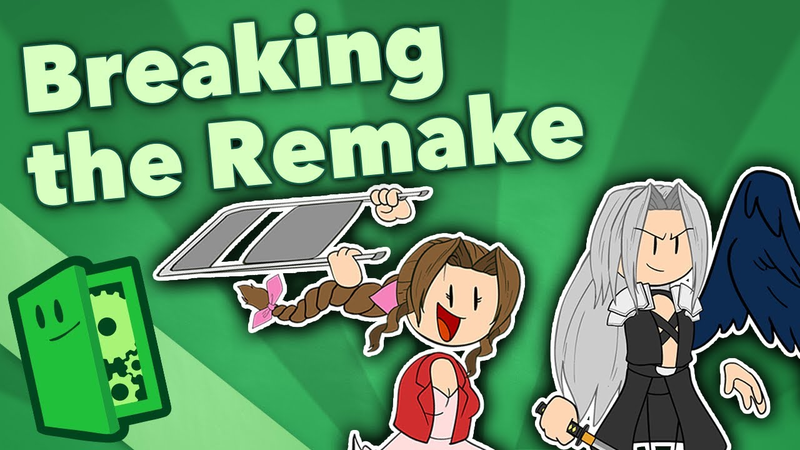
Final Fantasy VII: Breaking the Remake - Reboots, Remasters, and Remakes - Extra Credits
The gaming industry frequently revisits classic titles, employing three primary strategies: remasters, reboots, and remakes.
- The gaming industry categorizes title revisits into three distinct strategies: remasters (aesthetic updates), reboots (new narrative foundations), and remakes (modernized visuals and mechanics with original story retention).
- Final Fantasy VII Remake defies traditional definitions by functioning as a meta-textual narrative that diverges from the 1997 original's plot.
- Unlike a standard reboot, Final Fantasy VII Remake requires player familiarity with the original 1997 title to provide the necessary context for its narrative subversions.
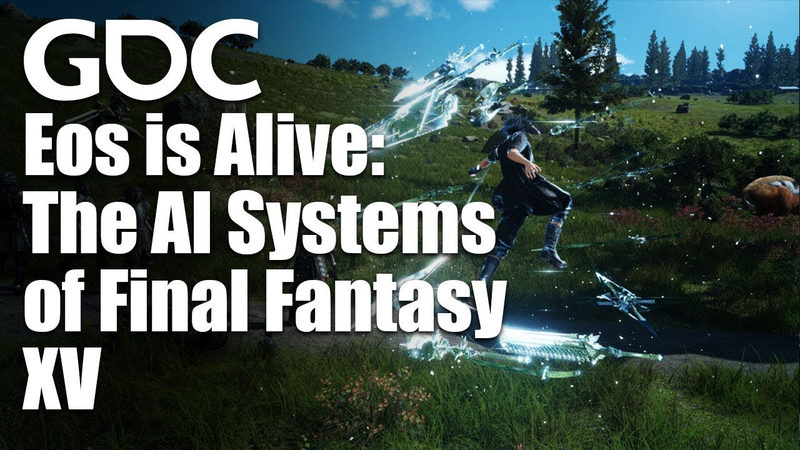
Eos is Alive: The AI Systems of Final Fantasy XV
Final Fantasy XV utilizes a sophisticated, multi-layered artificial intelligence architecture designed to create a cohesive, autonomous, and reactive open-world experience.
- Final Fantasy XV utilizes a three-tiered AI architecture consisting of a Meta AI (director), Character AI (individual intelligence), and Navigation AI (spatial positioning) to manage game progress and NPC behavior.
- The Character AI system employs a hierarchical 'AI Graph' that nests state machines within behavior trees, allowing game designers to create complex, scalable decision-making structures without deep programming knowledge.
- To maximize efficiency and reuse, the system uses an 'overriding' function that allows designers to customize specific common logic states for individual monsters or characters without rebuilding entire AI graphs.
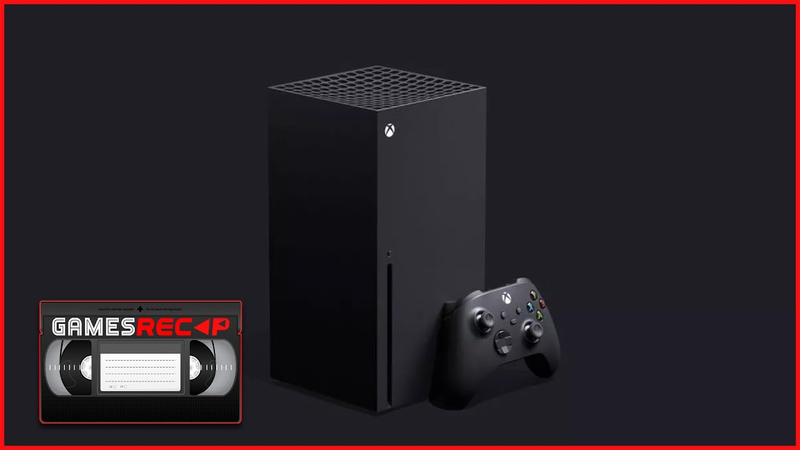
The Game Awards Biggest Announcements | Games ReCAP
The Game Awards serve as a critical industry barometer, functioning as a primary venue for major hardware reveals and high-profile software announcements.
- The shift toward standardized, PC-like console architecture, exemplified by the Xbox Series X, is designed to simplify cross-platform porting and provide developers with a stable baseline for optimization.
- High-profile exclusives remain the primary driver of consumer interest, with titles like Ghost of Tsushima and the Final Fantasy 7 remake serving as critical anchors for platform adoption.
- Technical performance alone is insufficient for success, as evidenced by the reception of Godfall, where poor visual design undermined its impact as a PS5 launch title.
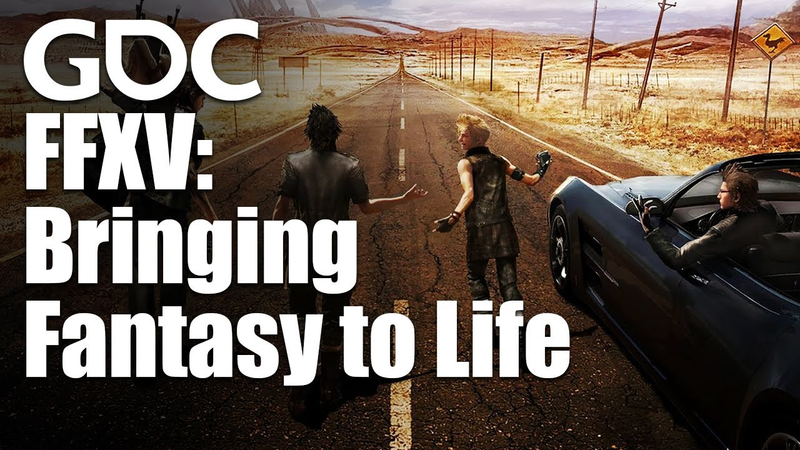
Bringing Fantasy to Life in Final Fantasy XV
The development of Final Fantasy XV centered on the ambitious premise of creating a "fantasy based on reality."
- To maintain narrative cohesion across multi-media projects, the development team established strict character-specific rules, such as speech ticks and nickname conventions, to ensure consistency among multiple writers.
- The team utilized a 'fantasy based on reality' design philosophy by incorporating real-world linguistic influences, such as Italian for the Venice-inspired city of Altissia, to create a 'familiarly foreign' aesthetic.
- To make complex lore accessible, the team replaced esoteric terminology with common, layman-friendly concepts, such as referring to summoned characters as 'Astrals' and using familiar archetypes like gods and oracles.
Ubisoft & Square Enix E3 Press Conference | Games ReCAP Episode 004
Ubisoft maintains a robust and stable development model by leveraging established engines and iterative design across major franchises such as Assassin’s Creed, Watch Dogs, Far Cry, and the Tom Clancy series.
- Ubisoft’s strategy of leveraging established engines and iterative design for franchises like Assassin’s Creed and Far Cry provides a stable production model that minimizes the volatility and mass layoffs seen elsewhere in the industry.
- A two-year development cadence is proposed as the optimal standard for major titles, allowing players sufficient time to master complex gameplay systems before the next iteration is released.
- Square Enix’s modernization efforts show inconsistent results, with the Final Fantasy VII Remake succeeding through real-time combat and high fidelity, while projects like the Avengers title and the Final Fantasy VIII remaster suffer from a lack of comprehensive overhauls.

Epic and Interactive Music in Final Fantasy XV
The development of Final Fantasy XV required a sophisticated approach to interactive audio, necessitating the creation of the proprietary Magni system to bridge the gap between traditional, melody-driven orchestral scores and dynamic gameplay.
- Square Enix developed a proprietary tool called Maggie (Music API Gate for Gaming Interaction) to maintain the melodic integrity of Final Fantasy XV's orchestral score while enabling seamless, interactive transitions.
- The system utilizes 'vertical remixing' through mode transitions, which control layer volumes, pitch, and low-pass filters to adjust music based on player actions and environmental triggers.
- To ensure musical transitions feel natural rather than like simple cross-fades, the system synchronizes changes with musical accents, sometimes requiring a wait of up to two bars to maintain rhythmic coherence.

Prompto's Facebook: How a Buddy-AI Auto-Snapshots Your Adventure in FFXV
The development of the photo system in Final Fantasy XV serves as a case study in integrating emotional artificial intelligence into open-world game design.
- The 'Prompto Snapshot' system in Final Fantasy XV was designed to serve as a core storytelling tool, documenting the player's journey to reinforce the narrative of brotherhood and emotional loss within an open-world environment.
- The system operates on three primary design policies: photos must serve as achievements, they must spark player imagination, and they must facilitate gameplay sharing by automating the process to overcome the friction of manual screenshotting.
- To manage the volume of content, the system captures over 20 photos per day but automatically curates and limits the final selection to 8–12 images to ensure the player is not overwhelmed during the daily review process.

Letter to My Nephews 3 - This Is Your Story - Extra Credits
Video games serve as a powerful metaphor for personal agency, teaching players that they possess the capacity to overcome adversity and shape their own destinies.
- Individuals can cultivate personal agency and resilience by internalizing the protagonist's role, translating the problem-solving skills practiced in video games into real-world perseverance.
- Life’s obstacles should be reframed as challenges inherent to a hero’s journey, encouraging a proactive approach to overcoming adversity rather than viewing barriers as insurmountable.
- Self-determination is essential for navigating non-traditional career paths, as demonstrated by the author's decision to prioritize professional goals over immediate financial security despite facing homelessness.

Free-to-Play's MECHANICS are Great - The Mini-Game Revolution - Extra Credits
Free-to-play mechanics, often criticized for their predatory pay-to-win structures, can serve as highly effective foundations for engaging mini-games when decoupled from real-world currency.
- Free-to-play mechanics can be repurposed as engaging mini-game systems by replacing real-world microtransactions with in-game resources earned through standard gameplay.
- Decoupling collection-based loops and strategic progression from financial barriers eliminates the exploitative nature of traditional Skinner box designs while maintaining player engagement.
- Integrating acquisition mechanics and armory-style progression into mini-games provides players with a sense of long-term investment, preventing side content from feeling shallow or forgettable.

How not to onboard (Game Center fail)
The initial user experience of Mobius Final Fantasy highlights critical friction points in mobile game onboarding, specifically regarding technical integration and permission requests.
- Mandatory Game Center integration creates technical barriers that prevent players from accessing the core gameplay loop, leading to potential churn before the game even begins.
- Forcing users to troubleshoot authentication errors or navigate complex system settings during the initial onboarding phase significantly alienates players at their most vulnerable point of engagement.
- Displaying push notification prompts immediately upon launch is a design flaw that causes users to dismiss requests before they have established any connection to the game.

FTUE: Mobius Final Fantasy
The first-time user experience (FTUE) for Mobius Final Fantasy highlights significant friction points common in Japanese mobile RPGs, specifically regarding onboarding and technical implementation.
- Cumbersome initial setup processes, including lengthy mandatory asset downloads, can drive day-one user retention rates as low as 20%.
- The use of a 'stub file' technical architecture creates stagnant waiting periods that prioritize data transfer over immediate player engagement.
- Poorly timed system prompts, such as push notifications and Game Center requests, occur before the user has established any investment in the game, creating unnecessary friction.

A Little Bit of Yesterday - Why We Love Retro Games So Much - Extra Credits
The enduring appeal of retro gaming stems from a desire to recapture a sense of uninhibited imagination, optimism, and playfulness that is frequently absent in contemporary, high-budget titles.
- The primary driver of retro gaming's popularity is a longing for the creative freedom, optimism, and over-the-top design choices that characterized early game development.
- Modern game design has increasingly prioritized realism and grounded narratives, which has inadvertently led to a loss of the exuberant joy and childlike wonder found in classic titles.
- The industry’s shift toward 'mature' themes was fueled by a sense of insecurity and a desire for mainstream legitimacy, causing developers to view the inherent silliness of games with shame.
Companies behind it

As the documents state it.