1 free read left. Create a free account for unlimited reading + AI research.
Create free account
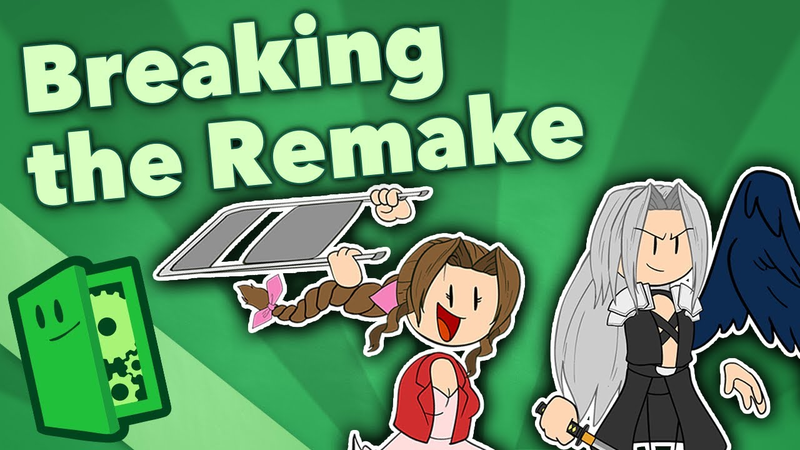
Final Fantasy VII: Breaking the Remake - Reboots, Remasters, and Remakes - Extra Credits
Key insights
6 takeaways- 01The industry is shifting toward a model where retellings serve as creative explorations that challenge the legacy of original works rather than merely replicating them.
- 02The gaming industry categorizes title revisits into three distinct strategies: remasters (aesthetic updates), reboots (new narrative foundations), and remakes (modernized visuals and mechanics with original story retention).
- 03The distinction between remasters, reboots, and remakes is becoming increasingly fluid as developers move beyond simple technical updates to reinterpret historical titles.
- 04Final Fantasy VII Remake defies traditional definitions by functioning as a meta-textual narrative that diverges from the 1997 original's plot.
- 05Unlike a standard reboot, Final Fantasy VII Remake requires player familiarity with the original 1997 title to provide the necessary context for its narrative subversions.
- 06This evolution in storytelling methods reflects the maturation of the gaming industry and encourages more critical audience engagement with interactive media history.
Ask AI about this video
Transcript
Storytelling is a fundamental part of human nature, and we love to pass down stories our parents told us to our children and grandchildren and great-grandchildren. But sometimes when we do this, we like to add our own spin, reimagining classic stories and retelling them in our own way. And since games are fundamentally a storytelling medium, they're no different. Sometimes we want to pass on a classic or reimagine them completely. Hey, hey, nice Buster Sword, Zoey. You know, I'm glad to see you're ready because today we're going to explore the differences between remasters, reboots, and remakes and talk about how Final Fantasy VII Remake might not be what you think. Thanks so much to Ting Mobile for helping us level up today's gaming discussion. So, how are video games typically retold? Well, there's actually a few answers depending on the goals of the designer, but retellings tend to fall into three categories: remasters, reboots, and remakes. Now, of course, there's some overlap between the three, but before we dive into that, let's break down the design philosophy behind
each one. The concept of remastering comes from early analog audio production, where master recordings could be worn down over time, necessitating a rerecording to keep sound quality up. The term has also evolved to sometimes reference the moving of an analog source to digital. For instance, things like digitizing film, where individual scans of the celluloid are taken frame by frame to create a digital copy. Then tools are used to restore places where the film may have been scratched or damaged and even digitally retouched to restore colors. And like audio and film remasters, video game remasters are all about retouching the aesthetics. This could mean updating textures, remastering audio, increasing poly count, or updating the UI because visuals tend to be the place where video games most easily show their age. Those cutting-edge realistic graphics of yesteryear can look um uncanny at best by today's standards. It's only natural that we'd want to touch up our games with newer graphics as new tech becomes available to us, like Bungie did with its remaster of Halo: Combat Evolved Anniversary. Plus,
as platforms get older, we also want to make sure we still have access to older games that we love. And remasters frequently involve porting the older game to newer systems, which gives us another way to keep our games accessible as older technology fades away. But, what if you're more interested in retelling a story in a new and radical way, rather than preserving it? Well, that, my friends, is how you end up with a reboot. Reboots take a wrecking ball to the old series, destroying what was previously built and returning to the foundation so they can build something new. Reboots ask, "What is core to this experience?" And then just plays with the rest. For example, take the 2013 reboot of Tomb Raider. While the spirit of the game is the same, go on adventures, explore tombs, miss that platform jump like 300 times, the remaster is different from the original, both graphically and mechanically. So, while a remaster's goal is to preserve the original, a reboot is way more concerned about establishing itself as a new interpretation of the game. Then we come to our third category of retelling, the remake, which lies somewhere between a remaster and a reboot. And a great
example of what we mean here can be found with the Pokémon Company's remakes, Omega Ruby, Alpha Sapphire, and the like. These remakes have taken the older games and given them graphical updates, similar to a remaster, but then, unlike a remaster, the gameplay itself is also updated with more modern conventions, just beyond quality of life improvements. Things like new typings, moves, and even new side stories or mechanics, like partner Pokémon from HeartGold and SoulSilver, have been reintroduced into the remake. And these changes make the game feel fresher, even to people who have already played the originals. But, at the same time, the characters, locations, and overall main story remains the same. This is done to preserve the feeling of playing the game again, and not to achieve a one-to-one recreation of its nuts and bolts. Because if remasters are like working to preserve a museum piece, remakes are more like remembering a beloved childhood memory. Take Resident Evil 2's remake. Mr. X, or Tyrant if you're nasty, in the original PS1 game would appear at certain points and it would feel like you were being hunted the
entire time, even though they were just scripted set pieces, a limitation of the tech at the time. But with current-gen hardware, Mr. X actually can and does organically hunt you down, recreating and enhancing that same feeling that teenage Matt had when running scared from the big man. Oh, and I'm just going to let the orphanage level speak for itself. The remake gives people who have played the game before an emotionally familiar experience and new players can experience a classic without having to deal with outdated mechanics or UI. So, there you have it. All the categories cleanly laid out. Yep, definitely nothing going to disrupt these nice little boxes. Wait, does anyone else hear that ominous Latin? Oh, hey Nomura. Okay, let's talk about Final Fantasy. Final Fantasy VII came out in 1997 on PlayStation and it became cemented in gaming culture forever. In fact, people who have never even seen a PS1 can still probably recognize Cloud Strife's sword or the victory music from the game. That legacy outlived the game itself. So,
when a remake was announced in 2015, people were excited to experience Final Fantasy VII yet again. But that's not exactly what we got. Now, we're going to try to stay vaguely vague here, but spoiler warnings for Final Fantasy VII Remake just in case. Final Fantasy VII Remake did something wild. While its marketing, demo, and well, you know, title suggested it was going to be a remake, it ended up being something much bolder. At first, it seems like a normal remake. Same story, same moby soldier boy. And sure, it had some extra scenes to flesh out side characters, wider maps to show off more of Midgar, and did bring scenes that were a little, shall we say, dated more in line with our current sensibilities. And these additions and tweaks feel like they exist to give characters a little more depth, while also not fundamentally altering the story, until suddenly they do and the story veers wildly away from the original format. So, does that make Final Fantasy VII Remake closer to a reboot? Um, no. Because where reboots try to build something entirely new from the foundation of a previous game, it's not
necessary to have played that previous game to fully understand a typical reboot. I mean, I can play the 2013 Tomb Raider without having touched a single PS1 Tomb Raider before and not feel like I'm missing anything. But Final Fantasy VII Remake, at a certain point, relies on the player knowing the story of the original. The last quarter of the game stops trying to explain itself and expects you to already know what's supposed to happen so it can tell you a new story instead. And you know, I think that's key to understanding what Final Fantasy VII Remake really is. It is a remake, sure, but it also challenges why we remake things. Plus, it's not trying to preserve a legacy like a remaster or reinvent itself completely like a reboot. Instead, it's an active conversation with itself. A remake 2.0, if you will. The game asks, through its narrative, what it means to add to a story people know so well. And then asks us, the audience, the question, is simply going through the same motions enough or can our retellings reach for something more than following the well-worn tracks of an original? As the
games industry continues to mature and we collect more and more history behind us, the question of how we interact with and interpret our past stories will become more and more relevant. Remasters, reboots, remakes, and whatever the heck Final Fantasy VII Remake actually is, all offer us different answers. And of course, there's no best way to go about this for everyone. But I hope that we, like FFVII's Remake, won't be content with only looking back and retelling the same stories in games the same ways over and over, but instead ask radical new questions through our favorite medium about the legacies we want to leave behind. Until next time, everyone. And the greatest of those gaming legacies, of course, is Sorry, got to take this. Hello? Oh, hey there new and improved Ting Mobile. Why yes, I am getting great service, even in my white void. Now, I don't know about you, but there's really only three things I care about when it comes to my cell phone provider, and they all start with C: coverage, customer service, and cost. But luckily, Ting's got me covered on all those fronts. They've got the best nationwide
LTE and 5G coverage in America, as well as award-winning customer service if you ever hit a snag. In fact, the one time Jeff needed help with his Ting account, he told me he was on the phone with an actual human in less than a minute. Take that automation. Now, you might think that a service like this would cost a ton of cash, but actually, we found when compared to our old cell phone plans, our bills have been cut nearly in half. And that savings is because you can choose the plan that's right for you. With their flex plan, you get unlimited talk and text for just $10 a month, and then only pay $5 a gig for data whenever you use it, which is great for those Wi-Fi hoppers among us. Also, they have their set five plan for $25 that includes five gigs up front if you know you're going to use it. Then for you hearty travelers, there's the unlimited talk, text, and data plan for just $45 a month, so you can keep up with all of your content on the go and not break the bank. Plus, switching couldn't be easier. Just head to extra credits.ting.com to check your phone's compatibility, create an account, and pick the plan that's right for you. Oh, and when you bring your phone and use our link, again, extra credits.ting.com,
you'll also get a $25 service credit to try Ting with no strings attached. They'll send you a SIM card you pop in your phone, and you'll save some cash, help support our channel, and be up and running in no time. A huge thanks to Ahmet Ziya Turk, Alicia Bramble, Casey Muscha, Dominic Valenciana, Joseph Blane, Kyle Murgatroyd, and Orioles One for being our legendary patrons. Mhm.
Summary
The gaming industry frequently revisits classic titles, employing three primary strategies: remasters, reboots, and remakes. Remasters focus on aesthetic preservation, updating textures, audio, and user interfaces to ensure older titles remain accessible on modern hardware. Reboots, conversely, discard the original narrative foundation to build a new interpretation, requiring no prior knowledge of the source material. Remakes occupy a middle ground, updating both visuals and gameplay mechanics to modernize the experience while maintaining the core story and emotional resonance of the original work.
Final Fantasy VII Remake serves as a complex case study that challenges these traditional definitions. While it initially presents as a standard remake, the narrative eventually diverges significantly from the 1997 original. Unlike a reboot, which functions as a standalone experience, this title relies heavily on the player’s familiarity with the original game’s plot to provide context for its subversions. By meta-textually engaging with its own legacy, the game functions as an active conversation between the past and the present, questioning whether a retelling should merely replicate well-worn paths or attempt to evolve the story into something entirely new.
Ultimately, the evolution of these storytelling methods reflects the maturation of the gaming industry. As developers continue to curate and reinterpret historical titles, the distinction between these categories becomes increasingly fluid. The industry is moving toward a model where retellings are not just technical updates or total reinventions, but creative explorations that invite audiences to reconsider the legacies of their favorite games. This shift encourages a more critical engagement with how interactive media preserves and transforms its own history.
















Comments