Destiny 2
Documents about Destiny 2
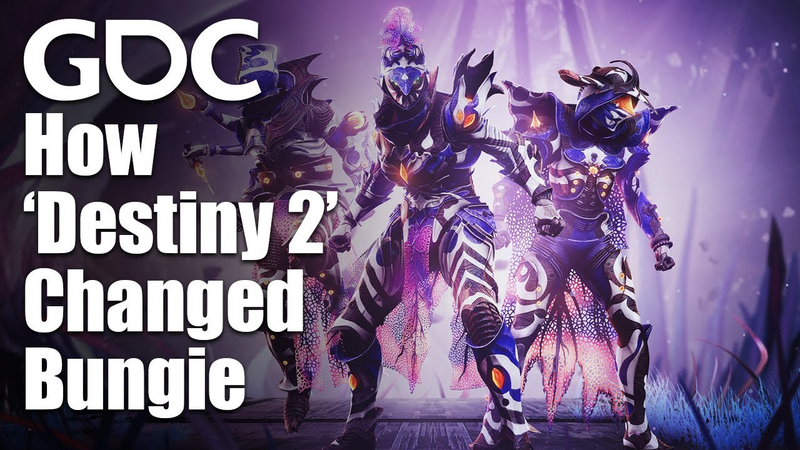
From Box Products to Live Service: How 'Destiny 2' Transformed Bungie
The transition of Destiny 2 from a traditional box product to a sustainable live service model serves as a blueprint for modern game development, emphasizing long-term player engagement over initial launch performance.
- In February 2018, Destiny 2 faced a critical retention crisis where projections indicated the entire player population would be exhausted within five weeks, forcing Bungie to shift from a box-product mindset to a live-service model.
- Success in live services is defined by velocity—the speed at which a studio can iterate based on community feedback—rather than the game's position or state at launch.
- Bungie transitioned from a 'heroic' development culture, which relied on final-push crunches to ship polished products, to a rigorous, sustainable cadence that treats development as a continuous train station where new content must be ready before the previous release departs.

Deep Dive: Steam's Top-Grossing Releases of 2023
This analysis examines the performance of top-grossing titles on Steam for 2022, utilizing data from Valve’s year-end sales rankings categorized into Platinum, Gold, Silver, and Bronze tiers.
- In 2022, six of the twelve top-tier Platinum games on Steam were new releases, including major titles like Elden Ring, Dying Light 2, Lost Ark, and Yu-Gi-Oh! Master Duel.
- Legacy 'games as a service' (GaaS) titles such as Destiny 2, PUBG, and Warframe continue to dominate Steam revenue through consistent monetization and dedicated player bases.
- The traditional 'buy-to-play' model lacking DLC or in-game purchases has become rare, accounting for less than 20% of Steam's top-grossing list.
Top 2022 Steam Games by Gross Revenue
Valve’s annual performance summary identifies the highest-grossing titles on the Steam platform for the 2022 calendar year.
- Valve categorized 2022 Steam top performers into four revenue tiers—Platinum, Gold, Silver, and Bronze—based on gross revenue generated between January 1 and December 18, 2022.
- Top-tier grossing titles for 2022 included major AAA releases like Elden Ring, Dying Light 2 Stay Human, and Call of Duty: Modern Warfare II, alongside live-service games Destiny 2 and Lost Ark.
- Long-standing industry staples, specifically Counter-Strike: Global Offensive, Dota 2, and PUBG: Battlegrounds, maintained their status as top-grossing titles throughout the year.
Plus: We Welcome Our New Steam Chart Overlords
This analysis examines the significant 2022 update to Valve’s Steam charts and provides a comprehensive performance review of recent PC and console game releases.
- Valve’s 2022 Steam chart update now ranks games by total revenue, including DLC and in-game transactions, rather than unit sales, which inherently favors live-service titles like Apex Legends and Destiny 2 over premium releases.
- Slime Rancher 2 achieved strong market performance by selling over 100,000 units within six hours of release and peaking at more than 21,500 concurrent users.
- Established franchises and niche simulators remain high-performing, with Construction Simulator and Return to Monkey Island reaching 17,300 and 15,500 concurrent users respectively.

Plus: Super-Dynamic Steam Charts
This analysis provides a comprehensive overview of the global video game market during late August 2022, focusing on sales performance, player engagement, and upcoming release trends across Steam, consoles, and mobile platforms.
- Destiny 2’s premium expansion packs maintained revenue dominance during late August 2022, while Hogwarts Legacy and F1 Manager 2022 generated significant pre-order momentum.
- SD Gundam Battle Alliance achieved a successful $60 debut on Steam, reaching a peak concurrent user (CCU) count of 21.9k.
- Madden NFL 23 and the Saints Row reboot served as the primary volume drivers for the PlayStation and Xbox platforms during August.

Bringing Players Together: Building Cross Play for 'Destiny 2'
The implementation of cross-play for Destiny 2 represents a strategic shift toward unifying a fragmented player base across seven distinct hardware platforms.
- Bungie transitioned from platform-specific social systems to a unified 'Bungie Name' identity system to ensure players remained recognizable when moving between seven different platforms.
- The development of Cross Play for Destiny 2 took approximately one year, moving from initial planning in summer 2020 to a full public release in August 2021 during the 'Season of the Lost'.
- To maintain competitive integrity, Bungie implemented two distinct matchmaking pools: a console pool (Xbox, PlayStation, Stadia) and a PC pool (Steam, Microsoft PC Store), preventing PC players from entering the console-only matchmaking environment.

Monetization Madness - How Games Make Money - Extra Credits
The monetization of video games is a foundational element of game design that dictates how developers support their projects and interact with their audiences.
- A game's chosen revenue model is a foundational design element that dictates gameplay mechanics, development processes, and long-term player engagement strategies.
- Modern monetization has shifted from simple pay-to-play arcade models to complex, hybrid strategies that combine premium purchases, free-to-play access, and ongoing microtransactions.
- Free-to-play models, which originated in South Korea and the mobile sector, rely on continuous revenue streams such as cosmetic microtransactions, subscriptions, and randomized loot boxes.
What Prevents Indie Games From Striving in the Modern Console Market
Indie game developers face significant challenges in the modern console market, primarily driven by the dominance of subscription services and games-as-a-service titles.
- Indie developers face significant challenges on consoles due to poor store discoverability and the dominance of games-as-a-service titles like Destiny 2 and GTA Online, which command long-term player engagement.
- The rise of subscription services like Game Pass has reduced the likelihood of direct game purchases, forcing indie developers to seek alternative monetization strategies and platform partnerships.
- Regular indie gamers are highly active, playing an average of 18.3 hours per week, and are more likely to prioritize innovation and unique experiences over the high-fidelity graphics favored by traditional console gamers.
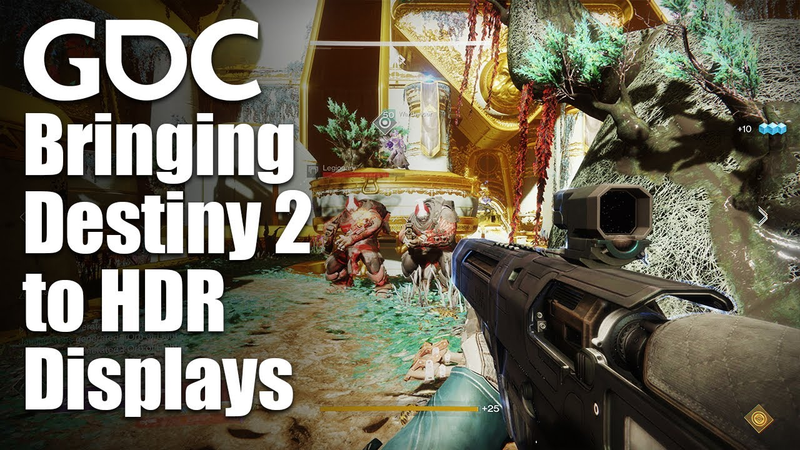
Not-So-Little Light: Bringing Destiny 2 to HDR Displays
The integration of High Dynamic Range (HDR) into Destiny 2 represents a strategic effort to modernize a legacy rendering pipeline without requiring a complete overhaul of existing art assets.
- Bungie successfully retrofitted Destiny 2’s legacy SDR rendering pipeline for HDR by implementing custom tone-mapping curves that extrapolate existing assets into 10-bit and 16-bit color spaces.
- To maintain UI legibility, the team utilized a reversible tone-mapping process that converts the back buffer to SDR for interface rendering before inverse tone-mapping it back to HDR.
- The implementation of FP16 back buffers and deferred tone mapping effectively mitigated color banding and hue shifts across diverse hardware configurations.
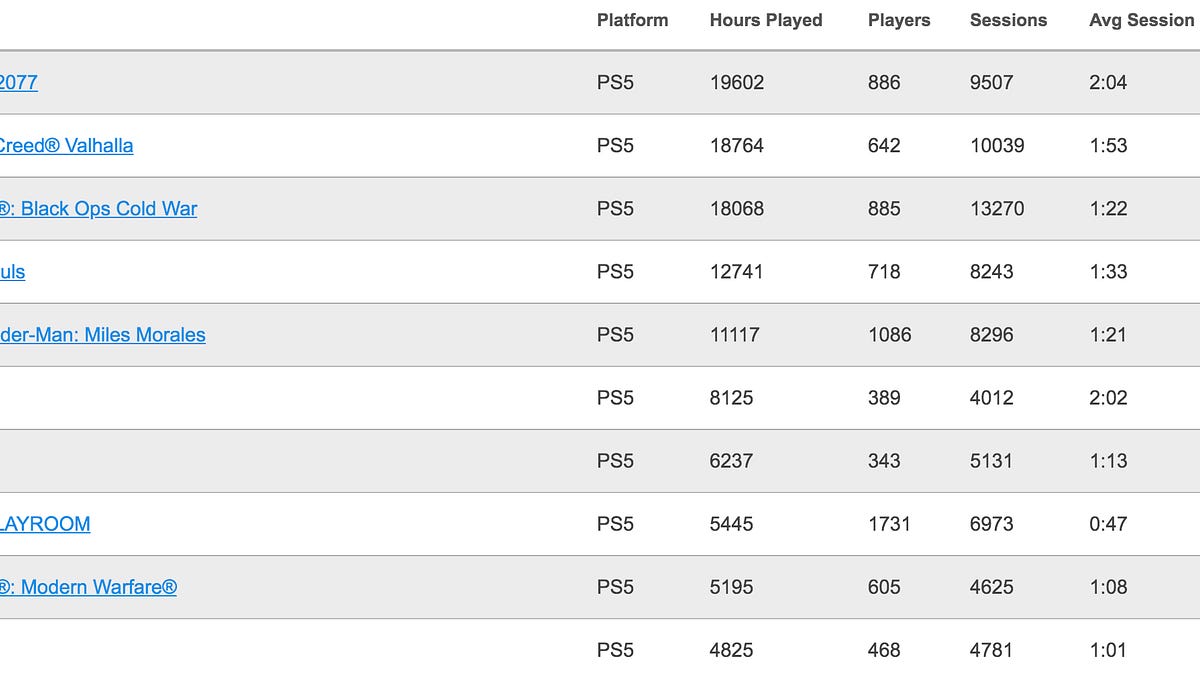
Who's Playing What on PlayStation 5?
This analysis examines early PlayStation 5 engagement trends by utilizing playtime data from a sample of 3,018 active users tracked via the PS Time Tracker platform.
- Long-standing titles like FIFA 21, Destiny 2, and Fortnite remain primary drivers of PS5 engagement, rivaling the impact of new platform exclusives.
- Early PS5 engagement analysis, based on a sample of 3,018 active users tracked via PS Time Tracker, shows that new releases like Cyberpunk 2077 and the Demon’s Souls remake dominate initial interest.
- Cross-generational support for frequently updated titles is a critical factor in maintaining console activity levels.

Destiny 2: Beyond Light Pre-Orders Are Very Strong, Analyst Suggests
Industry analysis from June 2020 indicates strong consumer demand for the Destiny 2 expansion, Beyond Light.
- Industry analyst Benji-Sales reports that pre-orders for the Destiny 2: Beyond Light expansion are performing strongly well in advance of its September 22, 2020, release date.
- Destiny 2 reached a peak of over 154,000 concurrent players on Steam as of June 2020, marking the game's highest PC player count since the 2019 launch of the Shadowkeep expansion.
- Bungie has confirmed that Destiny 2 will receive a next-gen upgrade for PlayStation 5 and Xbox Series X, featuring 4K resolution and 60fps support.

Destiny 2: Linear Music in an Open World
The audio team at Bungie developed a modular, systemic approach to music implementation for Destiny 2 to address the challenges of scaling linear, high-production-value scores across a vast, open-world environment.
- Bungie transitioned from Destiny's original system of custom-scripted, one-off music for missions to a modular 'music system' that uses expanded, multi-intensity audio pieces to create a linear-feeling score in an open-world environment.
- The new system allows designers to script activity scores directly during development, enabling them to audition music immediately and reducing the need for audio team intervention in the early scripting process.
- Music is organized into 'music sets' assigned to specific destinations, which randomly cycle through various intensity levels and transitions to maintain a consistent, high-quality score without requiring unique, hard-coded implementation for every encounter.