1 free read left. Create a free account for unlimited reading + AI research.
Create free account
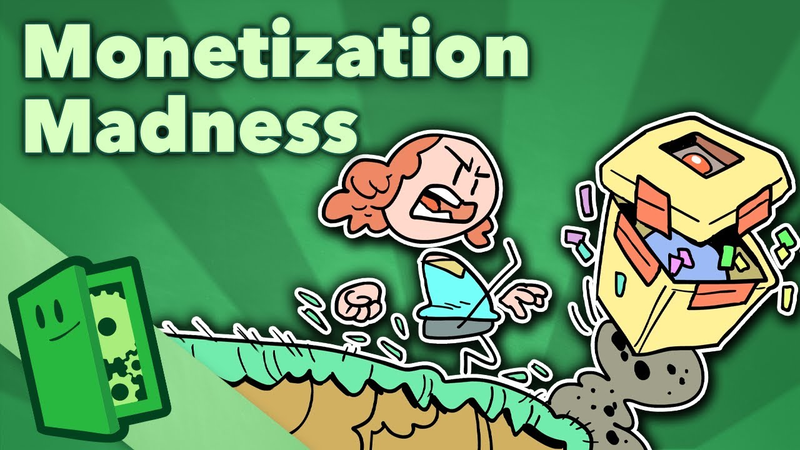
Monetization Madness - How Games Make Money - Extra Credits
Key insights
6 takeaways- 01Free-to-play models, which originated in South Korea and the mobile sector, rely on continuous revenue streams such as cosmetic microtransactions, subscriptions, and randomized loot boxes.
- 02Battle passes have become a standard engagement tool, utilizing transparent, progression-based reward systems to leverage the fear of missing out (FOMO) among players.
- 03A game's chosen revenue model is a foundational design element that dictates gameplay mechanics, development processes, and long-term player engagement strategies.
- 04Modern monetization has shifted from simple pay-to-play arcade models to complex, hybrid strategies that combine premium purchases, free-to-play access, and ongoing microtransactions.
- 05Major titles like Destiny 2 and Fortnite demonstrate the industry trend of layering multiple monetization strategies—including season passes and DLC—to adapt to evolving market conditions.
- 06The success of any monetization strategy depends on balancing the specific requirements of the game's genre, hardware platform, target audience, and ethical implementation.
Ask AI about this video
Transcript
Recently, while Jeff was doing research on an episode he was writing about Pokémon Unite's free-to-play mechanics, he realized something. While we've covered free-to-play and some other methods of game monetization in the past, we've never done a comprehensive overview of all of the different ways video games can make money. And for better or worse, methods of monetization fundamentally affect the design of how modern games are built. So, we're pressing pause on Pikachu for a moment to do a quick overview on all the different ways that the video games you play make their money. Thanks, capitalism. Thanks so much to Morning Brew for helping us monetize this episode. One foundational choice we don't often hear discussed in the context of early game development is how a game plans to make its money to support its creators and cover development costs, which is understandable because it's not the most fun topic, but also kind of odd because that choice impacts a ton of design decisions. But no matter what a developer or publisher chooses, they'll
always consider these same two factors. What are the upfront costs for the consumer to acquire the game? And does it monetize over time? So, let's jump into the Wayback Machine and take a look at how video games have answered these questions as our favorite medium has evolved. One of the earliest upfront costs that we elders remember is pay-to-play, aka slipping quarters into machines at the local arcade. Oh, and uh I have next match on Mortal Kombat, by the way. This form of monetization was very straightforward, not to mention practical, because arcade machines were way too expensive for most people to buy. But with the rise of personal computers and consoles, this changed how and where we all played and paid. Now, we could march down to ye old-timey video game store and purchase a whole game upfront. This monetization method, in industry speak, is called premium games, and outside of shareware, was how we bought most console and PC titles through the mid-2000s. And though online
storefronts have changed where we buy games, for a lot of studios, premium is still their default option. Also historically, premium games were complete experiences because without ubiquitous connectivity, you didn't have the easy option to sell more pieces of your game. Unless, of course, you release an expansion. Expansions, as the name suggests, takes a game and adds a lot of stuff to it. For instance, like Dark Portal did for Warcraft II back in 1996, or Intergrade did for the FFVII Remake. Most expansions were also bought in traditional storefronts. That is, until our devices got connected and added hard drives, and we got downloadable content or DLC. Now games could sell content in smaller chunks than expansions. And this was quickly embraced by developers on the seventh gen consoles, who for the first time had built-in connectivity and online stores. Some of this was great, and some of it was horse armor. Meanwhile, back in PC land, some games had been opting for a model that other mediums had found success with, subscriptions. And there are two major types. Subscriptions that
provide access to the game, i.e. you can't play if you don't pay, and subscriptions that provide benefits, such as additional player slots, higher level caps, or monthly in-game currency allowances, but didn't give you the boot when you stopped paying. Then we come to season passes, providing access to additional content over a season, which could last anywhere from a few months to a year. For example, Civ VI's Frontier Pass unlocked new civilizations, leaders, and game modes, where Destiny II's provided access to season-specific activities, missions, and equipment. Importantly, games with season passes are usually playable without the pass, but you just don't get that season's content. And speaking of playable without the pass, that brings us to games that are playable without the purchase, free-to-play games. They have no upfront cost, and instead make money through various ongoing methods. Their sordid history involves South Korean PC bangs, piracy, smartphones, ubiquitous internet, and a mistake by Apple. And you know, it's actually really a fascinating story I'd love to revisit in a future episode. Zoe, please mark that on the list.
Thanks, bud. But, what if you feel compelled to pay for your free game? Well, that's where the hybrid model of freemium comes in, where the game is free, but then either restricts important features or limits how far a player can progress before they need to pay. Note that this can be a soft cap, meaning at a certain point, the game progresses so slowly that it becomes almost unplayable. And in worst cases, preys on our impulse control for a quick dopamine hit. And both free-to-play and freemium games make heavy uses of microtransactions, the tiny cousins of DLC. They're an ongoing revenue model that allows players to purchase in-game currencies, characters, cosmetics, and more. Typically, microtransactions are relatively inexpensive, but ever-present, allowing players to pay small amounts here and there for additional game content. Or to, you know, spend a few hundred bucks on a free game like Jeff and his League of Legends skins. Next, we get to the dreaded loot box, a form of microtransaction where instead of purchasing specific things you know you'll get, you receive random loot from
a set of possible rewards. And while some of our past writers have hoped that the game industry would use these responsibly, time has most definitely shown that most implementations of loot boxes have been on the predatory side. Though kind of opposite in philosophy to loot boxes, is the battle pass, a system that rewards players for completing in-game tasks during a set amount of time with a group of free stuff for everyone to earn, and a set of bonus loot for those who buy the pass. Unlike the random nature of loot boxes, battle passes usually expose exactly what the player will get and how they earn it, all while delivering a dollop of FOMO. Jeff first saw something like this in Dota 2 in 2013, and they've since become a popular method of monetization for many multiplayer games. And finally, some games don't ask players directly for money at all. Instead, they generate revenue by showing players advertisements, kind of like YouTube. Or they allow players to view advertisements to earn in-game currency, or they allow players to pay real money to turn off advertisements altogether. I see you, YouTube Premium. Of course, there's no one best way for a game to
make money that will please all players. Genre, hardware, region, and audience all play a huge role. So, to match all the variables, we've seen teams implement a variety of monetization models when attempting to appeal to their game's core audience. And to illustrate, let's pull some names out of the old hat here and see how a smattering of popular games support themselves. Starting with the Oh, an easy one. Slay the Spire. That's a premium game. Next, we have Oh, Civ 6, which looks to be a premium game with two expansions and then a season pass covering six DLC drops. And ah, Fortnite. That has evolved to be free-to-play with microtransactions, a battle pass, and now a benefit-style subscription. A bit much for my taste. Ha-ha, I spoke too soon. Destiny 2, a premium game with microtransactions, loot boxes, and expansions that converted to a free-to-play when it changed its publisher, added a season pass, kind of dropped loot boxes, and then switched to a different type of season pass with a battle pass add-on. You know, I'm a little confused, but I I
hope it's working out for them. Anyway, we hope having all of this monetization madness in one place helps illustrate just how many options games have to support their creators, and how core that choice can be to a game's development. But now comes the hard part. Which of the bunch do you like best for developers, publishers, and game players? Do you gravitate towards games that favor some styles of monetization over others? And should any of these methods be yeeted off a cliff never to return? I've got a few. Let us know what you think in the comments below, and we'll see you next time. Because one of the things we love about all of you in the Extra Credits community is that you value being educated on topics you care about. And a great place to get started each day in that department is with our friends over at Morning Brew. For those not in the know, Morning Brew is an excellent free daily newsletter, Monday through Sunday, that gets you up to speed on the most important news stories of the day in tech, finance, business, and entertainment. Meaning, you're caught up every morning in just 5 minutes via a witty, irreverent, and informative summary of today's important issues. You know, I've been starting my days with
Morning Brew for a few months now, and I got to tell you, my mornings have been way more productive and enjoyable than they were before. You know, back during the dark times when I was just doomscrolling aimlessly through Instagram and Twitter. In fact, the other day I learned DoorDash started a food fight with NYC over commission caps. I found out Microsoft is allowing all of their accounts to go passwordless via fingerprint or facial recognition. And I read how the Chinese government is beginning to take aim at the gambling industry in Macau. AKA, precisely the mix of news I'm fascinated to read each morning. Again, Morning Brew is completely free, and you can subscribe in about 15 seconds. All you got to do is click the link in the description below. Then you'll get a piping hot newsletter you can use later each morning, all while helping to support Extra Credits in the process without spending a dime. Seriously, thank you all so much for your support. We'll see you next time. A huge thanks to our legendary patrons, Orioles 1, Kyle Murgatroyd, Joseph Blaine, Dominic Valenciana, Casey Muscha, Alicia Bramble, and Ahmed Ziad Turk.
Summary
The monetization of video games is a foundational element of game design that dictates how developers support their projects and interact with their audiences. The primary thesis is that the chosen revenue model fundamentally shapes the development process, influencing everything from gameplay mechanics to long-term player engagement. Regardless of the specific strategy, all models must address two core variables: the upfront cost for the consumer and the mechanism for generating ongoing revenue.
The industry has evolved from early pay-to-play arcade models to the modern era of diverse, often hybrid, monetization strategies. Traditional premium games, which require a single upfront purchase, remain a standard for many studios, though these have increasingly incorporated expansions and downloadable content (DLC) to extend the product lifecycle. In contrast, the free-to-play model—which emerged from regional trends in South Korea and the rise of mobile gaming—relies on ongoing revenue streams. These include microtransactions for cosmetics or currency, subscription services that offer either access or utility, and the controversial use of loot boxes, which utilize randomized rewards.
More recent developments include the battle pass, which provides a transparent, progression-based reward system that leverages the fear of missing out (FOMO) to drive engagement. Some titles also integrate advertising as a primary or supplementary revenue source. Modern games often employ complex, multi-layered approaches; for example, titles like Destiny 2 and Fortnite have shifted between or combined premium, free-to-play, season pass, and microtransaction models to adapt to changing market conditions. Ultimately, the effectiveness of these models depends on a delicate balance between genre, hardware, target audience, and the ethical implementation of monetization features.



















Comments