Destiny 2
Documents about Destiny 2
Activision Blizzard Revenue Down 15% in Q3
Activision Blizzard’s financial performance for the third quarter of 2019 reflects a period of contraction, characterized by year-over-year declines in both revenue and active user engagement.
- Activision Blizzard reported a 15% year-over-year decline in Q3 2019 net revenue to $1.28 billion, with net bookings falling 27% to $1.21 billion.
- Total monthly active users (MAUs) across the company dropped 8% year-over-year to 316 million, with declines occurring across all three divisions: Activision (down 22%), Blizzard (down 11%), and King (down 6%).
- Revenue by division saw significant year-over-year drops for Activision (down 47% to $209 million) and Blizzard (down 38% to $394 million), while King remained relatively stable with a 1% decline to $500 million.
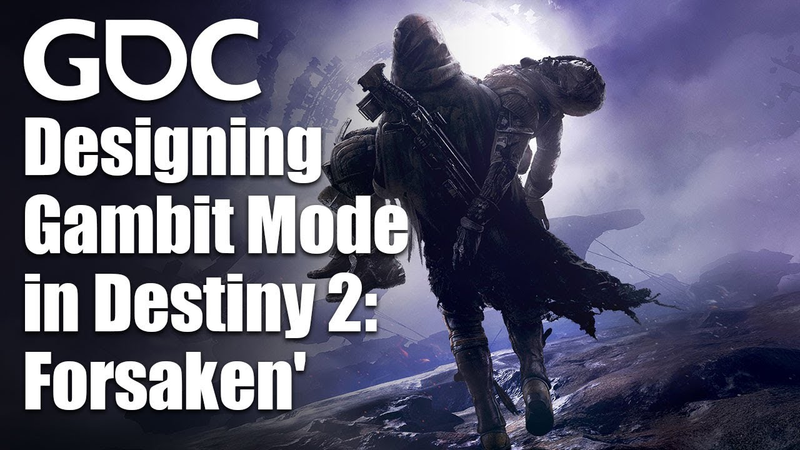
Designing Gambit Mode in Destiny 2: Forsaken
Gambit serves as a hybrid PvE-PvP mode for Destiny 2, designed to offer a fresh, replayable endgame ritual by blending AI-focused combat with competitive tension.
- Gambit was designed as a PvE-focused end-game ritual for Destiny 2: Forsaken, utilizing a core design philosophy of 'Firefight meets Super Puzzle Fighter' where players send 'blocker' AI units to hinder the opposing team.
- The development team implemented a 'ready room' to allow teams to see each other before matches, facilitating social interaction, loadout adjustments, and the introduction of an in-game announcer.
- To balance the risk-reward mechanic of carrying motes, the team reduced the penalty for dying during an invasion from five motes to three, encouraging more players to engage in PvP combat.
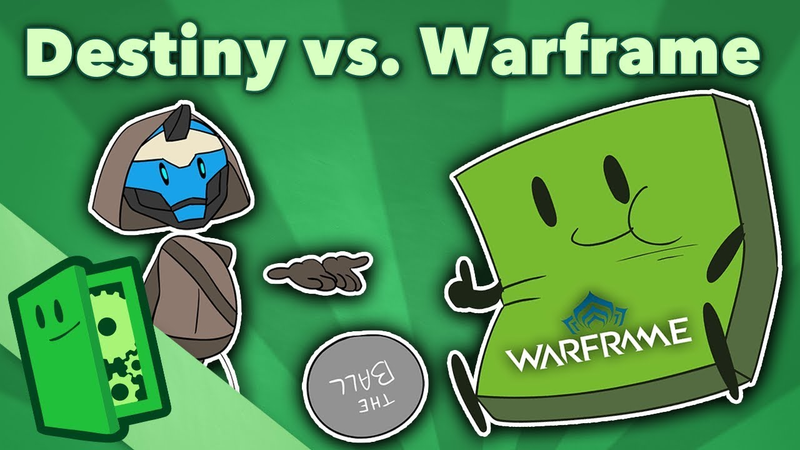
Destiny vs. Warframe - $500 Million in Free Marketing - Extra Credits
The core thesis posits that a lack of cohesive vision and tonal consistency in game development can lead to significant market failure, effectively allowing competitors to capture a dissatisfied player base.
- A lack of cohesive vision and tonal consistency in game development creates market vulnerabilities that allow competitors to capture dissatisfied player bases.
- Destiny’s failure to define its identity, oscillating between a standard console release and a service-based MMO, resulted in a disconnect between marketing promises and actual player experience.
- Warframe successfully captured the looter-shooter market by maintaining a consistent, communicable core identity as a fast-paced, dark sci-fi action game.

Epic Sync: Wrangling the Work of Highly Interdependent Dev Teams at Bungie
To scale the development of Destiny 2, Bungie transitioned from a traditional, discipline-siloed waterfall model to a structure comprising over 40 semi-autonomous, cross-disciplinary agile teams.
- Bungie scaled Destiny 2 development by transitioning from a siloed waterfall model to a structure of over 40 semi-autonomous, cross-disciplinary agile teams.
- The studio manages interdependencies through a quarterly Planning Day that brings approximately 300 developers together to align on 12 weeks of work.
- Physical artifacts, including dependency and risk boards, are used alongside digital tools like JIRA and TFS to visualize bottlenecks and secure formal commitments.