
Call of Duty
GameBy Infinity Ward · Released Oct 29, 2003
Documents about Call of Duty

Does Tencent Hate Riot?
Tencent’s internal development strategy is defined by a competitive, Darwinian model often described as a shark womb, where internal studios are encouraged to compete against one another to produce the most successful titles.
- Tencent operates with a 'shark womb' strategy, where internal studios like TiMi and Quantum/Lightspeed compete directly against each other, and Tencent prioritizes the success of the overall portfolio over the protection of individual franchises.
- Tencent’s internal rivalry strategy was exemplified by the launch of two competing mobile versions of PUBG, where the company released both to market and allowed real-world data to determine the winner.
- TiMi’s Honor of Kings has remained China’s top-grossing app for nearly five years, despite initial internal conflict with Riot Games over the use of League of Legends branding in marketing materials.
What's the Career Path of a Celebrity Gamer?
This analysis examines the shifting landscape of the global video game industry during early 2020, focusing on the professionalization of gaming personalities, the entry of big tech into cloud services, and the evolving platform dynamics of streaming and digital distribution.
- Asian markets are aggressively pursuing vertical integration, exemplified by Tencent’s majority acquisition of Huya to directly link game marketing with content consumption.
- Celebrity gamers face significant long-term career instability due to a lack of post-retirement infrastructure comparable to traditional sports, despite high-value exclusivity deals.
- The operational costs of maintaining social gaming platforms are rising due to systemic issues like cheating, specifically noted in Call of Duty: Warzone.
Xbox Bonanza: That FTC Win and the Future of Game Pass
The primary focus of this analysis is the legal and strategic landscape of Microsoft’s gaming division following a significant legal victory against the U.S. Federal Trade Commission (FTC).
- Microsoft successfully defended its Activision Blizzard acquisition against the FTC after the court ruled that the company lacked the incentive to withhold Call of Duty from competitors.
- The court’s decision was influenced by Microsoft’s 10-year commitment to provide Call of Duty to Sony and Nintendo, as well as the judge's rejection of the FTC’s market definition that excluded the Nintendo Switch.
- Microsoft’s 'Horizon 3' strategy, which aimed for ubiquitous global access by 2023, has underperformed, with Game Pass expansion proving slower than internal projections anticipated.
Hyper-Casual Grew Share of Top New Game Downloads to 78% in 2019
The hyper-casual mobile game genre experienced significant growth in 2019, solidifying its dominance among the most downloaded new releases.
- Hyper-casual games accounted for 77.6% of all downloads among the top 20 new mobile games released in 2019, up from 68% in 2018.
- The number of hyper-casual titles appearing in the top 20 list of new games grew from 13 in 2018 to 16 in 2019.
- The 20 most downloaded new games of 2019 generated a combined 2.1 billion installs, with hyper-casual titles dominating the volume.

Coronavirus Ruins GDC, Stadia and Geforce Now Deflated, Riot Games Valorant | Roundtable News
The global game industry is currently navigating a period of significant structural transition, marked by the disruption of traditional networking events like GDC and a broader shift toward digital-first engagement.
- Riot Games is diversifying its portfolio beyond League of Legends by launching Valorant and Legends of Runeterra to capture market share in the tactical shooter and card game genres.
- Cloud gaming platforms face significant viability challenges, as Google Stadia struggles with a lack of exclusive content and publisher incentives, while Nvidia’s GeForce Now deals with major publishers withdrawing IP to protect their own monetization strategies.
- The cancellation of GDC and other industry events is accelerating a permanent shift toward remote collaboration models and digital-first engagement within the game development sector.
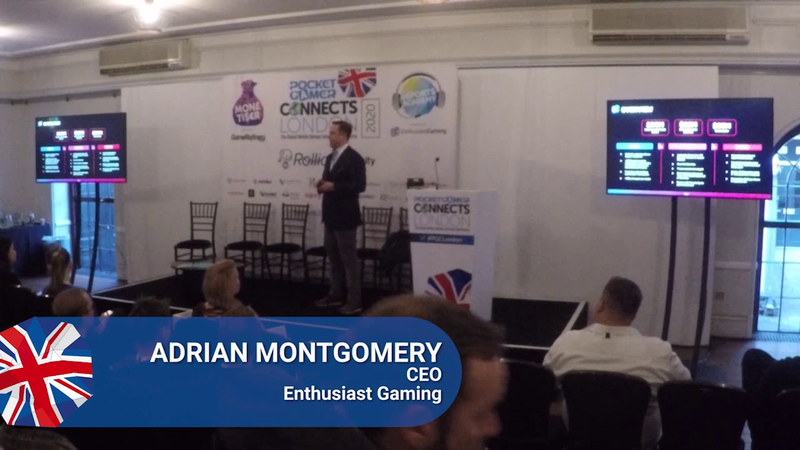
Superstar Session: How Enthusiast Gaming is Building Winning Esports Communities
Enthusiast Gaming operates as a diversified media and events company with a primary mission to build the world’s largest communities of gamers and esports fans.
- Enthusiast Gaming operates a diversified ecosystem of over 100 websites and 900 YouTube channels, reaching a monthly audience of more than 150 million users.
- The company’s business model relies on corporate sponsorship as its primary revenue driver, necessitated by the current absence of stable, recurring broadcast rights in the esports industry.
- Luminosity Gaming functions as a 'content factory' by managing 50 influencers and five competitive teams to generate consistent engagement across both franchised and grassroots gaming scenes.
Sweeney's Utopia: The Puritan Perspective of Epic Games CEO
This analysis examines the shifting landscape of the global video game industry in early 2020, focusing on the tension between idealistic business models and the pragmatic financial pressures of major platforms and publishers.
- Apple’s 2019 services revenue reached $46 billion with a 64% margin, which is double the margin of its hardware business.
- Tim Sweeney’s push for open ecosystems and reduced monetization is financially viable primarily due to the massive success of Fortnite, while most other industry players remain dependent on closed platforms and predatory revenue models.
- YouTube’s $160 million media rights deal for Activision Blizzard’s Overwatch and Call of Duty leagues indicates a stagnation in esports growth compared to previous Twitch agreements.

Top Game Genres by Revenues and Downloads
This analysis examines the performance of mobile game genres by evaluating the 1,000 most downloaded and 1,000 highest-grossing titles over a 30-day period.
- The Asian mobile market (Tier-1 East) exhibits significantly higher average Lifetime Value (LTV) across game genres compared to Western markets, with top-performing titles like Fate/Grand Order reaching an LTV of $430.
- High-LTV genres are typically characterized by high production costs, requiring substantial content, complex mechanics, and premium technical quality, making them difficult to enter without significant investment.
- Tencent dominates the Tier-1 East market, with its title Honor of Kings accounting for 95% of the MOBA genre's performance and generating approximately $5 billion in revenue on iOS in China alone.
Is Twitch Losing the Live Streaming Wars?
This analysis examines the competitive pressures facing Twitch and the broader live-streaming and cloud gaming landscape as of early 2020.
- Twitch underperformed in 2019, generating approximately $300 million in revenue against internal projections of $500 million to $600 million.
- YouTube is aggressively challenging Twitch’s dominance in esports by securing exclusive broadcast rights for Activision Blizzard’s Overwatch and Call of Duty Leagues.
- Twitch’s market position is threatened by a lack of a clear 'second act' and a heavy reliance on ad monetization and a limited number of core titles like League of Legends.
2020 Predictions: Who Will Reap the Rewards as Fortnite Declines?
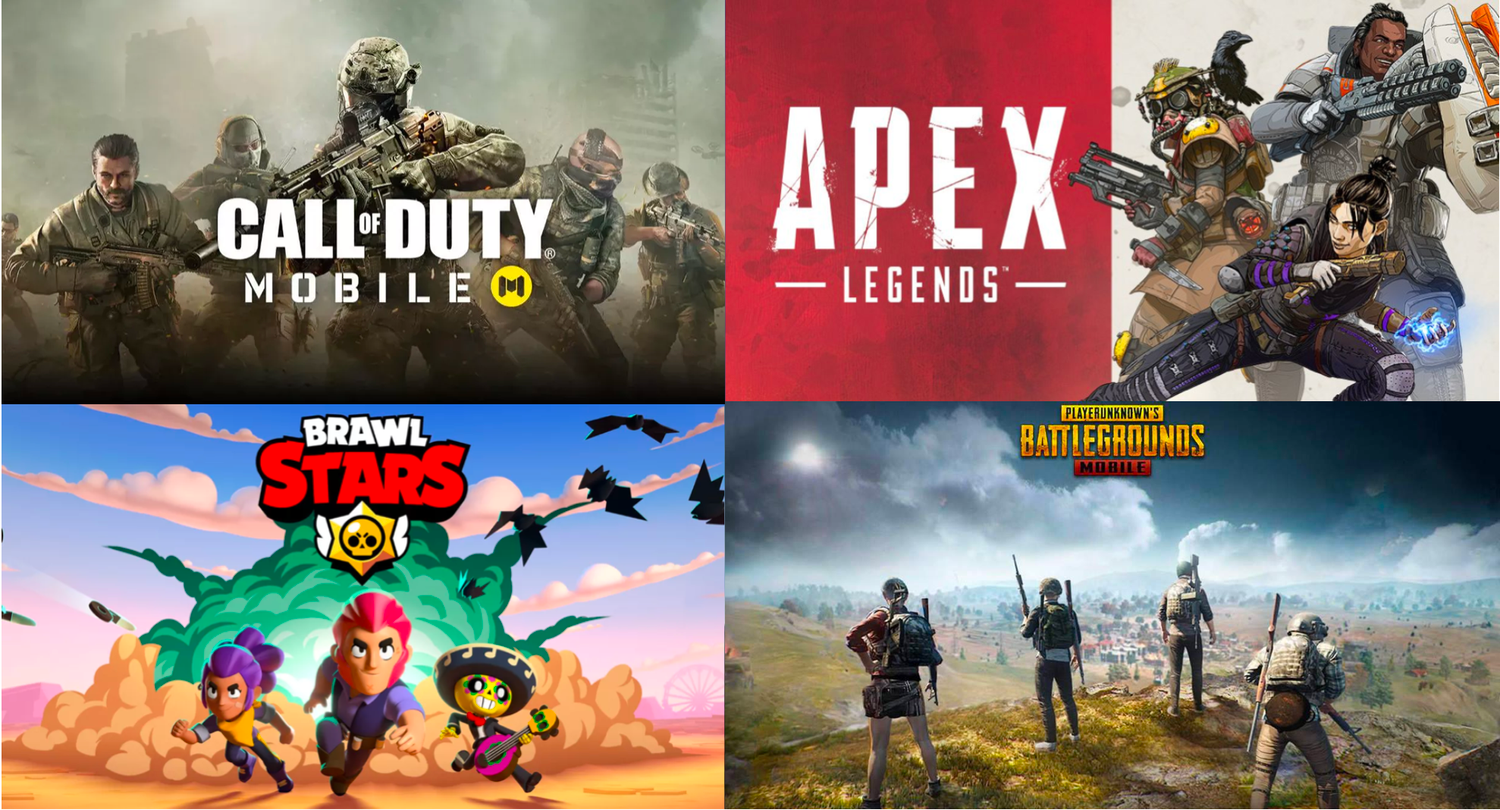
The mobile shooter landscape is undergoing a significant transition as the industry moves away from the peak of the Battle Royale craze toward more specialized sub-genres.
- PUBG Mobile dominated the Western Battle Royale market in 2019, capturing 30-40% of sub-genre revenue, a figure that doubles when including the Chinese version, 'Game for Peace'.
- Effective cosmetic-only economies require massive production pipelines; for example, Epic Games produces over 200 unique items per Fortnite season, including more than 80 full geometry-change outfits.
- Call of Duty: Mobile achieved the highest launch downloads of all time, but its initial revenue per player lagged behind competitors, signaling that Tencent and Activision will likely ramp up monetization strategies in 2020.

Automated Testing and Profiling for Call of Duty
The development of the Call of Duty franchise relies on a sophisticated, custom-built continuous integration system known as Compass to manage the immense technical complexity of multi-studio, multi-platform production.
- The Call of Duty franchise utilizes a custom Python-based CI system called Compass to manage a massive infrastructure comprising 700 worker PCs, 300 development kits, and 50,000 daily tasks.
- By shifting from GUI-based build servers to a code-centric architecture, developers can define performance metrics and memory statistics directly within source control, enabling version history and debugging for testing workflows.
- The system employs advanced error-bucketing to categorize failures by log-based keys, allowing teams to address recurring trends rather than isolated incidents.

Our Analysts' Picks for Best Mobile Games of 2019
The mobile gaming landscape in 2019 was defined by the widespread adoption of battle pass monetization, the integration of midcore features into casual titles, and the successful migration of major console intellectual properties to mobile platforms.
- The 'Battle Pass' model emerged as a dominant industry trend in 2019, with Clash of Clans successfully implementing 'Season Challenges' to drive significant engagement and revenue growth.
- Call of Duty: Mobile was the standout new release of 2019, achieving record-breaking launch performance with over 100 million downloads in its first week.
- Black Desert Mobile successfully bridged the gap for Western audiences by adapting the MMORPG genre with streamlined UI and combat mechanics, maintaining a top 200 grossing rank since its December 2019 launch.
Companies behind it
As the documents state it.