Battle Arena
Game
Documents about Battle Arena
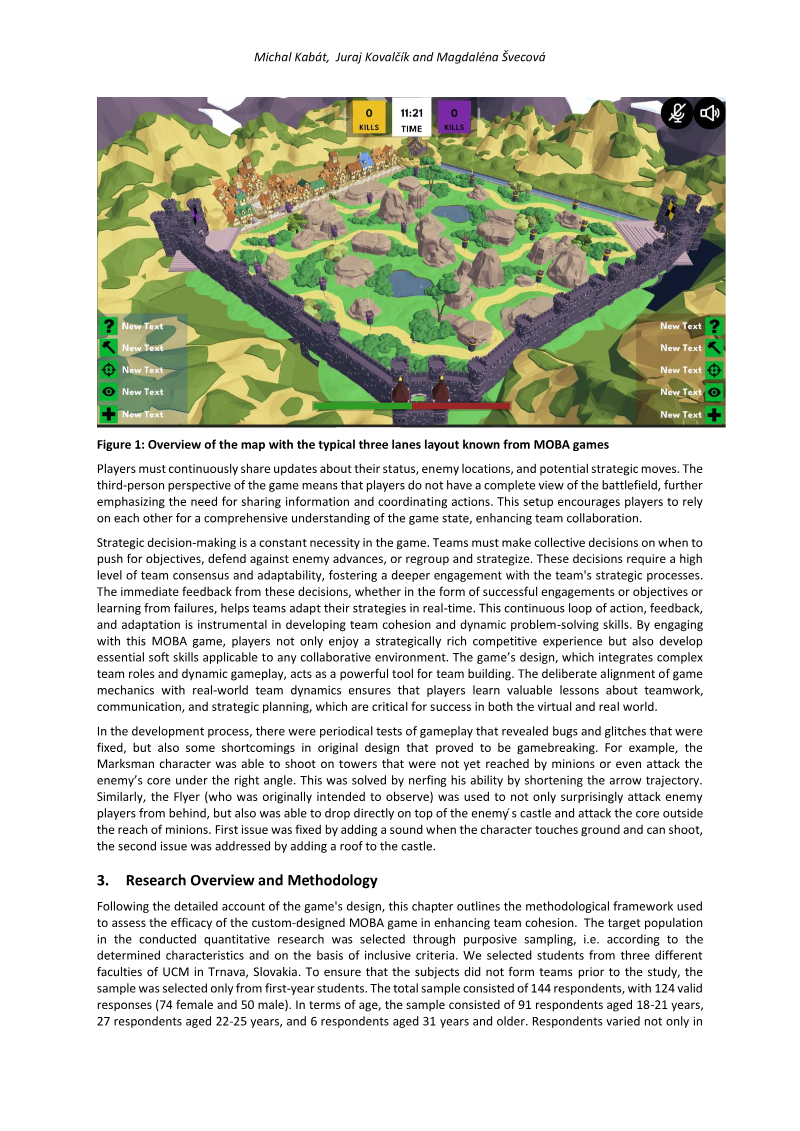
Enhancing Team Cohesion Through a Custom MOBA Game: Development, Implementation & Impact
The document describes the development, implementation, and impact of "Untitled Belbin MOBA Game" (UBMG), a custom Multiplayer Online Battle Arena designed specifically to enhance team cohesion and communication.
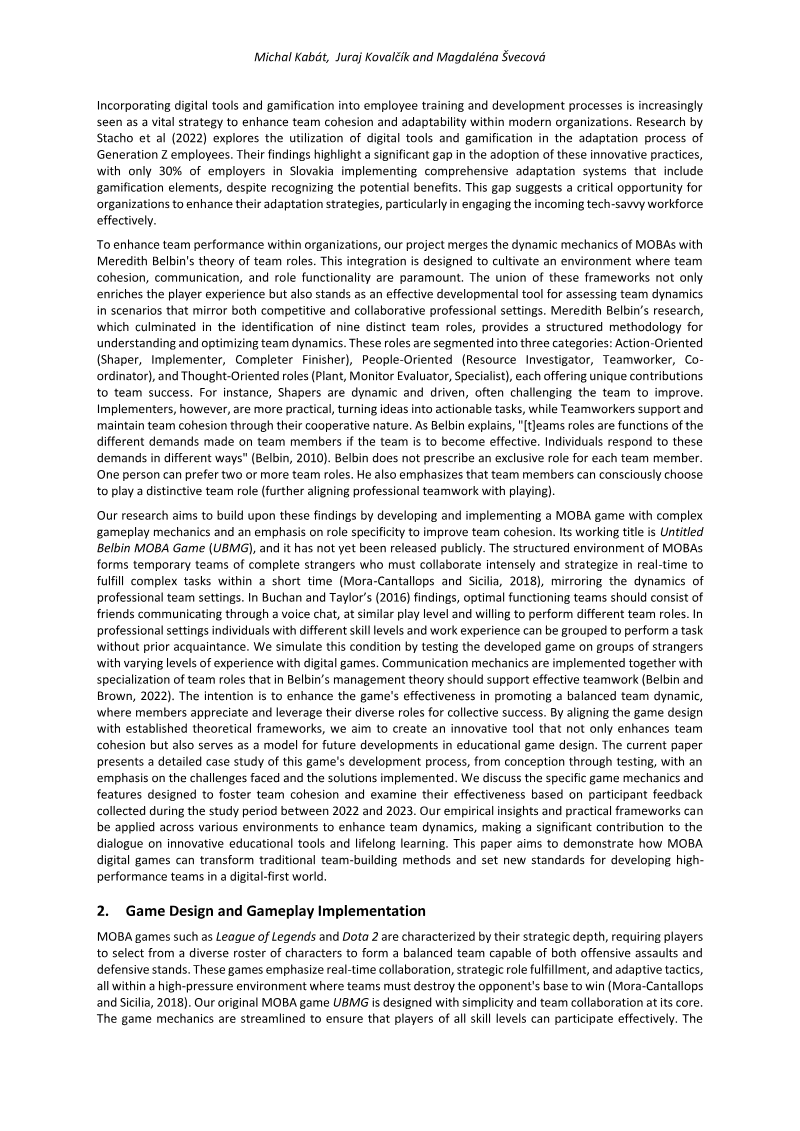
- The study introduced UBMG, a simplified MOBA that maps five fixed character roles (Healer, Flyer, Marksman, Bruiser, Jungler) onto Belbin team roles and prioritizes voice communication and shared objectives over individual mechanical skill.
- In a study of 124 valid first-year university students split into experimental and control groups, the experimental group showed significant gains in task cohesion, three dimensions of social inclusion, and four dimensions of achievement motivation after playing UBMG.
- The four achievement motivation dimensions that improved were confidence in success, flexibility, internality, and competitiveness.
Action2Score: An Embedding Approach to Score Player Action
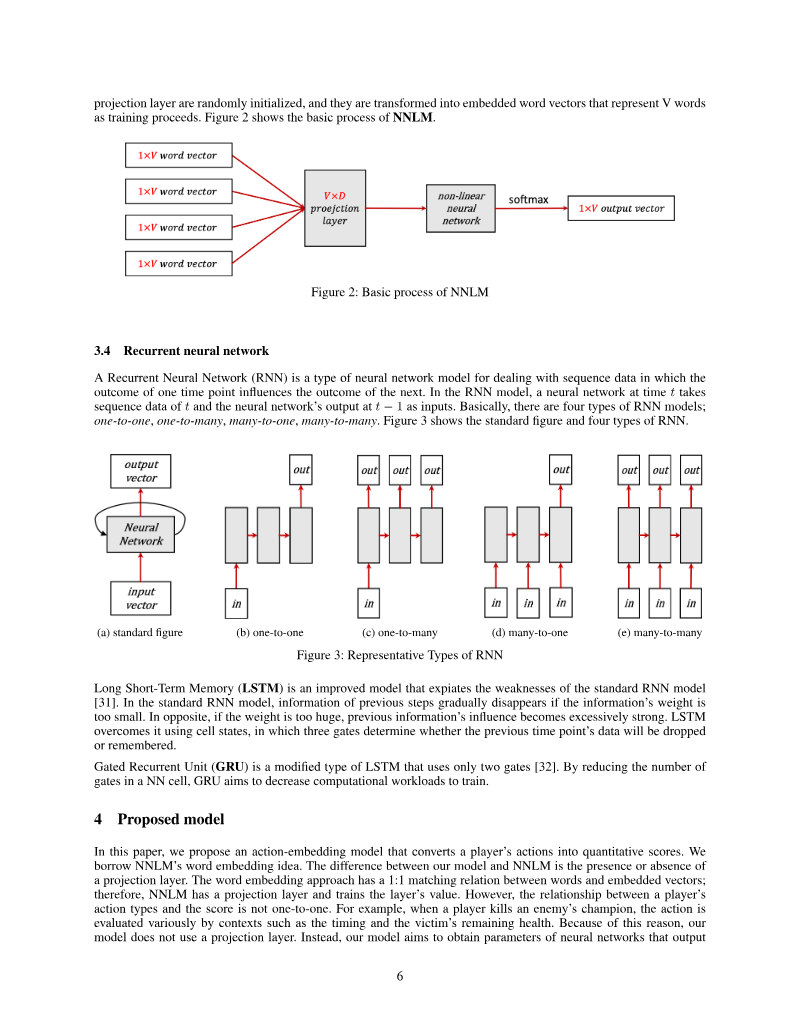
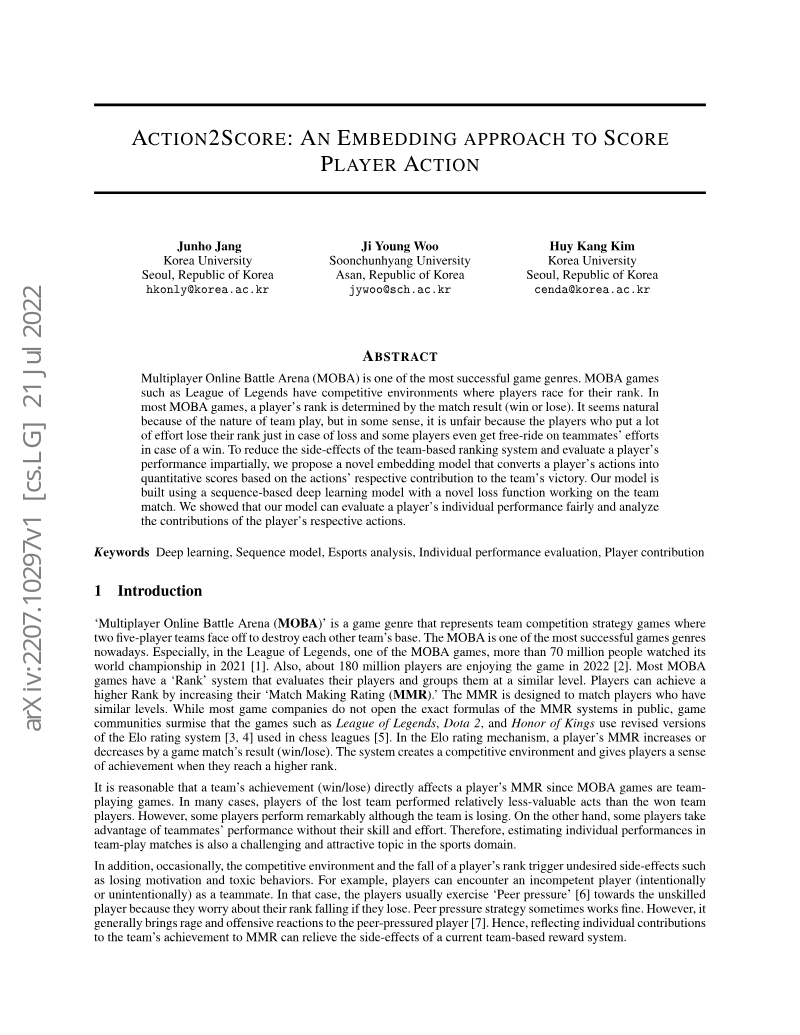
Action2Score introduces a sophisticated deep learning embedding model designed to quantify individual player contributions within Multiplayer Online Battle Arena (MOBA) games.
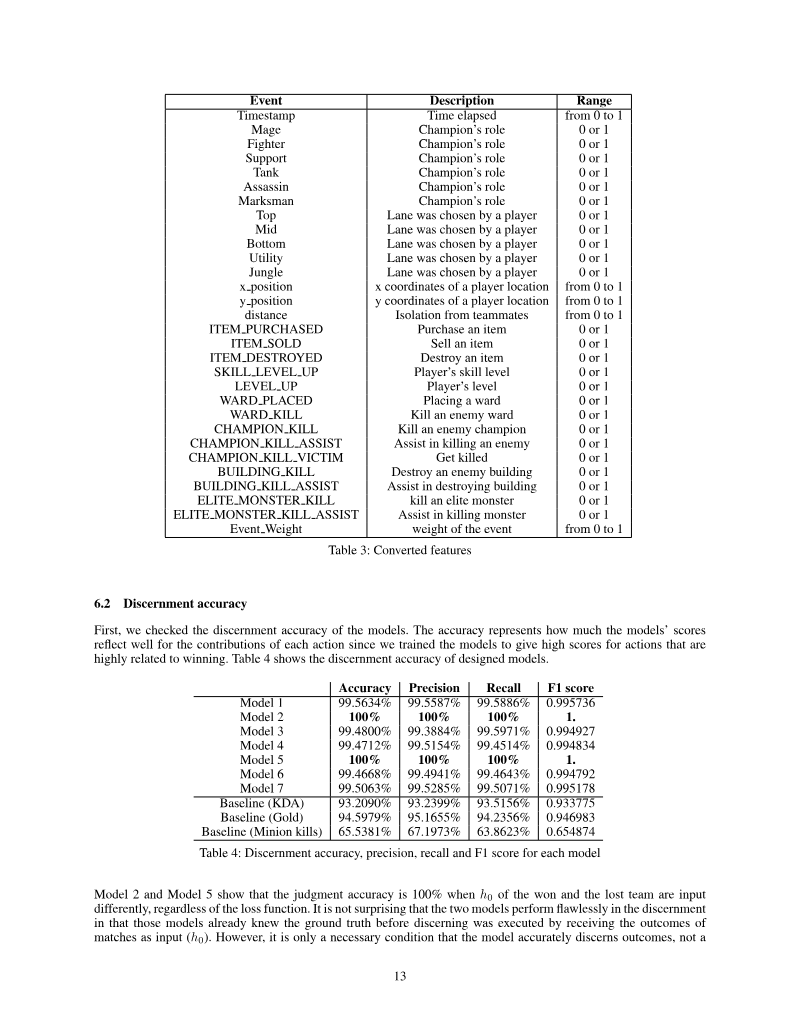
- The Action2Score model achieves over 99% discernment accuracy in evaluating individual player contributions by analyzing action sequences rather than binary match outcomes.
- The system utilizes a GRU-SLP architecture trained on a dataset of 245,575 League of Legends matches to map player behavior into a 30-dimensional embedding space.
- By decoupling performance from final match results, the model effectively identifies the value of support roles that are typically undervalued by traditional metrics like KDA and gold.
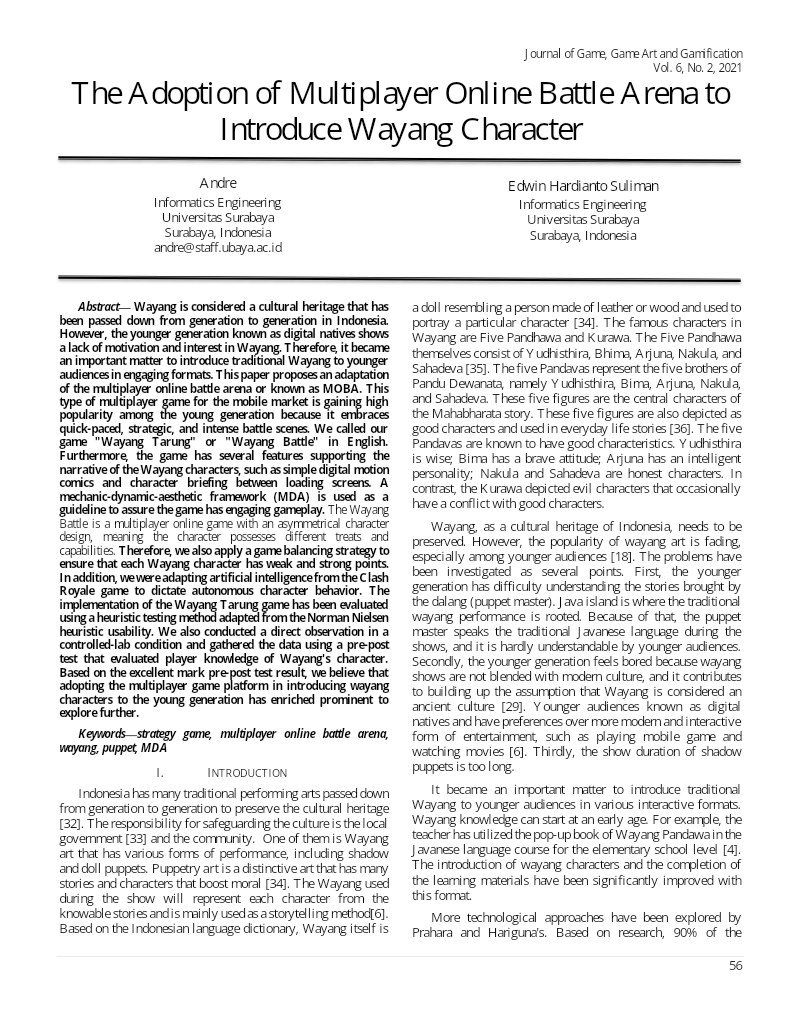
The Adoption of Multiplayer Online Battle Arena to Introduce Wayang Character
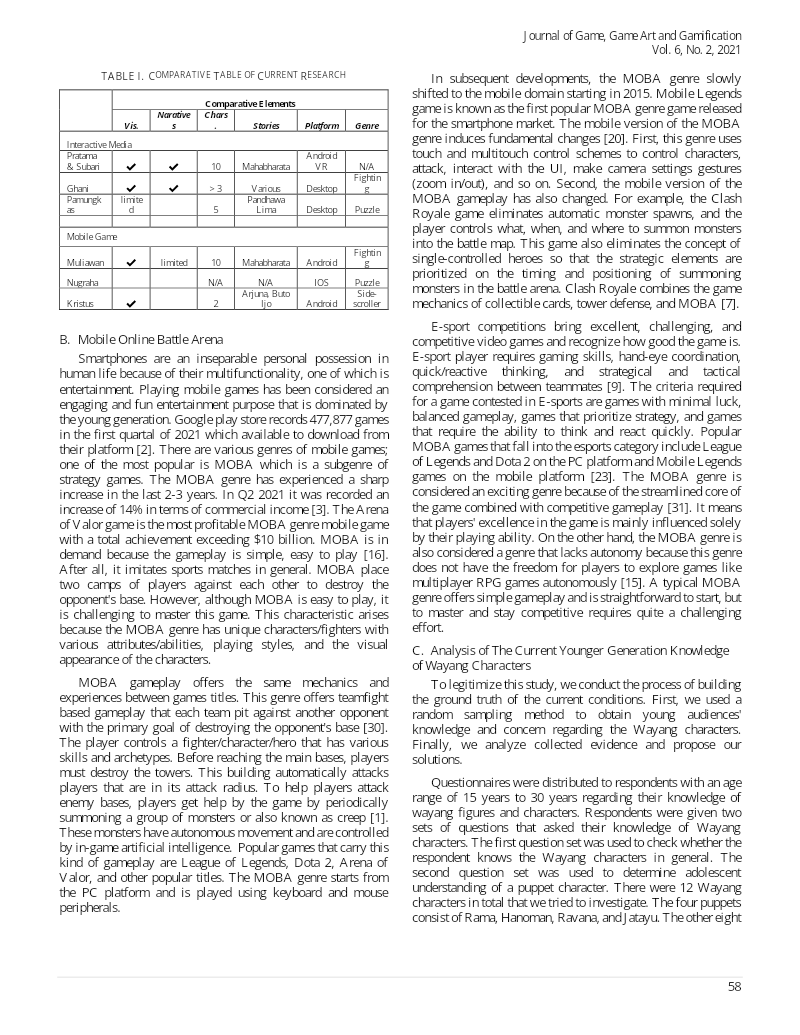
The integration of traditional Indonesian Wayang characters into the Multiplayer Online Battle Arena (MOBA) genre serves as a strategic intervention to revitalize cultural interest among digital-native youth.
- Integrating traditional Wayang characters into the MOBA genre significantly increases cultural literacy among digital-native youth, as evidenced by pre- and post-test evaluations.
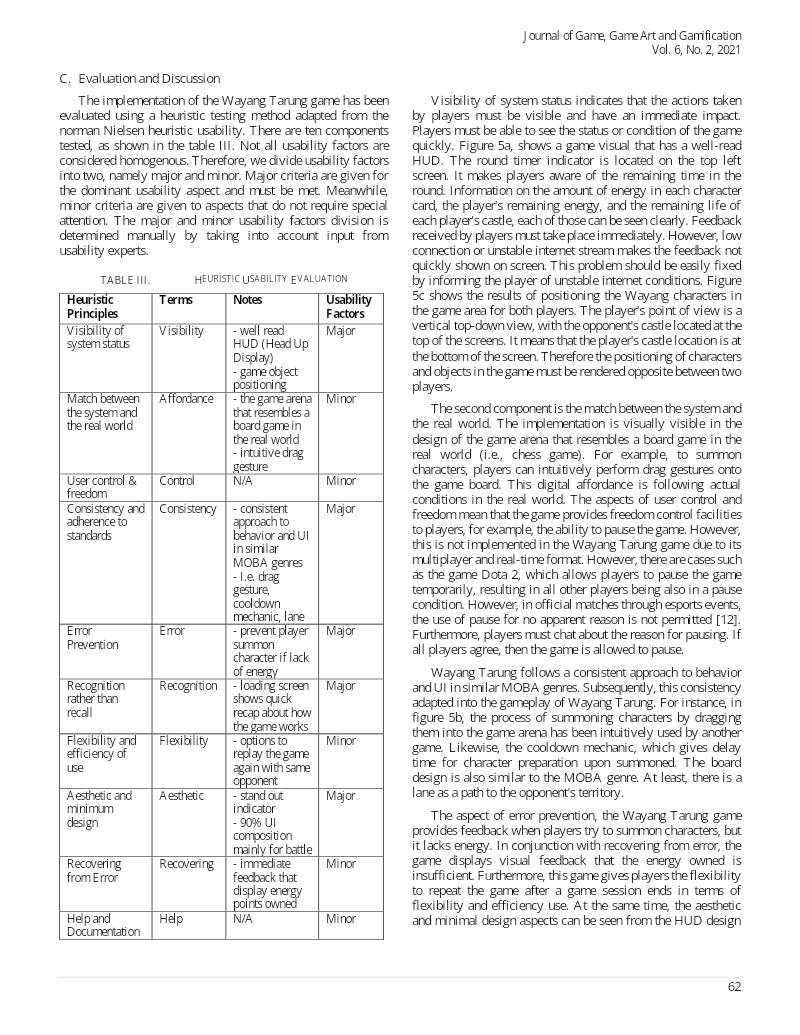
- The 'Wayang Tarung' project utilizes the Mechanic, Dynamic, and Aesthetic (MDA) framework to ensure cultural education does not negatively impact gameplay quality.
- Technical implementation of the game relies on a multithreaded server architecture to support real-time multiplayer interactions while maintaining character balance.
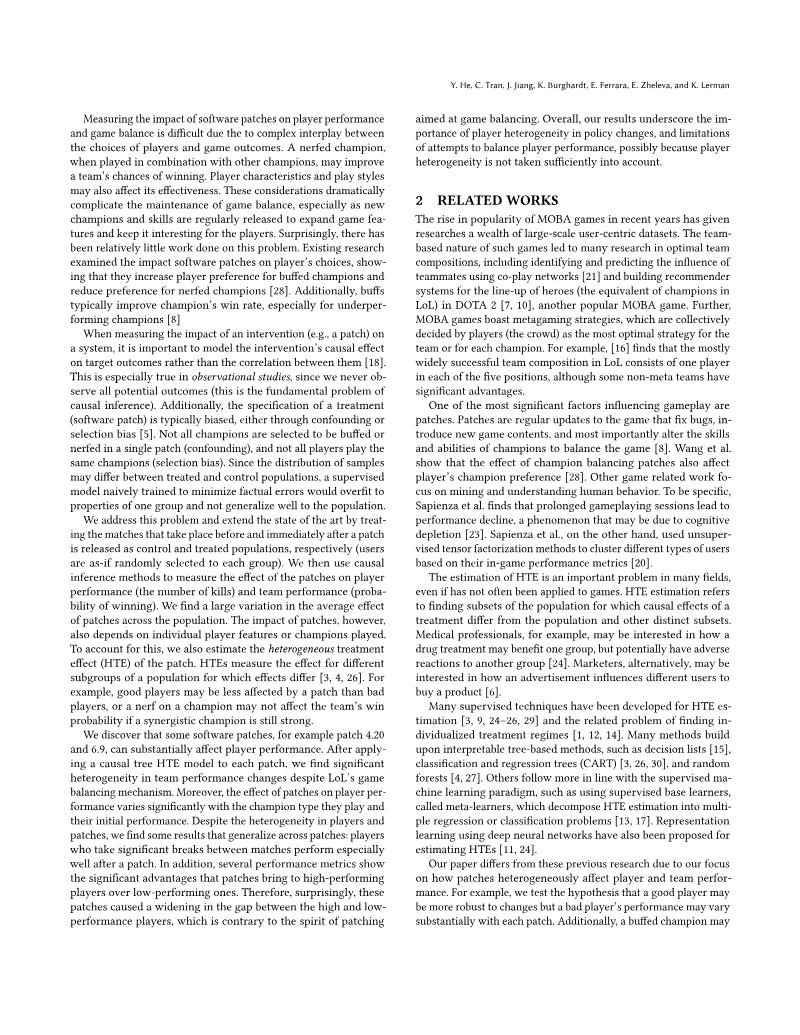
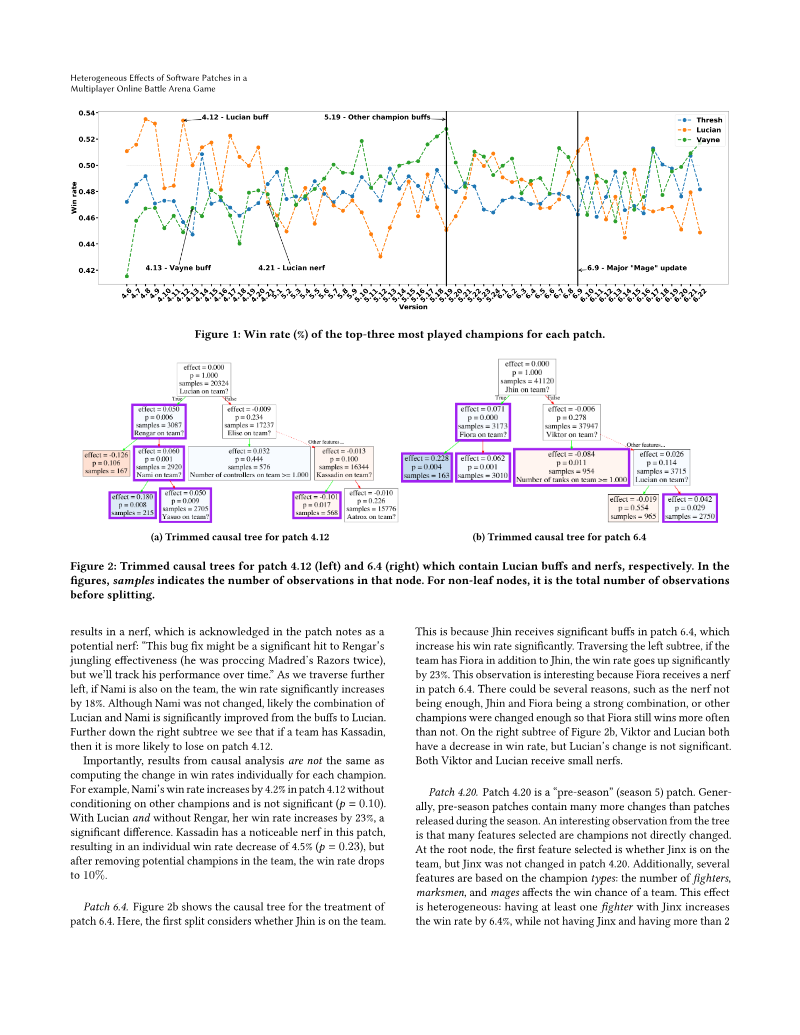
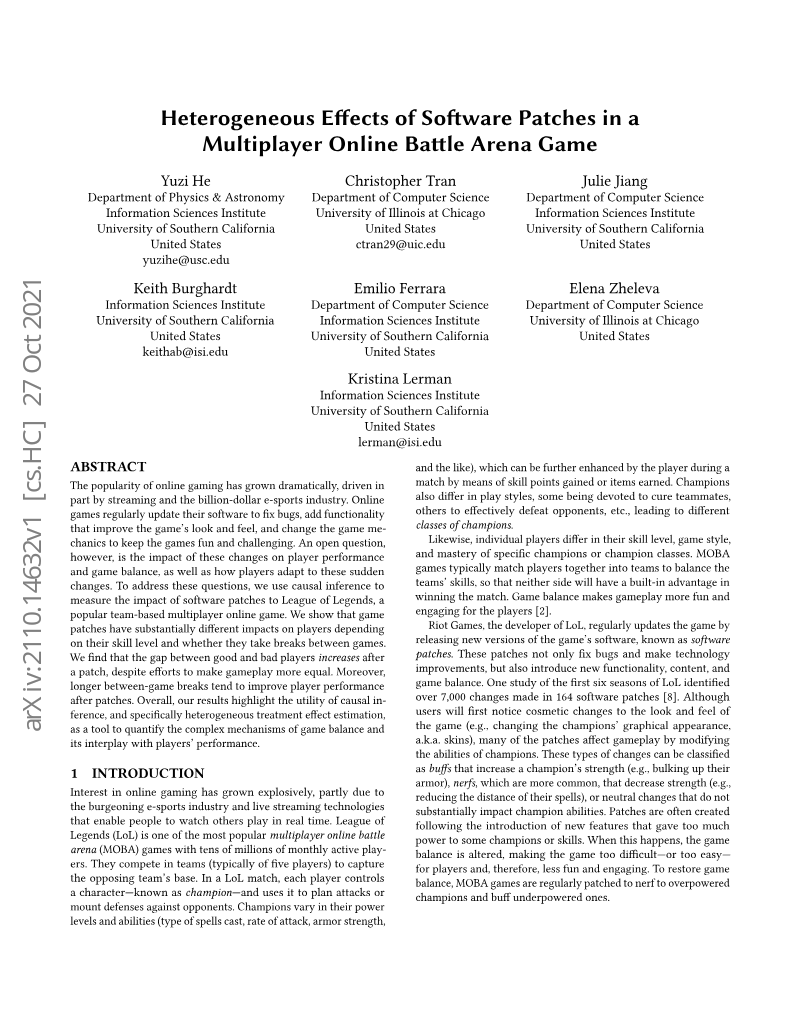
Heterogeneous Effects of Software Patches in a Multiplayer Online Battle Arena Game
Software patches in the Multiplayer Online Battle Arena genre exert complex, heterogeneous influences on competitive outcomes that frequently diverge from developer intentions.
- Software patches in League of Legends frequently fail to achieve intended equilibrium, often inadvertently widening the performance gap between high-skill and low-skill players.
- Modifications to a single champion create systemic ripple effects that alter the viability of untouched characters, making balance outcomes highly dependent on team composition.
- Player adaptation to new meta-conditions is significantly improved by taking longer breaks between matches, as continuous play hinders the cognitive recalibration required for systemic changes.
Effects of Mobile Platform on Female Engagement in MOBA Games
Mobile platforms serve as a critical catalyst for increasing female participation in the Multiplayer Online Battle Arena (MOBA) genre.
- In July 2017, the mobile MOBA game King of Glory (KoG) reached over 54 million daily active players and 163 million monthly active players, with females accounting for 54.1% of the player base.
- The mobile platform's inherent portability and convenience facilitate 'mobile socialization,' allowing players to engage in gaming as a social activity while physically together, which serves as a primary entry point for female players.
- Unlike PC-based MOBAs that often rely on text or voice chat, KoG's mobile environment encourages face-to-face social play, reducing the reliance on in-game communication with strangers.
Does Platform Matter? A Game Design Analysis of Female Engagement in MOBA Games
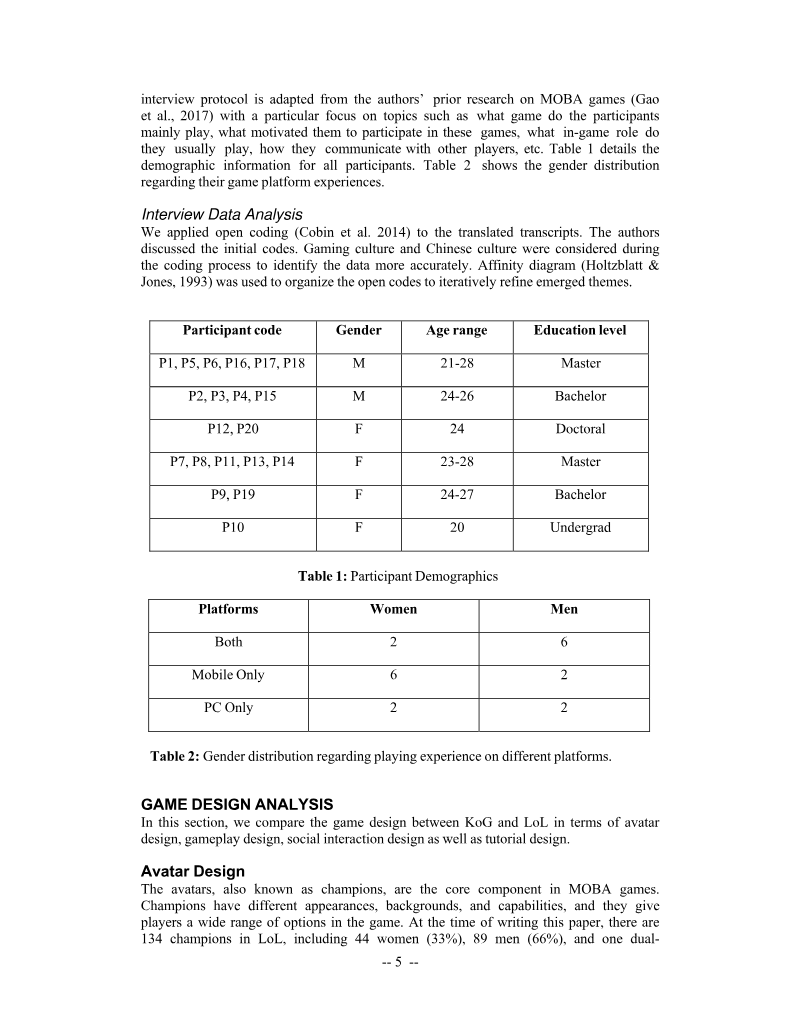
This analysis explores the factors contributing to the significantly higher female player engagement in the mobile Multiplayer Online Battle Arena (MOBA) game, King of Glory (KoG), compared to its PC counterparts like League of Legends (LoL).
- King of Glory, a mobile MOBA reportedly around 54% female in China, draws substantially more female players than League of Legends, a PC MOBA with roughly 35% female participation, despite similar core mechanics, suggesting platform shapes female engagement.
- King of Glory's accessibility advantages include simplified controls, fewer abilities, QQ and WeChat login integration, interactive tutorials, handheld mobility, and avatars that players found appealing.
- Interviewees identified sociability as a key draw of King of Glory, while serious players of either gender often preferred League of Legends for its complexity and teamwork demands.
Critically Approaching the Playful and Participatory Genealogy of MOBAs
The document critically analyzes the evolution of the Multiplayer Online Battle Arena (MOBA) genre, asserting that the term "MOBA" itself reflects a normalization of playful, cultural, and economic control within the gaming industry.
- DotA, a grassroots modding project on Blizzard's Warcraft III, is presented as the participatory origin of the MOBA genre, and the paper uses Foucault's dispositif and genealogical method to analyse its evolution.
- The paper argues that the move from DotA to League of Legends (released 2009) traded bottom-up creativity for accessibility, with Riot Games redefining the genre through top-down design that resisted DotA's emergent mechanics such as creep denying.
- DotA's competitive play was held back by missing features including reconnect functions, persistent accounts, and skill-based matchmaking, pushing its community toward paratextual clients that were hard for newcomers to access.
From Generative to Conventional Play: MOBA and League of Legends
The document examines the evolution of the Multiplayer Online Battle Arena (MOBA) genre, using League of Legends as a primary case study, to illustrate the transition from community-driven, "generative" game design to commercially refined, "conventional" play.
- The MOBA genre emerged from player-modders working in Warcraft III, most notably the DotA mod, whose design choices (removing base-building, standardizing 5v5 play, and using a single symmetrical map) were later commercialized.
- Ferrari positions League of Legends as the central MOBA case, citing it as the most played game by hours, supported by a professional competitive scene and a free-to-play model sustained by ongoing champion releases and data-driven balancing.
- Ferrari argues League of Legends constitutes conventional, exocentric play, with its team-based competition shaped by layered hidden and complex information.