Battle Arena
Documents

Squad Busters 2.0 and Supercell's YOLO Game Launch Strategy
Supercell’s Squad Busters 2.0 represents a strategic pivot from a casual, broad-market mobile game to a midcore-focused experience. The reboot introduces hero characters, cooldown-based abilities, and pre-match squad selection to inject tactical agency into a previously chaotic gameplay loop. By shifting from a match-three to a match-two mechanic and starting players with stronger units, the developers aimed to accelerate the time-to-kill and reduce the early-game resource-gathering phase. Despite these structural changes, the game continues to struggle with limited mode variety, persistent chaos, and a lack of depth that hinders long-term player mastery.
The development of Squad Busters reflects a shift in Supercell’s internal culture, moving away from its historical, highly rigorous internal feedback gauntlet toward a more aggressive, YOLO-style launch strategy. This approach prioritizes rapid market entry over extended soft-launch periods, a departure from the 18-month testing cycle that previously defined the company’s success with titles like Brawl Stars. The current iteration of the game is managed across three international studios—Helsinki, London, and Shanghai—yet it notably lacks cross-team collaboration with the successful Brawl Stars unit, highlighting challenges in institutional knowledge transfer within the maturing organization.
Financially and operationally, the launch is characterized as an unforced error, with monetization metrics falling below industry expectations at less than one dollar per download. The game’s progression systems, including town-building features that lack functional utility, remain disconnected from the core gameplay. While the reboot attempts to align the product with midcore preferences, the fundamental design remains caught between the strategic depth of auto-battlers and the real-time action of brawlers, resulting in a product that struggles to find a cohesive identity. The situation underscores the risks of abandoning long-term, iterative development in favor of rapid, post-launch pivots.
- Supercell has abandoned its traditional 18-month iterative testing cycle in favor of an aggressive 'YOLO' launch strategy, prioritizing rapid market entry over the rigorous internal feedback gauntlets that previously defined its success.
- Squad Busters 2.0 is underperforming financially, with monetization metrics currently falling below one dollar per download.
- The game suffers from a lack of cohesive identity, remaining caught between the strategic depth of auto-battlers and the real-time action of brawlers, which contributes to persistent issues with gameplay chaos and limited depth.
- Despite being managed across three international studios in Helsinki, London, and Shanghai, the project lacks cross-team collaboration with the successful Brawl Stars unit, indicating a failure in internal institutional knowledge transfer.
- The 2.0 reboot attempted to pivot toward a midcore audience by introducing hero characters, cooldown-based abilities, and pre-match squad selection, but these changes failed to resolve fundamental issues with mode variety and progression utility.
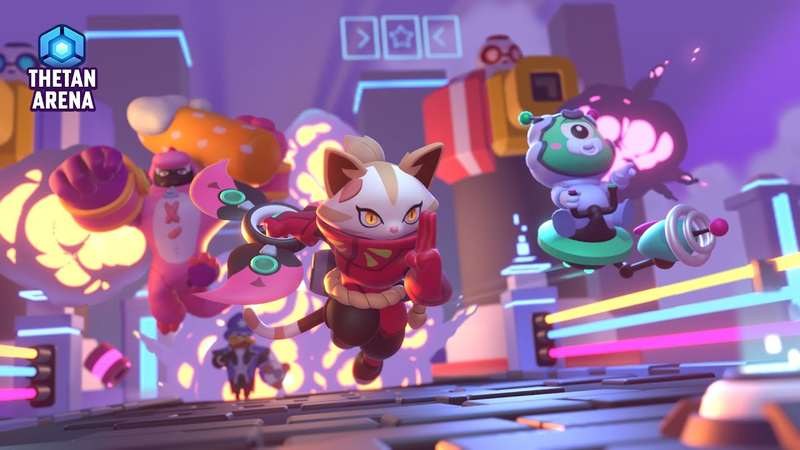
Deconstructing Thetan Arena - the game that combines F2P and P2E
Thetan Arena serves as a critical case study for revitalizing underperforming free-to-play titles by integrating blockchain-based play-to-earn mechanics. By repurposing the codebase of the struggling game Hero Strike, developers successfully bypassed the typical development hurdles faced by nascent crypto projects. This strategy allowed the studio to launch a polished, competitive experience that achieved 10 million downloads in just two months, significantly outperforming the four million downloads its predecessor accumulated over three years. The primary thesis suggests that blockchain integration acts as a potent marketing catalyst, enabling studios to scale user acquisition in competitive markets like Brazil and the Philippines.
Despite this rapid growth, the economic model faces substantial sustainability challenges. The current structure relies heavily on new capital inflows to subsidize the earnings of early adopters, creating inflationary pressure that mirrors the volatility seen in other prominent play-to-earn titles. Furthermore, the system imposes high entry costs and lifetime battle limits on NFT assets, which often results in net losses for average-skilled participants. This dynamic effectively forces the broader player base to subsidize top-tier players, leading to a model that critics argue functions more like gambling than a sustainable digital economy.
Long-term viability requires a fundamental shift away from developer-led currency sales toward a player-driven marketplace. While the game has successfully navigated app store restrictions by decoupling core gameplay from direct wallet integration, it currently lacks a mechanism to maintain token value and player equity. To transition from a speculative model to a stable ecosystem, the game must prioritize a fair value proposition for all participants rather than relying on the continuous recruitment of new investors. Ultimately, the project demonstrates that while blockchain can successfully scale a user base, it cannot replace the need for a balanced, player-centric economic design.
- Thetan Arena achieved 10 million downloads in two months by repurposing the codebase of the struggling game Hero Strike, which had only reached four million downloads over three years.
- Blockchain integration served as a powerful marketing catalyst for user acquisition, particularly in competitive markets like Brazil and the Philippines.
- The game's economic model faces sustainability issues due to inflationary pressure, as it relies on new capital inflows to subsidize the earnings of early adopters.
- High entry costs and lifetime battle limits on NFT assets often result in net losses for average-skilled players, effectively forcing them to subsidize top-tier participants.
- The project successfully navigated app store restrictions by decoupling core gameplay from direct wallet integration, though it currently lacks mechanisms to maintain long-term token value.