1 free read left. Create a free account for unlimited reading + AI research.
Create free accountWhitepaper DiGRA
1 free read left. Create a free account for unlimited reading + AI research.
Create free accountWhitepaperDiGRA
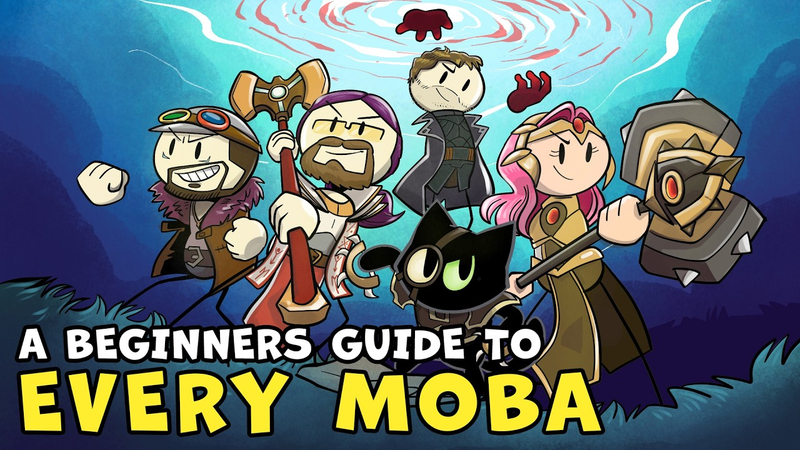
Simon Ferrari's 2013 DiGRA paper examines the multiplayer online battle arena (MOBA) genre through League of Legends, arguing that the genre emerged from player-modders working within Warcraft III, most notably the DotA mod, whose generative, exocentric design choices, including removing base-building, standardizing 5v5 play, and using a single symmetrical map, produced a form of play later commercialized. Drawing on play theory frameworks from Sutton-Smith, Zook et al., and Costikyan, the study positions League of Legends as the central case, noting its status as the most played game by hours, its professional competitive scene, and its free-to-play model sustained by ongoing champion releases and data-driven balancing.
The paper's analysis of the draft, opening, and laning phases contends that these ongoing additions and balance patches cultivate a form of "development anticipation" that sets League apart from other eSports. The draft is characterized as semi-transparent: team compositions and bans are visible, while masteries, runes, and internal team communication remain hidden. Early game phases are described as analytically dense, with uncertainty arising from asymmetric champion abilities, dueling, jungle ganks, and the difficulty of maximizing creep score. Ferrari concludes that team-based competition in League constitutes conventional, exocentric play shaped by layered hidden and complex information.
Applying Costikyan's theory of uncertainty, the study identifies several interacting sources of tension: puzzle-like creep-score optimization, the fog of war combined with unpredictable player behavior, and high-stakes teamfights driven by motor skill and performative uncertainty. The paper finds, however, that late-game narrative anticipation is weakened by positive-feedback snowballing, which often yields one-sided endgames, though spectator commentary and streaming partly restore dramatic tension.
Each row is a game or company this document names, each column a document, oldest first. A mark means that document names it. Select a row to see those documents.
DiGRA · 2016
DiGRA · 2016
DiGRA · 2016



DiGRA · 2016



DiGRA · 2016



DiGRA · 2016



DiGRA · 2016



DiGRA · 2016



DiGRA · 2016

DiGRA · 2015



DiGRA · 2015



DiGRA · 2015
Game Developers Conference · 2017