Axie Infinity
Game
Documents about Axie Infinity

two & a half gamers session #12 - Metacore 65M loss, Niantic 1 hit wonder, Industry conference guide
The gaming industry currently faces significant challenges regarding marketing efficiency, platform monetization, and the long-term viability of major titles.
- High-budget TV advertising is not a guaranteed path to profitability, as evidenced by Metacore incurring a $65 million loss despite significant revenue growth.
- CD Projekt Red experienced a 63% year-over-year revenue decline, highlighting the difficulty of maintaining long-term financial momentum following a troubled product launch.
- Security vulnerabilities remain a critical industry risk, exemplified by the $600 million Axie Infinity crypto heist attributed to state-sponsored actors.
Two & a Half Gamers Session #12: Metacore, Niantic, and Industry Conference Guide
This podcast episode provides a candid, informal analysis of current events and strategic trends within the mobile gaming industry as of April 2022.
- Metacore incurred a $65 million loss despite a $20 million investment in television advertising, highlighting the challenges of scaling user acquisition through traditional media.
- The Ronin Network bridge exploit resulted in a $600 million loss for Axie Infinity, with investigations linking the heist to North Korean actors.
- CD Projekt Red reported $207 million in revenue for the 2021 fiscal year, reflecting the financial performance of major industry players during that period.

Breaking Point
The gaming industry’s push into non-fungible tokens (NFTs) and blockchain-integrated titles is failing to gain meaningful traction, despite significant venture capital investment and corporate posturing.
- Ubisoft has ended support for Ghost Recon Breakpoint, effectively rendering its NFT-based 'Quartz' cosmetics worthless shortly after the company claimed it was seeing the 'endgame' for the platform.
- Major blockchain gaming projects are experiencing significant user declines, with Axie Infinity daily average users falling 30% in one month to approximately 107,000, and The Sandbox reporting a 29% drop to just 1,180 daily active users.
- Activision Blizzard is transitioning temporary QA staff to full-time contracts with pay increases, though the company has excluded the unionized cohort at Raven Software from this offer, citing legal obligations.
Axie Infinity NFT Sales Jump 350% Amid Game’s Reported Struggles to Retain Players
The provided text examines the paradoxical market performance of the blockchain game Axie Infinity in April 2022, contrasting a sudden surge in NFT trading volume with a broader, systemic decline in user retention.
- Axie Infinity NFT sales volume surged over 350% in a 24-hour period following developer Sky Mavis' announcement of a $150 million fundraising effort to address a $625 million Ronin Network hack.
- Despite the spike in NFT sales, Axie Infinity experienced a 30% decline in daily active users (DAU) over the month leading up to April 2022, falling to approximately 107,240 players.
- The volatility in player retention highlights a structural reliance on financial earnings rather than organic gameplay engagement, distinguishing blockchain titles from traditional games like Fortnite or Candy Crush.
LIVE | Worker's Right in the Game Industry
The global game industry is currently navigating a period of profound instability, defined by the intersection of speculative financial technologies and a fundamental restructuring of labor relations.
- The game industry is experiencing a fundamental restructuring of labor relations, marked by widespread unionization and walkouts at major firms like Activision Blizzard to combat crunch and toxic management.
- A generational divide has emerged between younger workers prioritizing workplace culture and flexibility and industry veterans concerned that eroding traditional hierarchies may undermine mentorship and project stability.
- Blockchain-based gaming remains highly vulnerable to security risks, exemplified by the $600 million theft from Axie Infinity, where human error and social engineering often bypass technical safeguards.
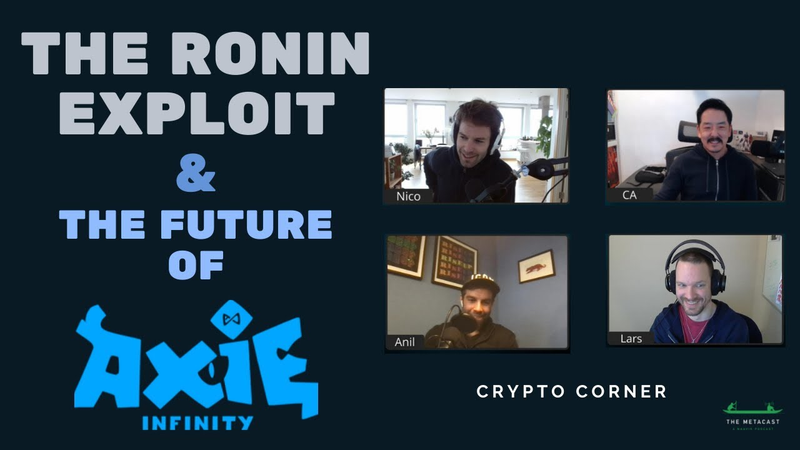
The Ronin Exploit & The Future of Axie Infinity - The Metacast by Naavik
The $625 million exploit of the Ronin network serves as a critical case study in the vulnerabilities inherent to blockchain bridge architecture and operational security.
- The $625 million Ronin network exploit, involving the theft of 170,000 ETH and 25 million USDC, was caused by a compromise of five out of nine validator nodes.
- The breach highlights a critical failure in IT security and internal monitoring rather than a fundamental flaw in blockchain technology, emphasizing the risks of centralized infrastructure in decentralized gaming.
- Axie Infinity is pivoting its business model away from speculative, growth-based revenue toward a 'fun-first' approach focused on long-term engagement and entertainment value.
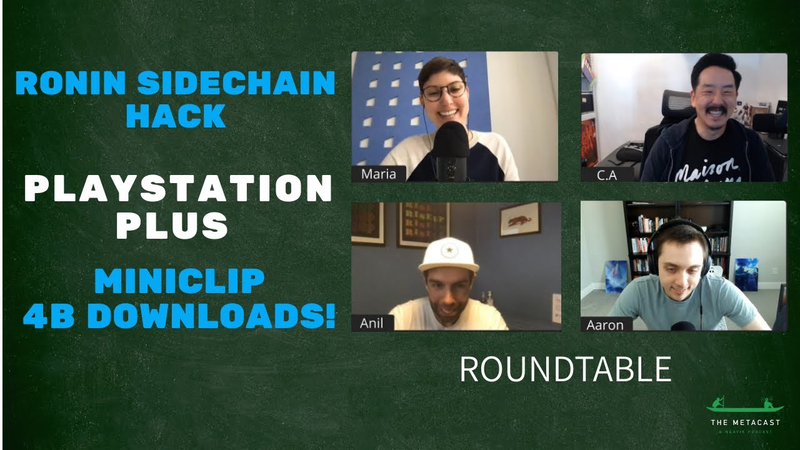
PlayStation Subscriptions: The Good, the Bad and the Strategy - The Metacast by Naavik
The Web3 gaming sector faces a critical inflection point following the $620 million Ronin network hack.
- The $620 million Ronin network hack highlights a critical need for Web3 developers to prioritize decentralized infrastructure and rigorous security audits over rapid development cycles.
- Sony’s PlayStation Plus strategy focuses on user retention through a curated library of legacy content, deliberately avoiding day-one access to new exclusives to protect the traditional console model.
- Microsoft’s Game Pass strategy pursues a platform-agnostic, Netflix-style model that prioritizes cross-device accessibility and immediate release value over traditional console exclusivity.

NFT games: Future or Crisis?
The analysis examines the rise of non-fungible token (NFT) games, arguing that while the sector attracts significant capital and corporate interest, it faces skepticism from both developers and players.
- NFT sales reached approximately $25 billion in 2021, driven by significant capital inflows and an 800% valuation increase for major marketplaces like OpenSea following a $300 million funding round.
- Despite the financial surge, only 30% of game studios express interest in developing NFT-integrated projects.
- Consumer adoption remains cautious, with a survey of 1,500 console and PC gamers showing that only 56% of hardcore players are willing to earn NFTs through gameplay.

Mobile Game Trends in 2022: It’s Now or Never
Mobile game growth in 2022 is projected to stabilize after the pandemic-driven boom of 2021, with key shifts shaping the sector.
- Apple’s privacy updates have significantly increased user acquisition costs, forcing developers to pivot from traditional targeting toward influencer marketing and live-streaming on platforms like TikTok, Twitch, and YouTube.
- The Play-to-Earn (P2E) model is becoming a mainstream revenue stream and employment alternative in underdeveloped markets, with some players in regions like the Philippines earning up to $3,000 monthly from titles such as Axie Infinity.
- Non-gaming giants including Netflix, Amazon, TikTok, Google, and Apple are aggressively entering the gaming space, evidenced by Amazon’s 'New World' reaching 700,000 concurrent players and TikTok campaigns like #GiftOfGame generating 2.5 billion views.

PlayStation's Game Pass: Making Sense of Sony's Subscription Strategy
The primary objective of this analysis is to evaluate Sony’s strategic shift toward a tiered subscription model for PlayStation, positioning it not merely as a reactive move against Microsoft’s Xbox Game Pass, but as a necessary adaptation to macroeconomic pressures.
- Sony is shifting to a tiered subscription model to stabilize revenue against macroeconomic pressures like inflation and supply chain volatility, moving away from the debt-heavy cycles of traditional hardware launches.
- Sony’s gaming division currently generates $2.8 billion in quarterly digital revenue, which accounts for approximately 50% of the division's total earnings.
- While Sony’s subscription service offers a larger library of 400 titles compared to Microsoft’s 100+, its reliance on 40-hour single-player campaigns creates a retention challenge compared to Microsoft’s live-service model.

EX Plus Alpha
The March 2022 announcement of Sony’s overhauled PlayStation Plus subscription service represents a significant strategic misstep, characterized by confusing branding, high pricing, and a lack of compelling value.
- Sony’s overhauled PlayStation Plus subscription service lacks day-and-date first-party releases, signaling that the company will maintain its existing high-cost business model rather than directly competing with Microsoft’s Game Pass.
- The new service structure is criticized for confusing branding and a high price point, with the premium tier costing 20% more per month than Xbox Game Pass Ultimate.
- Funomena is closing its doors following an investigation into CEO Robin Hunicke’s leadership, resulting in the termination of contractors and staff.
What We Know About Axie Infinity: Origin So Far
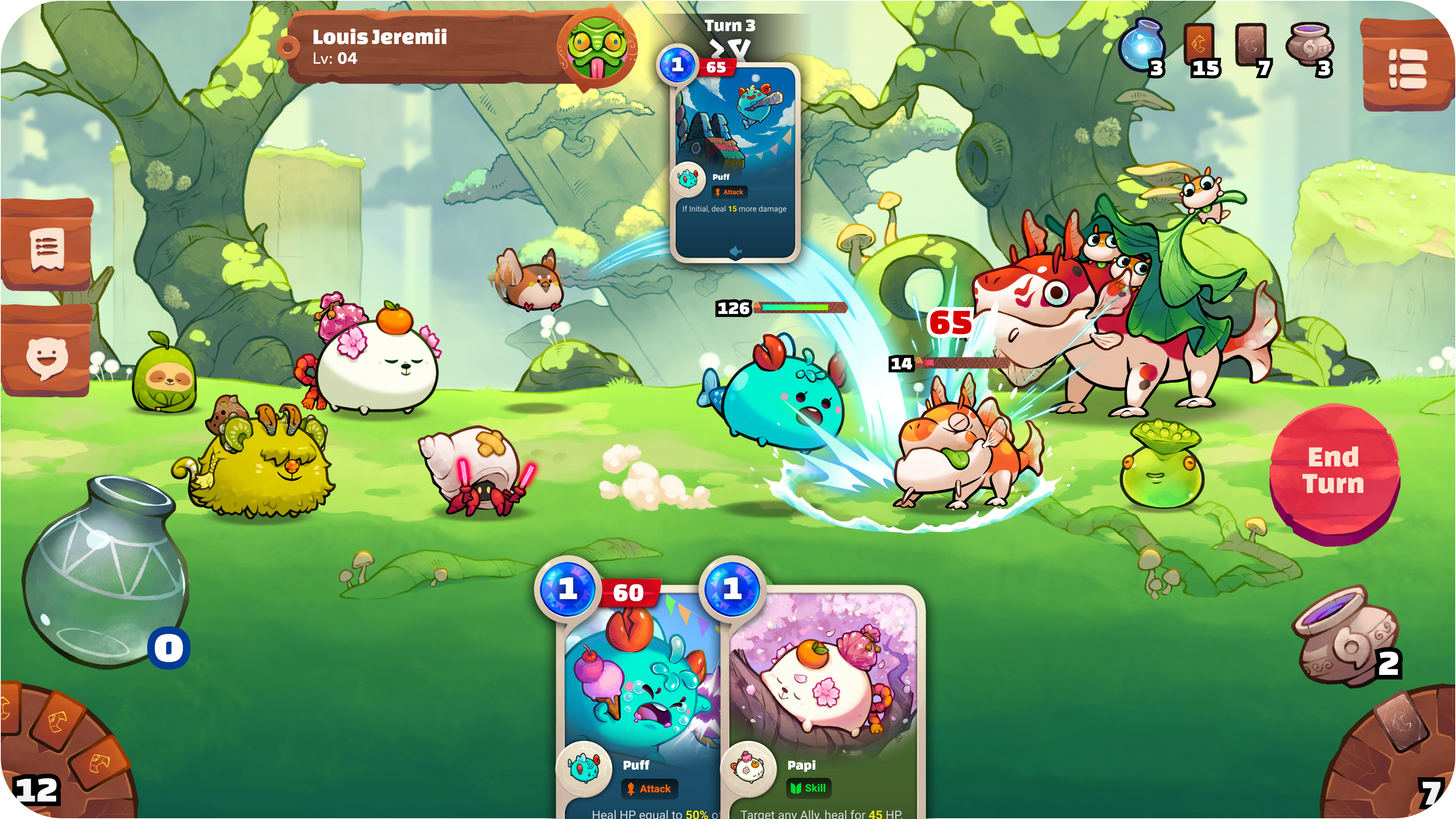
The introduction of Axie Infinity: Origin represents a strategic pivot for Sky Mavis, aiming to transition the title from a niche play-to-earn model toward a mainstream, free-to-play (F2P) mobile card battler.
- Sky Mavis is launching 'Origin' (Battle V3) to pivot Axie Infinity toward a free-to-play (F2P) mobile card battler model, aiming to scale its userbase beyond the existing crypto-native audience.
- The update introduces three non-NFT starter Axies to lower the barrier to entry, replacing the previous requirement for new players to purchase three NFTs, which historically cost significantly more.
- To address SLP token inflation, Sky Mavis is implementing a new power-up system using 'Runes and Charms' that requires players to spend in-game resources and eventually SLP to enhance their Axies.