Axie Infinity
Game
Documents about Axie Infinity

5 Reasons Why I Became Bullish on Blockchain Gaming
The primary purpose of this analysis is to articulate a shift in perspective regarding blockchain gaming, moving from skepticism to advocacy by highlighting how digital asset ownership fundamentally alters the player-developer relationship.
- Blockchain gaming shifts the player-developer relationship by replacing traditional free-to-play sunk costs with digital asset ownership and potential liquidity.
- True scarcity in blockchain models allows developers to maintain long-term asset value, providing an alternative to the traditional industry reliance on power creep.
- The ability to trade and cash out digital assets mitigates buyer's remorse and reduces the repetitive fatigue often associated with live-service games.
When Lambo: Axie's $152M Raise and Amazon's Content Curse
The gaming industry is currently experiencing a period of unprecedented financial abundance, characterized by record-breaking venture capital investment and high consumer spending.
- The gaming industry saw record venture capital investment in the first nine months of 2021, with approximately $9 billion raised across nearly 500 deals.
- Sky Mavis secured $152 million in Series B funding at a $3 billion valuation, yet Axie Infinity's sales volume dropped 39% from $848 million in August to $518 million in September 2021.
- Amazon’s New World reached over 900,000 concurrent players, marking a significant milestone for the company after previous failures like Crucible.

Crypto Is a Space Race: Buying into Something Better
The current state of the video game industry is characterized by a transition into a new cycle driven by blockchain technology and social-centric digital systems.
- Axie Infinity dominates the gaming NFT market, accounting for 83 percent of all game-related NFT volume with over $2 billion in total sales.
- Investor confidence in blockchain gaming remains high, evidenced by Dapper Labs raising $250 million at a $7.6 billion valuation and Sorare securing $680 million in funding.
- Wizards of the Coast demonstrates that legacy brands can thrive by leveraging evergreen IP like Dungeons & Dragons, reporting $816 million in revenue with high profit margins.
Sky Mavis’ NFT Game Generates $2 Billion in Sales
The rapid commercial ascent of the strategy mobile game Axie Infinity highlights the significant market potential of blockchain-integrated gaming.
- Sky Mavis’ strategy game Axie Infinity generated over $2 billion in sales, establishing it as a leading title in the NFT collectibles market as of September 2021.
- The game facilitates a play-to-earn model where over 600,000 merchants have engaged in more than 4.8 million NFT transactions.
- Player-owned assets are central to the game's economy, requiring users to purchase at least three character NFTs to participate in battles and earn AXS and SLP tokens.
TWIG 149: Reaction to Axie Infinity’s $1.2 Billion Annualized Revenue
The current landscape of blockchain-based gaming is characterized by extreme volatility, speculative hype, and a lack of sustainable business models.
- Current blockchain gaming models like Axie Infinity rely on a constant influx of new users to maintain liquidity, creating a fragile ecosystem that risks collapse once growth plateaus.
- Axie Infinity’s annualized revenue figure of $1.2 billion is widely criticized as a misleading metric that conflates short-term speculative spikes with sustainable business performance.
- NBA Top Shot serves as a cautionary example of volatility, with monthly gross sales plummeting from $230 million to $34 million within a few months.
The Evolution of Steam Tags
This analysis examines the strategic importance of Steam’s evolving taxonomy and the shifting economic landscape of the virtual reality and console markets as of mid-2022.
- Steam’s community-driven tagging system has become a superior discovery engine for its library of nearly 100,000 titles, with recent trends favoring granular subgenres like Action Roguelike, Colony Sim, and Deckbuilding.
- Meta increased the price of the Quest 2 by $100 to prioritize profitability over market share, following a $10 billion loss in its Reality Labs division during 2021.
- The VR market shows a clear preference for standalone hardware, evidenced by Ultrawings 2 selling ten times more units on Quest than on PC VR.
In FIFA v EA, Fans Lose
The termination of the thirty-year partnership between Electronic Arts (EA) and the football governing body FIFA marks a significant shift in the sports gaming landscape.
- EA’s Ultimate Team mode, a critical revenue driver, grew from $587 million in 2015 to $1.6 billion in 2021, underscoring the high financial stakes of the brand transition to EA Sports FC.
- Live services now account for 85% of EA’s $1.75 billion in quarterly bookings, providing a stable financial foundation as the company navigates the loss of the FIFA brand.
- FIFA faces significant financial risk from the split, as EA’s $150 million annual licensing fee represented the governing body's largest single income category.
All Aboard the Axie Infinity Hype Train
This analysis examines the volatile intersection of blockchain technology and traditional gaming, focusing on the rapid rise of Axie Infinity and the broader strategic shifts among major tech platforms.
- Axie Infinity’s play-to-earn model faces long-term viability challenges as competitors like Illuvium introduce more sophisticated financial structures, such as double-sided staking.
- Valve’s Steam Deck poses a direct competitive threat to the $11 billion gaming laptop market.
- Historical industry trends suggest that gaming 'sensations' often struggle to maintain long-term valuations comparable to established media giants like Disney.
All You Need to Know About DGaming
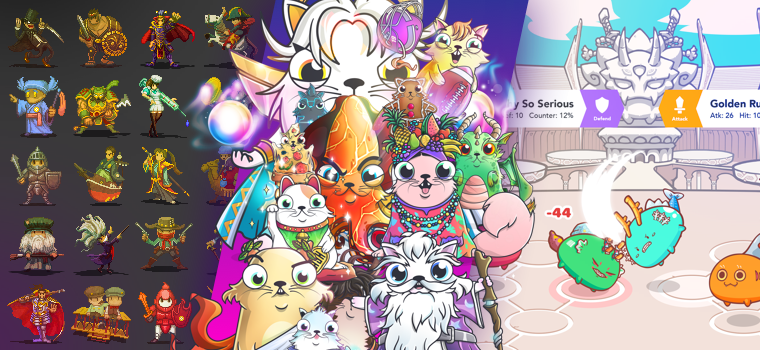
Decentralized gaming, or DGaming, represents an emerging sector of the video game industry characterized by the integration of blockchain technology.
- DGaming utilizes blockchain technology to provide players with full ownership of in-game assets, removing the developer's ability to alter, revoke, or restrict items.
- Smart contracts enable secure, peer-to-peer trading of digital assets without third-party intermediaries, effectively eliminating the risk of fraud in secondary markets.
- Blockchain integration allows players to earn real-world value from in-game activities, transforming gaming from a leisure activity into a potential source of income.