windows
Company
Documents about windows
Puzzle Monthly #4: $60M Marketing, $65M Revenue, What Happened to Good Job Games?
Good Job Games represents a cautionary case study in the mobile puzzle market, illustrating the limitations of prioritizing rapid asset exits and visual polish over sustainable, player-centric design.
- Good Job Games' title Match Villains generated $65 million in lifetime revenue but likely operated at a loss, as marketing expenditures for the project reached $83 million.
- The studio's failure to compete with industry leaders like Royal Match stems from a reliance on aggressive, punishing level design that prevents the retention of high-value users.
- Match Villains suffered from flat revenue-per-download metrics and an over-reliance on lower-tier geographic markets, preventing the game from achieving necessary scale.
The State of App Monetization: 2026 Edition
The global mobile application landscape is undergoing a fundamental structural shift as developers pivot toward subscription-based revenue models to ensure long-term sustainability.
- Subscription revenue grew by 105% YoY in Q1 2026, significantly outpacing ad revenue (14% growth) and in-app purchase (IAP) revenue (29% growth). This growth was broad-based, with 71% of accounts seeing subscription revenue increases.
- The share of subscription revenue in the overall revenue mix for multi-stream apps nearly doubled from 4% to 7% over 15 months, while ad revenue's share compressed from 63% to 57%.
- Casino apps show a Day 90 IAP ARPU of $2.43, almost double that of Casual games ($1.34). At the payer level, Casino ARPPU globally reached $11.40, comparable to Non-Gaming subscription ARPPU ($10.85).
Stop Briefing the AI Every Monday Morning
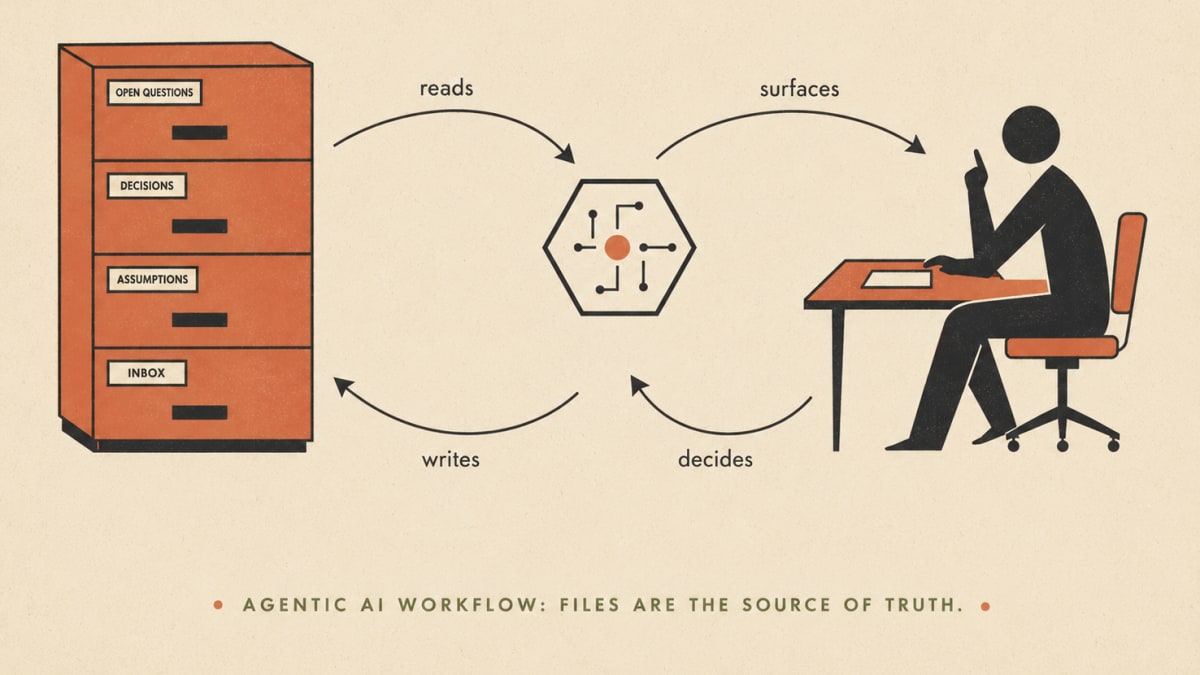
The primary thesis of this analysis is that current agentic AI workflows in game production are fundamentally flawed due to a reliance on volatile context windows rather than durable, externalized state management.
- Many agentic AI workflows fail because they treat the AI's context window as persistent storage, leading to a loss of information between sessions, similar to a computer's RAM being cleared.
- The common practice of re-briefing AI at the start of each session indicates a fundamental design flaw, as the AI should not require re-explanation of ongoing project states.
- A structural fix involves making the AI a stateless processor that reads from and writes to durable, human-readable external files (e.g., markdown files) for memory and state management.
Nigerian Studio Inuv8 Unveils Project OVERRIDE
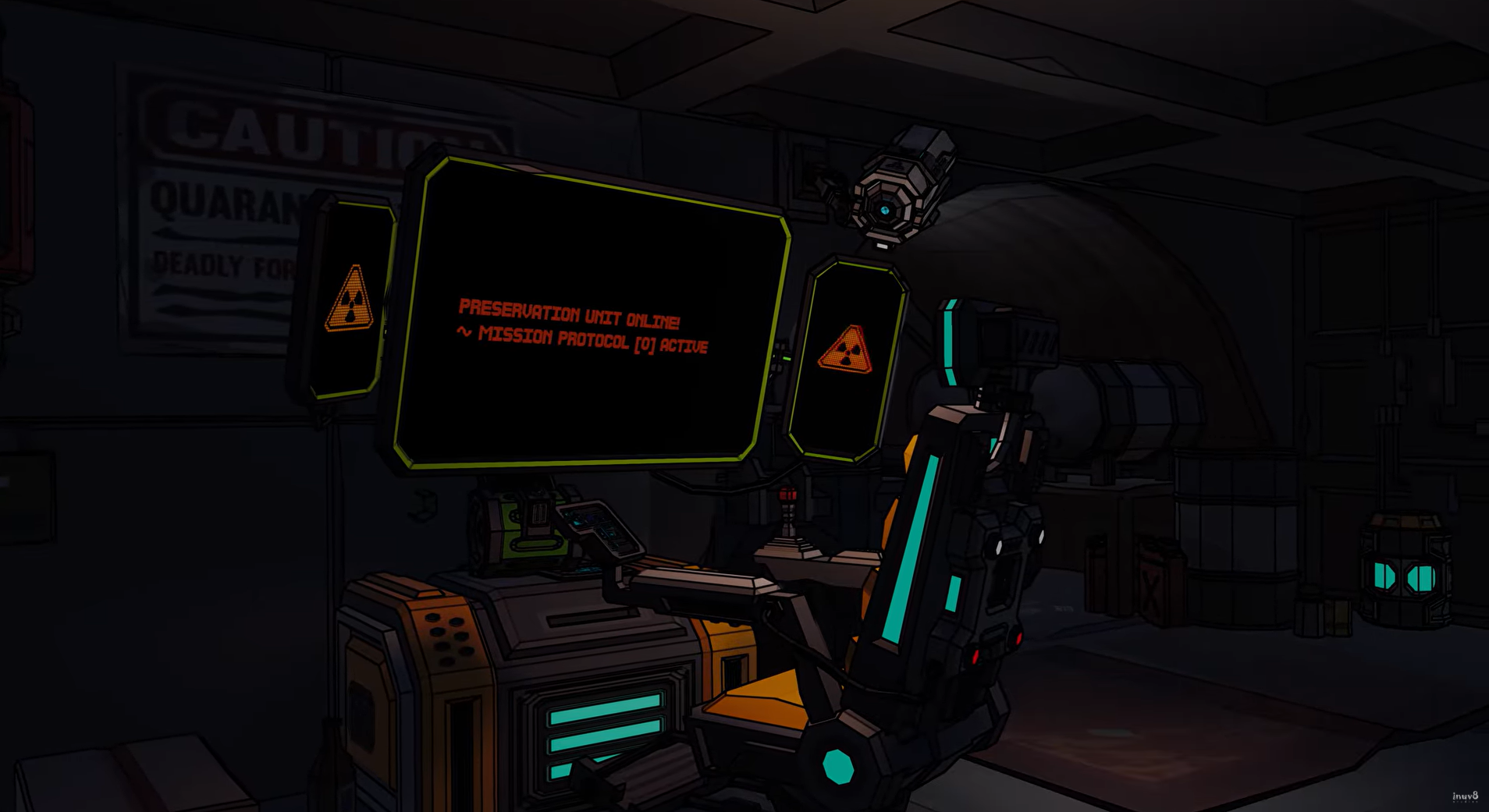
Inuv8 Studios, a Nigerian game development team led by Daniel Shontan, has officially announced its latest project, a narrative-driven science fiction adventure titled Project OVERRIDE.
- Nigerian developer Inuv8 Studios has announced Project OVERRIDE, a narrative-driven science fiction adventure set in a post-collapse, dystopian world.
- The project is currently in the pre-alpha stage of development and focuses on themes of mystery and the long-term consequences of human history.
- Inuv8 Studios is actively seeking publishers and industry partners to support the continued development of the title.
Valor Mortis: Postponement and Development Strategy
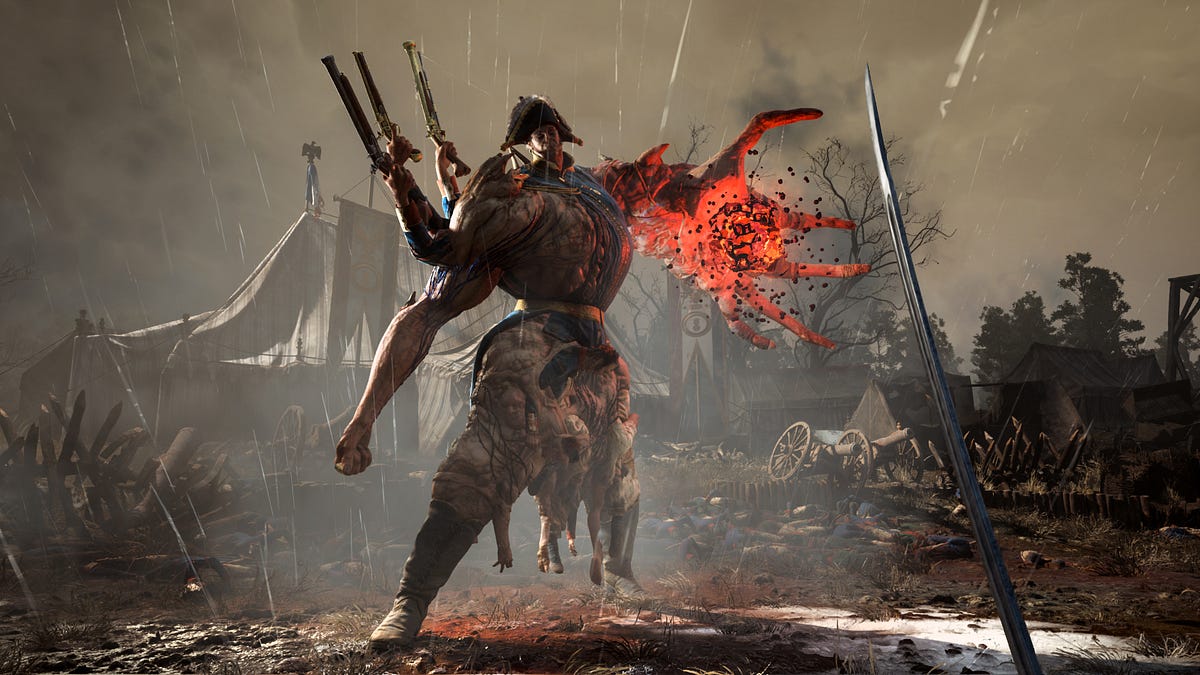
Valor Mortis, an action title from Lyrical Games and One More Level that blends Dark Souls-style combat with parkour in a Napoleonic-era undead setting, was originally slated for release on September 24.
- Lyrical Games and One More Level postponed the release of Valor Mortis from September 24 to October 13, 2026, to avoid a crowded market window.
- The original September 24 release date became untenable after Remedy’s Control claimed the same launch slot, creating a high-risk 'September crush'.
- The decision to reschedule was driven by the crystallization of the competitive landscape following major industry events like Summer Games Fest and various platform showcases.
Match Masters' Secret Growth Engine? Influencer Marketing
Influencer marketing has evolved from a peripheral experimental tactic into a core, permanent growth pillar for mobile gaming studios.
- Influencer marketing acts as a core growth engine that can drive up to 30% growth in organic installs by leveraging creator-led trust to attract higher-quality, more engaged users.
- Short-term attribution models significantly undervalue creator partnerships, as influencer-driven installs can continue to accrue for over a year, with some campaigns seeing a 50% increase in attributed installs by day 365.
- Influencer activity creates a positive feedback loop where install spikes improve app store rankings, which subsequently fuels further organic discovery and stabilizes daily active users.
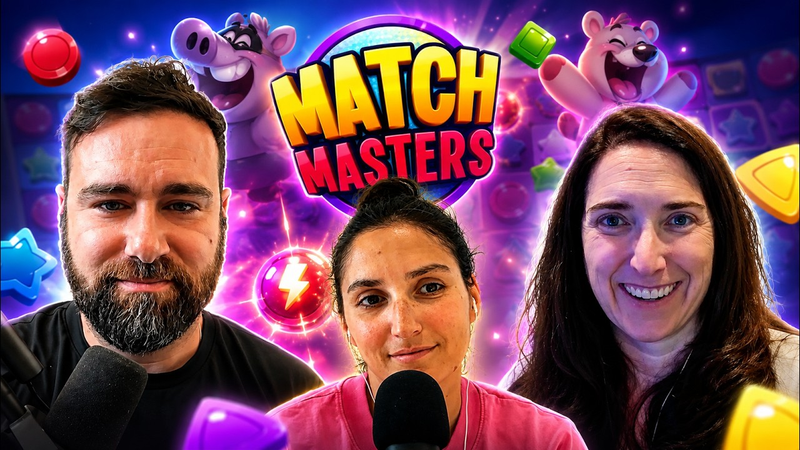
Match Masters' Influencer Marketing Playbook: 8 Years of Always-On Growth
Sustainable growth in the mobile gaming industry requires transitioning influencer marketing from an experimental tactic into a permanent, always-on pillar of the acquisition strategy.
- Transitioning influencer marketing from an experimental tactic to an always-on strategy is critical, as abandoning these programs can accelerate install declines by nearly threefold.
- Deploying a blitz approach, where multiple creators publish content simultaneously, triggers organic uplift and improves App Store rankings while enhancing the efficiency of paid user acquisition.
- Influencer marketing functions as a 'brandformance' tool, attracting higher-intent users who demonstrate superior retention rates compared to those acquired through traditional paid media.
Conversion Drivers in Videogames: Q1 2026
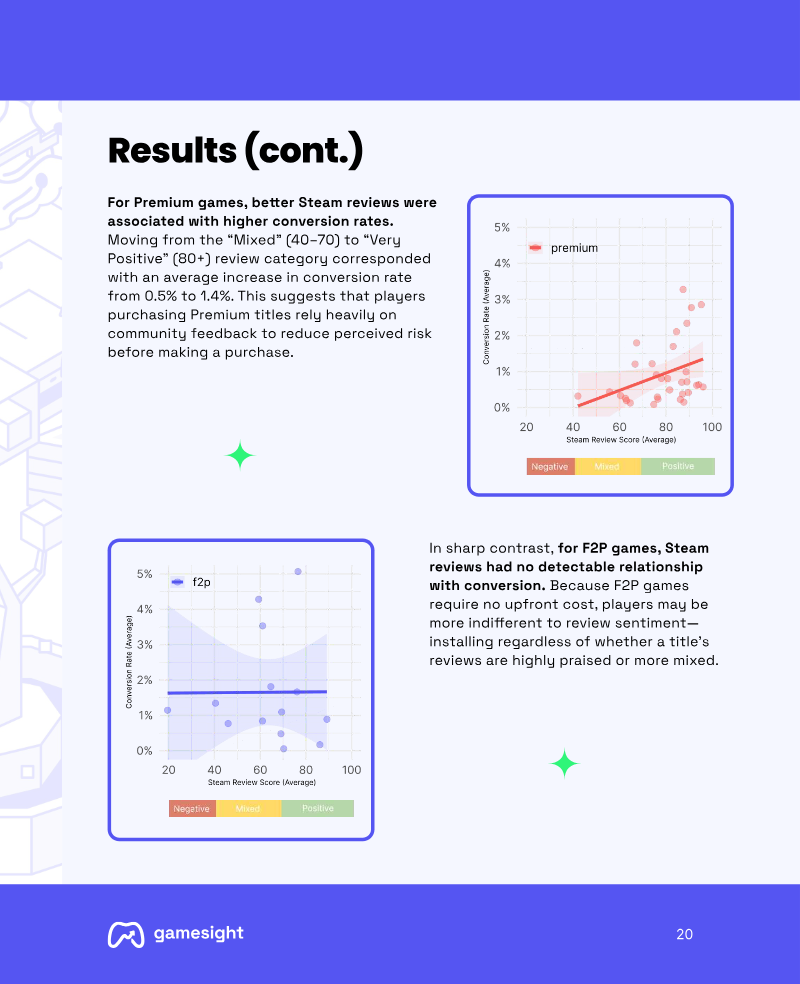
Marketing strategy and community sentiment serve as the primary determinants of conversion performance in the global video game industry as of early 2026.
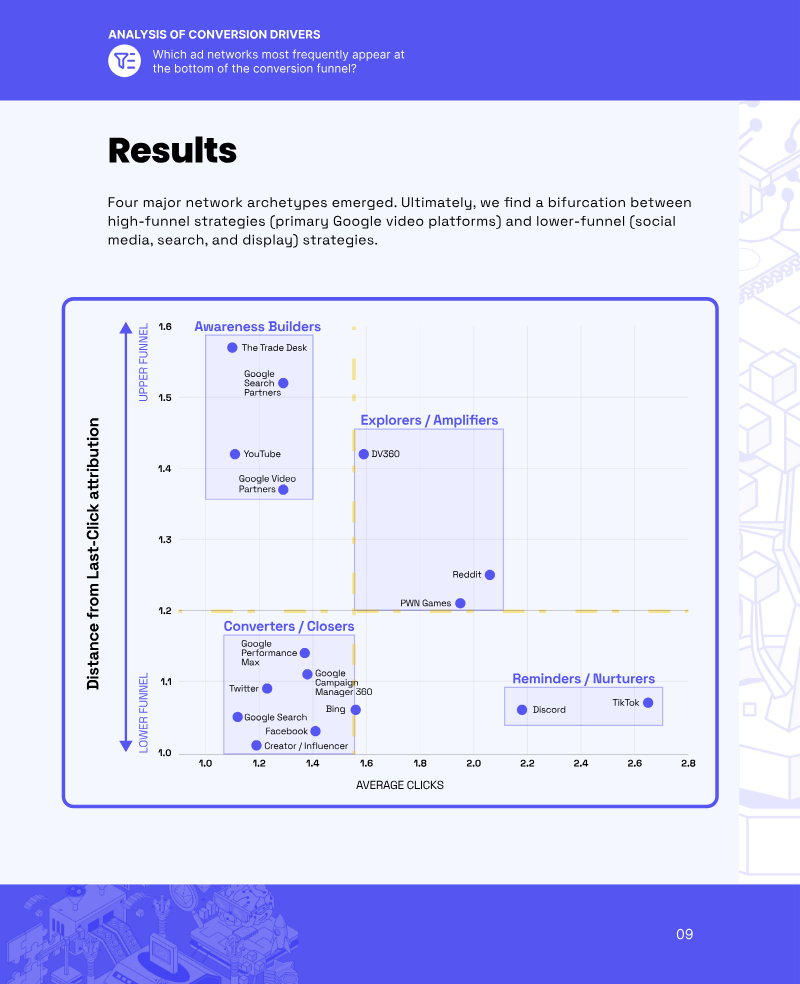
- Marketing execution is the primary driver of performance, with conversion rates for F2P games varying by 371x across different ad networks, dwarfing the 35% baseline advantage F2P titles hold over Premium games.
- Last-click attribution models undervalue upper-funnel awareness channels like YouTube, as 50% of the most popular demand-generating ad networks are not effectively captured by last-click metrics.
- Premium games priced above $40 require nearly twice the conversion window of mid-tier titles, and players take 27% longer to convert on Premium titles (141 hours) compared to F2P titles (111 hours).
The Discovery Problem | Design Club
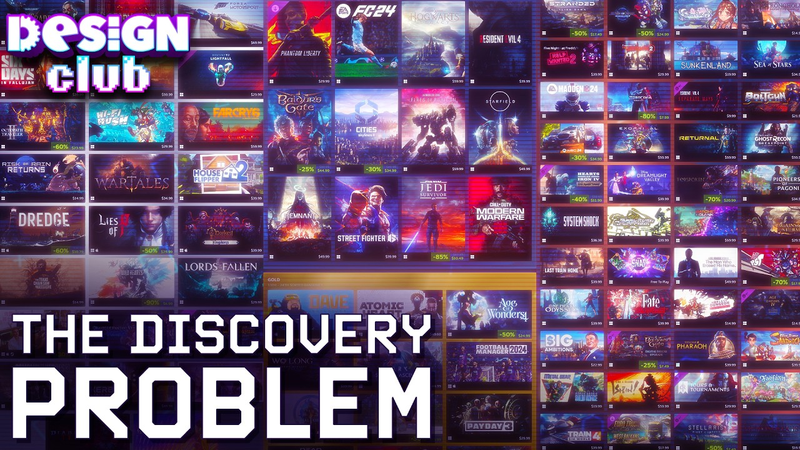
The primary challenge for independent game developers in the current digital landscape is navigating the discovery problem, which remains a manageable hurdle for those targeting the dedicated Steam audience.
- The primary driver of game discovery is the ability for players to immediately identify a game's genre and hook from its store page, as shoppers make rapid decisions based on visual clarity.
- Steam's algorithm prioritizes games based on opportunity cost, meaning even highly-rated games may struggle for visibility if they fail to convert impressions into sales compared to other available titles.
- Steam's discovery queue is effective because it targets 'tastemakers'—highly engaged players who act as gatekeepers; if these users engage with a title, they often drive organic growth through word-of-mouth recommendations.
The Xbox and PlayStation Games with 1M+ Sold on Steam Since 2023
This analysis examines the performance of Xbox and PlayStation titles on Steam since 2023, focusing on games that have surpassed one million units sold.
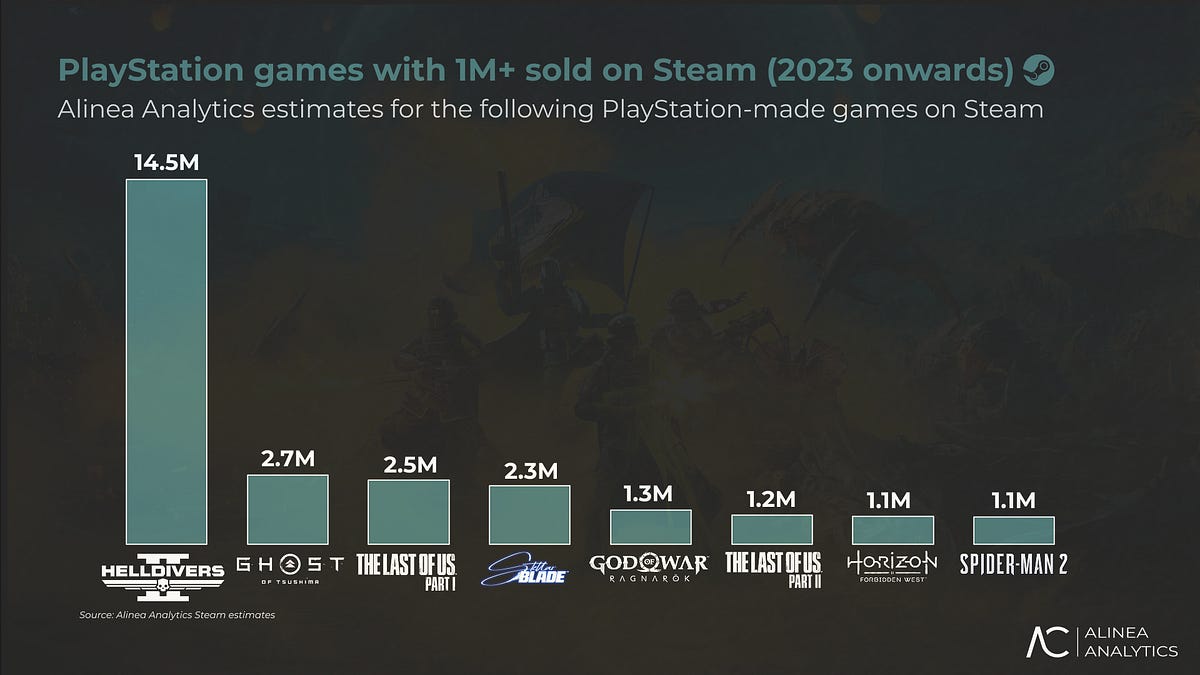
- Sony’s Helldivers 2 has sold 14.5 million copies on Steam, generating nearly $500 million and accounting for 40% of the units sold by Sony and Microsoft titles in the 1 million+ club since 2023.
- PlayStation’s prestige single-player ports are experiencing diminishing returns on Steam, with newer releases like God of War Ragnarok and Horizon Forbidden West selling at significantly lower velocities than earlier ports like the original God of War and Horizon Zero Dawn.
- Ghost of Tsushima Director’s Cut has achieved 2.7 million Steam sales, demonstrating that a longer gap between console and PC release can help preserve the novelty premium and drive sustained revenue.
Brutally Honest #207
The newsletter provides tactical guidance for mobile user acquisition (UA) managers, focusing on optimizing campaign performance in a post-IDFA environment.
- Optimize Google Ads performance by shortening attribution windows to 7 days for purchase events and 1 day for ad impressions to accelerate feedback loops, rather than relying on the 90-day default.
- Utilize a 28-day purchase attribution window for Applovin campaigns to effectively support blended ROAS optimization.
- Scale high-quality ad creative production by integrating AI image generation models such as Google’s Nano Banana, ByteDance’s Seedream, and Tencent’s Hunyuan.
UA Monthly #2: AppLovin's Social Network, Google Fee Cuts & Unity Vector
Unity is aggressively challenging the current user acquisition landscape by introducing D28 in-app purchase ROAS campaigns powered by its Vector engine.
- Unity is testing D28 in-app purchase ROAS campaigns using its Vector engine, moving beyond the industry-standard seven-day optimization window to better identify high-value players.
- Google has reduced Play Store fees from 30% to 20% for new installs, providing developers with marginal improvements in unit economics and increased bidding power for user acquisition.
- AppLovin is exploring expansion into e-commerce and social networking to secure first-party inventory, though analysts view this as a high-risk departure from its core B2B ad-tech expertise.