1 free read left. Create a free account for unlimited reading + AI research.
Create free accountReport Gamesight
1 free read left. Create a free account for unlimited reading + AI research.
Create free accountReportGamesight
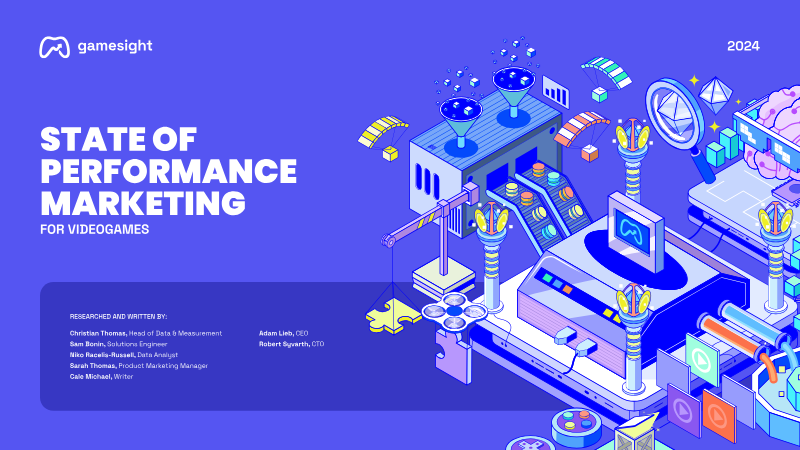
Traditional attribution undervalues upper-funnel awareness channels.
Attribution gap. 50% of the most popular demand-generating ad networks are not effectively captured by last-click metrics.
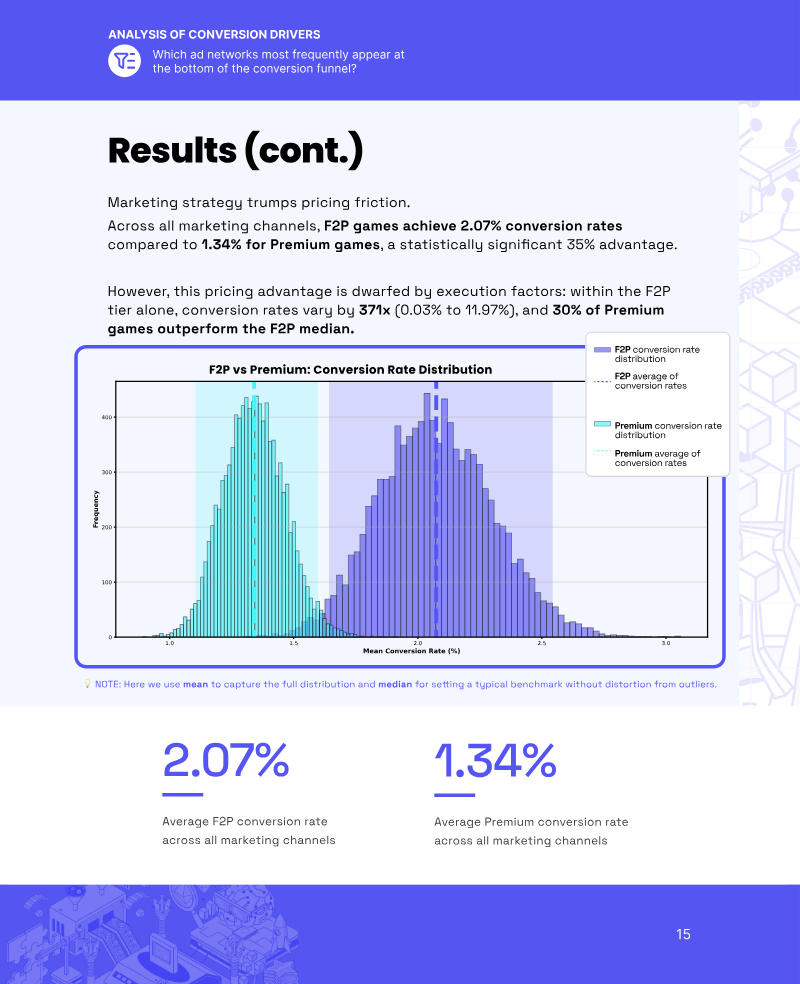
See it on page 9Marketing strategy and community sentiment serve as the primary determinants of conversion performance in the global video game industry as of early 2026. While pricing models like free-to-play and premium structures influence baseline metrics, the efficacy of acquisition campaigns depends more heavily on the alignment between marketing channels and specific player decision-making behaviors. Traditional last-click attribution models frequently undervalue high-funnel awareness efforts, necessitating a shift toward incrementality testing and extended retargeting windows to accurately capture the impact of early-stage engagement.
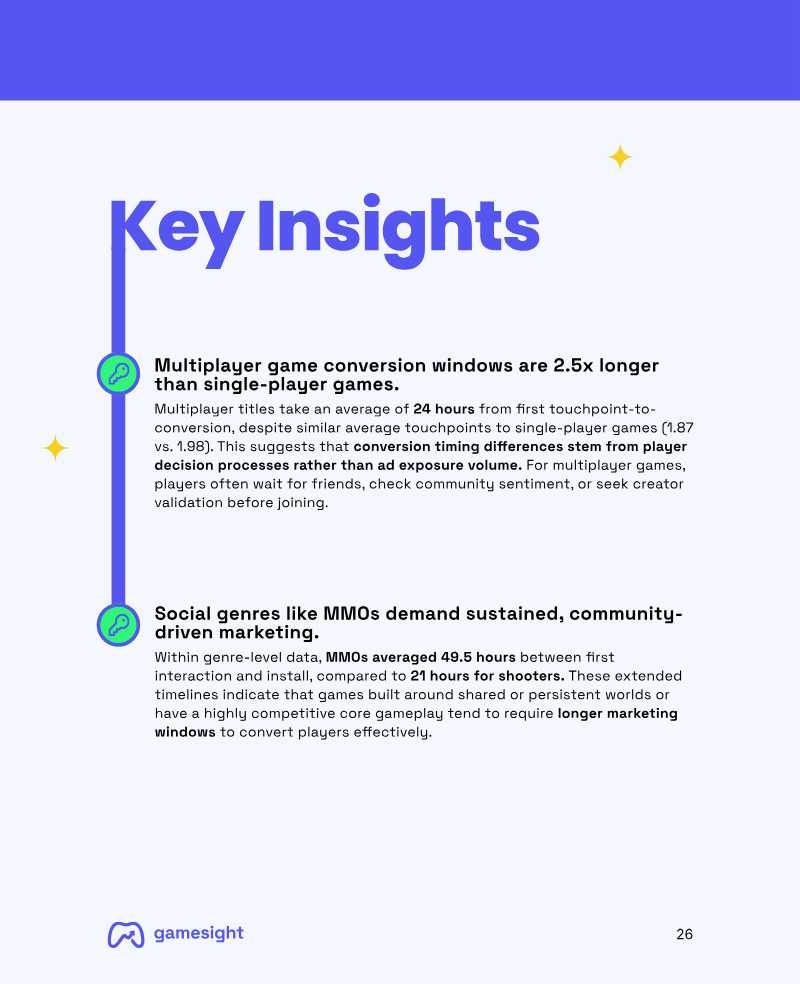
Player decision cycles vary significantly across industry segments, dictated largely by the social and cooperative dynamics inherent in different genres. Multiplayer and massively multiplayer online titles require longer conversion windows due to the complexity of social coordination, whereas single-player experiences benefit from strategies that emphasize urgency and individual-driven processes. Consequently, marketing efforts for multiplayer games should prioritize social proof and sustained community engagement, while single-player titles gain more traction through direct, time-sensitive calls to action.
Game quality and public perception act as critical multipliers for conversion, particularly within the premium sector. High Steam review scores, specifically those reaching the highest sentiment tiers, can nearly triple conversion rates for premium titles, whereas free-to-play conversion remains largely indifferent to such metrics. Because premium games involve extended evaluation periods, marketers must maintain consistent community-focused sentiment management to protect long-term conversion potential. By tailoring acquisition strategies to these distinct genre-based behaviors and moving beyond simplistic attribution, publishers can better optimize campaign performance and maximize player acquisition efficiency.
GameMakers · 2025
Two & a Half Gamers · 2024
Two & a Half Gamers · 2024
Tenjin · 2022

Mobile Dev Memo · 2026
Two & a Half Gamers · 2026
Mobile Dev Memo · 2026
Mobile Dev Memo · 2026
Deconstructor of Fun · 2026

Two & a Half Gamers · 2026
Mobile Dev Memo · 2026
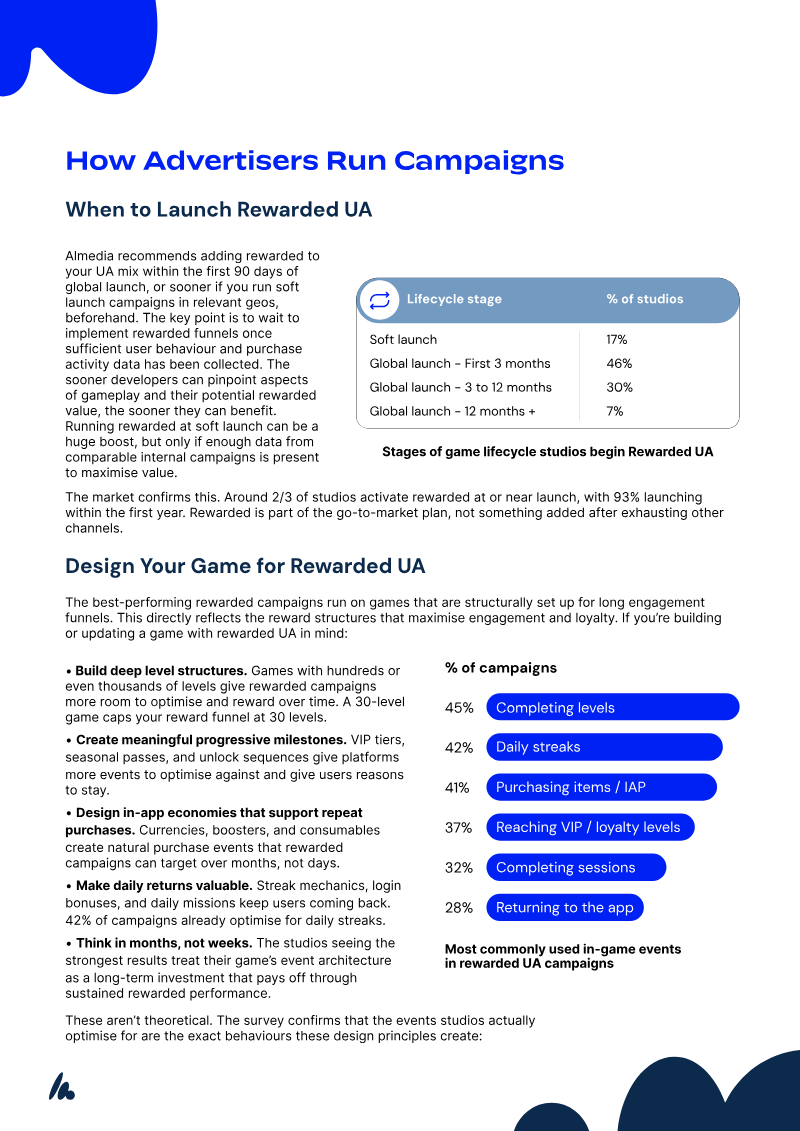
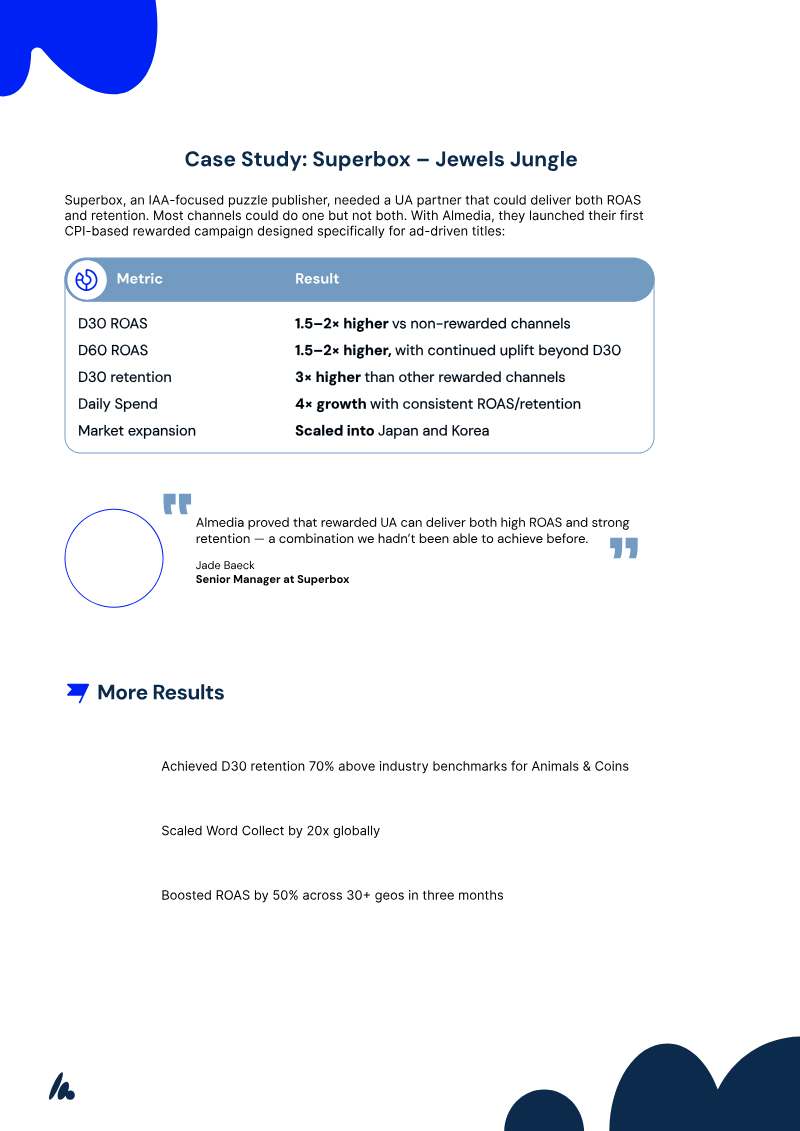
Almedia · 2026