Time
Company
Documents about Time

Solely Relying on Your Team's Estimates is Costing You Time and Money
Traditional estimation methods in game development are increasingly viewed as inefficient and unreliable, often failing to account for the inherent unpredictability of software production.
- Traditional subjective estimation methods in game development are frequently inaccurate, with large-scale projects typically exceeding their scheduled completion dates by 25% to 50%.
- Relying on manual, detailed estimation processes consumes significant resources and time from high-cost developers and designers, often necessitating unproductive 'Big Upfront Planning'.
- Human cognitive biases, including optimism bias, the anchoring effect, and confirmation bias, inherently warp subjective estimates and lead to impractical delivery dates.

Watch the Work, Not the Workers: Four Flow Metrics for Your Studio
The primary objective of this analysis is to advocate for a shift in game studio management from individual-focused surveillance to system-oriented flow metrics.
- Workplace surveillance is counterproductive, as 75% of C-suite leaders admit that excessive monitoring harms morale and retention, yet many continue the practice.
- Digital surveillance often leads to 'task masking,' where employees optimize for the appearance of work rather than actual output, and can increase injury risks by pushing workers to hit arbitrary productivity targets.
- Work Item Age is the most critical flow metric because it allows producers to identify and resolve bottlenecks while work is still in progress, rather than conducting a post-mortem.
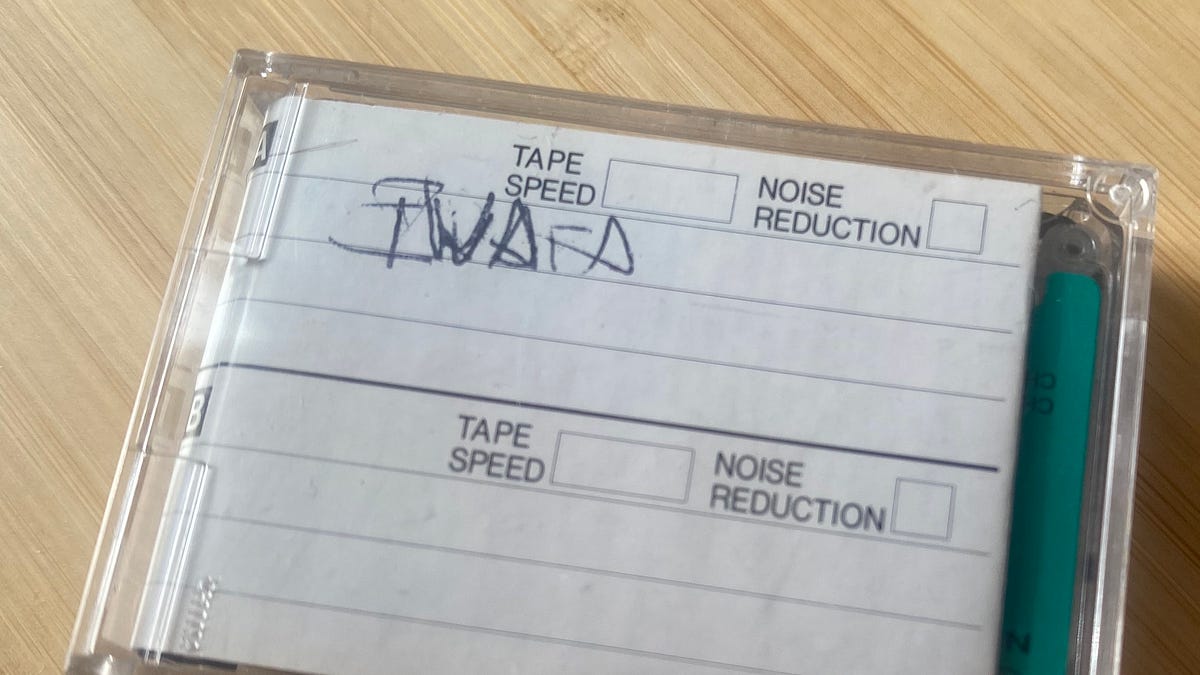
What Nintendo’s Late President Satoru Iwata Told Me, a Long Time Ago
This analysis examines a 2004 interview with the late Nintendo president Satoru Iwata, providing a historical perspective on the company’s strategic pivot during a period of significant industry uncertainty.
- Nintendo’s late president Satoru Iwata identified that the industry's focus on escalating graphical power and complexity had reached a point of diminishing returns, necessitating a shift toward new interaction mechanics.
- The Nintendo DS was developed as a strategic response to the stagnation of the gaming market and the competitive threat of Sony’s PlayStation Portable, which challenged Nintendo's dominance in the handheld sector.
- The dual-screen concept originated from former president Hiroshi Yamauchi and initially faced internal skepticism due to hardware costs and ergonomic concerns, but it served as the catalyst for integrating touch-screen, wireless, and microphone technologies.

Tundra Esports CEO Carleton Curtis to Step Down
Carleton Curtis is set to depart from his leadership positions at Tundra Esports and its parent company, Sandstorm Media Group, effective at the end of 2023.
- Carleton Curtis will step down as CEO of Tundra Esports and executive chairman of its parent company, Sandstorm Media Group, at the end of 2023.
- Tundra Esports co-founder Maxim Demin will assume the leadership role following Curtis' departure.
- Curtis joined Tundra Esports as interim CEO and executive board member in February 2023, having previously served as a non-executive board member for Sandstorm Media Group since December 2021.

Is It Time to Rethink the “Game of the Year” Award for Mobile?
The mobile gaming industry’s current approach to "Game of the Year" (GOTY) awards is fundamentally flawed due to a disconnect between creative recognition and actual business performance.
- Current 'Game of the Year' awards for mobile games fail to correlate with sustained spikes in downloads or revenue, as performance trends are primarily driven by seasonal content and marketing events.
- Analysis of Marvel SNAP, Apex Legends Mobile, and Genshin Impact between 2021 and 2023 shows that award wins are additive at best rather than causal drivers of commercial success.
- The existing awards framework is criticized as a marketing vehicle for platforms like Apple and Google rather than an objective measure of creative quality or business performance.
The Invisible Time Bombs: Risks in New Platforms and SaaS Products
The primary objective is to caution game developers and industry executives against the risks inherent in accepting standard terms of service for new platforms and software-as-a-service (SaaS) products.
- Standard terms of service for new platforms and SaaS products often contain restrictive exclusivity clauses that can bind an entire game portfolio to a single publisher.
- Ambiguous contract language regarding data ownership and derivative works poses a significant risk to the long-term intellectual property rights of game developers.
- Non-compete provisions in service agreements may allow platforms to utilize a developer's proprietary data to build and launch competing products.

Mobile Puzzle Games: 11-Year Market Analysis
The mobile puzzle game sector has demonstrated significant long-term financial success, generating $42 billion in global revenue and 50 billion downloads between January 2012 and June 2023.
- The mobile puzzle sector generated $42 billion in revenue and 50 billion downloads between January 2012 and June 2023, with the 'Swap' sub-genre (e.g., Candy Crush Saga, Gardenscapes) dominating by capturing 61% of total player spending.
- Hybrid-casual monetization, which blends in-app purchases with advertising, drove a 430% revenue increase for puzzle titles from January to May 2023 compared to the same period in 2022.
- Real-Time and Pair puzzle games are current growth outliers, with Real-Time titles experiencing a 64% revenue increase and a 103% surge in downloads during the first five months of 2023.

Play Time Isn’t Over in China: Video Games Industry Memo
Recent academic research indicates that government-mandated play time limits in China have failed to curb gaming among minors.
- A study of 2.4 billion players by the University of York found that China’s government-mandated playtime limits failed to reduce gaming among minors.
- Playtime among heavy users, defined as those playing more than four hours per day, remained stable or increased slightly in the year following the implementation of regulations.
- Regulatory efficacy was undermined because restrictions primarily targeted major companies like Tencent, while a vast ecosystem of independent developers remained largely ungoverned.

Layoffs for What: Letting Go of Talent to Improve Share Price Performance Works, Most of the Time
This analysis explores the correlation between workforce reductions and shareholder value within the video game industry during a period of post-pandemic market cooling.
- Public game publishers are increasingly using layoffs as a primary mechanism to signal operational efficiency and boost short-term share price performance.
- Electronic Arts saw its stock rise by 2.3% following a 200-person layoff in February 2023, followed by a 7.5% increase after a 6% workforce reduction the following month.
- CD Projekt Red experienced a 4.1% increase in its share price immediately following the announcement of staff reductions in May 2023.

What Is the Best Time to Request Permission From Users for ATT: iOS
This analysis examines the optimal timing for mobile game developers to request App Tracking Transparency (ATT) permission on iOS devices.
- Approximately 81.4% of top-grossing iOS games trigger the App Tracking Transparency (ATT) permission pop-up within the first 30 seconds of gameplay.
- The most common 'golden window' for requesting ATT permission is between 6 and 15 seconds into the first session, a strategy employed by 58% of the top 50 grossing games.
- Top 100 grossing games are 50% more likely to use a personalized pre-ATT prompt to encourage opt-ins compared to games ranked 101–200.
Respect Player’s Time by Making Longer Games
The primary thesis of this analysis is that independent game developers should prioritize creating longer, content-rich experiences to align with the preferences of the Steam audience.
- Steam players define 'respecting their time' as providing 16–50 hours of gameplay, viewing gaming as a hobby that should be filled with deep, long-form experiences.
- Indie developers face a 'bespoke content trap' when creating linear, level-based, or puzzle-focused games, as they lack the resources to produce enough unique content to satisfy player expectations.
- Development resources are limited to three core attributes—Game Length, Graphics, and Quality—forcing indie teams to prioritize at most two, whereas AAA studios can maximize all three.
How Arcade Video Game Discovery Works
This analysis explores the mechanics of discovery and monetization within the modern arcade industry, while also examining broader trends in intellectual property valuation.
- Modern arcade profitability is driven by redemption-style machines, which offer the fastest return on investment at approximately six months compared to nearly a decade for pinball.
- Capital expenditure for arcade hardware has surged post-pandemic, with average cabinet costs rising from $7,500 to $12,000 and premium titles now exceeding $25,000.
- AAA video game development costs have escalated significantly, with individual titles now requiring budgets exceeding $660 million.