Sky
Company
Documents about Sky
GameDaily Connect 2019 Highlights: Familiar Challenges Persist, But Fresh Ideas Abound
GameDaily Connect 2019, held in Anaheim, California, served as a focal point for analyzing the evolving landscape of the mobile gaming industry.
- thatgamecompany’s mobile-first title 'Sky: Children of the Light' surpassed one million installs in less than a week and has grossed over $1 million with more than two million total downloads.
- Mobile developers are increasingly adopting rewarded video monetization, a strategy that has expanded beyond casual and hyper-casual genres to become a standard industry practice.
- The industry continues to struggle with persistent operational challenges, specifically rising user acquisition costs, development crunch, and a growing need for better diversity and representation.

No Man's Sky: Grit
The development and launch of No Man’s Sky serves as a case study for navigating extreme industry adversity and managing the transition from a polarizing release to long-term success.
- Focus on actions over words by communicating with players exclusively through patch notes and game updates rather than blog posts or press releases.
- Filter feedback by treating it as raw data; analysis revealed that 80-90% of toxic commentary originated from individuals not invested in the game, allowing the team to ignore noise and focus on actionable player needs.
- Define a clear metric for success—such as player concurrency or critical reception—and optimize every team decision toward that specific goal to simplify complex development choices.
September 2018 US iOS Market Facebook Platform Mobile Game Ad Share Top 20
The September 2018 analysis of the United States iOS mobile gaming market highlights the dominance of Chinese developers in Facebook advertising.
- In September 2018, Chinese mobile game developers dominated the US iOS Facebook advertising market, securing all of the top five positions in share of voice.
- The top-ranked game for advertising share on Facebook was 'Game of Sultans' by Mechanist Games.
- Nine Chinese-developed games appeared in the top 20 list for Facebook ad spend in the US iOS market during September 2018.
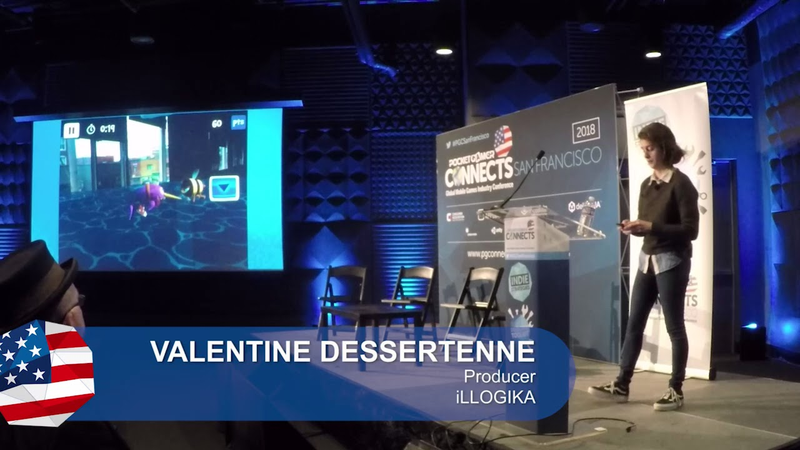
Augmented reality games for kids – Lessons learned from Sky Whale AR
The development of Sky Whale AR, an augmented reality (AR) expansion for a Nickelodeon-branded mobile game, serves as a case study for addressing the technical and ergonomic challenges inherent in creating AR experiences for children.
- To mitigate physical fatigue in children, AR sessions should be limited to approximately one-minute, high-intensity intervals with minimal edge-based screen interactions.
- Developers should adopt a non-gated approach to AR, ensuring it remains an optional feature that does not compromise the core 2D gameplay experience, as seen in the April 2018 launch of Nickelodeon's Sky Whale AR.
- Rather than relying on unreliable surface detection, developers should prioritize device movement as the primary control input to improve tracking consistency.

Recontact Istanbul: Eyes Of Sky postmortem
Recontact Digital Arts, a Turkish studio, developed the Recontact series to pioneer the integration of interactive cinema and mobile gaming.
- Recontact Digital Arts scaled its development team from three to 30 employees to produce the interactive cinematic game Recontact: Istanbul using the Unity engine.
- The studio successfully reached approximately 60 million users globally by merging high-fidelity live-action film with interactive mobile gameplay.
- Technical optimization was critical to the project, requiring the studio to compress high-resolution video assets from two gigabytes down to 500 megabytes for mobile performance.
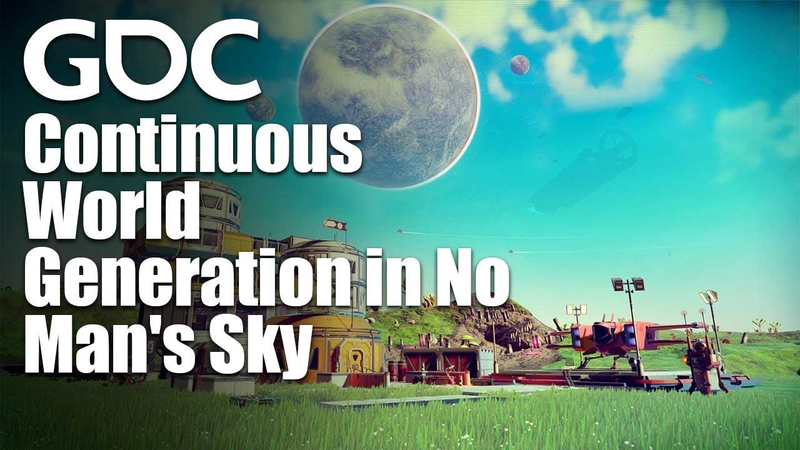
Continuous World Generation in No Man's Sky
No Man’s Sky achieves a seamless, galaxy-wide exploration experience through a custom C++ engine designed to handle real-time, procedural world generation.
- No Man’s Sky utilizes a custom C++ engine that balances procedural generation with artistic control by prioritizing developer-facing tools over purely autonomous algorithms.
- The engine simulates terrain on a sphere using an octree structure projected onto a cube, which eliminates flat-plane wrapping artifacts and manages complex gravity and coordinate systems.
- To optimize performance and memory, the system employs dynamic levels of detail and a multi-threaded job system that offloads generation tasks across diverse hardware.
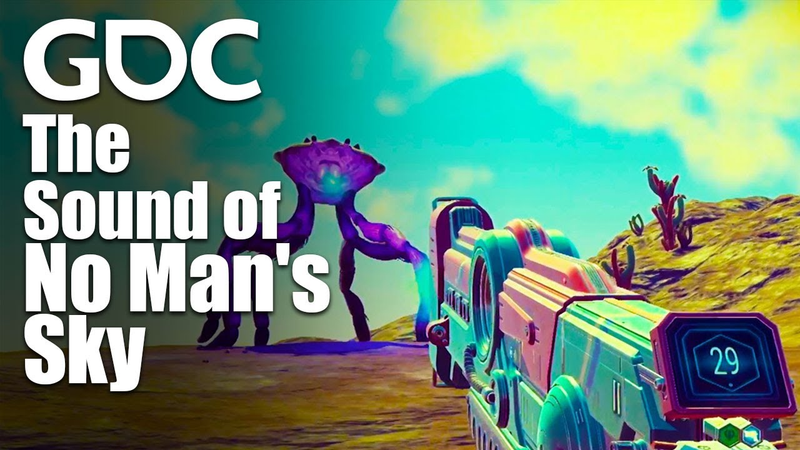
The Sound of No Man's Sky
The audio architecture of No Man’s Sky represents a fundamental shift from traditional event-driven sound design toward a highly flexible, state-driven system capable of supporting an infinite, procedurally generated universe.
- No Man’s Sky utilizes real-time ray casting to dynamically adjust audio layers and filters based on environmental variables, replacing the need for manual sound emitter placement in a procedurally generated universe.
- The 'Pulse' music engine deconstructs original compositions into 16,000 individual elements, remixing them in real-time based on player movement and location to create a non-linear, evolving soundtrack.
- The 'Rock Alien' synthesizer employs feedback-based pipe modeling and phoneme filtering to generate creature vocalizations that scale biologically according to specific in-game traits like size and behavior.

BioShock Infinite: Scoring in the Sky, a Postmortem
The musical direction for BioShock Infinite represents a deliberate departure from the grand, large-scale orchestral scores characteristic of the series' predecessors.
- The score moved away from traditional large-scale orchestral arrangements in favor of a minimalist ten-piece string ensemble to emphasize emotional intimacy and character-driven narrative.
- The composition utilized aleatoric writing and unquantized performances to create organic, visceral textures that reflect the game's 1912 setting and its underlying dystopian themes.
- A recurring open-fifth motif was implemented as a foundational anchor to symbolically represent the core narrative themes of infinity and time.
The 2017 GDC Tech Toolbox
Custom tool development serves as a critical catalyst for modern game production, enabling studios to overcome technical constraints while fostering creative iteration.
- Custom internal tool development is essential for overcoming technical constraints and enabling small teams to achieve high-fidelity results that off-the-shelf software cannot support.
- Procedural pipelines, as seen in titles like No Man's Sky, utilize modular texture layers, XML metadata, and shader-based processing to increase visual variety while maintaining memory efficiency.
- Development productivity is significantly improved by tools like Dark Config, which allow for the hotloading of configuration files to accelerate the design iteration cycle.
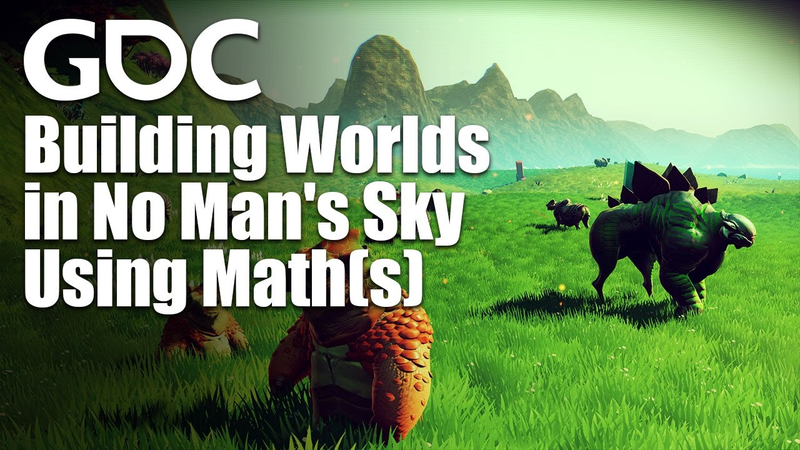
Building Worlds in No Man's Sky Using Math(s)
Procedural generation serves as the foundational architecture for No Man’s Sky, enabling the creation of a vast, diverse universe within a remarkably compact 300MB footprint.
- No Man’s Sky achieves a vast, diverse universe within a 300MB footprint by utilizing a custom engine driven by mathematical functions rather than pre-baked assets.
- The engine employs 'Uber noise'—a synthesis of layered 2D and 3D noise—to generate organic, non-repeating terrain features like erosion and overhangs without needing context from neighboring voxels.
- The procedural framework successfully handled a launch load of 500,000 concurrent players while maintaining a stable 1% crash rate.

Get Journalists to Cover Your Game: Lessons from Online Dating, Praying and No Man's Sky
The modern gaming landscape is defined by extreme saturation, with over 4,000 titles launching annually on Steam alone.
- With over 4,000 titles launching annually on Steam, the extreme market saturation necessitates a shift from broad outreach to highly targeted, high-impact communication.
- Developers must treat pitches like dating profiles, ensuring the core value proposition is conveyed within ten seconds using concise messaging.
- High-quality GIFs demonstrating immediate, watchable fun are essential assets for capturing journalist attention in a crowded media landscape.

De-Gamification - Flexibility to Play Your Way - Extra Credits
De-gamification serves as a critical design methodology that involves the intentional removal or relaxation of extrinsic motivators—such as scores, timers, leaderboards, and resource limitations—to evaluate the core, intrinsic appeal of a game.
- De-gamification is a design methodology that removes extrinsic motivators like scores, timers, and leaderboards to isolate and evaluate the core intrinsic appeal of a game's mechanics.
- Developers use de-gamification as a testing tool to determine if movement, exploration, and interaction are inherently engaging without relying on external validation or performance pressure.
- Removing systemic constraints during development often reveals new creative possibilities, as testers frequently invent their own challenges when freed from rigid objectives.