Scopely
CompanyUnited States · Founded 2011
Documents about Scopely

PocketGamer.biz Podcast Episode #3: Jens Begemann leaves Wooga, Jagex gets sold again, and more!
The global mobile and console gaming landscape is currently defined by significant leadership transitions, strategic acquisitions, and the evolution of social gaming platforms.
- Jagex has been acquired by Macarthur Fortune Holding for $530 million, marking yet another ownership transition for the studio as it struggles to stabilize its legacy intellectual property.
- Rovio achieved a 74.8% profit increase by significantly reducing user acquisition costs, though this strategy risks long-term brand fatigue for the aging Angry Birds franchise.
- Epic Games is evolving Fortnite into a persistent social hub through its Party Royale mode, leveraging virtual events to attract millions of concurrent users.


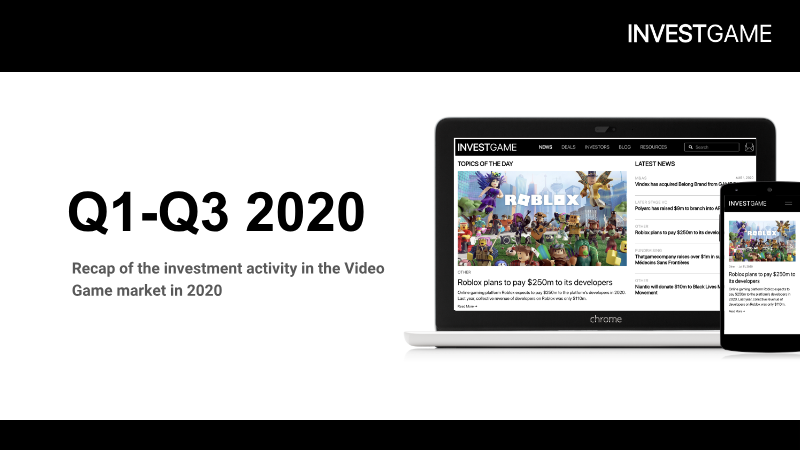
Investment Activity Report Q1–Q3 2020
The report documents investment activity in the global gaming industry from January to September 2020, covering mobile, PC & console, multiplatform, VR/AR, cloud-native and esports segments.
- The global gaming industry saw $27.5 billion in total deal value across 1,000 transactions during the first nine months of 2020, with gaming-specific deals accounting for $15.3 billion.
- M&A activity was defined by large-scale consolidation, led by Microsoft’s $7.5 billion acquisition of ZeniMax and Zynga’s $2 billion purchase of Peak Games, with Tencent, Zynga, and Microsoft collectively exceeding $11 billion in deal value.
- Public offerings were the primary driver of capital, generating $9.2 billion from 51 IPOs and PIPEs, while private venture investments contributed $4.7 billion across 254 rounds.

Mobile Publishing #1: Deconstructing Scopely's Path to $1B
This analysis examines the operational strategy behind Scopely’s growth toward a $400 million revenue run rate and its broader ambition to become a dominant free-to-play mobile games company in the West.
- Scopely is scaling toward a $400 million revenue run rate with the long-term ambition of becoming a dominant Western free-to-play mobile publisher.
- The company’s operational framework relies on a unified internal operating system that integrates studio ecosystems, proprietary technology, and shared publishing infrastructure.
- Proprietary technology platforms utilize machine learning and user segmentation to deliver personalized, consumer-directed gameplay experiences.
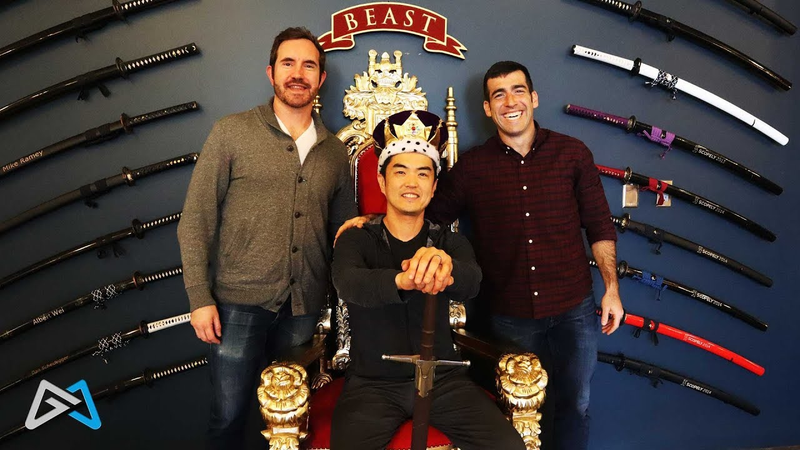
'Star Trek Fleet Command' - Scopely | Ft. Game GM Steve Huff and SVP of BD Henry Lowenfels
Star Trek Fleet Command, a mobile free-to-play title developed by DIGIT Game Studios and published by Scopely, represents a strategic entry into the 4X march-battle genre.
- Scopely and DIGIT Game Studios partnered to develop Star Trek Fleet Command, aiming to expand the 4X strategy genre by integrating RPG and simulation elements to reach a broader audience beyond hardcore players.
- The development team scaled significantly since the project's inception in 2015, growing their staff fourfold to support the game's ambitious scope and content roadmap.
- The operational structure features a collaborative model where Scopely manages product strategy and live operations, while DIGIT handles core development, with overlapping roles to ensure consistent feature prioritization.
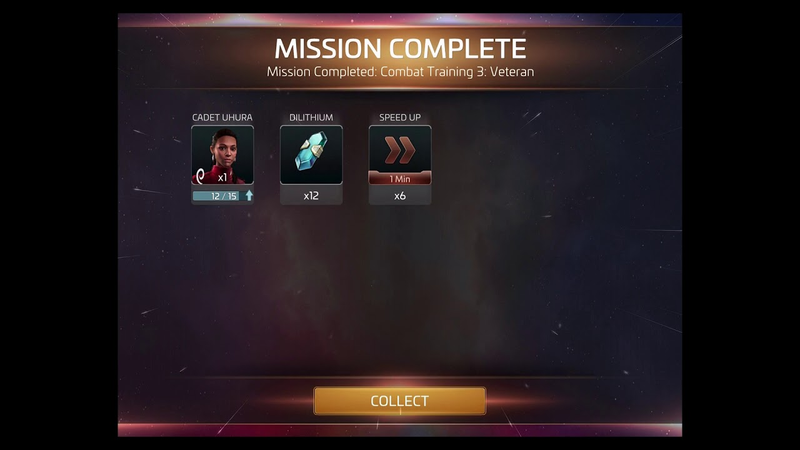
How does Star Trek Fleet Command monetize?
Star Trek Fleet Command, developed by Digit Game Studios and published by Scopely, functions as a mobile 4X strategy game that integrates base-building, resource management, and RPG-lite character collection.
- Star Trek Fleet Command utilizes a 4X strategy framework developed by Digit Game Studios and published by Scopely, combining base-building, resource management, and RPG-lite character collection.
- The monetization model is built on a multi-layered economy that uses hard and soft currencies, speed-ups to bypass construction timers, and loot-box-style recruitment systems.
- The game leverages the Star Trek intellectual property to differentiate its core loop from generic 4X titles, using recognizable characters and ships as primary engagement hooks.
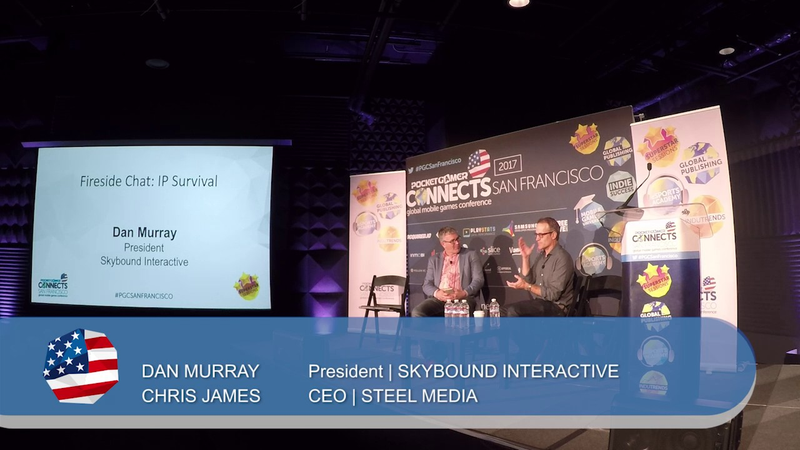
Skybound's Dan Murray on working with IP - Survival 101
Skybound President Dan Murray outlines the strategic approach to managing intellectual property (IP) within the gaming industry, emphasizing the importance of authenticity, creator-led business models, and deep collaboration between licensors and developers.
- Successful IP-based games require moving beyond superficial 'IP slaps' by ensuring mechanics and narrative spirit are deeply integrated with the source material.
- Skybound utilizes a 'wheel of awesome' business model, retaining core rights to properties like The Walking Dead to maintain control across film, television, and gaming adaptations.
- Licensing success relies on replacing siloed relationships with proactive, direct collaboration between IP holders and developers to ensure both narrative consistency and mechanical innovation.
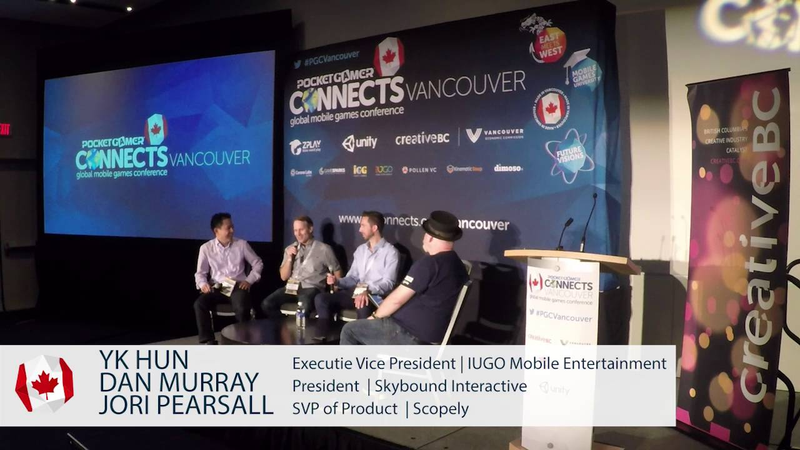
How The Walking Dead mobile game was brought to life
The development of the mobile title The Walking Dead: Road to Survival represents a strategic collaboration between Skybound Entertainment, Scopely, and IUGO to translate a high-profile media franchise into a successful free-to-play mobile experience.
- The Walking Dead: Road to Survival achieved over 20 million downloads in its first year and maintained a consistent position in the top 50 grossing charts.
- The development team utilized a 'lean' philosophy that treated iterative failure as a necessary tool for refining technology and live-operations processes.
- To maintain narrative integrity, developers used backstory from the Governor novels to create a parallel story structure that allowed for consistent content updates without violating the core comic book canon.
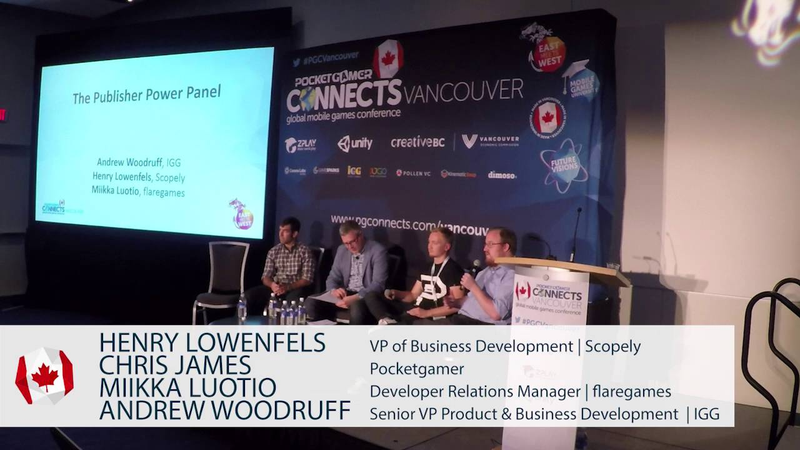
Trends in mobile game publishing with Scopely, Flaregames and IGG
Mobile game publishing has evolved into a strategic partnership model where publishers function as co-developers, providing essential funding, marketing infrastructure, and operational expertise.
- Mobile game publishing has shifted to a co-development model where publishers provide funding, marketing, and operational infrastructure to allow developers to focus exclusively on core gameplay.
- Publishers prioritize developers who demonstrate team cohesion and the capacity to produce multiple titles, moving away from interest in one-off projects.
- Successful pitches must feature addictive, universally appealing core mechanics that transcend specific demographic biases.
Indie Dimepiece: Super Tribes
The gaming industry has undergone a profound transformation between late 2021 and mid-2026, characterized by shifting monetization models, the integration of artificial intelligence, and a volatile investment climate.
- AppLovin has established itself as the dominant force in mobile ad tech by rewriting industry rules and creating a dependency model that forces competitors to rely on its infrastructure.
- Microfun successfully scaled 'Gossip Harbor' to the second-highest position in the US merge game market, demonstrating that significant growth is still achievable in highly competitive genres.
- Leading game studios are increasingly integrating AI to maintain live service operations, as evidenced by InnoGames using AI to extend the lifecycle of 'Sunrise Village'.

South Park's demonisation of F2P: let's blame Dungeon Keeper
The mobile gaming industry in late 2014 remains characterized by a persistent, polarized debate regarding the ethics and quality of free-to-play (F2P) monetization models.
- The mobile gaming industry is undergoing a structural shift toward service-oriented, co-development partnerships, exemplified by Scopely’s $35 million funding round.
- German developers are successfully transitioning from browser and PC markets to mobile, with Goodgame Studios scaling its workforce to 1,000 employees.
- Public perception of free-to-play (F2P) monetization remains polarized, with the 2014 mobile iteration of Dungeon Keeper serving as the primary symbol for criticisms regarding aggressive timers and exploitative mechanics.
Checklist for a Free App
The gaming industry has undergone a period of profound transformation between 2022 and mid-2026, characterized by a shift toward hybrid monetization models, the integration of artificial intelligence, and a cooling of venture capital investment.
- Mobile gaming success is increasingly driven by iterative product development, as evidenced by Voodoo’s model of testing 2,000 prototypes annually to identify hits.
- User acquisition (UA) strategies frequently collapse during the scaling phase, requiring systems that go beyond standard platform-provided tools to maintain performance.
- In a privacy-centric advertising landscape, the quality and optimization of ad creatives have become the primary drivers of marketing effectiveness.

The Rise of the Financial Kingmakers: Private Equity’s $21B+ Bet on Gaming
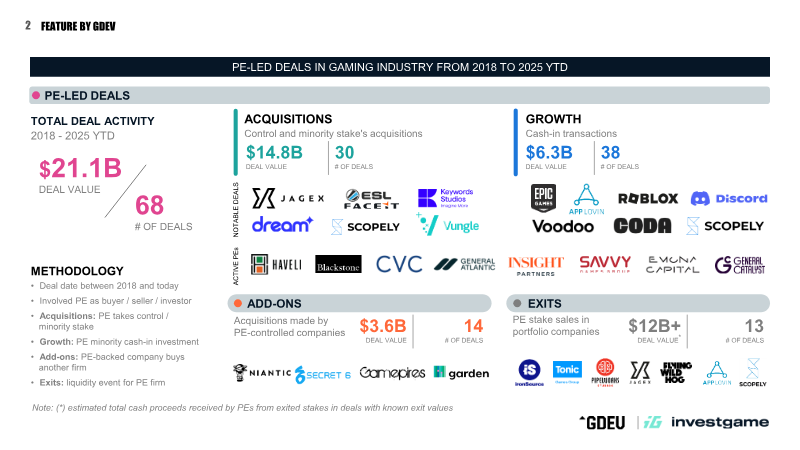
The analysis demonstrates that private equity (PE) has increasingly positioned itself as a decisive force in the gaming sector, channeling more than $21 billion into acquisitions and growth investments from 2018 through the first half of 2025.
- Private equity firms deployed over $21 billion into the gaming sector between 2018 and mid-2025, with annual deal values consistently surpassing $1 billion.
- Control acquisitions represent the primary investment strategy, accounting for approximately 60% of total capital deployed in the sector.
- Content creation studios holding strong IP portfolios are the most targeted assets, securing 42 of the 68 total private equity-led deals identified.