Rise
Company
Documents about Rise

Rise of Vietnam: Mobile Gaming Boom—Key Players, Winning Strategies & What’s Next
Vietnam has rapidly ascended to become a global mobile gaming powerhouse, with the domestic industry projected to surpass $1 billion in annual revenue by 2025.
- Vietnam’s mobile gaming industry is projected to exceed $1 billion in annual revenue by 2025, supported by a consistent 30 percent year-over-year growth rate.
- Local studios including iKame, Brave Stars, and ABI Games have become top global publishers by prioritizing high-scale, ad-monetized ultra-casual and super-casual titles.
- The industry’s success is driven by a collaborative ecosystem where developers share data and gameplay templates to maintain lean production models and high user retention.
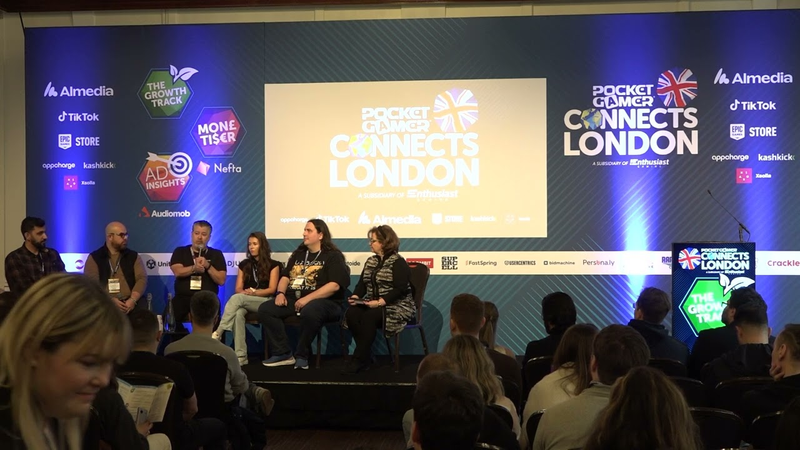
Panel: The Rise Of Rewarded UA – How To Take Advantage Of The Marketing Revolution.
Rewarded user acquisition has transitioned from a marginalized marketing tactic into a foundational growth strategy for the mobile gaming industry.
- Data indicates that 51% of users spend more money within mobile games when they are incentivized or rewarded for their purchases.
- Rewarded UA platforms require a distinct approach from traditional networks, as users are highly motivated to play through specific milestones to earn rewards, necessitating deep-funnel optimization.
- Successful rewarded UA strategies rely on integrating live ops with loyalty programs, allowing publishers to use user data to trigger personalized messaging and promotions during specific in-game events.

Indie breakout: Stirling Rank's Rise with Ready or Not
The tactical shooter Ready or Not serves as a case study in independent game development, demonstrating how a commitment to core gameplay loops and a distinct creative vision can overcome the limitations of a small, inexperienced team.
- Void Interactive successfully launched Ready or Not into early access after five years of development by prioritizing a clear vision and community engagement over traditional crowdfunding.
- The studio utilized a supporter program and a high-quality gameplay trailer to generate initial capital and traction, with the supporter edition accounting for a significant portion of early revenue despite representing a smaller percentage of total unit sales.
- Scaling the team proved challenging; the company grew from three founders to 15 employees before compressing back down to five, highlighting the difficulty of managing rapid expansion without structured roles.
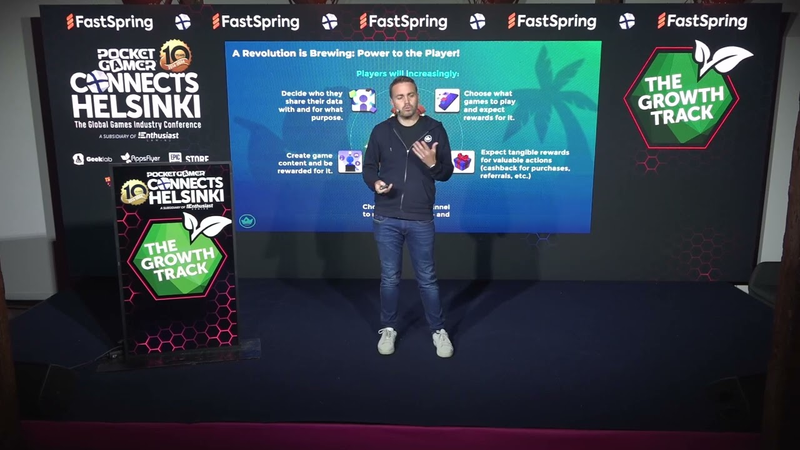
Session: The Rise of Player-Powered UA: How Incentives Will Shape the Future of Mobile Growth.
The mobile gaming industry is undergoing a fundamental shift toward a player-powered growth model, where developers increasingly treat players as partners rather than mere consumers.
- Over 80% of mobile players express interest in games that offer tangible rewards, and 25% of users are willing to switch games specifically to access these incentives.
- Developers are shifting toward value-exchange models that provide in-game items or real-world currency in exchange for player engagement and data to mitigate the impact of privacy-related tracking limitations.
- The adoption of web shops is increasing as a strategic method to bypass platform gatekeepers, capture first-party data, and provide more competitive value propositions directly to players.
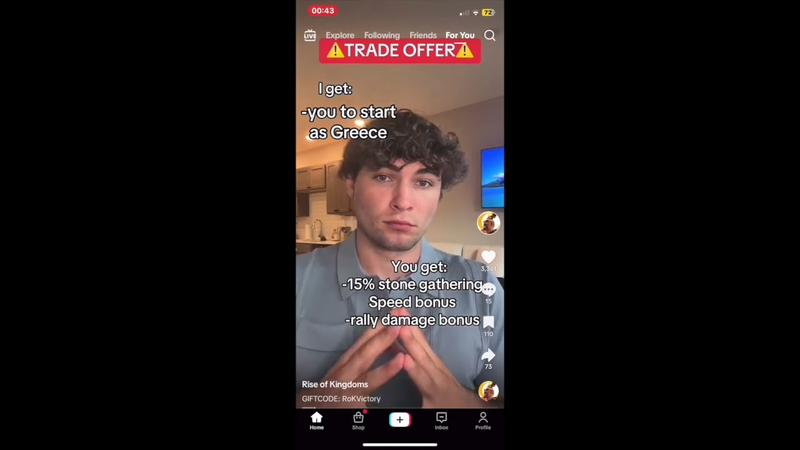
Rise of Kingdoms' 'player tips' ads from TikTok.
Rise of Kingdoms utilizes a strategic influencer-led marketing campaign on TikTok to drive user acquisition by framing gameplay decisions as high-stakes debates.
- Rise of Kingdoms uses influencer-led TikTok campaigns to frame gameplay decisions as high-stakes debates, leveraging conflicting expert advice to drive user acquisition.
- The marketing strategy utilizes a specific psychological hook by citing that only 5% of the player base achieves 10 million power, framing the game as a high-skill challenge.
- The game features 14 distinct civilizations, each offering unique bonuses like infantry health buffs or gathering speed increases to emphasize strategic depth.

Rise of Kingdoms' 'jocks and geeks' ads from TikTok
Rise of Kingdoms utilizes a specific narrative framework in its TikTok advertising strategy, centering on high-school-style social dynamics to drive user acquisition.
- Rise of Kingdoms uses a 'jocks-versus-geeks' narrative framework in TikTok ads to frame the game as a meritocratic environment where strategic planning overcomes social bullying.
- The ads illustrate the core gameplay loop by showing characters scaling their power from 10 million to 80 million through economic development.
- The advertising strategy prioritizes specific mechanics like logging, trade, and the control of traffic strongholds to demonstrate how players generate the capital required for military expansion.

Rise of Kingdoms ads from TikTok with weird hooks.
Mobile strategy games frequently employ unconventional and high-drama advertising hooks on platforms like TikTok to drive user acquisition.
- Rise of Kingdoms utilizes high-drama, non-sequitur TikTok hooks—such as real-world confrontations involving '10 million' or '80 million' power levels—to drive user acquisition through viral-style storytelling.
- Marketing content bridges absurd social skits with technical gameplay mechanics to appeal to both casual viewers and competitive players interested in min-maxing.
- Ads emphasize early-game optimization by highlighting specific civilization bonuses, such as the 10% stone gathering speed boost provided by choosing Greece.

Rise of Kingdoms' 'plane' creatives from TikTok
Mobile strategy games utilize aggressive, narrative-driven advertising campaigns on platforms like TikTok to drive user acquisition by gamifying social status.
- Rise of Kingdoms uses hyperbolic, narrative-driven TikTok advertisements to frame in-game power levels—ranging from two million to 80 million—as a form of real-world social currency.
- The marketing strategy centers on gamifying social status by depicting characters in public settings, such as airplanes, using high power rankings to assert dominance over others.
- Creative assets bridge the gap between casual entertainment and technical instruction by detailing specific civilization bonuses, such as Rome’s infantry defense or Greece’s resource gathering speeds.

Rise and Play’s Sophie Vo On The Skill You Can’t Overlook When Scaling Your Studio
Effective leadership in the game industry necessitates a fundamental shift from traditional, authoritative management toward a model of conscious leadership.
- Scaling a game studio requires shifting from authoritative, ego-driven management to conscious leadership that prioritizes self-awareness and human-centric responsibilities.
- Effective leaders must treat leadership development with the same technical rigor as product development to ensure long-term organizational health.
- Instead of micromanaging individual tasks, leaders should establish clear organizational frameworks that empower teams to operate with autonomy.

Inside Voodoo’s #1 Hit: The Story of Mob Control’s $200M+ Rise
Voodoo has successfully pivoted from a hypercasual focus to a midcore model, driven by a decentralized studio structure that prioritizes team autonomy and performance-based incentives.
- Voodoo has successfully transitioned from a hypercasual model to a midcore strategy, resulting in the hit title 'Mob Control' generating over $200 million in cumulative revenue.
- The company utilizes a decentralized, post-agile production model where small, senior-level teams operate with high autonomy and rapid two-to-three-week development cycles.
- Strategic integration of base-builder mechanics into 'Mob Control' directly resulted in a 20% increase in the game's lifetime value.

The Rise and Fall of Embracer Group
The decision to split Embracer Group into three independent, publicly traded entities—Asmodee, Coffee Stain, and Middle-earth Enterprises—signals the collapse of a decentralized corporate strategy that prioritized financial engineering over operational cohesion.
- Embracer Group is splitting into three independent, publicly traded entities—Asmodee, Coffee Stain, and Middle-earth Enterprises—marking the abandonment of its decentralized 'city-state' acquisition model.
- The 18-month restructuring process is a direct result of the company's failure to generate operational synergies from its debt-fueled acquisition spree, which prioritized financial engineering over organizational cohesion.
- The gaming industry is shifting away from large-scale consolidation toward a 'fewer, better, best' philosophy that emphasizes quality over quantity and light-touch parent company support.

Call of Dragons review - 4X strategy games deep dive, User acquisition & Game design breakdown (#62)
Call of Dragons represents a sophisticated evolution within the 4X strategy genre, successfully positioning itself as a high-production-value successor to established titles like Rise of Kingdoms.
- Call of Dragons generates approximately $14 million to $17 million in monthly revenue, with the United States contributing roughly $5 million of that total.
- The game demonstrates strong Day 1 retention at 51%, with Day 7 retention at 17% and Day 30 retention at 4% on Google Play.
- Unlike many modern 4X competitors that utilize 'fake' gameplay ads, Call of Dragons maintains marketing integrity by featuring authentic, representative gameplay in its user acquisition creatives.