VideoPocketGamer.biz
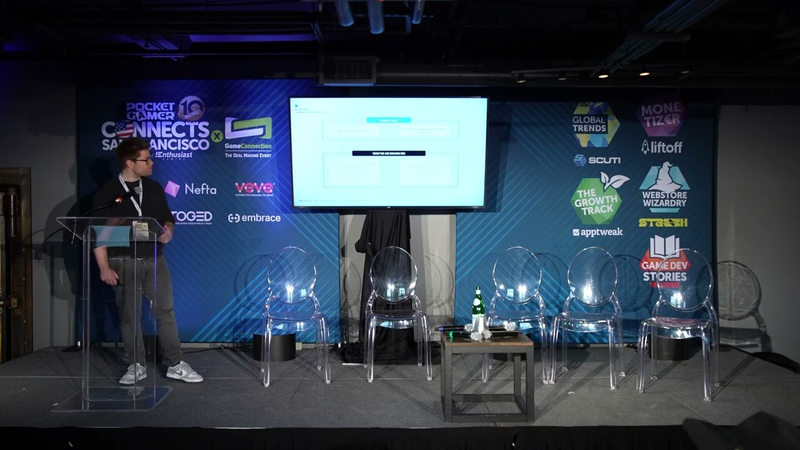
Panel: The Rise Of Rewarded UA – How To Take Advantage Of The Marketing Revolution.
13 Feb 202541 min video
Transcript
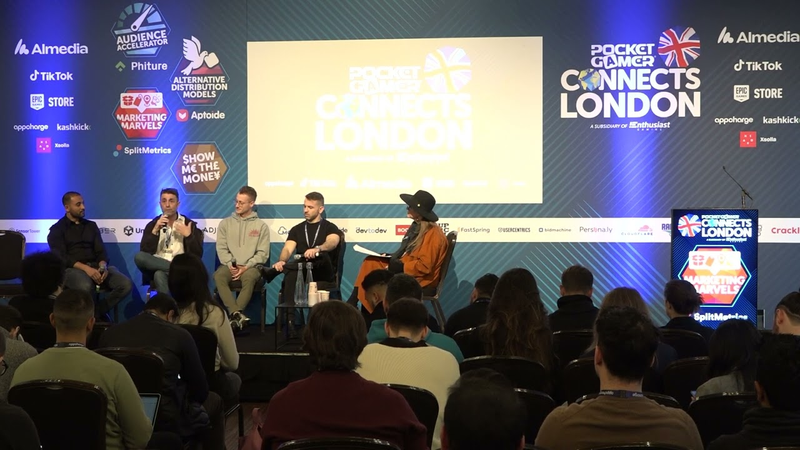
We're going to move on to a wonderful panel with the inimitable Peggy Anne Salts from Mobile Groove who's going to be hosting our panel. So, I'm going to hand over the reins to her. Um and this panel is going to be um about how to look at rewarded UA, the rise of rewarded UA. We've heard from uh one of our sponsors Out There Media. Um so, now we're hearing some more people in this in this market. So, Rewarded platforms, rewarded ads, it's part of UA and that's why we're all here. So, I just want to start off with a little show of hands here. How many people are using a rewarded platform or
thinking about it? How many are using it? Okay, good number. Increasing this year? How many's going to try and increase? 10%? 20%? So, you're using it? Okay, he's going to he's going to go for it. There, yeah. Um all right. So, it gives us an idea of where we are. So, we know about rewarded platforms. Um and some of you are going to significantly increase their use, which is good. And of course, there was a time when incentivized was more of a stigma than a strategy and that has passed. And that's why we're looking at this with a very, very ambitious title, how to take advantage of the marketing revolution because that's what it is. And got a panel of experts, a full house here. And I'll just go down um and try to match you and tell you a little bit about each. So, we have Aaron Thandi from Miss Play, uh over a decade of experience in adtech, commercial leadership. And of course, you're VP, global head of commercial at Misplay, and spearheading
growth for some big names. Speaking of big, you couldn't tell it, but he's quite tall, 6 ft 7 in. Two sons who are probably going to beat you out at that, perhaps. And you've said in prep, if mobile gaming doesn't work out, well, the NBA is another career stop for you. So, welcome, Aaron. Good to have you. Um Christine from Prodege here. Christine Rubin. Um no stranger to this. She's done a lot as sales director at Prodege. Helps developers harness revenue-driven ad strategies, and literally saddle up for success. Yes, I am the queen of puns. And she does this because she also canters across the country with her two horses, living the life. Welcome, Christine. Great to have you. Danielle Moscovitch, X triple dot. Can I still say that? X triple dot. X triple dot as of that like yesterday just to shock me, right? It's like, but you are here, which shows. And you can tell us a lot because, of course, strong technical background, deep passion for UA. You
love data. You love driving results. Great to have you. And any words on your next gig, Danielle? Or is that No. Okay, just not yet. Okay, but you are with us. And um Good there? And Brad Shapiro from Cash Kick, of course, a familiar face. If you've been attending all the events as I have, then you have seen him at the gaming conferences, and you'll hear a lot from Cash Kick as well this year. Brad Shapiro, EVP of revenue at Vungle as well. He brings to the stage, of course, a lot of insights across 30 years driving revenue, and some pretty impressive revenue as well because he's contributed to Vungle's 16,000% increase in revenue growth over the last 3 years. So, if someone's talked about growth, you're the fit. Welcome, Brad. Good to have you. And finally, Lenny, blast from the past made the trip as well from the states just very recently from Brown Boots, founder and CEO of Brown Boots, um
consulting with over 20 direct apps on developing in-house rewards programs through affiliate partnerships, 15 years in the industry, and clearly a perfect pick for the panel. So, we're all here, and we all know that we have the experts in the room that we can ask questions of later. But, you know, absolutely when you're looking at rewarded platforms, you have to know your audience. It's not pan spray. This isn't UA as it was before. Now, Miss Play has of course the spender report, which is very interesting. So, Aaron, can maybe you can just start with a little bit of data about the spenders. You have to fish where the fish are, and they're very, very different now. Yeah, absolutely. And um as Peggy mentioned, we do a spender report once a year. That's one will be out this year. And there are some interesting facts in there. I was personally pretty surprised by how much um how many different loyalty platforms spenders tend to engage with. There's clearly a desire for spenders who want to spend money, who want to be rewarded. 79% of them
actually have multiple loyalty platforms and programs that they use. And then, some of the data we found was that actually 51% of them actually spend more money when they're being incentivized, when they're being rewarded um to spend within game. So, obviously, there has to be a blend. You can't just go out and acquire all the spenders you want. That would that would work like magic. But, ultimately, from our conversations with our spenders and spenders we drive to mobile games, it's clear there's there's a need and a in and a growing demand um to get more rewards and to be incentivized while spend. It's the same for all of us, right? We all use credit cards where we're rewarded to spend. We all maybe have a preferred airline we use, and we prefer to fly with them to get those rewards. So, I like to think of it that way within gaming and loyalty specifically. Um if you are a spender or you're thinking about spending money, if there's a more of a push for you to do that, you're you're certainly more likely to do it. Hence the growth in our in our space this year and in previous years as well. It's also a growth through the different
models. If you think about IAA or IAP, very different. Is it also coming across in your report? You know, there's a difference in those spenders as well. Yeah, I mean, IAA's had its troubles these last couple of weeks. Everyone's aware of and with loyalty with IAA users specifically, it's it's obviously all about engagement, right? How are you going to get them to play longer and become more sticky within those games? And a lot of games, as everyone knows, are hybrid now as well with a blend of IP and IAA. So, there's some amount of segmentation you have to do there, but certainly not just for IP games. IAA we're seeing strong success when it comes to rewarded as well. Mhm. Brad, you do the same in the sense that you've seen this, but you've also had a different approach. I mean, first of all, is is he right? Are they very different or is it coming together in more of a hybrid model? Well, I think you're going to have multiple models. So, I do think there's an IAP model and actually that's where we started focusing on working with games that were
IAP focused. We could not figure out initially a rewarded structure that would work for um IAA games and so we kind of stayed away from them. And um over the past year we figured out how to make IAA work as well and um I'll say that we we couple of years ago we didn't work with with triple dot at all and now um they're one of our larger IAA advertisers. And part of it is is this a different type of user? And so you need to, as Aaron said, it's um engagement. And so you're trying to retain them longer to keep coming back. They don't need to spend, but you need them to continue coming back. Think about it from from an advertising perspective, getting a user to come for play for 3 hours on a single day is going to make you less money than having that user come and play for 3 days for an hour because of
the way the ad model works, that your top advertisers, how you monetize users, you're going to make more early on. So, the idea with IAE is to continue to get them to come back. They don't have to spend, but keep them engaged. Mhm. You talk about engagement, and that's the other point. It's not just the distinction between ads or in-app purchases, but it's also, you know, depending on where you want to be in the funnel, um how have you been looking at that? Because it depends a lot on top of the funnel UA, deep funnel retention, and you have to learn from behavior to optimize that rewarded um approach and that strategy. I mean, are there um ways that you've seen of balancing, you know, the need for really aggressive growth with the need for sustainable growth and sustainable user engagement, Brad? Um Well, not just you. I'm I'm opening up to everyone there, but I started with you because um
it is an interesting point. Or maybe we'll just stay with IAP and IAE because Daniel, you made it work at Tripledot um very well, but you know, you have the first-hand approach. You have the first-hand experience. Nightmare or uh or or did it spark joy? I Yeah, it did. See, it sparked It sparked joy. Okay, that's always good. Well, working with them, yes. I I I mean, I think I think we always believed in instant traffic, and maybe we were there earlier than than most. Um and Uh, yeah, it's there was a time when people were it's shady, it's dodgy, there's a lot of fraud. Obviously, now that's that's changing a lot and yeah, we we are happy to have have been there all the way. Well, um and I I I think there's more in the future. Yeah. So, I mean, you had to approach it and and we have an audience of people who want to dial it up or double down in the future. Um, so
what was for example a clear hit or clear miss in approaching rewarded as building that in to triple dot because it was mostly IAP, wasn't it? It's It's all IAP. Yeah. So, there's there's some experimentation perhaps with the other, but tell me how you approach that. Is there a clear win that you saw? I mean, in in the end of the day, you just just need to understand how how fast you want to break even and you need to define the rewards and the rewards that you give to the users. So, actually, it's less about a clear win. It's actually a very operational thing where you're like, "Okay, like let's try this. Let's Let's try that." Uh, and you you can arrive at something that works really well, which will differ by by by source. So, for example, it depends on what the users are awarded by play time, whether they're awarded by
for specific things they do. And there's also a lot of variance in what you pay for. So, all those things you you have to take into account. It's not it's not like the easiest thing, but it's well, rewarding. Rewarding, okay, pun intended. What is break even, as you said, deciding where to put them? At the end of the day, it's about unique economics, really. Um, and you want to incentivize your spenders, people who purchase in the game, but in your case it was spending their time. But another thing we're hearing so much about is live ops. You know, you need it to support or you want to support live ops, which is similar in a way. It's a similar profile. Aaron, and also I'd like to ask Brad and Christine to weigh in here, but also, you know, how can you cash in on that overlap? You know, do you need to have live ops? Is that a good basis for this or how do you approach it different perhaps from from what
Daniel's doing? Yeah, for sure. I think live ops is one of the most important parts, to be honest with you, when it comes to loyalty program. Mainly because of the success everyone's seeing with it inside the games. There's almost an opportunity to double up on live ops if you partner with with the right the right company, where if you've mastered live ops in your games or you're figuring it out, and with the user segmentation and the right point to drive messaging by push or other things, if you can partner with the program as well that that uses in and attack them in the the app as well, you will see significant success. And what I mean by that is if you're running a sale promotion during a certain time of year, if you're communicating with your account directors or you use us as an example at Misplay, we can create custom creatives, custom campaigns for certain segments of users whether they're already playing the game or they're new to the game, and help match up some of that messaging to continue to drive a deeper funnel engagements, whether that's spending or
retention for our games or things like that. So, I'd say like the communication between the the two companies, the game developer and the partner, when it comes to live ops, over communicating, understanding live ops schedules, understanding what works and what doesn't for different audiences and different segments of users, can be super super beneficial. Mhm. Another key part there on the live ops front is with a rewarded app, you've got access to a lot of data that you wouldn't necessarily have on a traditional advertising front. So, we've got the user data they have to make an account. We can see how they're moving. We can see the data on their phones. Um and actually I used to work with Aaron. We've done this quite successfully in the past using that data to leverage those specific campaigns for advertisers to really drive value not only in terms of the ROAS for them, but also in terms of the longer term retention and the long-term ROAS, which is what everyone really wants to achieve
these days. Mhm. And just to tack onto that I think as well when we interview users and we talk to users, they're craving personalization and it's yet another way to get super personalized with that messaging for them. Yeah. And of course personalization is important. Optimization, Brad, I mean you're seeing that data. What is What is possible and what can um the marketers, the studios be doing with that data to make to make rewarded uh to to work well with the rewarded platform to evolve that? Well, I'd like to bring up maybe like a little misconception in terms of um a lot of times you're looking at all rewarded platforms kind of the same and that they all have to have the same rewarded structure. So, it works on Misplay or it works on Swagbucks and so it has to work on Cash Kick. I think testing is great, but you every platform has a different audience that behaves
differently and I think you need to um I'd say each of the game publishers need to understand give a little more allow a little more control to the platforms to decide how to encourage and engage the users both let's say to install the game, but to continue and engage with the game And I think that's where also live ops comes in that we have the ability as Christine said to be able to go back and remarket to users within like during a live ops event because we have already have the user data. Mhm. Yeah, I'm going to I'm going to jump in here. Hey guys. Um You're going to stir the pot, Lonnie. Well, I think that we've touched on a bunch of different elements of how to leverage UA growth rewarded growth and live ops and IAP and IAA and all these different elements and I what I think is key is that no game is alike whether it's IAA,
whether it's social social casino or, you know, all the different categories of games, different different monetization capabilities. Um no platform is alike. Users come in all different shapes and sizes, but I think something that I've experienced a lot over my career is the motives that drive the reason for the growth. And we we start with a with a baseline of the long-term ROAS or, you know, high-level LTVs of the different users. And if it doesn't drive that, it's no good. If it's fraud, it's no good. But there are many different reasons why you would push for growth to begin with and then why you would push for um use rewarded growth in your mix uh to drive for those results. And having that North Star very clear and working towards that goal will help you keep focused and take advantage of the different platforms can offer you for different reasons. If you try to copy some other game or you try to copy what some other platform's doing because that's what it looks like should work or you assume that they're doing it for a long-term ROAS, but really they're
doing it for, you know, some app reviews or to get to higher up the app store, right? It's completely different competing reasons why you're doing it then you can you can get off off course very quickly. So, when you think about it, right? Think about what do I want to make happen right now? What is my goal right now? And if that goal shifts, then change strategies, change platforms, right? Don't be shy. You don't have to stick with the same thing. But try to incorporate that into your strategy, and you should be able to reap the benefits of the rewarded ecosystem for the goal at hand today. Mhm. That's it, a rewarded ecosystem. Uh Christine, you do also a lot of um broader integration strategies. And you've had come high-impact campaigns with rewarded ads, but also um a platform of um integrating rewarded ads with something broader, broader integration. What have you learned? Because it's also a matter of physical and digital. It's a matter of different channels.
So, I think my background is slightly different because I've been working in rewarded for the past few years, but before that I worked on traditional channels. So, I've worked across the Unity's platform, I've worked on ironSource's product, MOLOCO's. Um And I've again to add to the points that have been made here, the rewarded platforms, each individual platform is very, very different, and you do need to test it in the true way of testing, where you need to try different things. Cuz just cuz it works for one player doesn't mean it will work for another. But one of the most stark changes that I've seen between rewarded and a traditional channel is that the user behavior is very different. Our users are hungry on a rewarded platform to play through to get their rewards. And the way that you have to approach that compared to a traditional network is you need to be prepared for that to optimize down the line to push users deeper into those games to get their rewards. Mhm.
How's that impact also the um the prices, the media buying? I mean, what what about the ad buying? What should marketers be watching in 2025? Because that um interest, that engagement, that's valuable. Yeah, for sure. I mean, a trend that I'm sure all of us here have been seeing is people want to crack that secret sauce. How do you hit those longer-term numbers? Does anyone have an answer for that? I certainly don't have a one-fits-all answer, and I think that's probably the case for every single studio, just working through to find out how to achieve that. How did you handle that, Daniel? Did you come across that? And how what was your approach? I think I think it just depends. Like I said, it's all about the payback window, and it's all about the depths of the rewards. So, for example, with something like Misplay, uh, you get longer-term rewards, and users probably uh, playing for like, uh, a longer period of time.
Mhm. Uh, whereas there's something, this is like event-based, maybe that that window is like something shorter, like 30 days, uh, for for example, even shorter than that. So, by understanding which, uh, um, platform you're you're doing running those ads on, you can adjust and adjust, uh, flexibly tune your ROI and your desired ROI to to the best effect. Mhm. Of course, once you nail sort of that strategy, it's going to be changing depending on what you want to do with your game or the or the user behavior. Um, but you always want to scale. Um, Brad, maybe you can share a bit of since you talked about misconceptions, you know, being being honest and being, um, honest that marketers need to be honest themselves about scale and, uh, what they need to adapt and scale once they find what what works. So, what's the So, So, the question is to scale, and we're talking about, you
know, what is needed to do that properly, maybe some advice for marketers. Once Higher CPIs. Higher CPIs. That's an easy one. Or more fun more deep funnel events. Yeah. Deep fun I mean I mean a lot of times um I I think there were some earlier sessions today that talked about um in the rewarded space more data is better. So the more you share with us, the more we can analyze that data um in order to provide a positive experience for the user Mhm. as well as deliver on ROAS. And you know, that is one difference that I think we always are focused on the ROAS, but we also need to be focused on the user as well and the experience that the users having. So you know, that reengagement, engaging with live ops, um really creating um
delivering on value to the user as well. Mhm. Mhm. When you're there's a finite ecosystem also of users. And so when you're media buying from a rewarded platform, essentially what you're doing is also having them do media buying on your behalf as well. They've got to go get more users to continue to scale up your campaign. So at some point if you find like the perfection in your campaign and you say let's scale, you have to ask yourself your question. What are you actually asking? Are you saying there's you've got a million more of these great users in your tank that you're holding back from us and that should be able to continue to deliver us. Are you asking to go out and buy and use your budgets and I'll sort of extend your own media buying capabilities through them or are you acknowledging that like yeah, with every push of scale you may hit you know, other issues that are unforeseen. So sometimes it's this is great and we've locked it in we've dialed it in and let's keep it going and let's continue to look for other ways to continue to make or understand that you know, the comment of a higher CPI or these comments like those are real
things because you're trying to take away from others or you're trying to go and buy more expensive traffic to continue that uh gravy train rolling. Mhm. So, it's really not about scale, it's about going deeper and deeper into the engagement. And that brings us perhaps to the innovations in personalization, customization, also in in messaging is that um you know, like to continue with the idea of innovations here in rewarded platforms. We can't maybe talk about entirely what's coming, but we have the feeling that as this evolves as a UA channel, it's going to have that. There's going to be different changes, different approaches, um technologies, and others that you see on the horizon. I mean, how do you see Maybe we'll just start with um Aaron and go down, but to understand how this is going to evolve or what we're going to be expecting to make more of in 2025 with what we have.
I mean, we have the platforms, we have the appetite, and we know that it's a finite in the sense that you have to go deeper, not necessarily broader. Yeah. Um and I think uh I said earlier that, you know, we're all different or we're all we're all the channels are fairly different from each other and they focus on different things. I'm going to come back to the personalization piece. I think there's a lot more that could be done there. Um we use AI and Misplay really to drive our recommendation and personalization models. Um we're doubling down on that this year. Um again, back to the data Christine was talking about earlier, uh whether it's the first-party data or or from the apps on the phone or where it may be, it it's all there for the taking essentially and if we can continue to get more personalized this year, I think that's going to drive strong recommendations for users, making them happier. It's going to get users into the right games and ultimately we see is, you know, engagement drives spend, too. So, are spenders born or are they
made? They're both. And we want to help games create more spenders, for sure, as the hard work everyone's doing on their internal mechanisms to to convert non-spenders to spenders. Um and I think if we can continue to partner together to do that, uh that's where there could be some big wins this year. Mhm. So, I think that the the game we're as in the game space just getting more and more comfortable with this rewarded traffic. Um we have a lot of tools out there, but what I've found is that they're all disconnected, and I think it causes a lot of um struggles between between advertisers and publishers trying to get um the the traffic to scale and the quality that you need. And similar to what Aaron's saying regarding to both personalization and AI, we need both tools to one streamline our day-to-day uh work workloads, so we can do more work um without having to analyze every single level and every single detail and every single KPI. It's just unsustainable as as platforms to be able to do that at scale with hundreds and
then thousands of games and then thousands of different events and then millions of different users across the ecosystem and then again competing motives between IAA and IAP and growth and ROAS and KPIs. So, figuring out a way to bring the ecosystem together uh from, you know, AppsFlyer Adjust singular cost reporting um the different internal tracking systems that are used, Apple, Android, all these different elements, um and having the systems built so that we have tools available at our disposal that gaming publisher, media publisher can all work together on the same set of data in real time without having to pass that and then bolt on different AI components that can, um you know, create custom rewards by either segments or by even individual user, right? And then even go further and take that straight to the live ops where live ops is pushing something through the API and then you can piggyback off of that live ops and it just create a flywheel within one ecosystem. I think is really where we need to go as an industry and it'll help
all players thrive even more. I'll just say in terms of the tools out there, we're kind of building it internally. So there is the automation like everybody's talked about personalization. In order to do a lot of that, you need some automation, you need machine learning. So we're building that out because we don't really see a tool in the marketplace that's delivering on it and I think everyone on this stage might be looking at it slightly differently and so we're kind of building probably custom solutions that fit our platform. That makes sense because then it's about taking that data, making those optimizations on that platform. Christine, would you have something to add there about what you see in innovation or what marketers should be thinking about harnessing in the new year? Yeah, for sure and I think I'm basically going to say what everyone else has just said but in different words. We're all trying to leverage AI
to squeeze more money out of the people that spend money in our apps. And in addition seeing as this talk is covering the renaissance of rewarded apps, there's apps that are coming out of the woodwork. It feels like every week at this moment. So we've got all of these different players that trying something new to get hold of those spenders. But is this a good thing or a bad thing? I don't know. Could this be a problem for rewarded? Are there going to be players coming out who aren't necessarily viable that then bringing the tone down? I don't know. I don't know. What do you think? Well, I'll just say there's a work cash kick, there's a kick cash out of India. Somebody was telling me even last night if I saw them in our system and I was like, "Who is this?" I'm like, "I don't know." They they are everywhere. I mean, it it shows the viability of the market, but it also gives a lot of choices. I mean, maybe that's a good place to bring
it because we also want to take some questions. So, I'll I'll do that. You know, we understand where it fits and role of personalization will be improved will be increasing optimization testing that you talked about as well. But if we had to talk about an action item for our audience going out, you know, either something they need to start doing or something they need to avoid and stop doing. Why don't we start with you, Daniel? Um yeah, I guess keep your eyes open. Like Christine said, there's a lot of those um platforms uh opening up. And in general, just feels like uh like periods when one source works, but there's another's. And uh there there's a new one. So, I I I I think I think a lot of people approach this like uh a very static situation like like we know like those people and those people and we work with them. But realistically, you just have to This is
a period where you have to test a lot of them. Mhm. I'm not sure how long that will last because you expect a lot of consolidation and stuff like that happen afterwards, but this is like probably the biggest advice if you're doing an instant API, just open that, test test it, and so on. And where where I I have a um I I'll think about the innovation piece. Mhm. Uh and uh actually, I I came up with this idea that may may be really crazy, but uh so, the instant platforms are doing user acquisition as well, right? I kind of feel that the next step versus the current situation that we have is to give advertisers more visibility and kind of integrated better with uh what advertisers are doing. For example, why not uh do user acquisition for a water platform and use like a certain game in in their creative and why not integrate this with the advertisers campaign? Because it was like there's limited visibility on that you have but there's like a big
difference. On based on where those users come from into the water platform itself. And I feel like this is under exploited at the moment. That would be my my answer to the innovation piece. And better benchmarks. As well. Christine. I'm actually quite interested in what Daniel has just said about the incorporating a mini game. Yeah. Um. I think I know a couple of companies that are maybe trying something like this at the moment but what do you think that's going to actually do? Well, I mean like for for example like let's let's take Candy Crush as a neutral example, right? So so you're doing UA for your water platform saying like earn money. Maybe Candy Crush gives you a suggestion to do saying Candy Crush. Maybe you even use their own creatives. In a way it's not too dissimilar from a DSP because a DSP is connecting to exchanges on your
behalf. It sells traffic to you. And it buys them from exchanges and makes money on the difference. Then platform of course it has a more intimate relationship with their users. But Mhm. as a concept of making business is not that different. So maybe there is the next logical step would be to kind of marry those two concepts a bit more. That that's that's what I'm saying. Okay. There was a company actually I think a few years ago called Ovivo that was trying to do that but the you need a lot of tools to connect all the dots in order to make that happen because you could You it yeah if one guy comes up with the concept and like makes a good partnership and you know, they figure out budgets and how much to put towards it and how to measure it all, that's great. But again, now you want to scale it and now you're just adding another component onto the to the whole ROAS mix that you have to figure out. Yeah, absolutely. I would I would expect it to be quite challenging, but I think that whoever solves this challenge will reap some some decent rewards in the process, so.
Okay, so that's your wish list for platforms. Um, let's continue. Uh, what was your Did you have Did you have an action item to to do or avoid? Not really. To To do or to not do or avoid. Yeah, I guess check the data. Probably don't see that it's doing amazing on day seven and not your budget to 100k on the spot. That's straightforward. Brad, continuing with that action item, something to do or to avoid for our audience in 2025. I think, uh, integrate more the UA and, uh, the product managers like because I think that communication is lost a lot of times and it's hard, for instance, you want, uh, I'd say the game publishers want more, um, long-term engagement and increase that LTV and then when we, I'd say, rewarded
platforms want to get more data from them, the UA manager, it's not your job. It's somebody in marketing and so I think there's or or on the product side, um, with regard to the live ops to get all that information. So, there needs to be better communication, I think, a little bit within the games at at the game publisher side, um, and be able to communicate that, I guess, more seamlessly with, uh, with the reward platforms. Okay. Um quick just one liner and then So I'm going to go more than a one liner but I'll I'll be quick. You said the the I think that to Christine's point, you know, there are a lot of players coming out as rewarded marketing becomes popular. There are what I would say good ones and opportunistic ones. Good ones are folks that have a an audience and a platform that lends itself to being able to also promote games and give rewards
for it and these are legitimate good users in there that you probably want to take advantage of. And then you have the kick ashes that are like, "Oh hey, I can just make some money by, you know, buying a few users on the cheap whether they're real or fraud or whatever and, you know, run off into the sunset." And so definitely keeping your eyes open to the more of the, you know, legitimate players out there. It may not be the most popular name, it may not be the biggest, you know, scalable player but it could still provide a lot of good value to you. And then also versus, you know, the the the opportunistic ones. But also to Brad's point about everyone's building these tools, yeah, you're going to have platforms that own and operate their own audiences that are going to build tools to in order to continue to grow that platform and provide better services and value to the gamers. But then you have again, like I say, these other audiences including some of you guys out there that are games themselves where you have the rewarded gaming ecosystem that you're driving for other gamers whether you're, you know, giving users some points for completing a different offer within the game. So you're creating that ecosystem, too. We're actually building the tools to give that as an agnostic type of thing. So if you want to
if any type of app is trying to get into this market and wants to focus on a good product, good users and quality but doesn't want to focus on sort of the ecosystem, these are the tools that we're working to bring and so hopefully can create more transparency and more accessibility within the ecosystem over the course of the next few years. Okay, I think I want to open it to questions cuz that was I saw some hands here. Yes, exactly. You and then And you were the one who wanted to scale so we want to hear about you. Yeah. So, okay. So, yeah, one scale. Now, um from what I understand, a lot of you all have a lot of overlap of what you're getting your users only different ways. What's some of the upsides in partnering with several different rewarded apps versus going closely with one? Uh I would I mean, my action item was going to be continue to test and diversify. Diversification UA is still incredibly important. And all of us in the rewarded channels have different
messaging and different strategies towards our users. Like Misplay is trying to build a community of loyal mobile gamers who are sticky with a strong trusted brand. Others are trying to do things differently. So, if you put us into a box or someone else and them in the same box or someone else, and you treat them all the same, and you say, "Ah, it didn't work on this app, so I'm not going to try it this channel." I would say that would be a mistake. And so, you you want to also continue to be creative and and partner with, again, like I said earlier, with those account directors to really understand what else you could be doing to improve success within that channel. So, I just wouldn't say put them all into one box. I would say test independently, give them time, diversify, um and and then make a judgment. Thank you. The ecosystem also continues to move. So, while one thing one partner may be working really well for 6 months, a year, or two, the leaders of that business or whatever can change gears, and you're just like, "Oh, I'm great. I'm good." But all of a sudden, you're around you know, 6 months later, you're like, "Wait, this is not working anymore." And you haven't stacked up others or looked at new ones that maybe
filling in the gap with some more unique creative ways of doing things. Okay, time for one more question. I saw someone here. Yeah, it was you. Yeah. Sorry, right in front of me. There you go. Are there any tools that you see revolutionizing the industry this year? I mean, I think we're all as as we said earlier, right? We're all working to to revolutionize in a way where there's more transparency and connectivity between all of the players in the ecosystem from your MMPs to your cost reporting to your rewarded platforms to your DSPs to all the data that flows that try to help drive this insight of personalization and AI. Um you know, we're personally working on a product called Go-Cart which is designed to sort of create this transparency and this connectivity. Um but like we say everyone's sort of looking towards that because deeper funnel events, more sticky users, higher spend levels is what's going to make the ecosystem continue to go around and that's what
we're all really focused on making happen. I wouldn't say it's necessarily a tool, but at Cash Kick that's an owned and operated property. In order to scale, Cash Kick continues to scale, but in 2024 we launched Pacitos Marketplace. So we're actually looking at integrating or we're actually integrating into apps to bring new different audiences to users and we work with a lot of companies in the fintech, in the market research space and we have a few other channels that will be uh adding that are going to be kind of unique. Mhm. So spreading across the ecosystem to more apps, more apps, more audience. diversification. Absolutely, that's what we heard. Diversification again on the panel and speaking of the panel, I'd like to Oh, did you want to add something to Yeah, I think I think actually a lot of companies in the IP space are now thinking about
how to to do in-app purchases out of the App Store. And so obviously it's it works around web pages, web stores and that type of thing. I kind of feel that the most natural place for that is a web-based reward platform. So what I would be excited to see in the future is someone to combine all of these things so you get an instant platform and you can also buy things cheaper there and get better cash back. Something I guess it's not Yeah. really a tool but I I I think I don't think anyone has done it yet and I think it will work well. Something to look for in the future. Well, I know we're at time so I just want to thank our panel for all the great answers and insights.
Auto-generated captions from YouTube — names and numbers may be misheard.
Key insights
7 takeaways · ~3 min read- 01Data indicates that 51% of users spend more money within mobile games when they are incentivized or rewarded for their purchases.
- 02Rewarded UA platforms require a distinct approach from traditional networks, as users are highly motivated to play through specific milestones to earn rewards, necessitating deep-funnel optimization.
- 03Successful rewarded UA strategies rely on integrating live ops with loyalty programs, allowing publishers to use user data to trigger personalized messaging and promotions during specific in-game events.
- 04Marketers should treat rewarded platforms as independent channels rather than a monolith, as each platform utilizes different recommendation models and user bases that require unique testing and creative strategies.
- 05To improve ROAS and user experience, publishers must share more granular data with rewarded platforms, enabling better AI-driven personalization and more effective user segmentation.
- 06The industry is shifting toward greater automation and machine learning to manage personalization, with some developers building custom internal tools to bridge the gap between game data and reward platform capabilities.
- 07Future innovation in the sector is expected to focus on integrating web-based reward platforms with direct-to-consumer web stores, allowing users to purchase in-game items at a discount while earning cashback.
Ask AI about this video
Cite this video
Citation
Generating citation…


















Comments