Transcript
and I really think that what has now been proven is that this decentralized model in Creative heavy Industries like gaming just does not work and again when you're in a creative Endeavor like gaming I think it requires really really high levels of centralized oversight support you know synergistic effects and these companies especially in bracer had none of that hello everyone welcome to pixels and profit today we are joined by Chris petravic former SVP and head of corporate strategy m&a and business development at Zinga and largely credited for most of zinga's very successful Acquisitions over that huge runup was it like five years Chris I don't remember exactly how long it was but it was arguably almost one of the game industry's most successful series of Acquisitions that that we've seen and Chris is now Chief business officer at fun plus company that I also work that
and have a lot of respect for and root four and I would say there may not be anyone better to weigh in on synergies from m&a and how bundling at an organizational level can add overall synergistic value or not Chris welcome to pixels and profits along with You Chris we've got our regulars the pixel Brothers Brian pegn off Matthew contan sounds like a tag team wrestling match yeah top rad Chris is there anything else that I'm missing from your background that you w to perhaps weigh in on or maybe you could tell us a little bit more about what you're doing at fun plus right now yeah no thanks JK appreciate being with you guys big fans of the show and looking forward to this chat yeah so fun plus just helping Andy our CEO run the company you know we have a kind of a split organization from a footprint perspective you know we have over almost 2,000 people split across Asia mostly in China and then we have a a European presence AC across three cities one here
in Zurich where it's the the global operational headquarters of the company where I'm based and then we have an office in Barcelona that houses our publishing group as well as a new game Studio focusing on hybrid casual and then we have a a AAA IP studio in Lisbon that we started last year that's also ramping up so working on those with those teams and really focused on continuing to try and grow the company great all right so for our AUD today the main focus of discussion is going to be what happened with embracer in terms of a company that went through historically a series of merges and acquisition rolled up a lot of different companies and then split up but I think the more general question that I have for this group today is to try and understand moving forward in the games industry like what level of scale gives you the most competitive Advantage like what how how much scale is optimal given the new environment that we're in how
much was due to zerp how much is due to actual synergies things like that and maybe where we could kind of first kick it off is I think Brian were were you gonna go over the the current kind of status in terms of embracer the the breakup kind of summary of of what's happened maybe we could speak to the audience in terms of the current situation with embracer yeah we can cover that real quick it's funny because we were just doing an episode on what Ubisoft versus embracer kind of calling them both dead money and wondering how they're going to move out from where they are maybe like four or five days later April 22nd of this year embracer decided to split up its company into three separate entities and we'll call them asmod coffee stain and middlee Earth Enterprises because I'm not going to say and friends all of these we listed individually on the nas NASDAQ Stockholm Stock Exchange so asmod is a leading tabletop games publisher and distributor coffee stain focuses kind of on that NDA single a double A free-to-play games for PC console and
mobile and then Middle Earth is kind of like your cleanup hitter AAA developer and publisher of PC console games and IP owners and if you look at it like they split it up into three kind of bite-sized pieces right like net sales or you know net of fees for each of them is between like one and 1.3 billion USD the margin is much different right like asmod d is a low slow grower uh mid single mid- team margins uh coffee stain in the 30 to 40% range and then middle Enterprises in the high 20s so that's kind of where we're at right now Matt don't you have a few points on like when this is going to happen and we have some time I think right yeah absolutely so they did kind of point out that this is going to take a long time spin-offs like this take a long time and just like mechanically this is going to happen as a as a spin-off to shareholders so existing shareholders with embracer they get new shares in all of these and Friends companies sorry Brian but so and and in theory these transactions will be taxfree so that's part of the time it's
going to take they're expecting to do the spin-off of asthma D I believe in within 12 months and then the spin-off of of coffee stain sometime in calendar 2025 so all of this expected to be done roughly in the next 18 months so to answer your question is why does this take so long it's really complex to unravel these things it's really complex to separate the assets legally and then do all the tax analysis as well to make sure that this is a taxfree spin-off so there's no added cost to shareholders to doing this because you know you look at some spin-offs that have happened in in other Industries I I mentioned before I worked in like covering Telos before they do a lot of this where they all conglomerate and then they spinoff assets and sometimes those spin-offs aren't tax-free and that has a really negative impact on the parent company in terms of the shareholder value of that that spin-off and so they're going to do their best to make sure that all of this occurs the right way but that takes a long time all right and is Chris when when you look at embracer and you think about your own history at Zinga and what what a successful sort of combination
looks like relative to what you saw in embracer would you characterize any like how would you characterize what happened and potentially what you think they could have done for the organization to make sense in terms of a combination of of of assets yeah it's a great question JK this Deja Vu for you and I because I think we talked about this maybe two three years ago shortly after it happened in the context of analyzing both embracer and stillfront and trying to make sense of these decentral Iz citystate organizations you know being kind of a new flavor then in terms of you know how to bring games to Market game companies to Market how to deploy capital and I really think that what has now been proven is that this decentralized model in Creative heavy Industries like gaming just does not work I mean we have proxies in the public markets in the past interactive Corp was an example of you know loose Confederation of States all trading under this moniker of being digital assets Berkshire haway very famous for
also just being an asset holder but those are very different times in very different businesses and again when you're in a creative Endeavor like gaming I think it requires really really high levels of centralized oversight support you know synergistic effects uh and and you know these companies especially in bracer had none of that and Chris when you think about and to the extent that you can speak about it when you think about the Zinga model in in terms of like what C did and the the kind of synergies that you saw in a successful sort of & scenario could you speak to what that looks like to you sure so first of all it leads with a coherent strategy and and from the time that Frank got there along with the rest of us that joined him to turn the company around it was very clear from day one on what the strategy was going to be which was leaning in on forever franchises and leveling up the the portfolio both through organic reorientation meaning you know the existing forever franchise getting those demise and then bringing
in new forever franchises through m&a so it's very simple uh very straightforward wasn't rocket science but it allowed us to be very fast moving very Nimble very focused on what we wanted to bring in and I think here you saw just the opposite it was you know really to me seemed like a multiple Arbitrage Le strategy I mean obviously at Zinga we benefited from from multiple Arbitrage but that wasn't tip of the spear it was a great outcome and we also were really d on the fact that all acquisitions had to be a creative because one of the Strategic pillars of the company for the turnaround was that we had to improve our eidam margins to be in line with Best in Class and so we were never going to do deals of any scale that were going to be dilutive so that cuts out a bunch of a bunch of opportunities obviously if we didn't see a path to a forever franchise in in a game or a studio or team that also cut out a lot and it just seemed like when you have a a you know a a a solo executive you know basically you know leveraging the public markets
you know for his own would seem like somewhat personal desires to amalgamate stuff that he was really just a fan of and and letting them operate completely independently without any mutual benefits it it just seemed like a recipe for disaster then and I think you know the the the history has pointor it out now Chris I I got a question for you about you know kind of thinking about Zinga versus embracer in that sense I remember you know from the outside looking at kind of Zing's m&a strategy you know call it while you were there 2016 to like you know before Co basically right when they when they were doing a lot of deals it all seemed to be there was there seemed to be like a I'm not going to call it a Target size but it seemed to be like there was a size range that you guys excelled at that you kind of the deals ended up within a certain range certain Revenue profile certain stage of of of growth you know I remember small giant you guys brought them in right before they launched the game and you were able to help scale that game with with the resources of Zinga curious you know well a is that valid and then B you know when you look at embracer you know I don't see that exactly what you were saying
right you kind of see this just valuation arbitrage strategy Financial engineering strategy kind of getting whatever they could get their hands on yeah it's a great question but I think you're you're giving us a little bit maybe too much credit be because of the headlines of some of the bigger deals but you know when I got there you know you guys may remember from being in this industry that Zinga up until that point did not have a great track record of being successful on the m&a side from a return perspective and so we had to both internally as well as for the public markets as well as for the industry itself we had to kind of reinvent ourselves and start from scratch and our first deal that we did was for a crossword puzzle game Ouran right yeah yeah that was no harpan was harpan was the the the soliter game we bought a daily crossword puzzle game that was a sub 50 million deal and then harpan was an asset deal after that and then we bought The Bard and cart Studio of peak and then Graham and then small Giant and then Peak so we kind of progressively gave ourselves permission as we proved our ability to execute m&a and do the
proper levels of integration on a per deal basis give ourselves permission to unlock access to more Capital to do larger scale deals because look at the end of the day when you start doing those deals and you get more successful you know smaller deals of the previous transaction size you know there's diminishing returns on doing those kinds of deals because they take the same cost and effort but don't yield the same materiality so we naturally had to go up but that would not have been possible but for those early deals where we actually Pro to ourselves as a leadership team and as a company and also to our board and shareholders that we actually could do positive and creative things you know W with with the money that we had on hand Chris what about like the the function of time right so from 2016 with the the first two transactions and then into 2021 how did you see the market changing from your seat obviously a lot of more competition but did things start to seem a little bit off the wall to you yeah I think you know the only thing that was really hitting me toward the tail end there was we as we closed Peak on on basically on the eve of Co you
know was the fact that Co was going to change Dynamics and and I was a little bit off back then because I actually had predicted publicly that I thought deal volume in general across games and consumer Tech was going to decrease over covid because of the lack of interpersonal interactions which I always invest in as being super important and I couldn't have been more wrong but I think well we can get into why that was the case in a second and talk about whether that was a good thing or not but we also hadn't yet fully grasp the gravity of the potential of what what idfa was going to do I think it was far enough out still that it wasn't impacting our day-to-day decision-making we were talking about it a lot we were trying to figure out what it would mean because again it was so opaque that we didn't really have transparency into it so there weren't really any existential things other than the the looming you know covid lockdown that was that interrupted our flow of m&a I would say for a little bit although the even you know with my departure the the you know the company
and the team was still going strong with you know Ric was actually my last acquisition not not Peak if I remember the the order correctly but even after that they know bought an ad Network they bought a Chinese developer they they did an aqua hire to support their crossplatform ambition so you know stuff was still happening but covid was really the for me with the the big Harbinger where I thought things were going to change but not necessarily negatively impact the our business and maybe one of the questions I could ask all three of you you guys is that what is there a scenario in which all of these assets that Embraer had acquired together makes sense and to to the point that you made Chris about having a specific strategy and finding specific synergies is was there a scenario where or what could they have done to make all of those assets combined make sense or in the current market is is it better that they are split off well I think the order of of of preference in terms of what they did and how they did was really strange to me
you know to to to me My Philosophy is always if you're going to go into a category or a sector that you have to find kind of your anchor that's going to be the the the the center around which all subsequent activ uh uh revolves you know and for example you know gearbox in my mind should have been an earlier acquisition to be kind of the the tent pole for any and all kind of AAA IP creation that they wanted to do after that but it was always strange to me that you know leading up to that gearbox acquisition there was always this kind of manic quarterly acquisition spree where they were cobbling together a lot of subscale assets W with the goal of announcing them all at one time and making it seem like it was dressing it up in a way that everybody could see right through it right that you you're not you're not going to announce these individual Acquisitions you're going to announce them as a bundle but when people started trying to see what was the connective tissue between and among those bundles there really wasn't any and so I think that you know the in my mind one of the you know one of the mistakes was not really anchoring on something of substance and scale that could be the the the focal point or the
Hub around which all the other spokes could connect and and and benefit from because they didn't have any Central you know Hub to begin with right so I think in any of those cases they should have had that and it just seemed like you know a little bit all over the board again with the exception of of gearbox but that happened so much later in their cycle of their Acquisitions that by that point it was just it it it just kind of added to the confusion yeah I would I I think that's spoton right in this and you know kind of what you alluded to earlier as well there was there was no centralized functions for all of these add-ons to to Anchor to right so you know I think and I I go back to the podcast you did with JK when you left Zinga it was that 2021 before you joined fund plus and you talked about kind of having a menu of options and ways to integrate you know different teams there was there's no menu of options at embracer it was just all right now keep doing the same thing you're doing or you know and here's some earn outs or maybe okay now you're part of this publishing group but you still
do everything yourself there's no centralized marketing no centralized publishing nothing that could drive any sort of synergies other than value from Financial engineering and so you know that's for me JK kind of you know I know you wanted to talk about what could have made this successful I think you kind of alluded to it as well in your question well if there was no debt involved then theoretically they wouldn't have to break up the company right because the real Catalyst here is the debt is is the debt covenants that we're looming and now they're going to dump the debt with the board game company which to Brian's point is a slower growing but it's a much more cash flow of creative business because it's much more mature so debt investors like mature cash flow of creative businesses you know debt investors struggle with gaming only you know only the the largest triaa Publishers have had you know significant debt and only recently EA Activision Etc right and so I I do think that if they wouldn't have gone as big as they did and they would have focused on you know only using the cash and Equity they had and not taking on all this debt they could have survived in their current
form now would that still be a viable investment opportunity I mean that's probably not for my opinion but you know I I I do think the debt was a key Catalyst here that's driving this breakup I think also it's just kind of a victim of circumstance too right like it worked for a Time the company was at $1.16 billion of market cap gaming was at a different time now we're going through this minor gaming recession a lot of layoffs gaming time and spend is down demonstrably from covid Peaks so so yeah I'm sure some people that that work there probably just stay maybe waiting for another Co to happen or something like that for this but it it really was just you know the worst possible time to call the Peak there and continue to do deals even thereafter a lot of dilution as well some of that comps to the studios was stock-based so it's just you know unraveling of those things can happen very quickly but you know like I said it did work for a time yeah Chris I got a question for you kind of duv tailing what Brian just asked in the sense of during Co after Co call it 2122 there
was a ton of influx of capital into gaming both gaming emic investors whether it be corporate you know strategic buyers whether it be VC with much larger purses now because whether it's the the lp said hey we want much bigger sights of the pie or whatever and then you also had non-gaming emic money plus you had three money coming in ETC right so curious how that affected your thought process as someone who's been in the industry a lot longer and done this what you saw to your point you know it got more competitive which you weren't expecting you know and deal volumes went up and then also kind of how you think about navigating that kind of environment and I think as it ties back to embracer you know they were a key Catalyst as well these sorts of these rollup companies you know buying assets at inflated valuations I know Brian we've talked about your experience as well seeing some of this but I'm just Chris I'm curious what you think about all those things together yeah watching all of that transpire during that time was was mindboggling to me and astounding and you know on the one hand you know it's hard to fight the the the inertia force
of the market you know if the market is moving a a sector in a certain direction by the influx of capital and the relative low cost and you know it's it's hard to resist that whether you're a buyer or seller it really is difficult because you have to continue to show growth or you have to show great returns for your investors and so for both both sides of the table it seemed like an opportune time to transact and and even you know even with the covid restrictions of actually doing deals completely virtually which I would love at some point to try do a deconstruct of the the success ratio of deals that were done during that Co time not so much the capital raise but in terms of just you know success because it's really hard to establish those long-term relationships if you're doing it all by by email and by by video call especially when you're dealing with those kinds of dollars I think the other thing too that always struck me was just H how much how many smart people are involved in these processes whether it's Lars and his team in embracer whether it's investors that that just didn't didn't acknowledge the pattern
recognition that our Market is our Market is always cyclical not just us as a gaming industry but you know the stock market and recession trends that they're all very cyclical and that there was not going to be this endless up escalator that was going to permeate you know our industry you know and set a new floor for us from a year-over-year growth perspective and that is to me is existentially always the most interesting thing and mindboggling thing which is how can so many smart people not not call ball right on these kinds of things and temper their enthusiasm you know with this with these kind of you know future risks in mind like I said earlier the inertia is so difficult to to to resist when you you know when you have that perfect storm of growth rates people wanting to get into the sector that they bit on the sidelines you know low cost of capital it just seemed like a perfect storm of of opportunity for people to to to benefit from and maybe Brian and Matthew before we kind of move off of embracer and talk about and kind of like the Outlook more
generally what do you guys think about these kind of split off companies do you guys have a view in terms of the the Outlook and just like the the attractiveness of these three separate companies and their potential I guess they're all going public right yeah well two are going public and then the other one's getting renamed same thing yeah I mean I I think it's I mean obviously valuations matter and Capital Market situation matters when we get 18 24 months from now and a lot can change between now and then but I think at the right price both both the Middle Earth Enterprises and the coffee stain businesses are attractive acquisition targets especially if they don't do any of these synergistic moves that we've talked about right if they don't take advantage of centralized publishing centralized marketing Etc you can see a world where you know an Xbox who wants to fill out the Game Pass catalog but their strategy is also kind of weird right now are they doing fewer bigger better or are they still investing in Game Pass I don't know they're still investing in Game Pass coffee stain actually I think is a great acquisition for them you know this kind of collection of ablea games single player
games that are 10 to 15 16 hours long of playtime right total that's great for a subscription business and they can also then go through and cut the A and centralized publishing centralized marketing all inside of Xbox Etc so like something like that kind of makes sense or maybe even for Netflix like I don't you know who knows what Netflix's gaming strategy looks like in 18 to 24 months Chris you're nodding so you kind of agree but and then I think Middle Earth just because of the IP that's there I think there'll be plenty of interest in that business for Lord of the Rings for Tomb Raider etc etc I think that both of these businesses actually get quite interesting from an m&a perspective I think my my gut reaction to this was kind of like o like there's this company's already getting so small and now you're going to split it up into three and coming from experience and working with a company public that was subscale to begin with uh it's very daunting it's very challenging Zinga too like Chris I think when I first started covering your company there was $600 million of Revenue I know that was extraordinarily tough volatility is insane there's the quality of investors
that look at stocks that are that small they're often looking at really obscure numbers every quarter and that can cause a really big shock to the stock t plus one anytime you print but you know each of these businesses is over a billion dollars in Revenue I think that that cost of operation where where the size is adequate has gone up over time especially as the gaming industry has gotten more competitive uh but it's not nothing I don't think these are institutional grade names necessarily because they are very small I think they do to Matt's point more like acquisition targets especially if something gets something going in the right direction a new hit they're also a lot more sensitive to hits as a small organization without so much diversification so there's double-edged sword there but also like when you acquire companies part of that lift is from redundancies right like you don't need two CFOs you don't need two HR functions this is going to go the other way costs are going to go up from an infrastructure perspective and I guess like asmod the one silver lining there is they're going to get a different kind of shareholder right there's there's there's investors that just invest in toys and IP and things like that like
Hasbro is a big stock in that that regard so maybe they find more lift in that direction outside of the gaming vertical but look something had to change right like this is a a distinct change in narrative now this these three new CEOs have their own chance to carve out their success in public markets with their own narrative their own Capital allocation strategy so you know I think all those things considered I like I like it it's worth watching but again there still a lot of challenges and potential pitfalls for each of these companies it's it's a tough this is a tough industry to operate a public company especially at that size do you guys know what is lars's involvement going to be across these three companies is he going to be chairman across all three or or just be CEO of one or how is that going to look I think for now this is going to take a while so he's still the CEO and chairman of Corp I don't I think he's going to be on boards for all three Matt we were chatting about this a while ago but it's not super clear in the notes yeah yeah I'm gonna have to go back and recheck the all the information
they put out I don't think they clarified it to Brian's point I think they identified kind of like who's going to be the COO CEO of each it would make sense for him to step back and be on the bod which to be honest that's kind of even though he's the CEO of embracer today that's effectively what he is with how the Corp the how the corporate entity is structured where you have all these kind of independent subsidiaries so that makes the most sense and you know I mean look i' I've I've met the guy briefly I've heard him speak several times he's very smart he's not a gaming person right his background is in video game and Comics retail I believe I believe that's where he got his start so it makes sense for him to take a step back he's even with the ups and downs he's made a lot of money very good for him but you know it's the right time for him to step back as well I think in that sense yeah I think the interesting thing will be to watch the the performance of these stocks because as you guys alluded to in the beginning of the call the these are public company stocks that will be traded in Stockholm right they're not going to be on any US exchange and we know from history experience that when you see gaming companies traded on public markets that
are maybe secondary in size whether it's in Poland whether it's aim and UK whether it's Stockholm that the constituency is different right and and the LEL of sophistication is different and I mean you look at the historically the the companies that are public in Poland and the multiples that they have commanded or even in in the nordics right the Nordic NASDAQ right they they are a different filter and a different breed of investor different type of investor that sometimes over inflates the value because these are scarce Assets in terms of interactive gaming assets that that would otherwise be treated more as Commodities on the US public markets and so to your point costs will go up valuations may be still out of whack for these companies relative to how their peers would perform in more mature public markets so it'll be interesting to see in the medium to long term if they can rightsize it or even provide good exit opportunities for for the shareholders because of the the profile of of their value and their and their cost youve got a lot of European based funds that can only own European stocks so they just they have just a few
choices and this might be three new ones I would I would add volatility to your list of things as well volatility is also a lot higher we've seen that remember CD project went like this and this these Nordic stocks have done this right so there's a lot of volatility because to Brian's Point institutional money Flows In Like A Title Wave and flows out you don't have the steady stable investor base of passive funds like you do for us listed large cap name so very low volume too like the hedge fund complex in the United States moves lot of shares it's not the case there yeah yeah I do remember before all of this restructuring and spin-offs and embracer wanted to like uplist to whatever the bigger I forget the bigger Exchange in in in the nordics is that they wanted to be you know fully IFRS compliant and uplift and blah blah blah and I don't think they ever completed that with all these changes so it's maybe who knows when all this is done if that comes back on the table because to to Brian's point if they can uplift or like the more senior exchanges in Europe that also helps them attracting more stable Capital because there are some you know large funds that can't invest if you're not on certain exchanges hey
Chris maybe one general question I can ask you about success with m&a is essentially like you had stated that with respect to embracer like you you need to start with a strategy certainly there needs to be some level of synergies amongst the the assets and the companies that are bundled together and then there was like this discussion about execution Matthew you had you had mentioned that you know embracer potentially could have survived if they didn't have so much debt and Chris you had mentioned that at Zinga you had you know kind of incrementally done bigger and bigger Acquisitions and maybe embracer took on a little bit more than they could choose so there's like the the strategy Synergy execution and and how that was executed but then also was hoping I could ask you about like the integration one of one of the things just running a game Studio that is has become very clear to me is just how much execution matters right like the specific relationships it's not just a strategy but how you do it and wondering if you could speak to like how important
is that in terms of like after integration how you work with that studio and like maybe some of the like the the dangers the risks or like how do you do that the integration part right yeah yeah I I don't know that I can give you a single Silver Bullet answer but I can give you my perspective on on how I've treated integration during my history of Zinga and even before and I will say that as between the deal making and the post deal integration the lad is everything right I mean you know not to not to oversimplify things but I think the the the art and the science of doing transactions is rather straightforward and simple uh you do some due diligence you get to know people bankers and lawyers get involved they paper it you agree on stuff and and you know all is on paper right and it all looks good and and everybody is aligned and we can get to that as well because I do think there are some aspects that are super important but as we all know you know 20% of of deals you drive 80% of companies values and the success rate is in that 10 to 30% range of of successful
m&a however you define that and so I think we have a long history in our industry and Beyond of seeing too many things fail and it starts with misalignment w within the acquiring side within the the selling side and also misalignment between the two parties leading in but it also fails on the acquisition I mean on the post-acquisition integration side even more so because there isn't nobody feels that it's important right everybody feels that the hard work is done with the deal it's business as usual you know what the day after and everybody just operates as they did before but you know you're in a new relationship right and so the way you behave and the way you act in this new relationship is not how you acted or behaved before and you know and part of what led to the deal was a belief that one plus one could equal three as I like to say and so unlocking that value for both both sides benefit is is really necessary but also really individualized to each deal because each deal has its own requirements and it obvious starts with the fact of of how a
deal is structured and if by definition you have you know you have contingencies like earn outs for example that definitely dictates how you as the buyer interact with the seller because the one thing you want to avoid as a buyer is to be accused at some point down the road that you interfered with the sell's earnout ability to execute against right and so the way that we handled it at Zinga was this notion of you know doing less to do more meaning that we tried our best to keep minimal level of of contact in terms of day-to-day with with the studios that we Acquired and that came about very quickly because we had a combination of experience for myself when I was at cabam and watching some successful m&a there and then the folks that came in from EA that had seen their fair share of failures on the m&a front and then us all coming together sharing those experiences and saying okay well what what can we bring to the table from those learnings to make sure that we can be successful and and beat that hit rate and you know what we realized was and I'll never forget this that in many of
our early deals in fact not in all of our deals the the working group size of people that were involved on the zingga side was sometimes larger than the total number of heads that the studio had that we were acquiring right so when you think about if one if each person sends one email a day asking for something to the CEO or the founding team at the at the at the Target it ruins their entire day and takes their eye off the ball and so what we did was we had a very rigorous process in terms of communication and interaction with the folks on the other side both before and after and as as Matt alluded to earlier from prior talks you know we gave them the menu of options of things that we could offer them and made it completely opt in because we wanted them to feel like they were in control of making decisions as to whether or not they wanted to benefit from our data science whether they want to benefit from our great rates that we had with the ad networks because of how much money we spent whether they wanted to benefit from our Central Tech stack and all of the different sdks that that we had that could they could add in benefit But
ultimately we get we left it to them to decide and it became very organic when they started seeing when they ran into issues or when they saw how our games that had all those things integrated were performing relative to theirs it was very easy for them to raise their hand and say hey can you tell me a little bit more about this thing on the menu I'm really interested because I'm having issues with this or I don't want to invest in that and the first thing that always falls very easily is the central Support Services right accounting HR legal Finance all the things that you as a small Studio do not want to invest in an ad sales team you know those things were very easy conversations to have but and the closer you got to the product and the monetization the the longer those things took to to to be able to feel comfortable but leaving it in the hands of the new addition into the team into the organization to opt into the things that you can offer synergistically is key for us and by the way we also didn't add a lot of in the deal models that we did we never added a lot or ascribed a lot of value to Synergy we didn't have some infl ated number that said oh my gosh if they use all of these things on
the menu it's going to be 40% synergistic because it's just not true if you could get maybe 10 10 10 15% Synergy lift from from them opting into things over time that was a great outcome but again it wasn't something that we relied on for our deal models at all so after hearing that just imagine how much of a disaster it would have been to unbundle Zinga into four different public companies with all those things in play yeah I guess yeah embracer not doing that made this a little little easier I guess ironic yeah that's true I mean the counter to that though is that we were all very synergistic operations the only thing that differed was the the genres that we were in right it was all free-to-play mobile gaming that had some combination of I AP and ads you know with with a great data warehouse support behind it so I think from that perspective you know we weren't trying to unbundle a Frankenstein you know if an unbundling would have happened it would it could have been a little more discreet but to your point probably would have been more because of all the connected tissue yeah
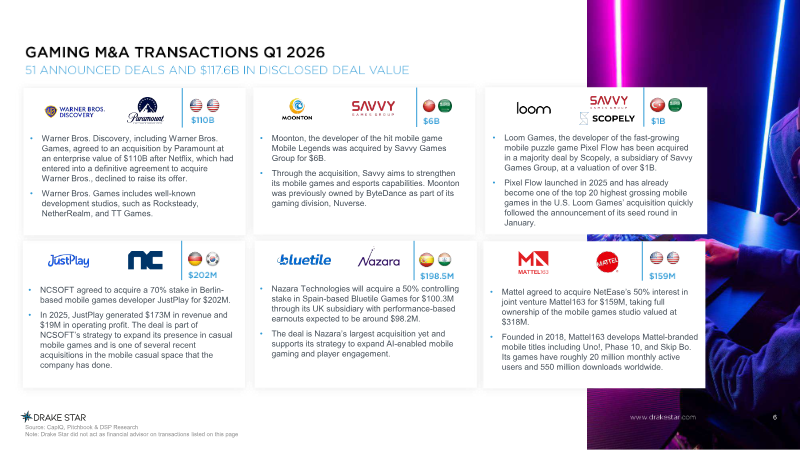
but still Bri don't give Strauss Lan any more ideas Chris maybe we could dive into this notion this concept of synergy and I I would love to hear your take in terms of like in this new environment like we're not going to see a lot of m&a based upon you know kind of multiples Arbitrage anymore probably for at least for for the near-term future or feel free to disagree with me if if if I'm wrong on that uh but it does seem that there are certainly advantages to scale that give you competitive Advantage I think most recently I had spoken to a few companies that talked about the value of cross promotion and looking at what they call portfolio LTV and certainly when you see like for examp you could take scopely as an example when they acquired stumble guys and the ability to acquire a lot of users organically and then to shift those users to a higher monetizing game like a monopoly go or something like that there's as as an example of like Cross promo and portfolio Al TV Brian had talked about cost savings through uh
consolidating Central functions I think that when you're at a certain level of scale you are able to get better deals from from vendors and just reduce kind of costs and things like that but maybe it it'd be great to understand your current thinking as far as you know the kinds of synergies or advantages that you would see in terms of that 10 to 15% that that you think is possible and then what is the ideal level of scale in in the current environment yeah I think on the Synergy side like I alluded to before you know I always had a really rational view as did the rest of the team the leadership team in Zinga around the amount of synergies that we could that could be realized again because we didn't force anything on the on the front end you know I think that you know there are certainly ways that you can impart synergies you know I I know that you take two as you alluded to with Strauss you mentioned him earlier that they were very vocal in terms of the cost synergies that they were going to be able to realize as a
way I think of probably plating the market around justifying the cost of the acquisition so that really was maybe more of a of a public market PR necessity rather than you know than something that they wanted to be as vocal about you know for us at Zinga we were fortunate enough that we were acquiring Studios I would say even up to Peak because Peak for all of its size and scale was only about 100 people right so we were not acquiring huge headcounts and the places where the synergies were were were most realized like I mentioned earlier was in those Central functions so so we didn't have to duplicate or they didn't have to add you know any more people to Legal Finance accounting HR all of the things that they lightly invested in but could keep at that level and and then we ended up creating like a matrix working relationship with those Folks at each of these Studios so that they had connectivity into the mothership but could still run their day-to-day business as they saw fit I think for things like cross promotion you know perhaps things have gotten better over time with your example of stumble guys
and and scopely but you know to me that was always a little bit of a red hearring because it was much more of a promise than what actually materializes in terms of the the behavior pattern of players you know going from one game to another just because it's in the same portfolio obviously you can run in-house ads and try and do all all of those things but if you apply natural conversion and clickthrough rates on that it's not going to be some Panacea of of you know ultimate benefit and then you also have to be very careful because you don't want to bring the highest value players from one game over to another that have no no certainty that they're going to be equally high value players as they were in the other game so to me Cross promo we saw some success like at Zinga for example in Social Casino in Match 3 because there was a lot of audience overlap and we actually also had the same IP in in both of those gaming experiences so there was two levers that we pulled which is overlap of audience and then and then IP Affinity but I think stumble guys to uh Marvel Strike Force or stumble guys to Star Trek or star trick to Strike Force like those are all things that I think conceptually sound good but I really
don't believe that that that that that is you know kind of a like I said a panacy of success I think it's it's quite Limited in its in its benefit and could in certain spots help but I think it's not something that drives the bus right could also end up being extraordinarily expensive right because if you're deviating a player from one of your wholly owned titles to a company you've partially acquired then pay an ear not on top of it you're that math doesn't quite work out we had a lot of pitches at we had a we had a captive audience of female Gamers that played cup fashion design home we often had companies come to us and say hey like you know this is our game we've built and you can send your players from design home like why the hell would I do that does exactly the other thing I want to just hit on JK is kind of like the concept of scale overall that you kind of brought up is it's kind of messy and Gray in the sense of embracer as a consolid entity is almost $4 billion of Revenue right like that makes them one of the biggest players in gaming just by total revenue so in the they have scale but where they don't have scale is in a studio level or a title level so they're
not getting the economies of scale that you would expect from a business with $4 billion dollar of Revenue relative to a business with 100 million because that hundred million dollar Revenue company might only have 10 employees embracer has thousands and thousands of employees Chris to your point when you're buying even Peak with only a 100 employees the economies of scale within that studio already are so good and so I think you know there for a long time a lot of stud I mean maybe more so it was focused on triaa but I think even these Dynamics bled into the best-in-class mobile Studios which is fewer better best and I think maybe it was because of covid and the shift in engagement metrics and revenue and everything happened in the industry we've gotten away from fewer better best and I think part of the layoffs that have permeating the industry in 23 in this year is also about slowly getting back to that fewer better best mentality in the sense of we need to make fewer games each game has to be bigger each game has to be more profitable has to be more live Ops driven etc etc and I think we're getting back to that with a lot of the structural shifts in the industry it
just takes time to get back to that and Chris maybe one other question I can ask you is I'm trying to remember who I spoke to but this was like years ago but I think I spoke to somebody at Zinga I think it was Scotty K who also spoke about sharing of best practices between Studios or something along those lines and so to what degree and and I know like in in the further past there was like a lot of lawsuits and things from the Zinga Playbook that got stolen and like that but like how much of the Synergy or incremental Improvement do you think could be ascribed to like certain Secrets Trade Secrets best practices from one Studio being exported to other Studios that then actually see seees some kind of uplift yeah it's interesting because you know those kinds of synergies that Scotty's talking about and he was a primary driver of that he and his team because what would happen uh so two things would happen in in those scenarios where you're talking about best practices number one is a studio would run into an issue for the first time time in their lives right so for example There Was You know I remember
with graham we had an issue shortly after the acquisition where they had some kind of currency inflation issue because of some mistake that they made and how they were pricing currency and all of a sudden they were like they had to create these syncs to get the currency out of the ecosystem and they weren't really sure what you know what was going on and and we were lucky enough as a company and as a leadership team that you know Zinga up until that point had 10 plus years of both successes and failures of free-to-play games and so the Treasure Trove of data and analytics that we had that we could just plug into these companies and take the data that they were experiencing in their game and show pattern recognition across that 10 years of data to give them answers and Solutions on how they could fix their issue and in some cases you know we would offer up resources of people to embed themselves for anywhere from three to six weeks in those Studios to fix these discrete issues and then immediately leave because we didn't want them to feel like we were there overstaying our welcome and those kinds of ad hoc things you know were a added a lot of value I would say more from the relationship and Trust level than
actually being able to chart how much it improved the financial efficiency of that of that group for that event or for that amount of time and then the second part which is I alluded to earlier is just the the access to the data so when you're a young Studio that's maybe on your first game trying to do your second and you're trying to figure out go to market strategies product Market fit Etc you're only as good as what you have built and that that building is you know the the data the data set is quite limited but if you you can benefit from a company that's had its its share of successes and failures albeit during different times in in the in the industry's history that data is supremely important to help inform your decision-making and we never actually prescribed that the data would be anything more than a tool used for these leaders to make decisions and we didn't say that it was the Holy Grail of right or wrong it was just more informative but if you can tap into that we saw tremendous benefit again ultimately on the you know with product development decisions it's in the execution but just building that trust
and and relationship and and being there for folks in a supportive way and offering up our our access to our resources basically for zero cost we didn't Bill we didn't do any interdepartmental billing for people's time or money or expense Etc but just to know that it was all there I think you know created a lot of mutual trust and and and improved the working relationship which to me is priceless it's sometimes not well understood but sometimes at certain studios I've seen like some really small dumb trick can like double D7 retention so like yeah sometimes some of that data is is actually quite helpful yeah and we did by the way I mean another just tactical thing was to be able to allow these folks who were spending their hard-earned you know dollars on marketing and advertising for us to to include them in in our Master service agreements with the ad networks to just give them some price you know some price relief right so I think that was probably that that was obviously quite tangible as well so those kinds of things where you can you know where you can identify again they're small in and
of themselves but they have tangible benefit and so Brian and Matthew before I ask Chris about like the future outlook of of m&a moving forward in the current environment do you guys have any other questions you'd like to ask Chris current thoughts on GameStop oh is it back now what's his name the the the day Traders back I mean roaring kitty is back and he's roaring yeah are we back in for another roller coaster I don't I don't know that I don't know that there's any more energy left in the market for this I mean I think yeah I think that was a that was a oneand done I don't think that it's going to replicate itself I mean I do have a question that ties into the future outlook for m&a and it is also kind of talking my book as someone who works at a Roblox Studio but I still think for Roblox professional developers it's still early you know there's still a lot of things that have to be worked out as as building on the platform but you know curious if you've thought about when these larger organizations to take roadblox seriously as a platform and what that might look like from a
industry structured perspective oh Matt great question don't hate me for these answers or I just you know this is all part of the healthy debate but I continue to be a a on the more skeptical side of large scale organizations investing in or quote unquote taking Roblox seriously obviously you have what Netflix is doing which I think is tremendous and I think you know reminds me of back in the day of second life and you know when when Brands were going in there and creating virtual spaces for themselves and when I was at Playboy we created a Playboy bunny shaped island and it was all fun and we invested in it as we invested in marketing right it was all meant to be a new storefront for our brand to interact with users in a new and different way and I see Roblox very much the the same because to me the unit economics prevent any large scale companies from taking Roblox seriously because if you're going to invest or acquire a top tier roblo developer it's it the financial profile is so at odds with your core business that you're going to have to you're ultimately going to create a lot of tension within your
organization from not just operations but accounting and finance and how do you invest in this growing business but you know when you're earning 20 cents on the dollar it's quite it's quite you know it's quite reversed in its in its logic but I do think that ufn roblocks present tremendous opportunities for games uh and game companies that have Brands to create extensions right we and we we talk about franchise extension trans media whatever words you want to use and I do think that that is where I'm most bullish about for our company and for others is to look at these platforms as ways to extend your brand just like you used to look at Discord and YouTube as a way to kind you know to kind of create that I think this is a natural uh a natural filter through which to look at things and and you know in terms of Acquisitions or exits you know I can't help but think that the closer proxy for Studios operating on Roblox as an exit is more than what you saw with with meta and Oculus like being kind of the sole acquir of content creators for their platform because they're such a uniquely situated
platform of one you know that there is really no other other place for these people to go than to the platform itself and I feel that Roblox could actually stand a benefit from that because then their unit economics you know improve if they're keeping 100% of what's going on and they're more in control of the IP that's being created so but I don't see it as a broad-based opportunity for companies to you know deploy Capital into for purposes of exiting those Studios but I do see it as a as a marketing platform for game IP all right cool so maybe before I ask that last question Chris maybe I could also ask you from a fun plus perspective are any of these three embracer bra split off companies attractive to you are you gonna make bid look we are yeah we are I mean as much as I would like to say yes because of our scale we are still heads down trying to you know get on the other side of the last couple years you know being a mobile first you know Forex strategy Centric company and I think we're doing a tremendous job doing that we also have
pledged to ourselves that we are not going to be looking at external opportunities until and unless we we raise external Capital because that's a great Catalyst for us to have that dry powder and also signal to the market that we are you know we are serious a serious acquir because the one thing I I I pride myself on is actually not trying to to negatively impact the relationships and reputations that I've built with the ecosystem you know mostly the people on the cell side the investment Banks Etc I think those folks there are a few things that they like less than than people that are on their call sheet that you know never transact right or or only just go into the data room to get to get data and then immediately extract themselves from the process because then they're not being genuine right and I've told all the folks that I that I know in this industry from the time I started fun plus I'm like hey please don't don't consider me at the top of your call list for the time being I will let you know I'm always happy to provide feedback but we're not ready to do any material transactions and that way you know when we do come to Market you know if all
things go well then we can be in a better position to actually be sincere in in our signals great interesting all right so final question Chris we're at the end of Zer we are in a what seems to be a fairly challenging Mobile gaming Market in Industry you know we're seeing some scale back in terms of some of the the rollup companies like embracer and so what is the the Outlook and what level of scale how much activity do you expect in the near-term future so the one the one positive thing that I can see and and a silver lining on all this is that there is an entire constituency of large-scale financial institutions that are now leaning into gaming because of the fact that they have been priced out of the market for the last three to four years you know leading up into covid which is the private Equity firms you know the The Sovereign wealth funds Etc that could not compete with the public market multiples and and there is an intersection of those folks that also have a bull bull casee thesis on the future of gaming and interactive entertainment and so you know there is
no shortage of folks that are ready willing and able to deploy Capital into gaming mobile or otherwise and we just saw the news today about the the eqt and keyword Studios right they're trying to finalize a deal after keyword had said no twice and eqt one of the preeminent European and Global private Equity Funds right continuing to up their you know up their offers because they see value so I think whereas before we had a certain Fil A Certain hose of capital that was that was driving a lot of the business I think there's new and different hoses that are now coming off the off the sidelines and looking at our industry and I think there's General feelings that the the most of the Dust up is behind us and that we all as an industry are getting smarter and operating with the new goalposts where they are and we're also doing things as an industry in terms of investing in platform diversification going crossplatform going off app store you know we're doing a lot of things to to create sus you know sustain ability for ourselves as an industry and we are all unified maybe
with the exception of Apple and Google as an ecosystem and making sure that we all succeed right all of the value chain links are working together to make sure that we continue to thrive and and persevere past these more challenges some people say challenging times but remember we're these are challenging times based on an abnormal Global event that that caused unintended inflated valuation so maybe we're back where we should be and the only thing that's been the the unfortunate you know kind of outcome of this has been the overinvestment by companies and people right and so you know now we're we're get going through that painful process but I think once that has settled down a little bit I think we'll be back into a good smooth sailing relatively speaking smooth sailing is defined differently now by the way than it was before in terms of growth rates but I think you know we're poised for I mean we're still going to be the largest sector of entertainment right that's not going to change so I think if you're betting a horse on gaming versus music versus books versus movies and TV this is still where you want to be and I think there's a lot of financial Capital out there that believes the same especially as the convergence is happening between gaming
and IP and interactive entertainment and the walls are falling down and and they're seeing this generational shift of digital Natives and the proportion of time that they're spending with gaming and gaming related activity is only going to continue to increase so I think I think well medium to long term I think we're going to be fine all right awesome well Chris thanks so much for your time do do you have a final message for our audience maybe from a fun plus perspective if not no worries no just just continue to do what you guys are doing I mean we have the most creative collaborative industry that I've ever been in I mean we always talk about this thing of coopertition in our industry and it's so true I've never seen such an industry that is so large in stature yet so so intimate in its community and the fact that there are a lot of us out there working together even though we work at different companies and in different capacities really trying to share thoughts best practices ideas suggestions learnings I think that will only continue to benefit us as an ecosystem and I encourage it and I I've love what I've seen and we've all locked arms during these these
difficult times to try and come up with Solutions and and and help each other and I just hope that that continues awesome thanks Chris yeah thanks so much Chris Brian Matthew thank you guys as well and for audience we will catch you next time bye everybody [Music] [Music]
Auto-generated captions from YouTube — names and numbers may be misheard.
Key insights
Distilling the key insights…
Ask AI about this video
Cite this video
Citation
Generating citation…



















Comments