Origin
Company
Documents about Origin
Epic’s State of Unreal: Building the Future of Games or Just Selling More Tools?
The annual State of Unreal keynote highlighted Epic Games’ ongoing efforts to expand its ecosystem through Unreal Engine 5.6, the Unreal Editor for Fortnite (UEFN), and the Epic Games Store.
- Epic Games reported $2.1 billion in total payouts to developers, with $722 million of that revenue generated specifically by third-party creators within the Unreal ecosystem.
- Epic is aggressively expanding the Epic Games Store with mobile self-publishing tools and a 0% revenue share model on the first $1 million earned to compete with established platforms.
- Unreal Engine 5.6 and the Unreal Editor for Fortnite (UEFN) are the core of Epic's strategy, though UEFN currently faces significant criticism regarding its platform stability and user experience.

The Man Who Made Ultima: Lord British | Extra Credits Gaming
Richard Garriott, widely known by his persona Lord British, stands as a foundational figure in the evolution of computer role-playing games (CRPGs) and massively multiplayer online games (MMOs).
- Richard Garriott, known as 'Lord British,' pioneered the RPG genre with the Ultima series, which introduced the concept of the 'avatar' and shifted industry standards toward complex morality systems with 1985's Ultima IV: Quest of the Avatar.
- Garriott founded Origin Systems, which was acquired by Electronic Arts in 1992 for $30 million in stock and later produced the groundbreaking 1997 title Ultima Online, one of the first successful graphical MMOs to utilize a recurring subscription model.
- The commercial success of Ultima Online led to internal conflict at EA, where the company's mandate to pivot toward multiple simultaneous MMO projects resulted in the cancellation of other titles and the eventual stagnation of Origin Systems.

Mobile Gaming Market Review 1H2024 | AppMagic Data Analysis
The mobile gaming market reached a state of stabilization during the first half of 2024, effectively concluding the post-pandemic decline.
- The mobile gaming market stabilized in 1H 2024, ending the post-pandemic decline with Tier 1 Western markets recording a 7% revenue increase despite modest global download growth of 1–2%.
- Major studios are shifting strategy from high-risk new title development to optimizing existing assets through sophisticated LiveOps and enhanced monetization frameworks.
- Success is increasingly driven by the 'casualization' of core mechanics, exemplified by Brawl Stars' revenue recovery and the integration of hyper-casual loops in 4X strategy titles like Last War: Survival and Whiteout Survival.
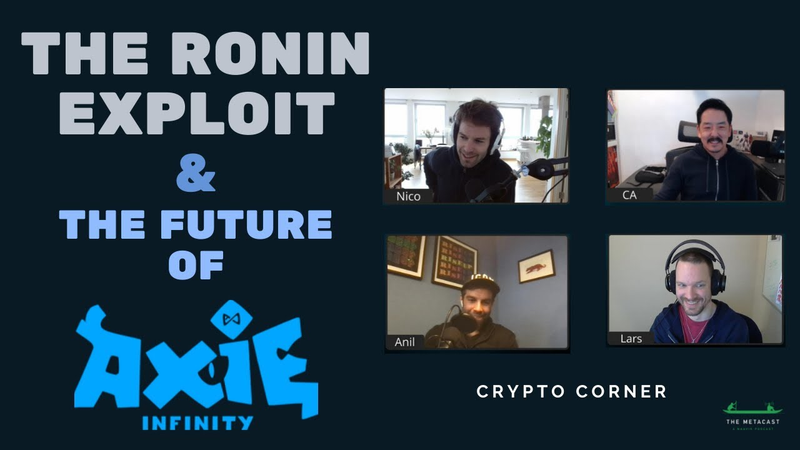
The Ronin Exploit & The Future of Axie Infinity - The Metacast by Naavik
The $625 million exploit of the Ronin network serves as a critical case study in the vulnerabilities inherent to blockchain bridge architecture and operational security.
- The $625 million Ronin network exploit, involving the theft of 170,000 ETH and 25 million USDC, was caused by a compromise of five out of nine validator nodes.
- The breach highlights a critical failure in IT security and internal monitoring rather than a fundamental flaw in blockchain technology, emphasizing the risks of centralized infrastructure in decentralized gaming.
- Axie Infinity is pivoting its business model away from speculative, growth-based revenue toward a 'fun-first' approach focused on long-term engagement and entertainment value.
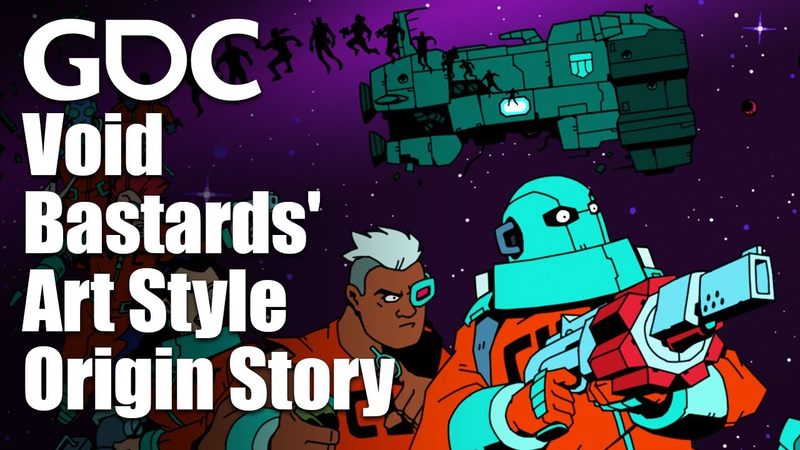
Void Bastards' Art Style Origin Story
The development of the art style for the 2019 game Void Bastards was a multi-year iterative process driven by a commitment to a cohesive comic book aesthetic.
- The development team for Void Bastards was geographically distributed across the UK, Canberra, Canada, and Scotland, necessitating early conceptual tools like a three-page comic to align the team on the game's tone and world-building.
- The game's core loop shifted from a single protagonist who accumulated genetic errors upon reincarnation to a system featuring a series of disposable prisoner characters.
- To manage production scope, the team opted for hand-designed spaceship layouts with procedural interior elements rather than fully procedural ship generation.

Guitar Hero Origin Story | Lessons Learned with Kai Huang former CEO and Co-Founder of Red Octane
RedOctane emerged as a pivotal force in the mid-2000s gaming landscape by transitioning from an online rental service to a specialized hardware and publishing powerhouse.
- RedOctane achieved financial stability by pivoting from an online rental service to a high-margin hardware business, specifically focusing on niche accessories like dance pads before partnering with Harmonix for Guitar Hero.
- Product pricing should be based on the perceived value delivered to the consumer rather than a cost-plus calculation to maximize profitability.
- To maximize the return on fixed marketing expenditures, companies must execute simultaneous product launches across all platforms and territories to ensure immediate market penetration.
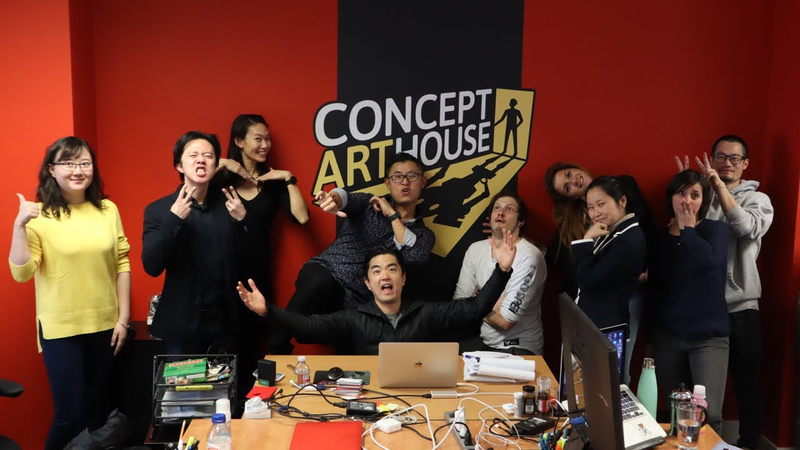
From Artist to CEO | Concept Art House Origin Story and Inside Tour
Concept Art House is a high-end art service provider for the gaming industry, specializing in concept art, illustration, 3D modeling, and marketing assets.
- Concept Art House, founded in 2006, has scaled from a six-person team to over 70 staff members, providing art services for major clients including Blizzard, EA, Sony, and Wizards of the Coast.
- The mobile gaming sector drives 70% of the company's output, with production budgets for individual mobile titles now reaching as high as $40 million.
- The studio operates a distributed business model with a San Francisco headquarters and significant production facilities in Shanghai, utilizing Jira, Shotgun, and Basecamp to manage international workflows.

*The Most* Famous Mobile Gaming Blog - Deconstructor of Fun | Origin Story with Miska Katkoff
Deconstructor of Fun serves as a prominent industry platform dedicated to the analysis of mobile free-to-play gaming, focusing primarily on the mechanics of monetization and market performance.
- Deconstructor of Fun functions as a specialized analytical platform for the mobile free-to-play industry, prioritizing technical deep-dives into monetization mechanics and market performance over general news.
- The platform has scaled to include a network of over 115 contributors who produce content and host the 'This Week in Games' podcast.
- The blog serves as a professional portfolio for contributors, where public documentation of analytical processes and industry insights frequently leads to career advancement and recruitment opportunities.

Where Do Your Fortnite Dollars Really Go? - The Origin Story of Tim Sweeney - Extra Credits
Tim Sweeney, the founder of Epic Games, has utilized his significant wealth generated from the success of titles like Fortnite to become one of the largest private landowners in North Carolina.
- Epic Games founder Tim Sweeney has utilized wealth from titles like Fortnite to acquire nearly 40,000 acres of land in North Carolina for conservation purposes.
- Sweeney’s land holdings exceed the total geographic size of the country of Liechtenstein.
- In 2016, Sweeney donated $15 million to reroute power lines away from the ecologically sensitive Box Creek Wilderness.

Mailbag 4 - Questions About the Game Industry - Extra Credits
This discussion addresses a variety of inquiries regarding the game industry, ranging from professional development and design resources to market trends and corporate analysis.
- Professional success in the game industry is driven by tangible output and functional prototypes rather than abstract concepts or academic degrees in fields like psychology or economics.
- Aspiring designers should prioritize practical skill development and portfolio building, supplemented by foundational texts such as Jesse Shell’s 'The Art of Game Design: A Book of Lenses' and Don Norman’s 'The Design of Everyday Things'.
- Digital distribution platforms like EA’s Origin are essential business model pivots necessitated by the ongoing decline of physical game sales.