Mike
Company
40 documents in the library are about Mike, from writers such as The Esports Advocate, PocketGamer.biz and Deconstructor of Fun. Each has a summary and key insights with the page they come from.
Connections
The documents about Mike on the inner ring, the other games and companies they name on the outer one. Select a cover to see it up close and open it in a new tab; drag to move, pinch or Ctrl + scroll to zoom.
Documents about Mike
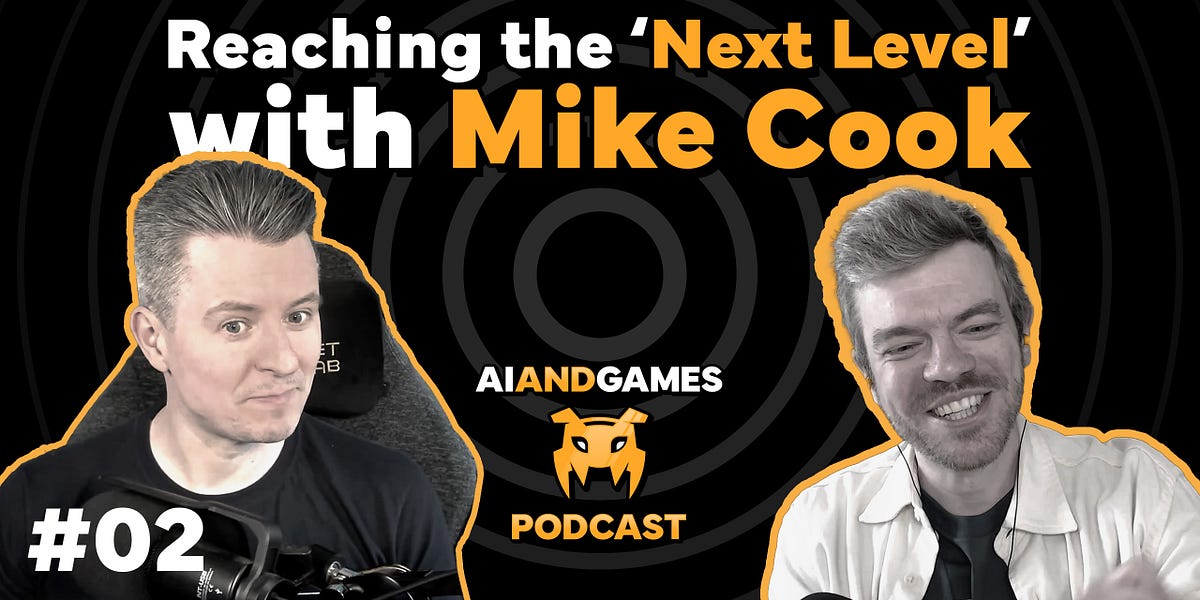
Reaching the Next Level with Mike Cook
The second episode of the AI and Games podcast features a discussion between host Dr. Tommy Thompson and guest Dr. Michael Cook, a senior lecturer at King’s College London.
- Dr. Michael Cook, a senior lecturer at King's College London with over a decade of experience in procedural content generation (PCG) and generative design for video games, recently published 'Next Level'.
- 'Next Level' is an introductory book on PCG in games, designed to be accessible to a general audience without a computer science background.
- The book discusses the challenges of introducing complex subjects to a broad audience and the selection of topics to cover.

Next Level: A Warm and Encouraging Introduction to Procedural Generation
The primary purpose of this analysis is to review Dr. Mike Cook’s book, Next Level: Making Games That Make Themselves, while providing a broader update on the state of artificial intelligence within the global video game industry as of May 2026.
- Xbox has discontinued its Copilot AI tool for mobile and console, following a largely unnoticed PC launch last year, as new head Asha Sharma staffs the leadership team with four members from Microsoft's CoreAI.
- Blender faced user backlash for accepting a corporate donation from AI company Anthropic, and while they announced they were surprised and need to address AI intersection, they are keeping the money as a one-off donation.
- Roblox introduced 'Roblox Reality,' a hybrid architecture using a video generation layer and AI models to re-render existing games for higher visual fidelity, a concept previously pitched by Stadia in 2019 for style transfer.

Foodini: Building the Dietary Intelligence Layer for the Restaurant Industry
Foodini addresses the urgent need for allergen compliance and dietary intelligence in the U.S. restaurant sector, driven by a wave of new regulations such as California SB-68 that will take effect July 2026 and similar laws in New York, Maryland, Michigan, New Jersey, and Missouri.
- Foodini provides an AI-driven platform for allergen compliance and dietary intelligence, addressing new regulatory requirements in states like California, New York, and Maryland that take effect by July 2026.
- The platform utilizes a proprietary AI engine, AINGEL, to classify over 450,000 products and has achieved a 60% reduction in staff allergen queries with zero reported incidents among live partners.
- Clear dietary labeling drives commercial performance, with tagged menu items generating 3.6× higher engagement and receiving four times more views.
Liquid Death’s Mike Cessario on Building a Brand That Can’t Be Copied
Liquid Death, a beverage company founded in 2019, has achieved significant market success by positioning itself as an entertainment-first brand rather than a traditional consumer goods manufacturer.
- Liquid Death, founded in 2019, has scaled to hundreds of millions in revenue by positioning itself as an entertainment-first brand rather than a traditional beverage manufacturer.
- The company’s competitive moat is built on countercultural branding and humor, which allows it to bypass the restrictive corporate approval processes that hinder incumbents like Coca-Cola and Pepsi.
- By treating the physical product as a commodity, the brand has successfully expanded its portfolio from water into sparkling water, iced tea, and energy drinks.
Amazon Abandons Its Open World Driving Game with Maverick Games
Amazon has officially terminated its publishing agreement with UK-based developer Maverick Games for an unannounced open-world driving title.
- Amazon has terminated its publishing agreement with UK-based developer Maverick Games for their upcoming AAA narrative-led open world driving game.
- Maverick Games, founded in 2022 by former Forza Horizon creative director Mike Brown, confirmed that development of the title remains ongoing as they seek a new publishing partner.
- This move is part of a broader strategic contraction at Amazon Game Studios, which has recently cut MMO development staff, ceased operations on the title 'King of Meat,' and sold the MOBA 'March of Giants' to Ubisoft.

The Ares Gameplan: UA Financing, Non-US Developers, and Kim Kardashian
Ares Interactive is positioning itself as a successor to Glu Mobile, leveraging a strategic focus on user acquisition (UA) financing and partnerships with non-US development studios.
- Ares Interactive has secured $70 million in funding to expand its portfolio of cross-platform free-to-play games.
- The company is led by founder Niccolo de Masi and executive Mike DeLaet, both of whom are former Glu Mobile veterans, leading to industry comparisons of Ares as 'Glu 2.0'.
- Ares is actively exploring the development of a celebrity-licensed game similar to the success of 'Kim Kardashian: Hollywood'.

TWiG #370: Supercell’s Annual Letter, Reading Between the KPIs
The global gaming industry is currently defined by a stark consolidation of market share, where established live-service titles dominate revenue and monthly active users across PC and console platforms.
- Supercell’s Squad Busters failed to achieve long-term viability despite reaching 75 million downloads and receiving a $100 million marketing investment.
- Supercell is restructuring into a startup-like model with tighter budgets and profit-sharing to address internal complacency and move away from a reliance on high-spend user acquisition.
- Roblox is struggling with low unit economics and market saturation due to a user base primarily under the age of 18, prompting a strategic pivot toward older, higher-income demographics.
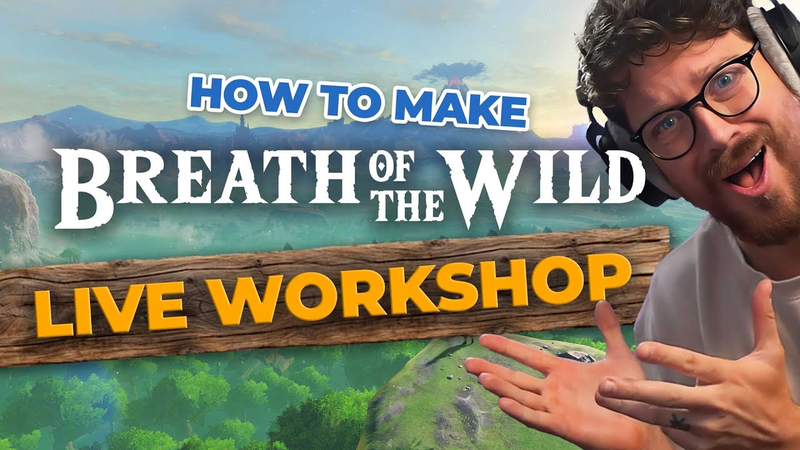
How To Make "Zelda: Breath Of The Wild" Workshop: Day 1
Replicating the distinct visual aesthetic of The Legend of Zelda: Breath of the Wild within the Unity engine requires a disciplined approach to asset management and color theory.
- Establish a consistent color scheme for environments and biomes early in the development process to create a cohesive visual foundation, even if deviations occur later.
- Implement Level of Detail (LOD) groups for all exterior assets to manage poly counts and texture sizes, preventing performance issues when rendering large-scale environments.
- Maintain strict folder organization for all imported assets to ensure project scalability and prevent workflow bottlenecks during development.

Dignitas Partners With LANForge
The Los Angeles-based esports organization Dignitas has entered into a strategic partnership with gaming PC manufacturer LANForge.
- Esports organization Dignitas has entered into a partnership with gaming PC manufacturer LANForge, though the financial terms of the deal were not disclosed.
- Under the agreement, LANForge will supply high-end gaming PCs to Dignitas players, as well as to the organization's broadcast and content teams.
- The partnership includes collaborative marketing efforts, with LANForge branding to be featured on Dignitas team jerseys and promoted across social media channels.
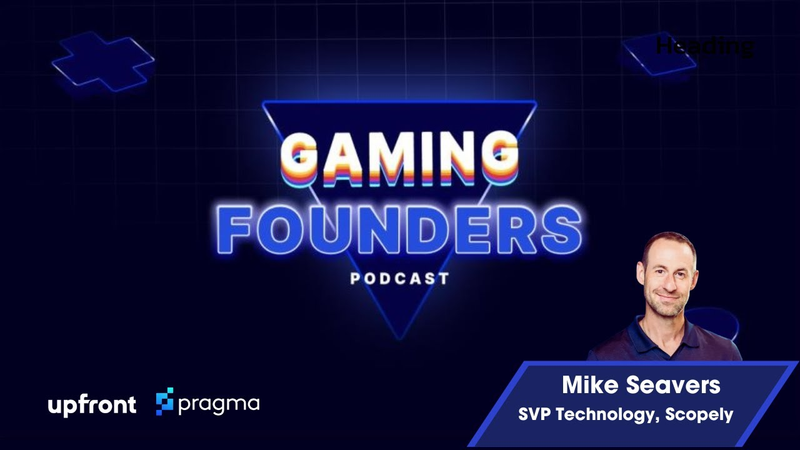
Fireside Chat with Mike Seavers at the Online Services Summit
Hypergrowth in the gaming industry necessitates a fundamental shift from startup-driven improvisation to standardized, enterprise-grade engineering practices.
- Scaling a studio from 300 to 5,000 employees often leads to a 80% turnover rate in leadership, as only about 20% of managers successfully adapt to the evolving demands of hypergrowth.
- Engineering leaders must shift their focus from individual technical contributions to team enablement and long-term organizational health once they reach the director level, as failing to delegate effectively is a primary cause of leadership burnout.
- The gaming industry should adopt mature, pragmatic operational processes from enterprise software development—such as rigorous production cycles and structured outsourcing management—rather than resisting them due to a desire to remain 'different' or 'creative'.
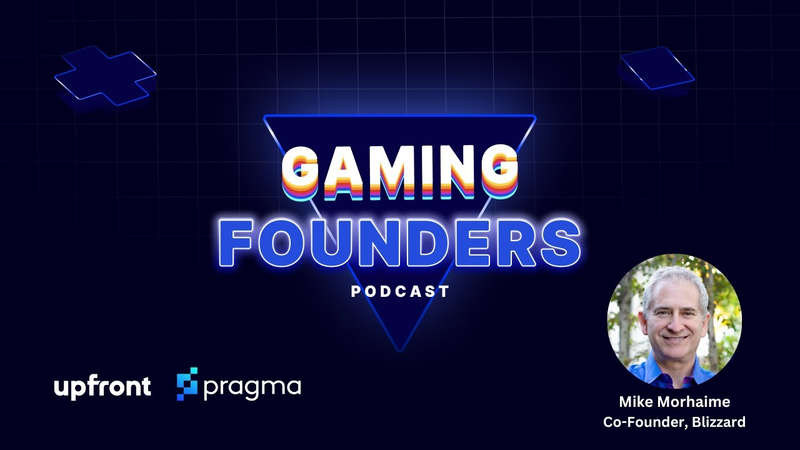
Mike Morhaime on Blizzard's Iteration Culture that Built Starcraft, Warcraft, and Diablo
The core philosophy driving long-term success in the gaming industry centers on an iterative development process that prioritizes execution and gameplay quality over rigid adherence to initial concepts.
- Blizzard’s success was driven by an iterative development culture where few games followed their original plan, proving that 90% of success relies on execution rather than initial concepts.
- The transition from Warcraft I to Warcraft II resulted in an order-of-magnitude increase in success, achieved by adding features like fog of war, naval units, and higher resolution graphics.
- Blizzard’s early growth was fueled by a $25,000 initial investment—$15,000 borrowed from a grandmother and $10,000 from a graduation gift—before the company was eventually acquired by Davidson and Associates.
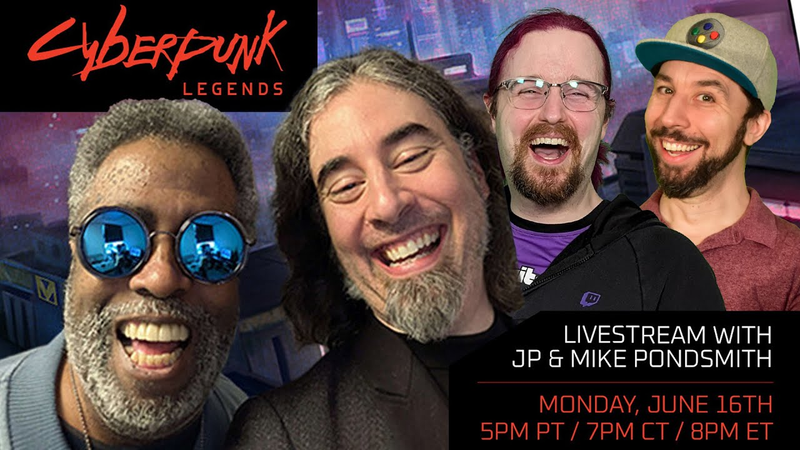
Cyberpunk: Legends FIRST GAMEPLAY LOOK with Mike Pondsmith and James Portnow
Cyberpunk: Legends represents a strategic effort to translate the high-stakes, narrative-driven essence of the Cyberpunk tabletop RPG into an accessible, cooperative card game.
- Cyberpunk: Legends is a cooperative card game for one to four players that utilizes poker-inspired mechanics and restricted communication to emphasize team synergy over individual heroics.
- The game is developed through a partnership between Talsorian and CD Projekt Red to ensure strict adherence to established franchise lore and the master timeline.
- The design features a modular, scenario-based structure that supports non-linear storytelling and long-term character progression without the need for a game master.