indie
CompanyUnited States
Documents about indie

Storytelling Tools to Boost Your Indie Game's Narrative and Gameplay
Integrating traditional narrative structures with flow theory serves as a powerful strategy for indie game developers to deepen player engagement and refine mechanical progression.
- Integrate narrative structures with flow theory to align mechanical progression with emotional development, ensuring that gameplay challenges feel earned and meaningful.
- Structure the player's emotional journey using a narrative arc that includes an inciting incident, a low midpoint, a critical black moment, and a decisive conclusion.
- Establish a baseline of normality before introducing conflict to provide the necessary context and empathy required for players to engage with subsequent challenges.

Practical Contract Law 201 for Indie Developers: Moderately Scary Edition
Contracts function as the foundational rulebooks for independent game studios, providing the necessary clarity and predictability to navigate business relationships and mitigate risks associated with both failure and unexpected success.
- Prioritize robust work-for-hire agreements that explicitly transfer all project-related intellectual property to the studio, avoiding fragmented 'Franken-contracts' that jeopardize ownership.
- Secure leverage in development agreements by withholding the formal transfer of intellectual property rights until all final payments are successfully processed.
- Mitigate financial risk from scope creep by implementing rigorous scope-of-work documentation, formal change-order processes, and mandatory kill fees.
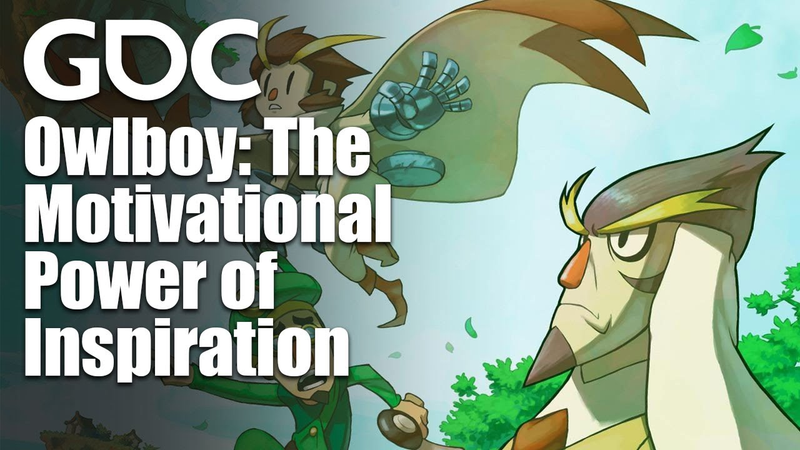
Owlboy: The Motivational Power of Inspiration
The nine-year development cycle of the indie title Owlboy serves as a case study for the critical role of sustained creative inspiration in long-term game production.
- Maintaining long-term motivation over a 9-year development cycle requires a team-wide commitment to a core vision, even when faced with significant financial hurdles and the need for secondary employment.
- Design inspiration can be sourced by internalizing experiences from other media, such as architectural elements observed during travel, and by allowing the mind to wander during periods of boredom.
- Iterative design is more effective when moving from small, rough sketches to pixel art sprites, which helps developers focus on essential shapes and silhouettes rather than getting stuck on minute details.
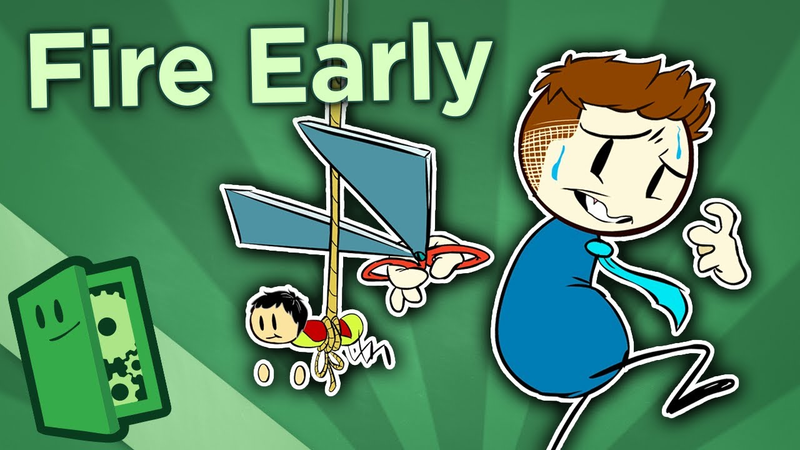
Indie Advice - Fire Early - Extra Credits
Effective project management in the indie game industry requires the difficult but necessary willingness to terminate underperforming team members early.
- Delaying the termination of an underperforming team member prioritizes one individual over the collective success and morale of the entire project team.
- Procrastinating on personnel decisions creates compounding technical and operational debt that forces remaining team members to work at reduced efficiency.
- Addressing a poor fit within the first month of a year-long project limits the negative impact to 8% of the development timeline.
We Failed at Publishing Competitive Games so You Don't Have to
The pursuit of a competitive gaming publishing label serves as a cautionary tale regarding the disconnect between development expertise and market realities.
- Financial success in competitive gaming requires aligning development costs with market reality, as even respectable sales of 200,000 units—such as those achieved by Divekick—can fail to recoup investments if the budget and strategy are misaligned.
- Publishers must avoid the cognitive bias of attributing past successes to internal expertise rather than the inherent appeal of the product, which often leads to the repeated failure of marketing strategies for subsequent titles like Capsule Force and Gun Sport.
- A shift in strategy is required from front-loaded content models to sustainable post-release update cycles, as the former fails to maintain the long-term engagement necessary for competitive titles.
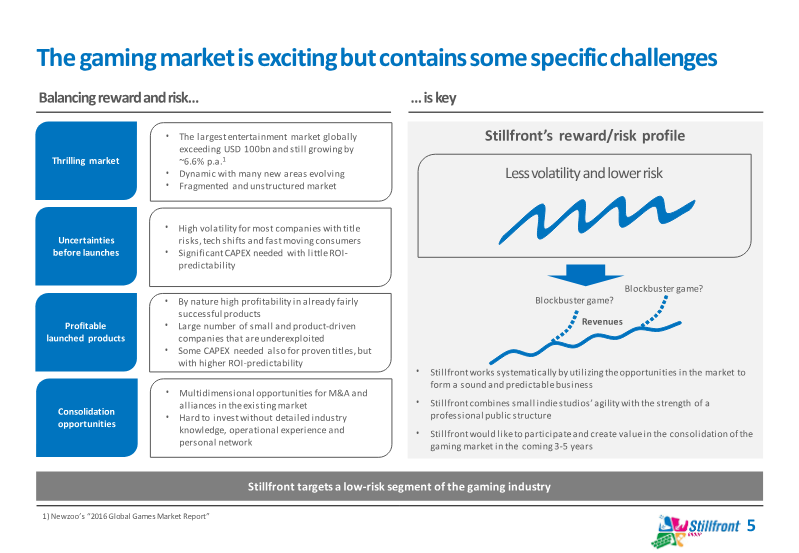
Stillfront Group Presentation: Q1 2017 Report
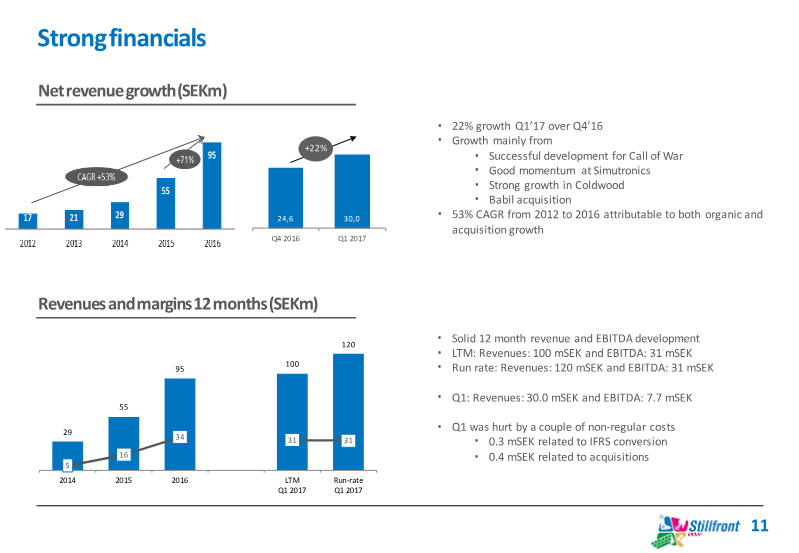
Stillfront Group’s Q1 2017 report outlines a business model centered on acquiring and managing a portfolio of small, independent gaming studios to achieve high-growth, low-risk profitability.
- Stillfront Group achieved a 53% compound annual growth rate between 2012 and 2016, maintaining EBITDA margins between 25% and 35% since listing.
- Q1 2017 net revenues reached 30 million SEK, marking a 22% increase over the previous quarter driven by acquisitions and existing title performance.
- The business model focuses on acquiring independent studios to manage a portfolio of long-lived, free-to-play strategy games, mitigating the volatility of blockbuster-driven development.
Low Poly Modeling: Style Through Economy
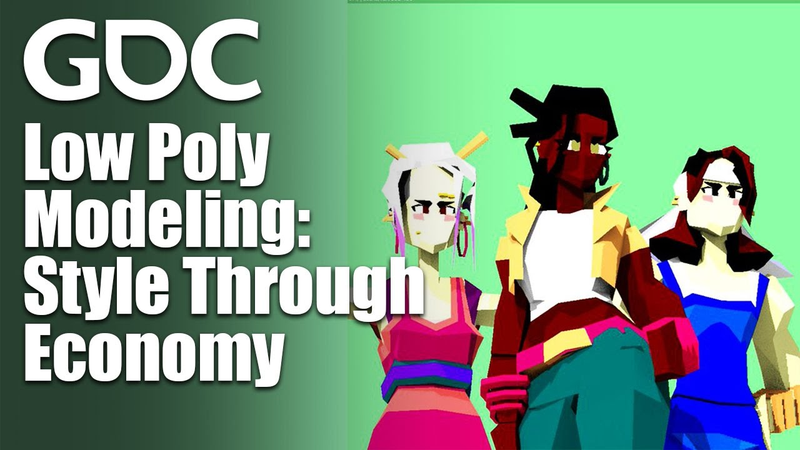
Low-poly modeling functions as a deliberate design philosophy centered on surface economy, prioritizing stylistic efficiency and the clear communication of visual ideas over the pursuit of high-fidelity realism.
- Adopting a low-poly first workflow increases productivity and iteration speed by eliminating the need for manual decimation or retroactive optimization.
- Low-poly modeling prioritizes surface economy and silhouette legibility, allowing developers to maintain consistent visual quality while managing limited resources.
- Low-poly geometry functions as an efficient control cage for subdivision surfaces, enabling rapid structural adjustments before final detailing and sculpting.
The Auteur Myth - Lone Visionaries... and Their Teams - Extra Credits
The gaming industry frequently suffers from the auteur myth, a persistent misconception that complex video games are the product of a single, visionary creator.
- Modern game development is an inherently collaborative process that relies on the specialized contributions of dozens or hundreds of professionals, including programmers, artists, designers, and sound engineers.
- The 'auteur myth'—the misconception that games are the product of a single visionary—obscures the reality of team-based production and creates unrealistic expectations for aspiring developers.
- Attributing success to a single individual often ignores the essential contributions of contractors and part-time specialists who are frequently necessary to achieve high-quality output in both indie and AAA sectors.
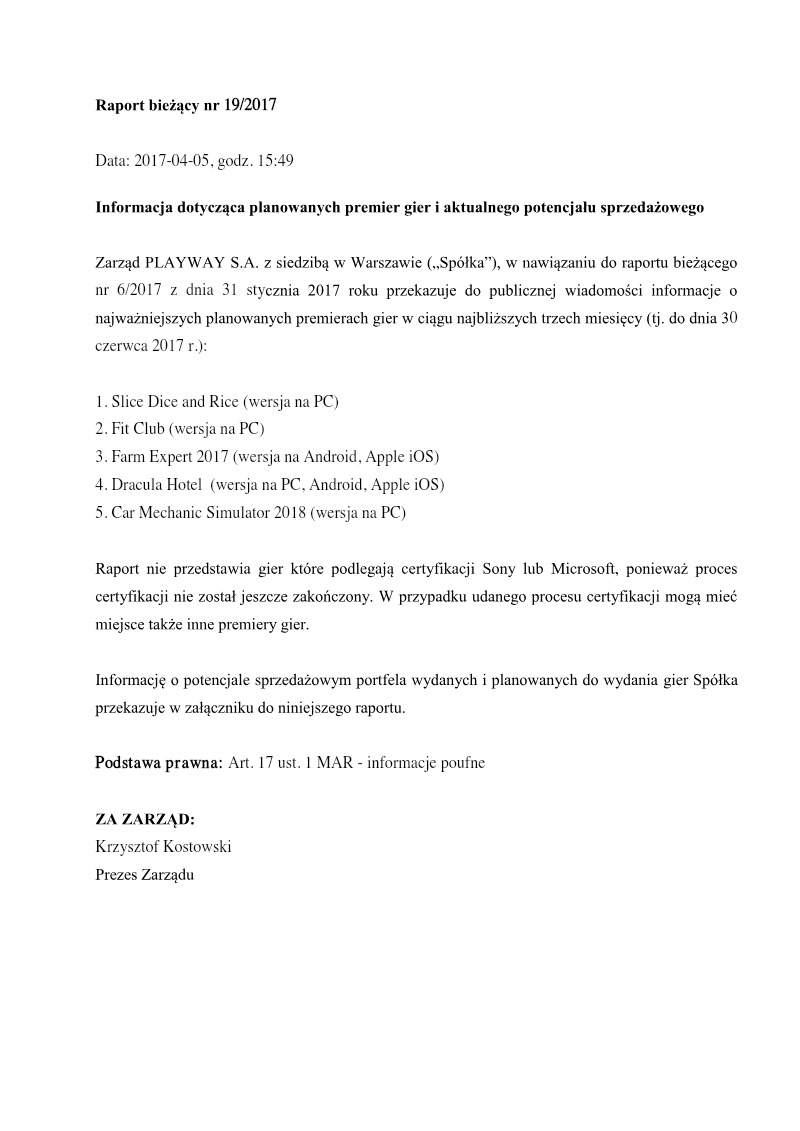
Raport Bieżący Nr 19/2017
PlayWay S.A. outlines its strategic release schedule and commercial outlook for the second quarter of 2017, focusing on a diverse portfolio of titles across multiple platforms.
- PlayWay S.A. is prioritizing the launch of its flagship title, Car Mechanic Simulator 2018, for PC during the second quarter of 2017.
- The company’s Q2 2017 release pipeline includes five confirmed titles: Slice Dice and Rice, Fit Club, the mobile version of Farm Expert 2017, and others.
- PlayWay S.A. is pursuing a multi-platform strategy targeting PC, Android, and iOS to maximize market reach.
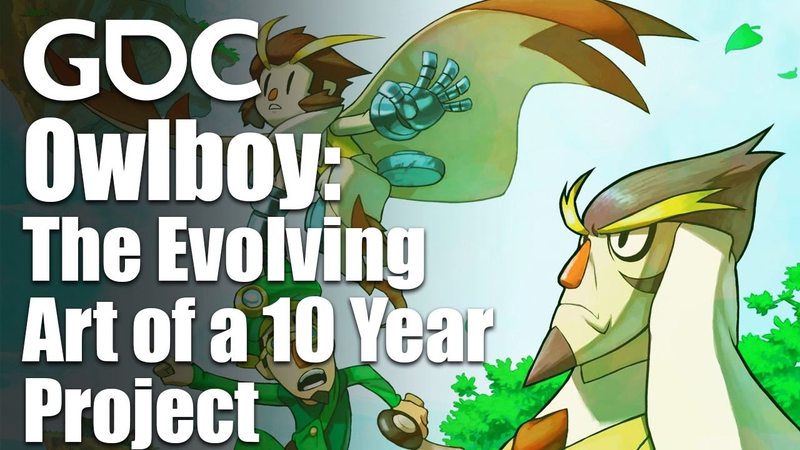
Owlboy: The Evolving Art of a 10 Year Project
The decade-long development of the indie title Owlboy serves as a case study in the tension between creative perfectionism and the practical requirements of project completion.
- Owlboy was in development for 10 years, spanning an entire console generation and outliving the XNA programming language originally used for its creation.
- To maintain visual relevance, the developers implemented custom algorithms to smooth pixel art movement, moving beyond the traditional constraint of locking animations strictly to pixel grids.
- The game's narrative tone shifted significantly toward a story of friendship and personal struggle after the developers experienced major life events, including the death of a close friend.
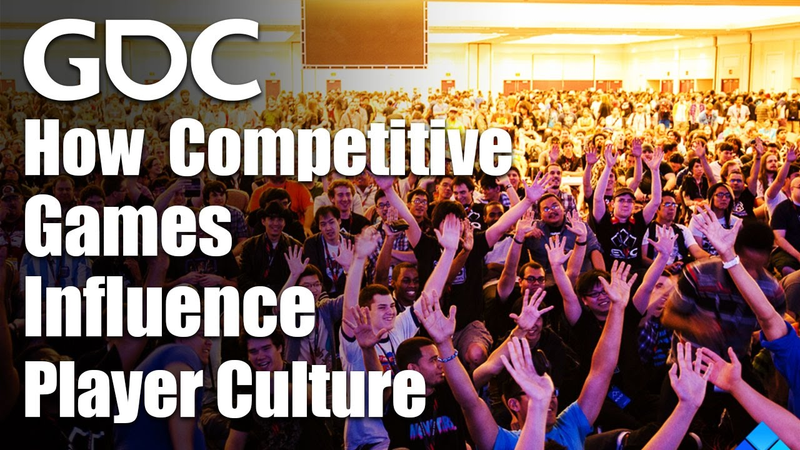
Arcade to eSports: How Your Competitive Game Influences Player Culture and Values
The evolution of competitive gaming from the arcade era to modern eSports reveals that the structural design of a game directly dictates the values and social dynamics of its player base.
- Game structural design directly dictates the values and social dynamics of a player base, meaning competitive ecosystems must be built to reflect the game's inherent culture.
- The fighting game community maintains a grassroots, open-bracket culture by prioritizing direct participation and personal mastery over the passive consumption models common in modern eSports.
- To sustain competitive ecosystems, organizers should avoid standardized, spectator-focused industry models and instead foster accessible entry points through youth and collegiate formats.
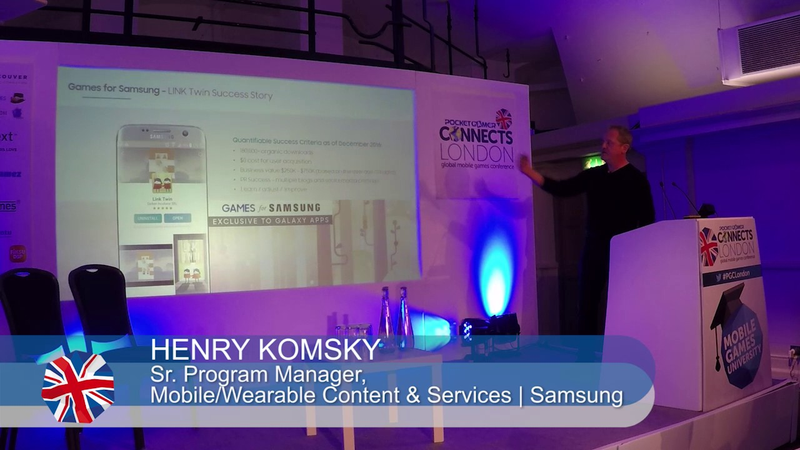
What is the Games For Samsung initiative?
The Games for Samsung initiative is a strategic developer program designed to help indie studios and smaller developers build a substantial, engaged user base for new mobile titles.
- The Games for Samsung initiative offers indie developers promotional support and high-visibility placement in the Galaxy Apps store in exchange for 90 days of platform exclusivity.
- Participating developers receive four weeks of banner placements, social media campaigns, dedicated PR, and white-glove technical support to help reach a performance goal of 100,000 downloads.
- To qualify, developers must submit brand-new titles for an internal review and implement a functional monetization model, preferably using the Samsung billing system for in-app purchases.