indie
CompanyUnited States
Documents about indie
Indie Polish: Making the Most of the Last 10%
Polish serves as a critical differentiator for independent games, transforming functional prototypes into cohesive, commercially viable experiences.
- Prioritize visual consistency and essential quality-of-life features, such as UI scaling and control rebinding, to establish a professional first impression that differentiates indie titles from functional prototypes.
- Reallocate resources from non-essential high-fidelity elements, like hyper-realistic environments, toward core mechanics that define the primary player experience.
- Utilize cost-effective animation techniques like squash and stretch, alongside strategic lighting, to elevate aesthetic quality without the need for massive production budgets.
Still Grooving: Game Dev Life Set to Live Music
This presentation explores the emotional and professional realities of independent game development, focusing on the lifecycle of the title Hyper Light Drifter.
- Developers should prioritize creative 'love' and thematic resonance over exhaustive perfectionism, as the core player experience is defined by atmosphere rather than just mechanical systems.
- The labor invested in game development acts as a value multiplier, where thousands of hours of team effort can generate hundreds of years of collective engagement for the global player base.
- A sustainable career requires rejecting rigid work-life balance models in favor of a fluid, rhythmic approach to productivity that emphasizes intentionality and variety.
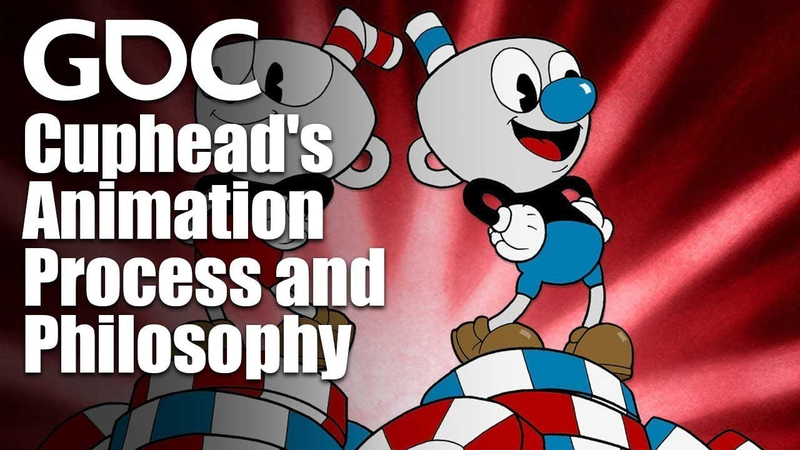
Cuphead's Animation Process and Philosophy
The development of the 2D action game Cuphead is defined by a commitment to the aesthetic and production techniques of 1930s animation.
- Studio MDHR maintains the aesthetic of 1930s animation by utilizing traditional paper-based animation, hand-inked frames, and watercolor backgrounds rather than digital simulations.
- The design process for Cuphead bosses prioritizes simplicity and solid shapes, avoiding overly complex details that would be difficult to animate or rotate in 2D space.
- To ensure technical feasibility, animators create rough blue-pencil sketches before committing to final designs, as the high-stakes nature of paper animation makes late-stage changes labor-intensive.

Designing with Physics: Bend the Physics Engine to Your Will
This presentation addresses the common challenge of achieving solid, responsive physics in indie games without requiring custom engine development.
- Combat 'floatiness' by increasing gravity beyond realistic levels, as the issue is a design-driven limitation of default engine settings rather than a purely technical failure.
- Improve simulation stability and perceived weight by implementing significant mass ratios between objects rather than using uniform mass defaults.
- Mitigate tunneling and jitter in fast-moving objects by reducing the fixed time step and enabling continuous collision detection.

Raport bieżący nr 52/2017: Zawarcie umowy inwestycyjnej
PlayWay S.A. has entered into a strategic investment agreement with Bartłomiej Gajewski to restructure and expand the development operations surrounding the 911 Operator franchise.
- PlayWay S.A. acquired a 50.01% controlling interest in the newly rebranded Game Operators Sp. z o.o. (formerly Creative Octopus) through a 495,000 PLN capital injection.
- All economic and moral copyrights for the '911 Operator' franchise were transferred to Game Operators Sp. z o.o. to consolidate future revenue streams.
- The partnership aims to scale production by establishing five new development teams focused on porting '911 Operator' to mobile and console platforms.
(Opportunity) Cost Effective Marketing & PR for Indies
Indie game marketing is most effective when developers shift their perspective from a purely technical mindset to a consumer-centric one.
- Treat marketing as a game design problem by identifying your objective—getting the player to the game—and systematically removing barriers to that goal.
- Conduct a competitive audit by analyzing similar titles to determine your game's market position, pricing strategy, and unique selling points.
- Perform a SWOT analysis (Strengths, Weaknesses, Opportunities, Threats) to objectively evaluate your game from a consumer's perspective, focusing on the 'tip of the iceberg' that players actually see.
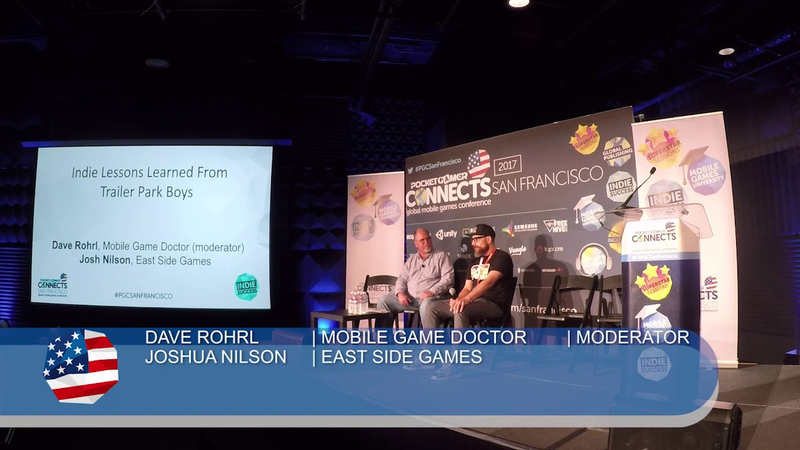
Eastside Games' indie lessons learned from Trailer Park Boys
The development of Trailer Park Boys: Greasy Money serves as a case study for independent studios navigating the complexities of licensed intellectual property (IP) in the mobile gaming market.
- Trailer Park Boys: Greasy Money achieved 2.5 million installs in its first 45 days and reached the top 100 in over 100 countries by pivoting from a mechanics-heavy design to a narrative-driven idle game model.
- The studio successfully balanced profitability and retention by utilizing a hybrid monetization model where in-app purchases generate 75% to 80% of revenue, supplemented by secondary ad revenue.
- Leveraging niche intellectual property significantly reduces user acquisition costs and increases project visibility with platform holders, provided the studio maintains creative control and agility.
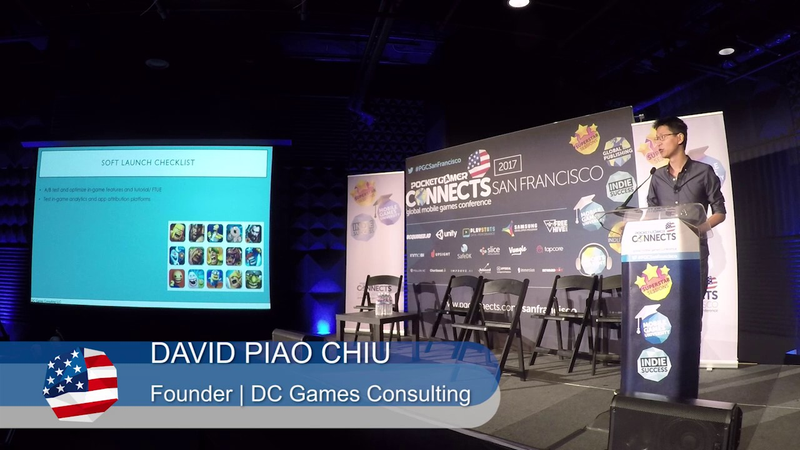
An indie survival guide to self-publishing in the mobile free-to-play world
The mobile free-to-play (F2P) landscape is characterized by high market saturation, with over 800,000 games on the iOS App Store and thousands of new titles launching weekly.
- The mobile F2P market is highly saturated, with over 800,000 games on the iOS App Store and thousands of new titles launching weekly, driving user acquisition costs to record highs.
- Developers must choose between self-publishing and partnering with a publisher based on their internal capacity for managing UA, ASO, and community engagement versus the trade-off of revenue sharing and creative control.
- When selecting a publisher, developers should prioritize alignment on monetization strategies—specifically the use of offer walls—and verify the partner's track record and portfolio fit for their specific genre.
Game video streaming: Your game is being watched more than it is being played
The gaming industry is undergoing a fundamental shift where the consumption of video games is increasingly defined by watching others play rather than direct participation.
- Video streaming currently accounts for 30% of total game consumption and is projected to surpass active gameplay within five years.
- Games must be designed as broadcast-ready entertainment to ensure long-term community engagement, as viewership is becoming a primary driver of market success.
- Major franchises like Grand Theft Auto have achieved over 3.3 billion hours of watch time on YouTube, demonstrating that game viewership can exceed the reach of top-tier traditional television media.
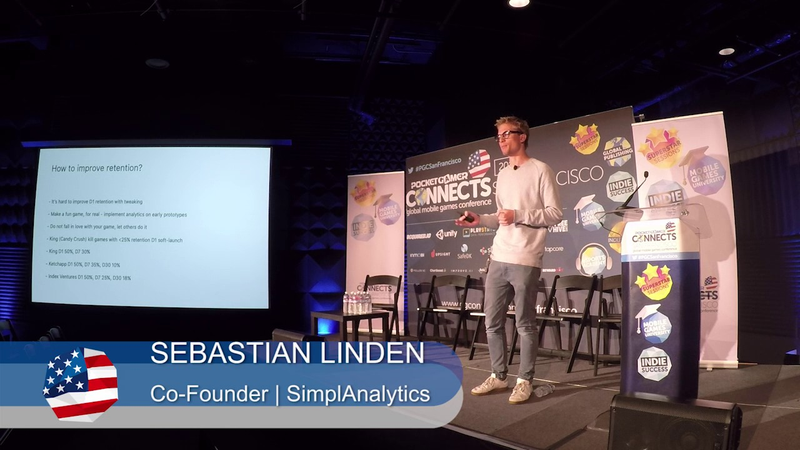
Why indie game developers should look at analytics in different phases
Indie game developers should prioritize data-driven decision-making by integrating analytics early in the development process to validate core gameplay and improve long-term viability.
- Day 1 retention is the most critical metric for indie developers, serving as the essential foundation for all future monetization and scalability.
- Indie developers should validate core gameplay mechanics within a two-week window using a Minimum Viable Product (MVP) to avoid over-investing in projects that lack player stickiness.
- Maintaining engagement through Day 7 and Day 30 remains a significant challenge for indie studios, even when initial Day 1 retention targets are met.
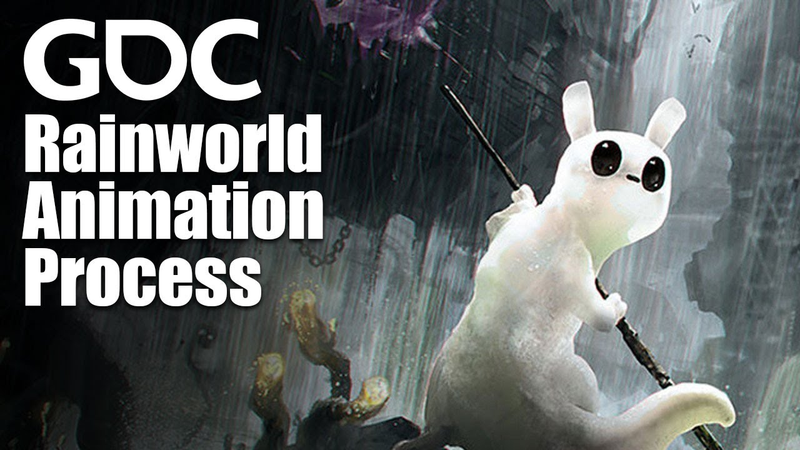
The Rain World Animation Process
The animation process for the indie game Rain World centers on the use of procedural animation to create a believable, autonomous ecosystem.
- Rain World utilizes a procedural animation system that separates physics simulations from cosmetic visuals, allowing for performance efficiency and easier tuning of creature behaviors.
- The game’s AI and animation are deeply integrated, where locomotion is driven by pathfinding algorithms that treat creatures as physics objects moving toward destinations in a tile-based environment.
- Creature personality is an emergent property of the game's systems; by making AI motivations and environmental interactions visible to the player, users project intent and personality onto non-scripted behaviors.
Getting Started as a Game Journalist - Practice, Prepare, and Pitch - Extra Credits
Entering the field of game journalism is best approached through freelancing, which allows aspiring writers to build a portfolio while maintaining financial stability.
- Freelancing is the recommended entry point for game journalism, allowing writers to build a portfolio while maintaining financial stability through per-article commissions.
- Effective pitches to editors must be concise, ideally under 200 words, and feature a unique hook that distinguishes the story from generic industry coverage.
- New writers should focus on pitching features such as developer profiles or analytical pieces on indie games, as these are the most effective entry points for securing commissions.