indie
CompanyUnited States
Documents about indie
5 Ways To Make Money As An Indie Game Developer
Establishing a sustainable indie game studio requires a multifaceted approach to revenue generation and community building.
- Achieving 20,000 wishlists on Steam is the primary benchmark for ensuring a high-visibility game launch.
- Developers should negotiate publisher agreements based on gross revenue rather than net revenue to minimize recoupment deductions.
- Maintaining ownership of intellectual property is essential for long-term monetization through merchandise and cross-platform expansion.
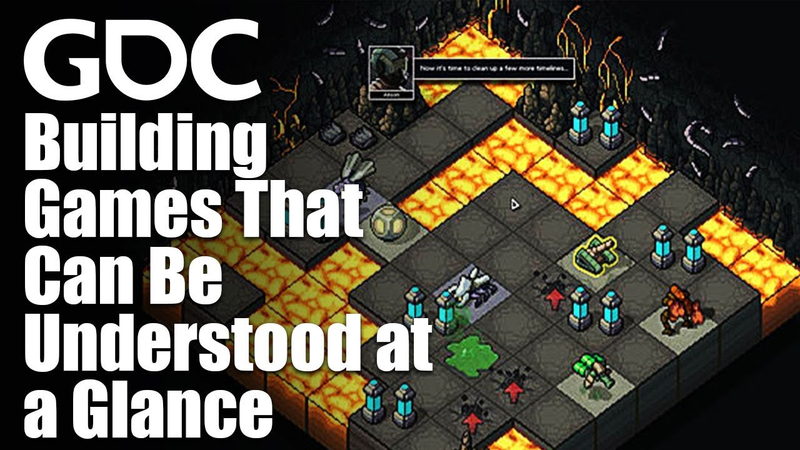
Building Games That Can Be Understood at a Glance
Designing games that are immediately comprehensible to an outside observer—a concept termed subway legibility—serves as a powerful tool for indie developers to improve tutorials, organic discovery, and marketing.
- Apply the 'three reads' principle to UI design: the first read establishes the genre or hook, the second communicates core mechanics, and the third provides secondary contextual information.
- Prioritize visual hierarchy by scaling and positioning UI elements based on their importance to ensure the game state is immediately understandable to both players and observers.
- Utilize 'subway legibility' to lower the cognitive load on new players, which simplifies tutorial design and allows marketing materials to convey value without needing extra context.
Becoming a Game Developer... (5 Days in 1 Video!)
The pursuit of a career in game development requires a rigorous, multifaceted daily routine that balances academic coursework, independent project iteration, and content creation.
- Professional game development requires a rigorous, multifaceted daily routine that balances academic coursework, independent project iteration, and content creation.
- Success in the industry relies on disciplined time management and the use of organizational tools to maintain productivity across multiple concurrent projects.
- The development lifecycle is defined by a constant cycle of experimentation, where broad ideas are narrowed through iterative testing to identify viable prototypes.
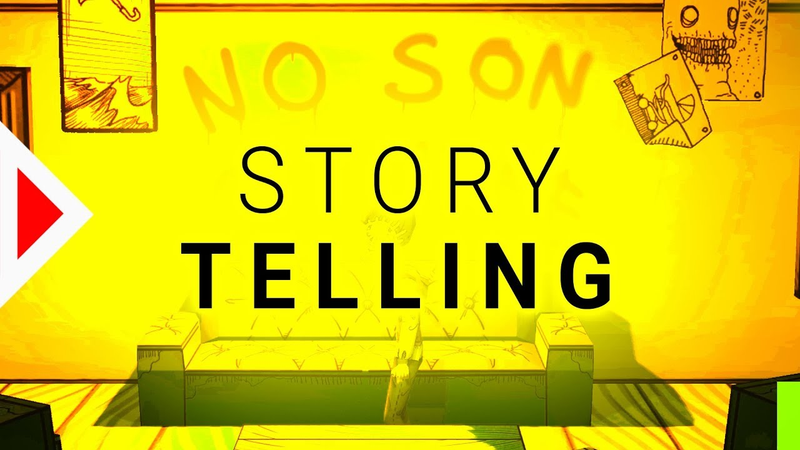
Let's Play UNSAFE - Is This How You Do Storytelling in Horror Games?
The indie horror game Unsafe (Chapter 2) serves as a case study in atmospheric environmental storytelling and puzzle-based narrative progression.
- Unsafe (Chapter 2), developed by Sylvester Hansen, utilizes a 2.5D perspective to explore complex themes of identity, religious intolerance, and conversion therapy within a psychological horror framework.
- The game employs environmental storytelling through scattered notes, locker interactions, and symbolic imagery to reconstruct a fragmented narrative centered on the protagonist’s trauma.
- Gameplay mechanics, specifically inventory management and code-based puzzles, are directly integrated into the narrative to reveal critical plot points regarding the protagonist's past.

Suddenly My Game Is Fun Again!
The development of the real-time strategy game Ovus Nova has undergone significant mechanical refinements to improve player agency and overall engagement.
- The developer transitioned from randomized unit movement to a swipe-based system, granting players direct control over egg-hatching directions and tactical navigation.
- The upgrade bar now fills automatically, with a mechanic that accelerates progression three times faster when no eggs are present on the screen to create a strategic trade-off.
- Core gameplay was simplified by removing slow-hatching red eggs and implementing a restriction against stacking eggs to reduce user frustration.

Another Brick In The Wall! - Pathfinding for OVUS NOVA - (Part 2)
The development of the PC strategy game Ovus Nova has reached a significant milestone with the successful implementation of wall mechanics and a highly optimized pathfinding algorithm.
- The Ovus Nova pathfinding system now supports stable performance of 140 to 200 FPS, even when managing large unit counts simultaneously.
- The implementation of wall mechanics and optimized collision detection has enabled complex level design, including support for destructible environments and varied terrain.
- Development in GameMaker was hindered by the lack of native, efficient tools for migrating scripts and assets between projects, necessitating manual workarounds.
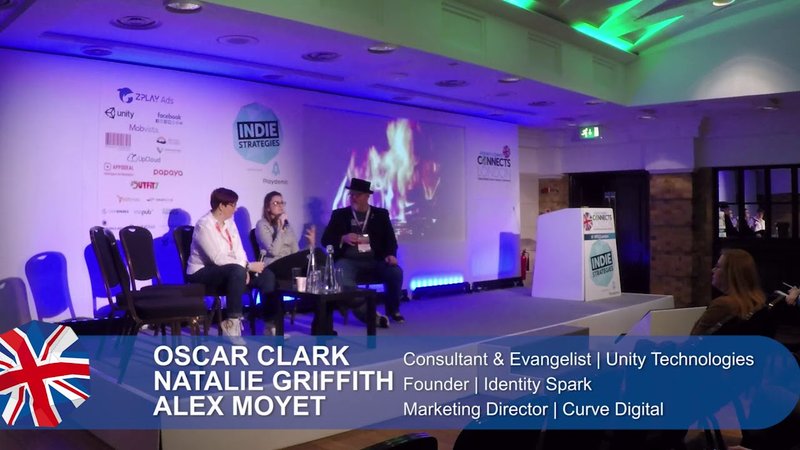
Fireside chat: Brands and indies
This discussion explores the necessity for independent game developers to treat their projects, studios, and personal identities as brands.
- Branding is a strategic necessity for indie developers to build long-term trust and audience loyalty, rather than a purely visual exercise involving logos.
- Developers must integrate marketing and branding functions early in the development cycle to shift from transactional sales to cultivating a dedicated community.
- In a saturated market, consumers perceive every studio through a brand lens, making intentional perception management essential for securing repeat engagement.
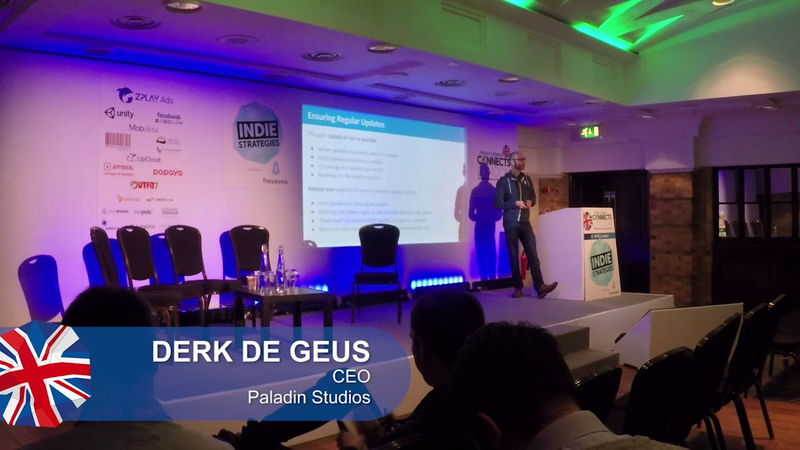
Live ops for indies – The DNA of an effective mobile team
Effective live operations for independent mobile game developers require a fundamental shift in mindset from the creative, milestone-driven development phase to a data-informed, stability-focused maintenance phase.
- Transitioning to live operations requires shifting from a milestone-driven development mindset to a disciplined, stability-focused maintenance phase.
- An effective live ops team for indie studios consists of four to eight members who balance creative vision with technical conscientiousness.
- Consistent, smaller updates generate recurring performance spikes that extend a game's lifecycle, effectively transforming a declining revenue curve into a sustainable long-tail asset.
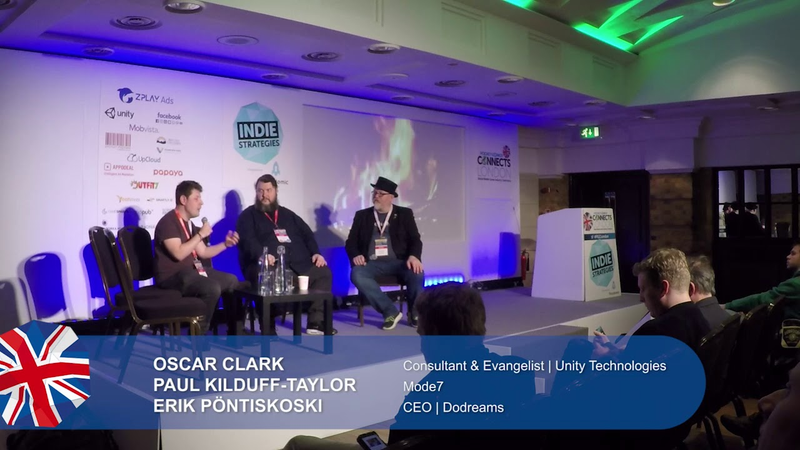
Switching from developer to publisher
The discussion explores the evolving landscape of game publishing, focusing on the shift from traditional developer-publisher relationships to modern self-publishing and hybrid models.
- Developers must treat game projects as businesses by prioritizing product-market fit and market-oriented strategies rather than relying solely on creative focus.
- The decision to engage a publisher should be a strategic choice based on specific needs like funding, marketing, or distribution, rather than a default industry path.
- Studios like Mode7 and Dodreams demonstrate that using early access, soft launches, and prototyping to gather retention data provides the necessary evidence to successfully pitch to investors.
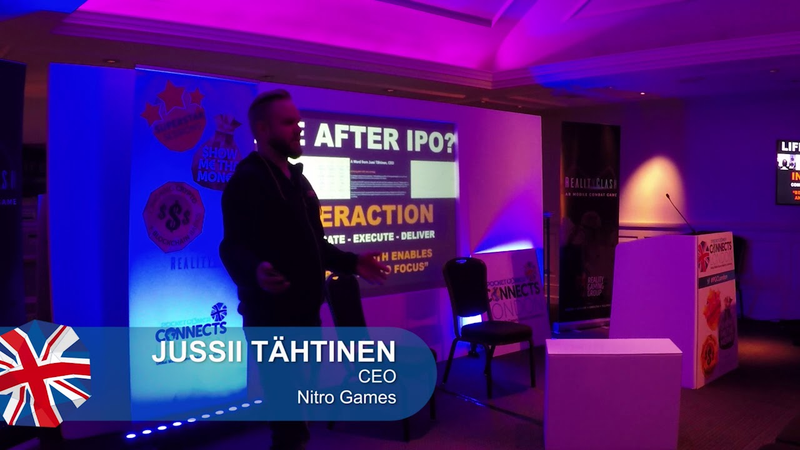
Life as a public indie developer
Nitro Games, a Finland-based mobile gaming studio with a decade of experience and a team of 40, views an initial public offering (IPO) not as an exit strategy, but as a strategic platform for growth.
- Nitro Games, a 40-person studio based in Finland, utilized an IPO on the Stockholm First North market as a growth platform rather than an exit strategy.
- Public listing streamlines business negotiations by providing partners with immediate access to financial and legal documentation, effectively bypassing lengthy due diligence processes.
- The transition to a public entity requires a rigorous operational loop of quarterly reporting and regulatory disclosures, necessitating a balance between administrative transparency and game development.

Crowdsourcing the Localization of Gone Home
The Fullbright Company utilized crowdsourced localization to bring the narrative-heavy indie game Gone Home to international markets without incurring the high costs associated with professional translation services.
- The Fullbright Company successfully localized Gone Home into over a dozen languages by utilizing a crowdsourced model to bypass the high costs of professional translation services.
- To overcome the challenge of narrative embedded in 3D assets, developers implemented a text-only system using dynamic overlays for in-game objects and standard subtitle files for audio.
- The localization workflow was designed for accessibility, allowing community volunteers to contribute using only simple XML and plain text files without requiring specialized software.
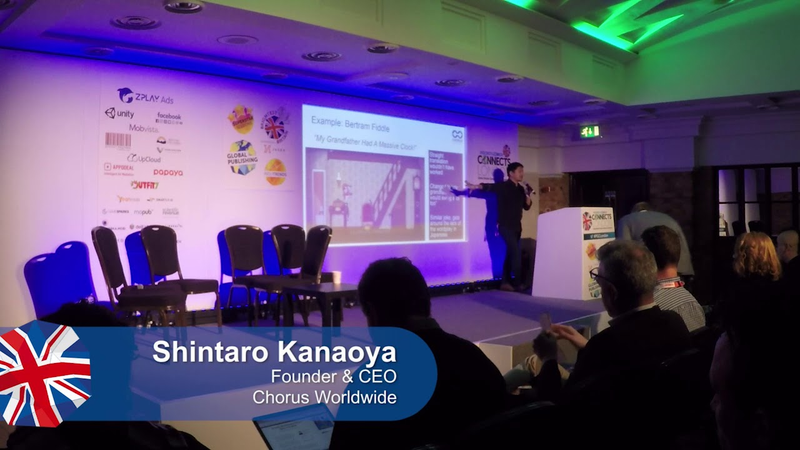
The indies’ path to getting out into Asia
Expanding into Asian gaming markets presents a significant opportunity for independent developers, provided they move beyond the misconception that Asia functions as a single, monolithic territory.
- Asia is not a monolithic market; China, Japan, and South Korea have distinct top-grossing titles with almost no overlap, requiring a highly localized strategy for each territory.
- Successful market entry requires professional culturalization beyond simple translation, as poor localization or failure to adapt visual assets to local aesthetic preferences can alienate players.
- Indie developers should prioritize partnering with local publishers who possess established relationships and expertise in navigating diverse, region-specific distribution channels.