indie
CompanyUnited States
Documents about indie

Raji developer interview at GDC 2019
Raji: An Ancient Epic is a fantasy action-adventure game centered on a young protagonist navigating a world rooted in ancient Indian mythology.
- Raji: An Ancient Epic is an action-adventure title set in a world based on ancient Indian mythology, featuring a narrative focused on a protagonist rescuing her kidnapped brother.
- The game utilizes a unique visual health-tracking system that displays enemy vitality through dynamic markers at their feet to provide immediate combat feedback.
- Super.com is publishing the title, leveraging its team of former and active indie developers to support studios within the emerging Indian game development market.
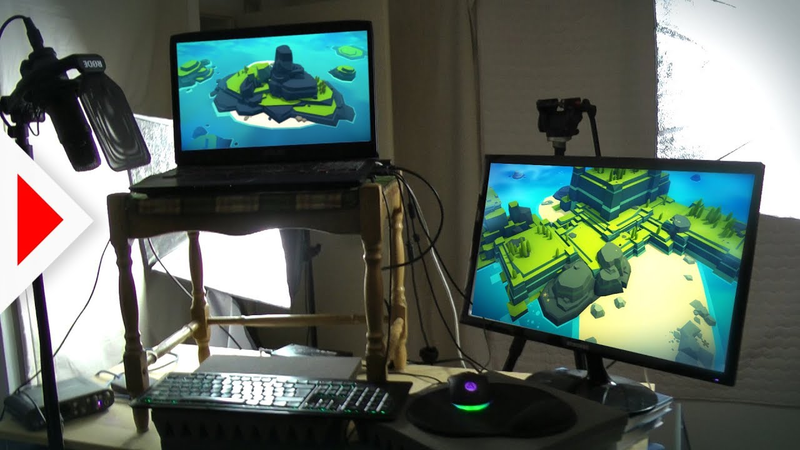
Game Dev: The Week Before Launch (Devlog)
The final week of development for the indie title Islanders highlights the technical and logistical hurdles inherent in preparing a game for a Steam launch.
- The final week of development for Islanders focused on critical technical stabilization, specifically resolving Linux build compatibility, dynamic batching failures from multiple light sources, and mesh transformation errors.
- The development team utilized Unity’s frame debugger, iterative testing, and community-sourced troubleshooting to address performance bottlenecks before the Steam launch.
- To maintain productivity and morale during the high-stress pre-launch period, the team employed a dual-project workflow, working on a separate platformer project during daily livestreams.
The Best Slides I Saw at GDC 2019
This analysis highlights key marketing insights and strategic takeaways presented at the 2019 Game Developers Conference (GDC).
- Modern game sales have shifted from a launch-day peak model to a 'long burn' trajectory, where revenue growth in the second month can significantly outperform initial launch week figures compared to 2014 trends.
- Developers should utilize lead magnets, such as offering free content in exchange for email addresses, to effectively build mailing lists and drive marketing spikes.
- When pitching to platforms like Steam or Sony, developers must engage with two distinct internal departments: the Content team, which evaluates game quality, and the Promotion team, which handles store marketing.
How We Made ISLANDERS - (Indie Game)
The development of the indie game Islanders serves as a case study in the effectiveness of rapid prototyping and iterative design within small, focused teams.
- A three-person team developed Islanders in just four months as part of a bachelor program, proving that small, focused teams can produce polished titles through rapid iteration.
- The development process relied on short-term prototypes lasting only one to two days to test mechanics, allowing the team to discard complex features like real-time resource management and meteors.
- Transitioning from a real-time model to a turn-based system was a pivotal design choice that removed player pressure and prevented late-game economic inflation.
Decorticating Dead Cells: A Business and Marketing Deep Dive
The successful commercialization of the indie title Dead Cells relies on a rigorous, data-driven approach to competitive analysis and community-focused development.
- The development of Dead Cells cost approximately $800,000, with the team allocating $70,000 toward events and $50,000 for a trailer that primarily served to facilitate press coverage rather than drive direct sales.
- Competitive analysis should involve playing all games within a genre and using tools like NoScope or Social Blade to track viewership trends and identify key features like modular design and late-game content.
- Early Access strategy requires transparency regarding development timelines and a focus on building community rapport by explicitly highlighting how player feedback has influenced game updates.
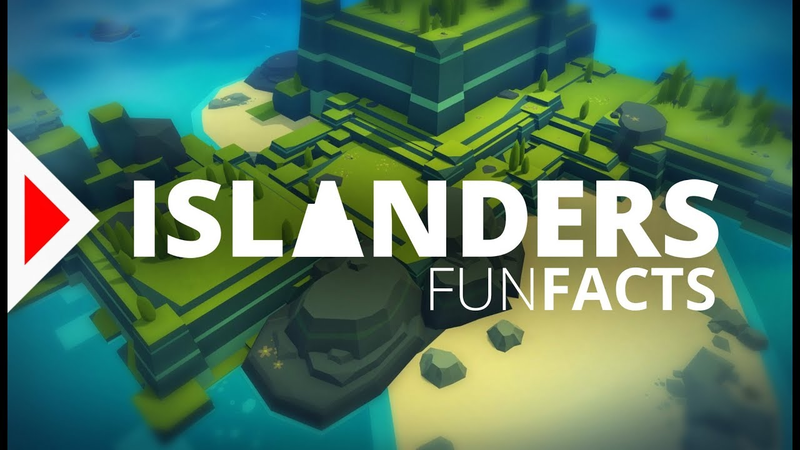
ISLANDERS - All you need to know. (Devlog)
Islanders is a minimalist, casual strategy game designed to be accessible to a broad audience while offering significant depth for players seeking a challenge.
- Islanders is a minimalist strategy game developed by a three-person team over a four-month period as a university project at HTW Berlin.
- The core gameplay loop centers on procedural island generation and a deck-building mechanic where players strategically place buildings to maximize scores based on proximity bonuses.
- The game features 30 distinct building types, each with unique environmental constraints and range-based scoring requirements.
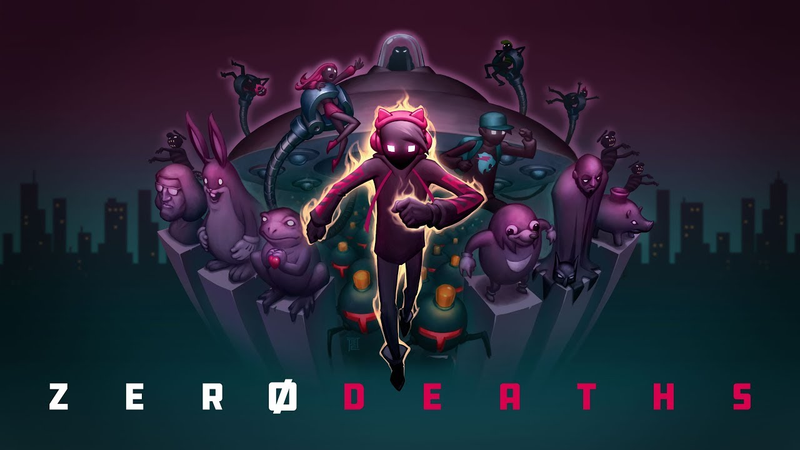
Zero Deaths Official Trailer (A Game-Jam Made In 14ish Days)
The development of the 2D platformer Zero Deaths serves as a case study in rapid game production and community-driven design.
- The 2D platformer Zero Deaths was successfully developed and released within a compressed 14-day timeframe.
- The project utilized real-time feedback loops by incorporating mechanics, narrative, and design concepts suggested by viewers during live-streamed development sessions.
- Rapid prototyping and game jams serve as viable alternatives to traditional long-term production cycles, allowing for the creation of functional software with minimal overhead.
ISLANDERS - Surprise! We made a game.
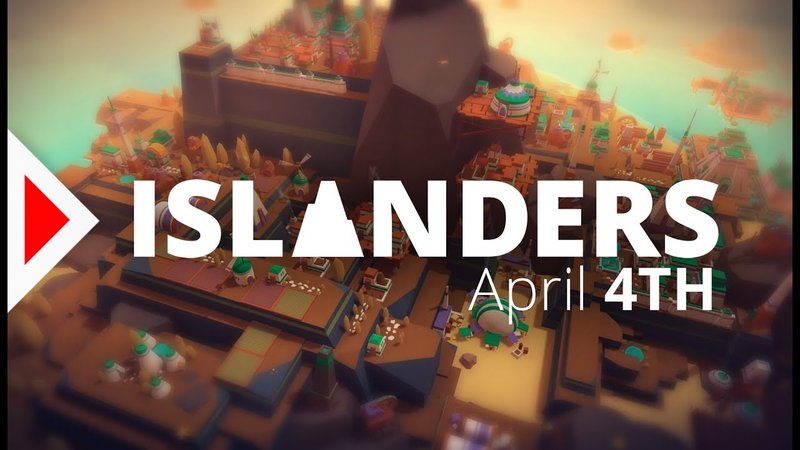
Islanders is a strategy-based optimization game centered on the construction of aesthetic settlements across procedurally generated islands.
- Islanders is a strategy-based optimization game developed by a three-person team from the HTW Berlin game design program.
- The game is scheduled for a Steam release on April 4 with a target price point between five and ten dollars.
- The core gameplay loop focuses on earning points through the strategic placement of buildings within procedurally generated environments.
Fantasy games pitching
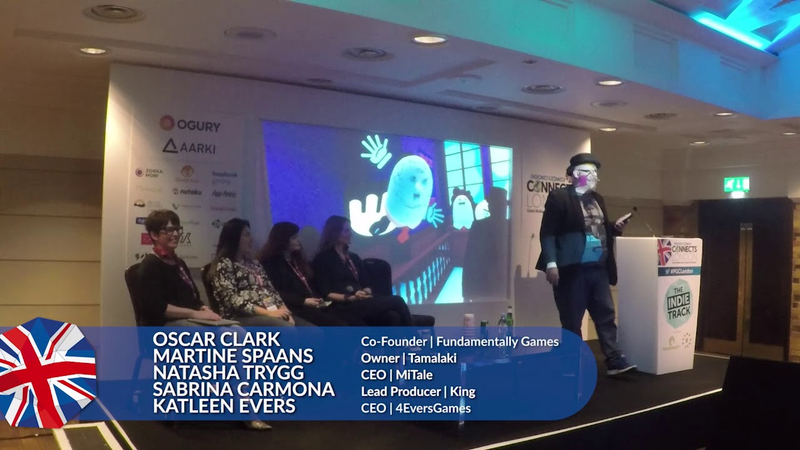
The modern mobile and indie gaming landscape is defined by a relentless pursuit of differentiation, often leading developers to embrace absurdity, satire, and unconventional mechanics to capture user attention.
- Developers in the mobile and indie sectors are increasingly using absurdity, satire, and unconventional mechanics as high-concept marketing hooks to achieve differentiation in a saturated market.
- Commercial viability is maintained by integrating diverse monetization models—including microtransactions, subscriptions, and ad-supported gameplay—directly into the core game loop.
- The industry strategy focuses on subverting traditional genre expectations to generate viral interest and capture user attention.
Porting to console – Why alternative platforms options matter
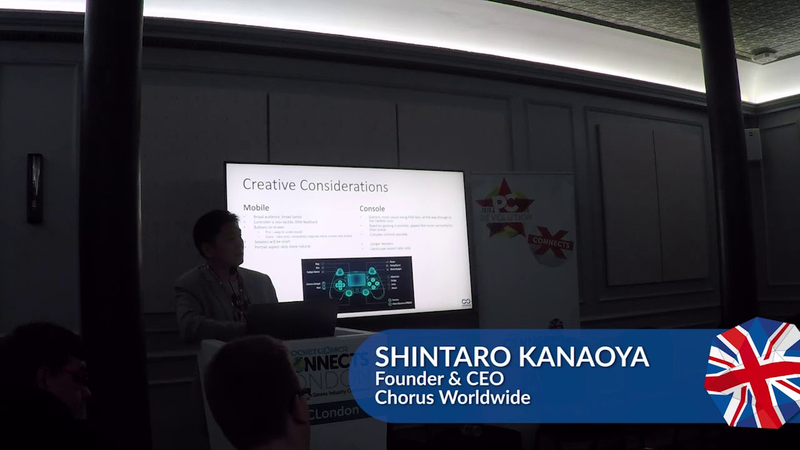
Porting mobile games to console platforms represents a viable and potentially lucrative expansion strategy for independent developers, provided the game’s design is compatible with controller-based play.
- Porting mobile games to consoles offers a high return on investment, evidenced by a case study where a £5,500 investment generated £25,000 in revenue over ten months.
- Console sales can represent a significant portion of total earnings, with some titles seeing console revenue account for nearly one-third of their lifetime total.
- Console platforms provide a less saturated marketplace than mobile app stores, offering developers a strategic opportunity to extend the lifecycle and profitability of existing intellectual property.
Raw Fury: Cross-platform publishing – Why and how
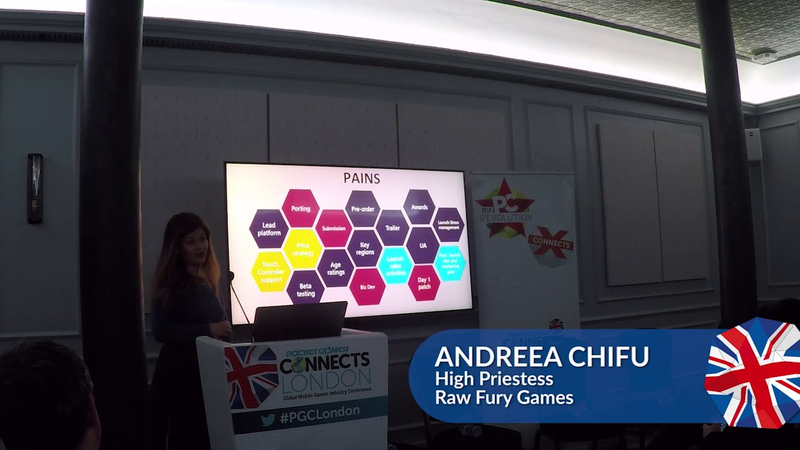
Cross-platform publishing serves as a vital strategy for independent game developers to maximize revenue, reach diverse global audiences, and mitigate the inherent risks of platform-specific performance volatility.
- Cross-platform publishing acts as a financial hedge against market volatility, allowing developers to mitigate the risks of platform-specific performance fluctuations.
- Expanding to multiple platforms enables developers to capitalize on regional market preferences, such as console dominance in Japan or mobile-first consumption in Brazil.
- Successful multi-platform launches require a rigorous, long-term submission schedule that begins months before the target release date to accommodate certification and store page localization.
Gamer Motivation Model: Updated Reference Sheets
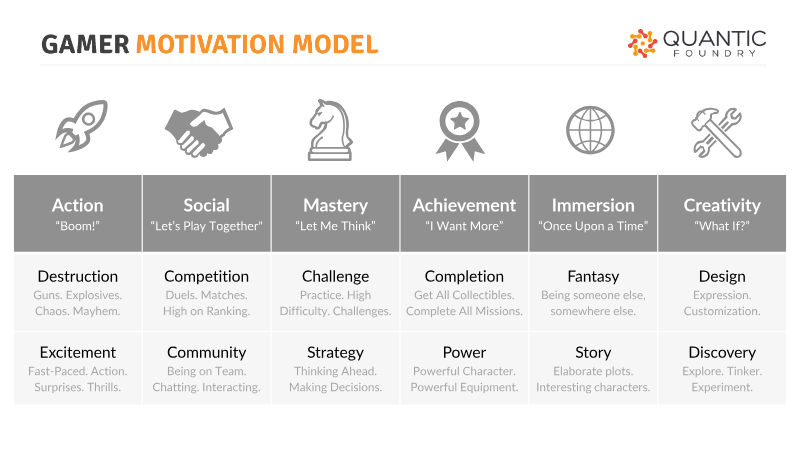
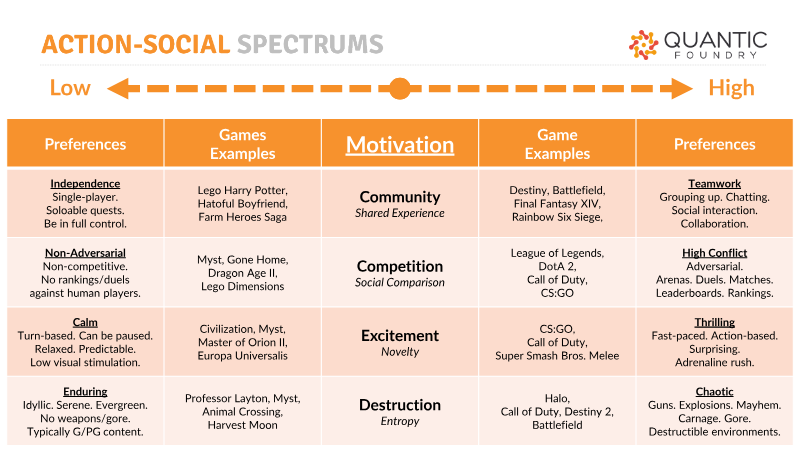
The Gamer Motivation Model provides a comprehensive framework for understanding player behavior by categorizing gaming preferences into three primary clusters: Action-Social, Mastery-Achievement, and Immersion-Creativity.
- The Gamer Motivation Model categorizes player behavior into three primary clusters: Action-Social (Bright), Mastery-Achievement (Tall), and Immersion-Creativity (Wide).
- Player preferences are defined by six core sub-categories—Action, Social, Mastery, Achievement, Immersion, and Creativity—which function as sliding scales rather than binary choices.
- The model uses specific spectrums, such as Destruction versus Excitement and Completion versus Power, to diagnose how individual game mechanics align with player psychological drivers.