1 free read left. Create a free account for unlimited reading + AI research.
Create free account
Porting to console – Why alternative platforms options matter
Key insights
6 takeaways- 01The porting process involves rigorous administrative hurdles, including formal proposal approval, the acquisition of specific dev kits, and mandatory, multi-iteration certification processes.
- 02Console ports are most viable for titles with traditional gameplay mechanics, while portrait-oriented, ad-monetized mobile games are generally unsuitable for the transition.
- 03Promotional efforts on console platforms, such as traditional games press coverage and community engagement, often yield more direct and measurable sales impacts than in the mobile space.
- 04Porting mobile games to consoles offers a high return on investment, evidenced by a case study where a £5,500 investment generated £25,000 in revenue over ten months.
- 05Console sales can represent a significant portion of total earnings, with some titles seeing console revenue account for nearly one-third of their lifetime total.
- 06Console platforms provide a less saturated marketplace than mobile app stores, offering developers a strategic opportunity to extend the lifecycle and profitability of existing intellectual property.
Ask AI about this video
Transcript
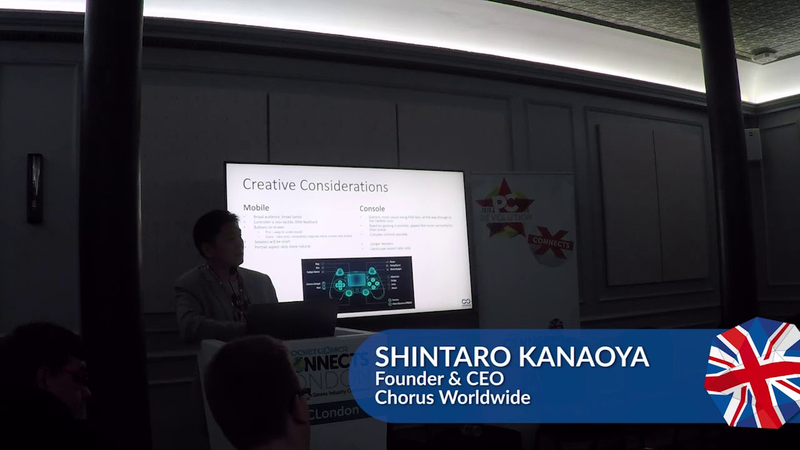
[Music] hi Mona Shintaro Kanaya I run a company called chorus we're kind of indie publisher of indie games this talk is really going to be about porting to consoles like it says it's really aimed at those of you that are thinking about going to consoles but never have and is it worth it should you do it that kind of stuff so if you have already done a lot of work on consoles and you're probably not gonna learn very much so apologies right so this is the quick spiel about who we are so the company in 2014 there's only three of us so very very small we're all really old I mean
that talk just a second ago made me feel [ __ ] ancient so everyone in this company is over 40 and it's just depressing but we all kind of started off at the EA Japan many many years ago so all of us have kind of got experience taking Western stuff out to Asia so I was the producer on the first Japanese version of The Sims for example and then fazool ki who's now our production guy the guy in the middle he does all the he didn't now does all our production stuff and the guy on the right Ryu G is our PR guru but he's he's quite interesting in that he's only almost exclusively only works at western games companies in Japan so he's very fluent in talking Western stuff to Japanese audiences it's quite unusual and these pictures were done by that guy over there the guy that he thinks it looks like Tom Cruise is that right yeah yeah in collateral maybe so that's who we are so I'm not I won't spend too much time on this uses
in terms of what kind of games we look for we because we are quite small we don't really go we're not like a powerhouse you a company like so we look the games that are quite unique quite individual that can stand out on their own two feet very gameplay driven we kind of look for games that we ourselves like we're quite selfish that way we just think well that looks like fun so we're fairly genre agnostic as well if we think actually that looks like that we fire I'd play that then we pretty much do it and so for the first three years we were exclusively mobile but as of a couple of years ago we started doing console which was because Nintendo approached us and we were showing us off a game a bit summit which is an indie thing in Japan and Nintendo said can you come and talk to us and I was like yeah we don't really want to do DS games or Wii U games but it turned out it was for switching like yes we'll take that meeting and it's gone well so this is these are the kind of stuff we've done so far this is just
I think everything that's live in China right now so the biggest ones we've done at the room and the room too a few other games you might recognize like return a 77 The Adventures of Bertram fiddle which I'll come on sue in a second broken sword five and a few others and so we've worked with developers from UK Brazil Taiwan Malaysia Russia pretty much everywhere Brazil I think and these are some of the kind of the console games we've got going at the moment so again very indie the Mambo was our first one which came out I think it was five months after the switch came out and all the way through to Bertram fiddle which almost two was a lot most recent one when we've got a couple of titles that we're quite excited about forgotten man which is coming out and another one called vambrace which is yeah that's not that's often it's super spreads that's we leave the only reason to have it
there so I'm gonna talk about this that guy who happens to be in the room so you might have noticed that there were couple of games that were both on mobile and console and they were the adventures of Bertram fiddle one and the adventures of Bertram fiddle two which were created by rumpus headed up by said over there so I met Sarah but Pocket Gamer Helsinki four years ago or something like that you just in some backroom and saw your game looks like fun it's got a huge amount of text that seems good for localization so we did it quick point he's got a really good Kickstarter on right now so you should go support it and I'm sure he'll tell you all about it did you ask him so the reason that we won to go to console was because we had a really successful mobile game so Bertram fiddle is a point-and-click Monty Python humor esque inflected Victorian England murder
mystery adventure game and so 7/8 the first two we localized them into Japanese Chinese and Korean and kind of work did all that stuff out there we had to we had to localize the phrase my grandfather had a massive clock into four different languages which was fun luckily the things got to pendulum so when you tap on it obviously the English you understand that it's a joke to convey that it's a joke is quite difficult but sev had drawn we were the pendulum so we just made a joke about my grandfather's used to swing wildly as well or something like that so it kind of worked but so that was curved an interesting localization challenge because it was it's so full of humor and so full of kind of English humor to get that across to audiences that share no cultural touchpoints was challenging but what we found was people actually did liked it they got into it they
understood the humor and we thought well if this is working on mobile and now that the switch is out and it's very Indy friendly then maybe there's an opportunity there which is why we did it so like I said both games were well-received games were developed in unity we thought well we can keep if we can keep the porting costs low this is a bit of a bit of an experiment let's see if we can do it so we expect it to get a positive return on investment and so rumpus they gave us a source code I think it's fair to say you didn't have to do too much on it is that fair there you go so they did fuck-all and then just we just sent them we just send the money every now and then like a huge amount but yeah not nothing so this is probably the most interesting slide of the whole thing just so you've got the numbers so the porting costs in the end for us came to about five and a half thousand pounds which included buying the dev kit getting the Japanese ages and age ratings the cost of the engineer which basically was one
engineer for one month doing the ports I should say that we ended up publishing this globally not just Asia so we had the Japanese Chinese Korean English and whatever other languages said put it in French German etc and a little bit of promotional costs with using a service called key mailer which if you don't know it it's a really useful service to send out codes to streamers for the generations ed people I don't really know what they do and so we've so far between out for about ten months it's made twenty five thousand pounds there abouts which if you just take the ROI is three hundred forty 10 which is pretty good it continues to sell we continue to do price promotions it goes up again then comes back down again so it's actually from a pure business point of view been well worth our time doing so for those of you that haven't done console development this the next few slides are put him useful hopefully so for those of you that are familiar with mobile development you know you'll know the stuff on the
left that you get you develop a license from Apple you get a Mac you make that gaming you deploy the Xcode granted is a little bit more complicated than that but you know strokes right on console it is obviously a bit more complicated so anyone can sign up to be a developer at developer Dean Tendo comm as soon as you do that you will see Wii U and D S switch is just not there to get access to switch which means being able to download the SDK which means being able to order dev kits you have to submit your game proposal they have to review it they have to like it they have to give you the ok then about a week later suddenly all the switch stuff will appear and that's when you can find the order the dev kits and then you can get the game running on the target machine then you have to go through certain knows what cert is do most of you know what 30 is who so some of you don't know ok so when you put a game out on mobile wait you put on Android you put on Google Play and pretty much next day
it's available immediately but you can just it's out into the wild on iOS on iTunes Connect all app store connect it might take a day or so cert is a different beast and all three plat we'll do this they go through the game pretty much with a fine-tooth comb make sure everything works which is great because you'll get a bug free as close to bug free product as possible by the end of it it will take you multiple try it could take you up to a month possibly two months depending on how good the code is coming in you'll get a bunch of bug reports you'll have to fix them and it just takes time there's and the game won't go out unless that's done and then actually if you want Nintendo to promote the game you want to create product pages and all that kind of stuff again it's more online paperwork which is it it's just something you have to do but it's a bit more onerous than the equivalent on the App Store for example some creative considerations if you have a mobile game going to console I won't
read this all out but yeah obviously they're very very different devices with Bertram we had a point-and-click adventure which i think i don't i don't actually know this for sure set but I'm guessing the original target platform was PC ok so mobile mobile and PC but and really you know console and joy pads aren't the best way to play point-and-click adventure games just because moving a cursor around is a bit painful but I think what we've shown is that actually it was worth doing and there's an market there's an audience there that's happy to play it and also because it's a sit back in your sofa experience as opposed to like leaning over a thing or having a device right here it's quite a social thing so if you're trying to solve a mystery with someone sitting back with your family with your friends trying to solve a mystery it's quite a fun engaging thing to do so point-and-click didn't immediately make a lot of sense but
actually seems to be seems to be working obviously there's loads more you can do with a controller than you can on a touch device so the kind of reaction time and that kind of gaming that all that that thing that opens up all the different types of games is worth thinking about also you don't have to have the UI and all the buttons on this screen so again it makes the the real-estate a lot cleaner so if you it depends on the kind of game you have if you have something so I would say if you have a match three game that's in portrait don't do it it makes no sense if you have a landscape games it's a racing game or something like that then you probably need to think about why you develop your mobile first isn't console potentially a lot better promotional considerations well on mobile I guess it's either getting featured or putting a lot of money into you a the nice thing about console is that I think there's a lot more control
in your hands at a lower cost so getting featured is great when it happens but it's kind of up in the lap of the gods paid you a is good apparently you can pay up to eight dollars put install and get that cost down to whatever but with PR on console you can start building an audience and a community engage the fan base you can use services like email to distribute codes out to streamers which is very cost effective and obviously you can work with the PR agency to get the word out there and doing mobile PR mobile games PR fairly ineffective it's nice to have that coverage it doesn't really promote that many installs of the gate it's good for awareness but doesn't really promote that many installs we've found whereas with console it's much more effective so getting word out there in games press makes a difference and that's something that you can control yourself yeah apart from that you know ps4 and Xbox one not a huge amount of difference
between that and Nintendo the biggest one with the ps4 is that they have three different regions and three different cert processes so you have to submit your one game to three different people and you will get three different budgets bug bug reports and you have to pass all of them before we can release the damn thing which is fun Xbox one is great as you'd expect from a software platform developer it's a very powerful tool set you can screw up like we did so we had a game where we had a the paid version which was the one that's supposed to go out we had a review free version which was only supposed to go out to reviewers we launched apparently the free version by accident so for about three hours the game was completely free and we got on it quickly but apparently three hours is really quick at internet time so it was immediately on the forums people downloaded the free version very quickly and yeah we didn't feel good about it but it's just you know it's one of those things that wouldn't have happened with Nintendo because they really hold your hand through to release Xbox were like
your thing you deal with it okay so yeah additional pros and cons is it worth doing I think if you think about the total budget for your game and the incremental cost then unless you've got the game that's completely unsuitable then why wouldn't you spend the additional whatever small amount of time small amount of cost to go there again going back to I think the Bertram example I think roughly console has caught up with the up with mobile and what sorry with iOS and PC in terms of revenue so for that small extra increment of investment it's made up probably maybe slightly less than a third of the overall revenue on a platform that it was never going to come to in the first place so I would say it's absolutely worth thinking about yes it is hard to get the game onto the platforms but there's a lot fewer games
you're computing with far fewer games out there and in a time when it's incredibly hard to get discovered even though switches is getting more and more saturated nothing compared to iOS nothing compared to Android so you have a better chance of your game standing out yeah is it what is it suitable well again like I said if you've got a match-three that's portrayed that's free-to-play there's ad monetized you know switch doesn't really make any sense it's not going to work but if you've got something that you think actually this is more gamey more your traditional gaming then absolutely worth considering and why wouldn't you because my my thing really um that's it I'm done thank you very much [Applause]
[Music]
Summary
Porting mobile games to console platforms represents a viable and potentially lucrative expansion strategy for independent developers, provided the game’s design is compatible with controller-based play. The primary thesis is that the relatively low incremental cost of porting, combined with a less saturated marketplace compared to mobile app stores, offers a significant opportunity for developers to increase their total revenue and reach new audiences.
Key findings from the analysis of specific case studies, such as the Adventures of Bertram Fiddle series, demonstrate that porting can be highly cost-effective. In one instance, a porting project required approximately £5,500 in total investment—covering dev kits, age ratings, and one month of engineering time—which subsequently generated roughly £25,000 in revenue over ten months. This represents a strong return on investment, with console sales eventually accounting for nearly one-third of the title's total earnings.
The process of moving to console requires navigating more rigorous technical and administrative hurdles than mobile development. Unlike the relatively open submission processes of mobile storefronts, console platforms necessitate a formal approval of the game proposal, the acquisition of specific development hardware, and a mandatory certification process. This certification, while time-consuming and sometimes requiring multiple iterations to resolve bug reports, ensures a higher quality, more stable product. Furthermore, console platforms offer distinct promotional advantages, as traditional games press coverage and community engagement efforts often yield more direct, measurable impact on sales than similar efforts in the mobile space.
The scope of this analysis covers the global indie game market, with a focus on the Nintendo Switch, PlayStation 4, and Xbox One ecosystems. The findings suggest that while not every game is suitable for a console transition—specifically noting that portrait-oriented, ad-monetized mobile games are poor candidates—titles with traditional gameplay mechanics and high-quality production values can thrive in the console environment. Developers are encouraged to view console ports as a strategic, low-risk experiment to extend the lifecycle and profitability of their existing intellectual property.















Comments