indie
CompanyUnited States
Documents about indie

🚨📢BREAKING NEWS: Clash Royale Drama, Layoffs, Applovin Q4, Unity Reshuffle 🤯
The current state of the gaming industry is defined by a sharp divergence between companies undergoing painful structural restructuring and those achieving significant growth through product-market clarity.
- AppLovin reported a 70% year-over-year revenue increase to approximately $5.5 billion, highlighting a stark contrast to the 30% stock decline and leadership reshuffle currently impacting Unity.
- Nexon achieved a 6.5% revenue increase to $3.1 billion, driven by the strong performance of titles like ARK Raiders.
- Supercell’s recent Clash Royale revenue spike was temporary, with data indicating that performance has already regressed to previous baselines despite influencer-led marketing efforts.

TWiG #370: Supercell’s Annual Letter, Reading Between the KPIs
The global gaming industry is currently defined by a stark consolidation of market share, where established live-service titles dominate revenue and monthly active users across PC and console platforms.
- Supercell’s Squad Busters failed to achieve long-term viability despite reaching 75 million downloads and receiving a $100 million marketing investment.
- Supercell is restructuring into a startup-like model with tighter budgets and profit-sharing to address internal complacency and move away from a reliance on high-spend user acquisition.
- Roblox is struggling with low unit economics and market saturation due to a user base primarily under the age of 18, prompting a strategic pivot toward older, higher-income demographics.
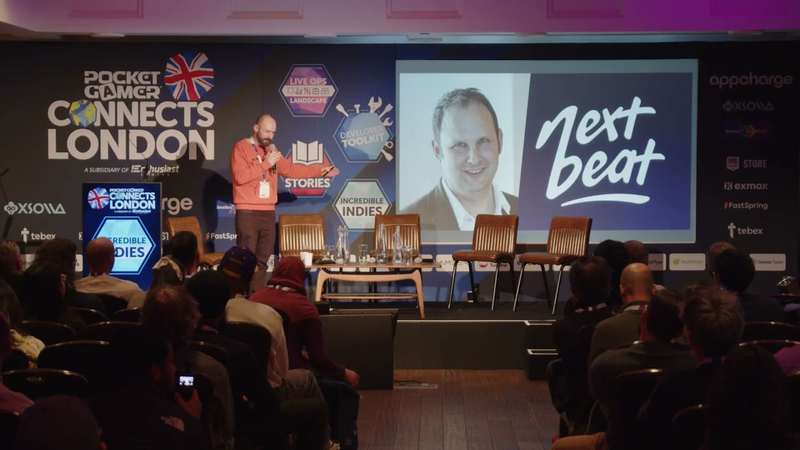
Session: Quit Your Job… Then Join Duolingo? The Unexpected Journey Of An Indie Icon - Nicoll Hunt.
The transition from independent game development to corporate software engineering is a complex, non-linear journey defined by the tension between creative autonomy and professional stability.
- Nicoll Hunt transitioned from an independent developer (founder of I Fight Bears) to a staff software engineer at Duolingo by way of Space Ape Games and the startup Next Beat.
- The acquisition of Next Beat by Duolingo was driven by the strategic alignment between the startup's music-game expertise and Duolingo's goal to develop a music-learning course.
- Transitioning from indie development to corporate environments provided Hunt with financial stability and the ability to work on large-scale projects while maintaining a creative, 'indie' mindset.
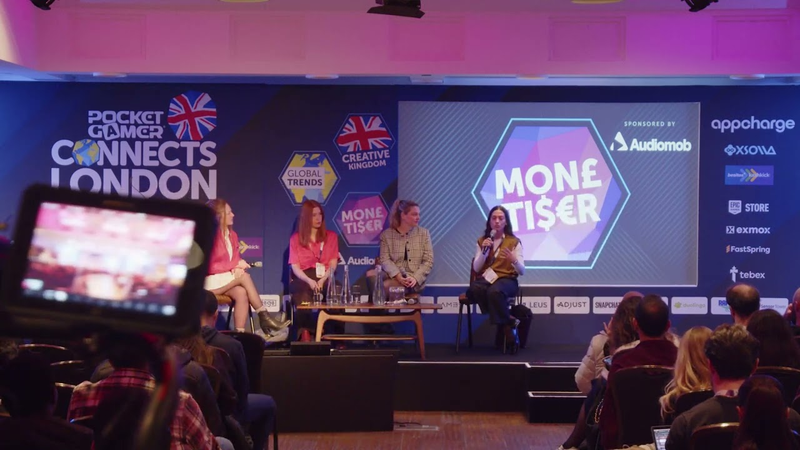
Panel: Running DTC at Scale - Lessons From Mobile Game Leaders.
This panel discussion explores the strategic shift toward Direct-to-Consumer (DTC) models within the mobile gaming industry, emphasizing how publishers are leveraging web shops to bypass traditional app store fees and improve monetization.
- Direct-to-Consumer (DTC) web shops are now a core strategic requirement for mobile game publishers to bypass app store fees and improve monetization in a difficult user acquisition environment.
- Aggressive education of creators and players can drive rapid adoption, with one platform increasing web shop revenue from 10% to 40% in just a few months.
- Successful DTC implementation requires integrating the web shop into the core product vision rather than treating it as a bolted-on utility.
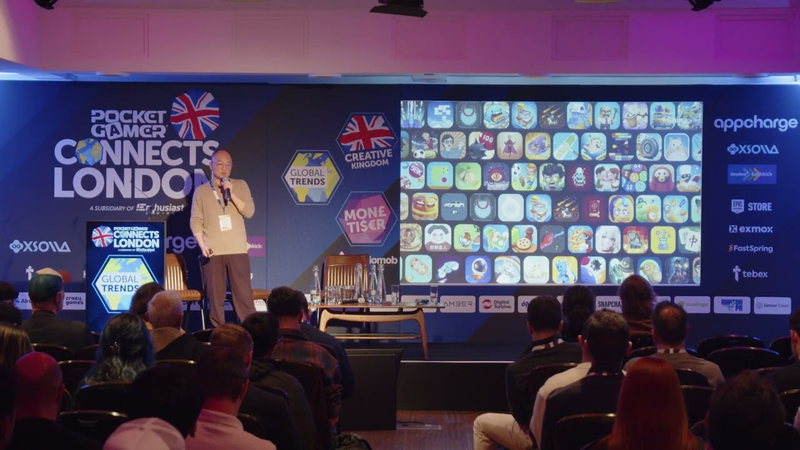
Session: Bring Your Games To China—Unity China Publish Service - Wang Wei, Unity.
The Chinese gaming market represents approximately one-quarter of the global industry, with a player base of nearly 700 million people.
- The Chinese gaming market represents approximately 25% of the global industry, with mobile games accounting for 70% of total revenue.
- Mini-games—playable directly within apps like WeChat and TikTok without downloads—are a major growth driver, with the sector expected to reach $10 billion annually by 2025.
- Entering the Chinese market requires navigating a fragmented ecosystem of local app stores (e.g., Huawei, Xiaomi, TapTap) and obtaining a government-issued ISBN number, which is mandatory for legal monetization.
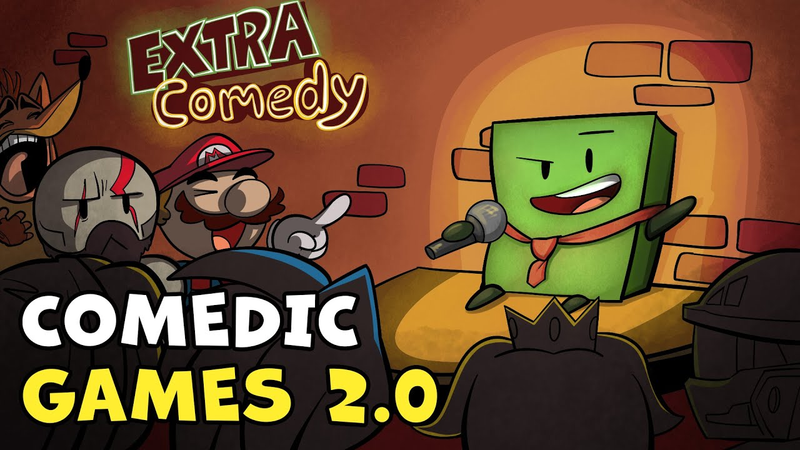
How the Joke has Changed | Comedy in Games 2026 | Extra Credits Gaming
Comedy in video games has evolved significantly over the last decade, shifting from a reliance on scripted writing and voice acting to a model where gameplay mechanics and player interaction serve as the primary drivers of humor.
- Comedy in games relies on the structural manipulation of player expectations, where developers create tension through established rules and resolve it through surprising or subverted outcomes.
- Effective game comedy often involves a strategic balance of player agency, where designers must decide when to grant control and when to remove it to ensure the player's input enhances rather than disrupts the intended humor.
- Modern comedy games have shifted from relying solely on written dialogue to utilizing gameplay-driven mechanics, such as physics-based simulations in titles like Octodad and Surgeon Simulator that intentionally defy real-world gravity and logic.
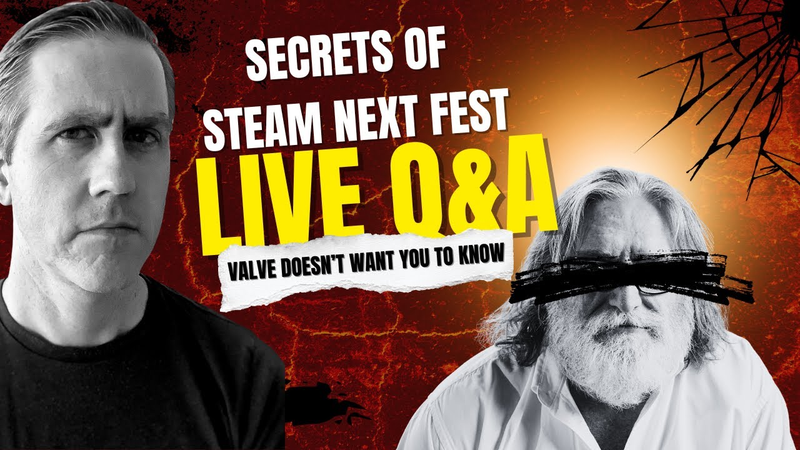
Live Q&A With Chris Zukowski about Steam Next Fest
Steam Next Fest serves as a critical promotional milestone for indie developers, but its efficacy is fundamentally tethered to the volume of wishlists a game accumulates prior to the event.
- Launch your demo well before Steam Next Fest to build wishlists, as the event itself is highly competitive and favors games that already have significant traction.
- Use median playtime on your demo as the primary metric to evaluate game quality, as it is a more reliable indicator of player engagement than average playtime or subjective feedback from friends.
- If your game consistently ranks in the bronze or silver tiers on Steam benchmarks, it is likely that the core concept is not resonating with the market, and you should consider shipping the project to move on to a new game.

Azur Games' Head of Publishing Sergey Marcinkiewicz on Vietnamese Mobile Gaming Ecosystem
Vietnam has emerged as a premier global hub for mobile game development, characterized by an exceptionally rapid pace of production and a unique mastery of the puzzle genre.
- The mobile gaming industry is shifting away from hyper-casual models toward complex, high-quality titles inspired by PC mechanics such as roguelite, tower defense, and survival arena games.
- Vietnam has established itself as a premier global development hub, distinguished by its rapid production speed and expertise in pioneering new puzzle sub-genres.
- Due to rising user acquisition costs, studios now require at least three months of data to effectively optimize return on ad spend (ROAS).
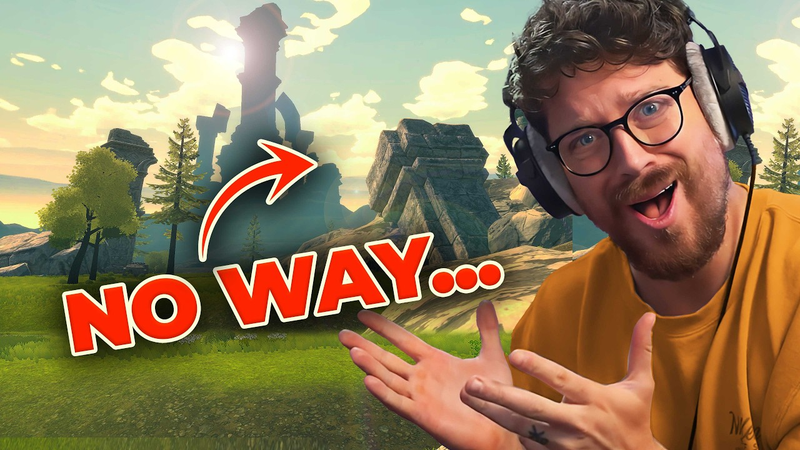
Making Beautiful 3D Games Is Easier Than You Think
Creating a high-quality, stylized 3D adventure game—modeled after the aesthetic of titles like The Legend of Zelda: Breath of the Wild—is achievable for independent developers using free assets and a disciplined approach to visual design.
- Achieving a stylized, Breath of the Wild-inspired aesthetic relies on a limited terrain palette of three to four textures, using hue shifting and saturation adjustments to ensure all environmental elements, such as grass, dirt, and stone, remain color-coordinated.
- To avoid visual repetition in terrain, use noise spreads for grass billboards and maintain a consistent tiling scale across all terrain layers to create a unified look.
- High-fidelity assets should be placed strategically to anchor the scene, as the human brain interprets the presence of a few high-resolution objects as an indicator of overall high-quality visual fidelity.

Split Fiction’s Josef Fares on Clair Obscur success, AI fears and EA’s reputation
Josef Fares, the creative director of Hazelight Studios, emphasizes a philosophy of prioritizing creative vision over market data to drive game development.
- Hazelight Studios has achieved significant commercial success by prioritizing creative vision over market data, resulting in 27 million units sold for 'It Takes Two' and 12 million for 'A Way Out'.
- Josef Fares explicitly rejects taking Hazelight public, arguing that the pressure to satisfy stock market stakeholders forces companies to prioritize short-term financial gains over long-term creative quality.
- The studio maintains a staff of approximately 80 employees and operates under a co-op-only design philosophy that intentionally avoids risk-averse, data-driven decision-making.
Larian Loses the AI High Ground, Farewell to Anthem, and Minecraft Goes Mini! | Games For Breakfast
The gaming industry is currently navigating a period of intense friction between corporate efficiency mandates and a deeply skeptical player base.
- The gaming industry is experiencing a widening divide between AAA studios prioritizing shareholder-driven cost-cutting and indie developers who maintain a focus on human-led creative innovation.
- Generative AI integration in game development is facing significant player backlash, with critics arguing that reliance on AI tools leads to a regression in emotional resonance and craftsmanship.
- Labor instability remains a critical issue, highlighted by the closure of Ubisoft Halifax following unionization efforts and ongoing allegations of union-busting at Nintendo.

Let's Review Your Games — Ep. 040
Independent game development requires a delicate balance between creative vision and technical accessibility.
- Indie developers frequently fail to bridge the gap between creative visual identity and fundamental user experience, leading to disoriented players.
- Common technical failures include inconsistent control schemes, such as conflicting button mapping, and unreliable audio or UI cues.
- Poorly paced onboarding sequences and the premature introduction of complex mechanics often prevent players from engaging with the core narrative.