indie
CompanyUnited States
Documents about indie
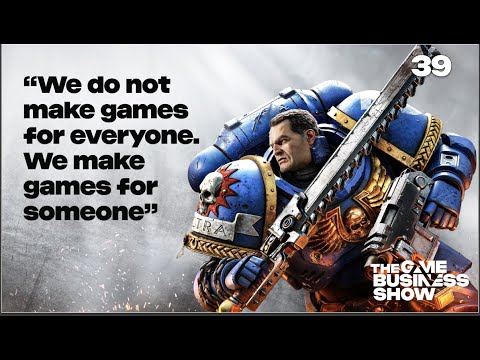
"We didn't believe Space Marine 2 could hit seven million unique players"
Pullup Entertainment, a European-based federation of studios and publishers, has achieved significant financial growth by focusing on the AA and indie game segments rather than the AAA market.
- Pullup Entertainment reported annual revenue of 390 million euros, a 100% year-over-year increase, with an EBIT of 60.3 million euros.
- Warhammer 40,000: Space Marine 2 exceeded 7 million unique players, validating the company's strategy of scaling niche titles through high-quality execution.
- The company manages a pipeline of 50 projects, split between 20 owned or co-owned intellectual properties and 30 licensed or third-party titles.

Jake Birkett: How To Make Indie Games Full Time, Unity vs Custom Engine, Indie Survival | Ep. #051
Achieving long-term financial sustainability in the independent game industry requires a shift away from chasing viral trends toward building a diverse catalog of smaller, profitable titles.
- Indie developers should prioritize building a sustainable, long-term business model over chasing viral hits, as 95% of games fail to achieve significant commercial success.
- Consistent income can be generated by building a portfolio of games and leveraging a loyal fan base that purchases bundles and subsequent titles in a series.
- Game feel and player feedback—such as sound, visual effects, and intuitive mechanics—are more critical to long-term success than academic gray-box design or complex meta-systems.

“It was amazing to have PlayStation behind us”
Innovation and team culture serve as the primary drivers of success in the gaming industry, outweighing the influence of rigid business models or hardware specifications.
- The gaming industry should shift from a AAA-focused model toward a double-A development approach, prioritizing small, agile teams to foster innovation and creative ownership.
- Studio closures are frequently caused by a misalignment between a team's creative identity and the shifting strategic demands of large corporate partners like PlayStation and Meta.
- The industry's reliance on hire-fire staffing models and commoditized development cycles is actively undermining the collaborative environments required for long-term stability and genuine innovation.

Let's Review Your Games — Ep. 022
Professional game development hinges on the balance between mechanical responsiveness and atmospheric immersion.
- Mechanical responsiveness must take priority over indulgent animations, as prioritizing visual flair at the expense of snappy, reactive gameplay often alienates players.
- Technical polish—specifically professional audio, intuitive UI, and accessible control schemes—is the essential foundation for a successful player experience, regardless of creative ambition.
- Effective design requires clear, fair feedback loops and consistent signposting, particularly in tutorials, to prevent usability barriers from undermining innovative game concepts.
Which Game Engine Is Best In 2025? UNITY vs. UNREAL?
The choice between Unity and Unreal Engine remains a central debate for independent game developers, particularly those focused on first-person shooters.
- Both Unity and Unreal Engine face significant performance bottlenecks regarding real-time shadow casting, requiring developers to manually limit the number of shadow-casting lights to maintain acceptable frame rates.
- Unreal Engine is often preferred for 3D and FPS projects due to its out-of-the-box support for features like Lumen, which provides real-time global illumination that is more difficult to achieve in Unity.
- The choice of game engine is frequently driven by team familiarity with specific programming languages, such as C++ for Unreal, and the need for cost-effective development tools for early-stage studios.
What Does a “Good Game Studio Culture” Actually Look Like in 2025?
The modern game studio landscape is characterized by a fundamental misunderstanding of organizational dynamics, where the focus on abstract concepts of culture often masks a failure to implement effective institutional policy.
- Organizational health in 2025 is driven by structural design, reporting hierarchies, and incentive systems rather than abstract cultural values or team-building exercises.
- Effective studio leadership relies on clear, codified policies regarding performance, hiring, and firing to dictate behavior, as culture is an emergent outcome of these institutional rules.
- Investor confidence is currently prioritized toward leadership teams with proven track records rather than novel technologies, reflecting a broader skepticism toward high-risk ventures like AAA Web3-integrated shooters.

Let's Review Your Games — Ep. 018
Indie game development requires a rigorous focus on professional polish and intentional design to elevate projects beyond the perception of unrefined asset flips.
- Atmospheric immersion and narrative clarity are the primary drivers of player retention, requiring a shift away from generic musical scores toward reactive, thematic soundscapes.
- Effective indie storytelling should prioritize environmental cues and central mysteries over text-heavy exposition to maintain player engagement.
- Professional polish requires cohesive typography, modern lighting techniques, and directional shadows to prevent projects from being perceived as unrefined asset flips.
How To Start Making Games With NO EXPERIENCE
The development of successful indie games is often characterized by a transition from early personal isolation to professional collaboration, rather than innate technical mastery.
- Fredrik Prantare, creator of Core Keeper, grew the game to over 4 million copies sold, with figures currently approaching 4.5 million units.
- Prantare’s development journey began in high school by utilizing level editors in games like Heroes of Might and Magic III, which helped him build foundational design skills.
- The transition from a high-schooler with low academic attendance to a leader of a 50-person team was driven by years of iterative failure in various project 'constellations'—small, collaborative groups formed to build games.

Let's Review Your Games — Ep. 017
Modern indie game development requires a rigorous focus on technical optimization, particularly for the Steam Deck, which has emerged as a critical platform for reaching contemporary audiences.
- Prioritize technical optimization for the Steam Deck, as it has become a critical platform for reaching modern indie gaming audiences.
- Implement the 'isekai principle' by dropping players into an unfamiliar environment with a clear, immediate motive within the first five minutes of gameplay.
- Improve visual clarity by using high-contrast, cinematic lighting instead of ambient light to ensure the protagonist is easily distinguishable from the environment.

I Was Wrong About Making Games...
The primary thesis of this analysis is that indie game developers often hinder their success by obsessively pursuing groundbreaking, unique mechanics rather than focusing on quality and execution.
- Success in the indie game market does not require creating a groundbreaking or entirely unique mechanic; focusing on executing a solid, high-quality game within an established genre is more effective.
- Attempting to force innovation often leads to bloated codebases, development paralysis, and wasted resources, as evidenced by the speaker's failed attempts to iterate on complex, 'unique' mechanics like magnetiles or skydiving.
- Leveraging your specific strengths—your '20%' or forte—is the most reliable way to ensure quality, as seen in the speaker's shift from struggling with new mechanics to focusing on storytelling and atmosphere in his title, Twisted Tower.
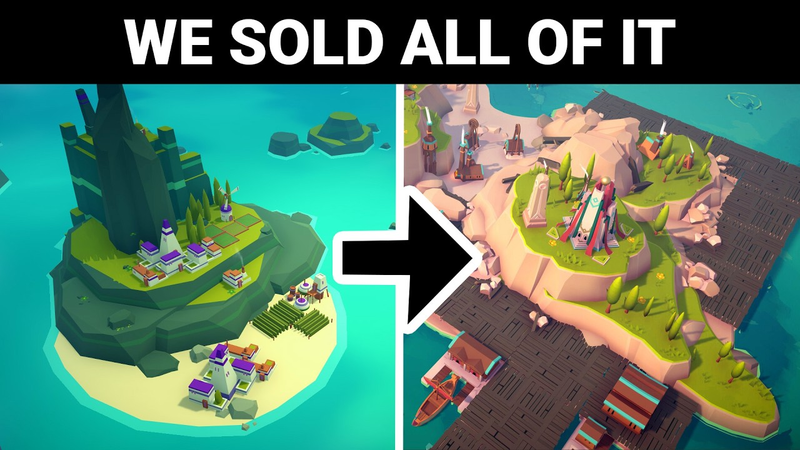
They Paid Us To Upgrade Our Indie Game
The sale of intellectual property (IP) by independent developers can serve as a viable strategy for both exiting a project and ensuring its continued development.
- Selling an indie game IP can be a viable exit strategy when the original developers no longer wish to maintain the project, as demonstrated by the sale of 'Islanders' to the porting studio Coatsync.
- The sale price for the 'Islanders' IP was approximately 1 to 2 times the total revenue the game had generated in the year following its initial release.
- Selling an IP can provide significant relief from the long-term stress of maintenance, porting, and community management, which the author notes can be exhausting and prone to contractual failures.
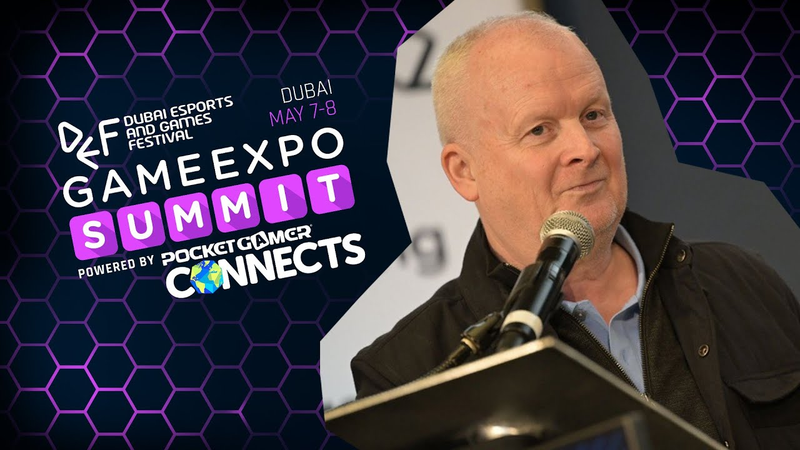
Understanding what the market wants - Stuart Dinsey from Curve Games
Curve Games, a mid-sized British indie publisher, is strategically expanding its global distribution and market presence by prioritizing direct-to-consumer pathways and emerging regional markets.
- Curve Games is bypassing traditional platform limitations by using Xsolla-powered micro-sites to implement localized payment methods and capture direct consumer data.
- The publisher is targeting the MENA region for growth, which currently represents 1.5% of its business but is identified as a high-potential market due to rising indie developer activity.
- Curve Games’ strategy for emerging markets involves moving away from Western-centric exports to focus on identifying and cultivating regional intellectual property with global appeal.