1 free read left. Create a free account for unlimited reading + AI research.
Create free accountGet Feedback For Your Indie Games!... #010
Key insights
6 takeaways- 01The core design of Project RR utilizes high-difficulty traps and unpredictable enemy behavior to intentionally force players into a trial-and-error loop.
- 02In Project RR, retaining map progress across restarts transforms the gameplay from a single-run challenge into a puzzle-solving experience based on repeated exploration.
- 03The developer must balance trial-and-error loops with predictable execution, ensuring that once a player masters a level, success is determined by skill rather than inconsistent AI behavior.
- 04Design choices like omitting visual indicators for enemy sightlines should be communicated through atmosphere and tone rather than explicit tutorials to maintain immersion.
- 05Developers should prioritize a cohesive game identity over conventional design rules, even if that requires incorporating elements traditionally viewed as frustrating or unfair.
- 06A clear distinction between a game focused on strategic execution versus one focused on unpredictable horror is essential for determining which traditional design rules to uphold or break.
Ask AI about this video
Transcript
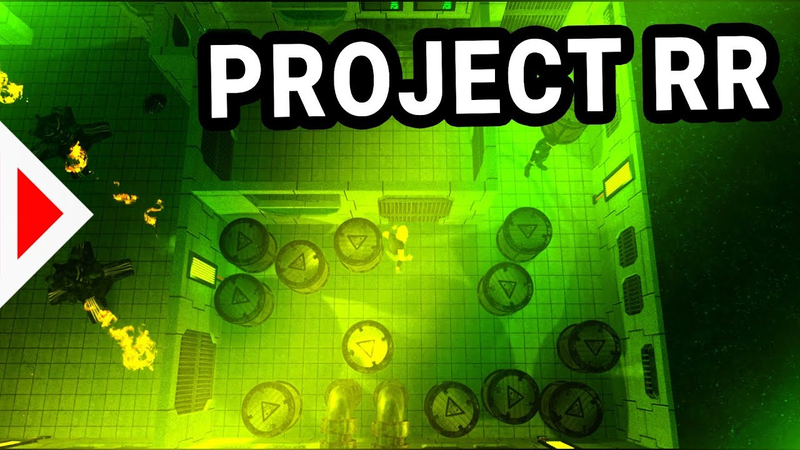
get feedback for your indie game get featured on my youtube channel this is Jonas play sir game with another amazing game we can learn from project our our we're gonna talk what the game does well and what needs to freaking change holy hell this game has some frustrating moments for example walking through this store and instantly getting shot at there's no warning there's no time to react and you're gonna die the first time around for sure usually I would say this is absolutely unacceptable but this feels like a super conscious design decision made by the developer and it makes a lot of sense to me in this context why is that let's have a closer look at the game and we might be able to figure it out project RR is a top-down stealth game you infiltrate an evil corporation and in each stage you need to find the key card that allows you to progress to the next level the game mechanic we absolutely need to talk about first is this one right here every time you go into a new room it reveals itself and it stays revealed even if you restart the level
you will still be able to see what's going on in the room and this tells us one really interesting thing about how this game is meant to be played levels are meant to be replayed there are meant to be played multiple times you're not supposed to beat the level the first time around you're supposed to collect information about the level get to know the level how it works where you need to go what you can do the game wants you to make a plan to try different things and the level design shows that as well for example in this level there are a lot of different approaches you can take you can go this way you can take these explosives you can try to go through the console try to deactivate the turrets or you can go straight for the objective whatever you prepare but you definitely won't beat the level the first time around you just don't have enough information about that I think that's exactly how it's meant to be and step by step exploring the map revealing all of the rooms feels like making good progress feels like you're gonna be smaller the next time around so even though you have to replay the levels a lot you still feel like you're making progress because you're gathering new information and as a result of that you
get better and better at beating the level walking through this store is a straight-out trap but the second time you I you know it's there you know you shouldn't go there and even though that's frustrating the first time around it feels like making progress because you're getting further than in the last run and on top of that I think it really adds to the stealth fantasy to that stealth horror fantasy where you don't know what to expect every time you walk through a door that could be a trap there and just kill you straight away you never know what to expect and it really keeps you on your toes it's really funny to me because this game has a lot of elements where I usually say this is really bad game design but in this context it absolutely works and makes the game better for example the guards they don't have a vision cone you don't know where they can see you and where they can't see you it's just really plain unfair sometimes you think I can easily go there they won't see me and then they see you and sometimes it's exactly the other way around you think no I can never go there they will see me and then you go there and you figure out okay they can't see
that far usually that would really suck but in a game that is about replaying the levels figuring everything out finding the perfect boots this is really beneficial and then once again it adds to that stealth horror element where you never know what to expect it definitely kept me on my toes it makes it very exciting to play the game it feels unfair but it adds to the fantasy you should definitely be aware that this is a trait though yes it might feel more exciting it might fit the fantasy quite well it adds tension it adds horror but then once again it also makes it more frustrating and more stressful is there a trade worth taking I don't know most games probably shouldn't do that but it's cool that their games out there that are brave enough to try it and I think there's an audience for it we just should be aware of the fact that this kind of game is not for everyone it definitely requires some strong nerves to play this and you need to make sure it doesn't get too frustrating how could we do this first of all I think you should definitely try to communicate that this is a difficult game that
levels are meant to be replayed and that it's probably not possible to beat them the first time around because knowing that makes it a lot less frustrating to fail and you don't need to communicate that with verge with any pop ups or anything like that just genuinely make it look like a difficult game maybe go even into a bit more of a horror direction with the lighting make everything a little darka make everything a little creepier because that communicates okay I'm not supposed to beat this the first time around then also have some stressful zones that create a lot of tension actually you're already doing that quite well the sounds are really freaking me out which if you consider the circumstances is a good thing I guess talking about frustration there's one thing I really
want to criticize things should be more predictable when you know how they were things being unpredictable when you don't know the rules is fine figuring the rules out is a cool element of the game I really liked that but there are also some elements that are just too unpredictable and even when you know how they work they just do something different every time that's just no fun I think the level should be a lot easier to solve once you figure them out as soon as you know how all of the elements in the level work the execution should be relatively straightforward I just don't want to get stuck in a level that I already know inside out for too long because the exciting and cool part of the game is exploring new levels and figuring new stuff out gathering new information planning new routes and just executing the perfect run on a map that I already know inside out is just not that entertaining basically what kept me from progressing is just firstly the difficulty it just got too difficult in the third level that's because the game
is not done yet it's just in prototyping phase and it only has four levels so I understand that the difficulty curve is not balanced but then at the same time some of the elements in the level are just too unpredictable for example this boss in the middle right here sometimes he could see me sometimes he couldn't see me sometimes he just ran up shot me sometimes he threw a grenade at me it was just too unpredictable I couldn't figure that character out that just kept feeling frustrating so I think what this game needs be easier once you figure the level out and it should be maybe even a little more unpredictable and even a bit more unfair in the exploration phase of the game not sure if that's actually the developers vision for this game but according to the decisions the developer took so far I think that's where he wants to go and if not then take this as an opportunity to reflect on that do you want this game to be about execution because then it needs to be a lot more predictable than there need to be a lot more indicators where guards can see you and what the range of all of the turrets
is or do you want to make this game about the stealth and about the exploration and about the horror and about the tension then you should do what I've just told you you need to figure out what the identity of your game is supposed to be and after that it's a lot easier to tell which game design rules you're supposed to break and which game design rules you shouldn't break I think there are a couple of other design flaws doors should be a lot more visible from the top-down perspective then this counselor is kind of cool but the best solution is always to turn all of the turrets off it would be cool if there was a bit more strategical depth to this maybe you can only turn two turrets off and you have to decide which ones or sometimes it just could also be a good idea to leave turrets on because they stop guards from getting to you or something like that at the moment it's just the best strategy to turn all of them off which is a little disappointing the rest hopefully comes down to this being a prototype there are a lot of issues with the controls and with the animations but the super interesting thing is the following sometimes it can be really cool and
refreshing to break the rules and really sick off games that show me few cones and all that sort of stuff this game doesn't have this which somehow makes it a little more frustrating but also helps the game so much to feel a lot fresher more distinct more exciting and fits the setting absolutely perfectly so the main takeaway from this video the part I want every single one of you to remember and implement into your game right away figure out the identity of your game figure out what your game wants to be what kind of experience do you want to deliver and then base all of your design decisions on that and if that means disrespecting some established game design rules so be it there's nothing worse than a game that doesn't know what it wants to be and there's nothing better than a game that knows exactly what it is and embraces that in every way possible if you enjoyed watching this video click one of these videos right here I think they'll
be super interesting to you if you like this one this is Jonas making games with you this was project our our hope this game will succeed and I hope to hear from this game in the future hope it's gonna work peace out [Music]
Summary
The primary objective of this analysis is to evaluate the design philosophy of the indie stealth game Project RR, emphasizing the importance of establishing a clear game identity to guide development decisions. The core thesis posits that developers should prioritize a cohesive vision over adherence to conventional design rules, even if that involves incorporating elements typically considered frustrating or unfair, provided those elements serve the intended player experience.
The analysis focuses on a top-down stealth-horror prototype, noting that the game intentionally utilizes high-difficulty traps and unpredictable enemy behavior to force a trial-and-error loop. By retaining map progress across restarts, the game encourages players to treat levels as puzzles to be solved through repeated exploration rather than single-run completion. While this approach effectively builds tension and supports a horror-stealth aesthetic, the analysis identifies a critical need for balance. Specifically, once a player has mastered the mechanics and layout of a level, the execution phase should become predictable and rewarding rather than remaining subject to inconsistent AI behavior or unclear environmental rules.
Key recommendations for the developer include refining the game’s difficulty curve and ensuring that design choices—such as the lack of visual indicators for enemy sightlines—are clearly communicated through atmosphere and tone rather than explicit tutorials. The analysis concludes that the most successful indie titles are those that possess a strong, self-aware identity. By deciding whether the game is intended to be a test of strategic execution or an unpredictable exploration of horror, the developer can better determine which traditional design rules to break and which to uphold, ultimately creating a more polished and intentional player experience.







Comments