
Game Science
CompanyChina · Founded 2014
Documents about Game Science
Pleasures Under Pressure: Misogyny, Moral Outrage, and Creative Contraction in Contemporary Chinese Game Culture
This paper examines how gender-based controversies reshaped discourse around Chinese video game culture, using the 2024 backlash against Black Myth: Wukong as its central case.
- The 2024 backlash against Black Myth: Wukong centred on resurfaced remarks by the game's art director and sexually suggestive recruitment material, and it extended to commentators who had praised the game while treating male players as the default audience.
- Because Black Myth: Wukong was a national industrial milestone, gender criticism was often read as an attack on China's rising game industry rather than as a question of representation and respect.
- A commentator's audience fell by more than 400,000 after he watched a reveal of a miHoYo title with a contested record on gender, illustrating the commercial cost of participating in these disputes.
Mythic Alternatives: Mythological Mechanics Beyond Violence
This paper examines how mythological video games can move beyond their dominant reliance on combat and violence to model other aspects of mythic narrative through gameplay mechanics.
- Violence is the default mechanic in mythological video games, a pattern the authors tie both to mainstream gaming trends and to the violent episodes found in many myths themselves.
- The paper argues that games can move beyond combat by translating mythic motifs into core mechanics, and it surveys five categories: metamorphosis, heroism, extraordinary movement, dying and rising, and interactions between gods and mortals.
- Heroism is modeled through systems such as the kleos meter in Warriors: Legends of Troy and the aristeiai in A Total War Saga: Troy, which represent the exceptional, exemplary hero.
From Journey to the West to the West: Evaluating Black Myth: Wukong's Exhibition on Ancient Chinese Culture for Cross-Cultural Communication
This paper examines how Black Myth: Wukong, a Chinese-developed action role-playing game inspired by the classical novel Journey to the West, mediates traditional Chinese cultural knowledge for international audiences through English localisation.
- The paper argues that global visibility of Black Myth: Wukong should not be mistaken for cultural comprehension, and frames the game's English localisation as a form of cultural mediation comparable to museum curation.
- Using the character Lingxuzi as a case study, the analysis finds that the English version drops the meaning of the Taoist honorific suffix 'zi' by transliterating only the sound of the name.
- The English localisation misidentifies Lingxuzi as following Buddhist ways, although the Chinese source text explicitly marks the figure as Taoist.
Tangible and Terrifying: Cultural Heritage Representation in Chinese Horror Games
This study examines how Chinese horror games represent cultural heritage, organizing its analysis around two dimensions: "Tangible (Perceptible Heritage)" and "Terrifying (Affective Heritage)."
- Chinese horror games act as significant, if largely unintentional, carriers of Chinese cultural heritage, with the horror genre serving as the key link between tangible (perceptible) heritage and affective heritage.
- The study organizes its analysis around two dimensions: 'Tangible (Perceptible Heritage)', where games reconstruct recognizable material spaces and embed folk customs, symbols, and rituals, and 'Terrifying (Affective Heritage)', where horror mechanics use these elements as triggers to amplify emotional responses.
- Three case studies, Paranormal HK, Detention, and Firework, anchor the analysis of how these games reconstruct real-world spaces and cultural elements.
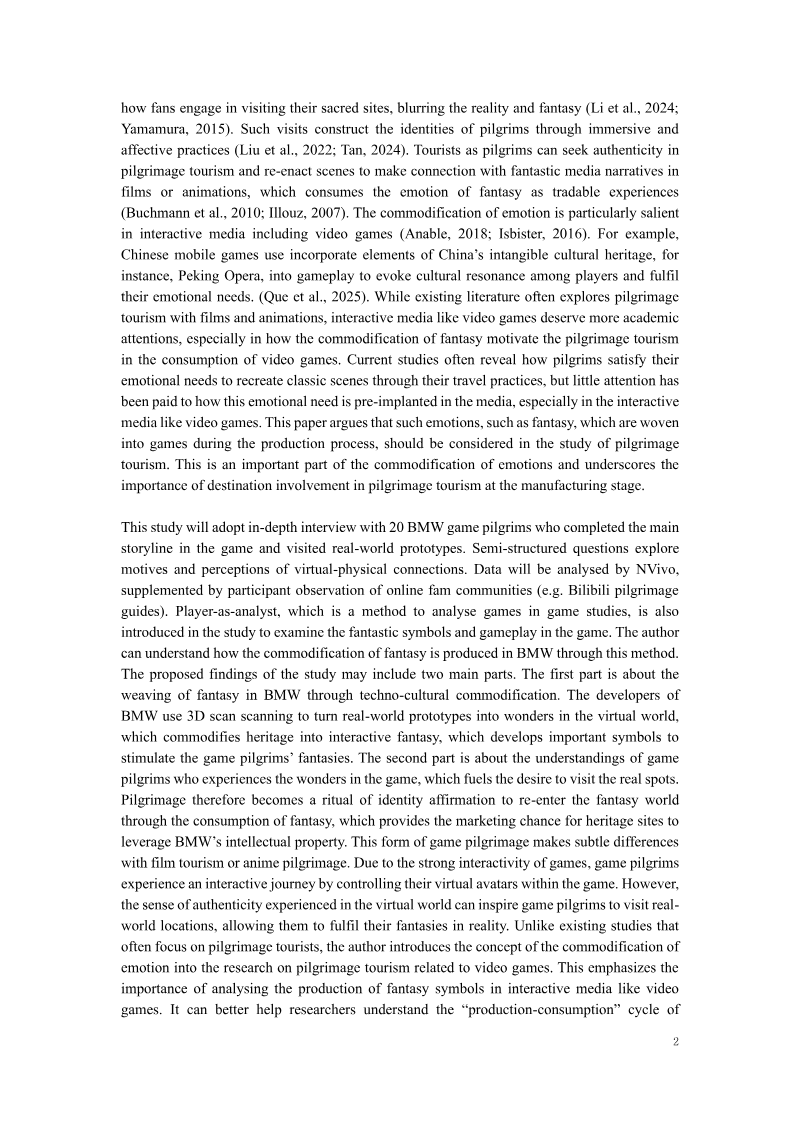

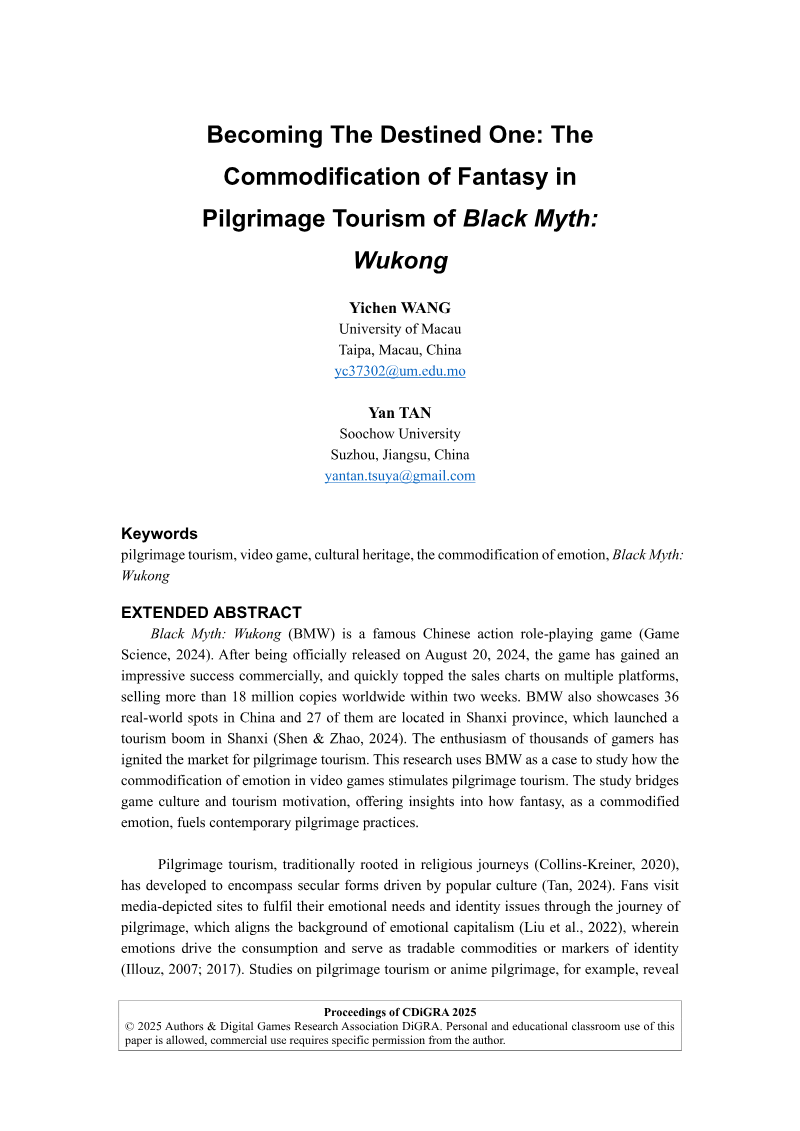
Becoming The Destined One: The Commodification of Fantasy in Pilgrimage Tourism of Black Myth: Wukong
This paper examines how the commodification of fantasy in the video game Black Myth: Wukong (BMW), a Chinese action role-playing game released in August 2024, stimulates pilgrimage tourism.
- The paper argues that game pilgrimage is a ritual of identity affirmation, in which players visit real-world locations to re-enter a game's fantasy world, and that fantasy emotions embedded during game production should be central to pilgrimage tourism research.
- Black Myth: Wukong, a Chinese action role-playing game released in August 2024, sold more than 18 million copies worldwide within two weeks and features 36 real-world sites in China.
- Of the 36 real-world sites featured in Black Myth: Wukong, 27 are in Shanxi province, a region that experienced a notable tourism surge.



Games Industry Region Report China
China is the world's largest games market and its most difficult to enter, generating $48.7bn in 2024 according to Newzoo (¥325.8bn, or $44.8bn, per the China Audio-Video and Digital Publishing Association), ahead of the United States at $47.6bn.
- The Chinese games market generated $48.7 billion in 2024, accounting for approximately 30% of total global industry revenue.
- Chinese entities now dominate the global landscape, owning or developing 14 of the top 30 highest-grossing games worldwide as of early 2025.
- The market supports a massive player base of over 701 million, with a significant shift occurring as domestic firms expand from mobile dominance into premium triple-A PC and console development.
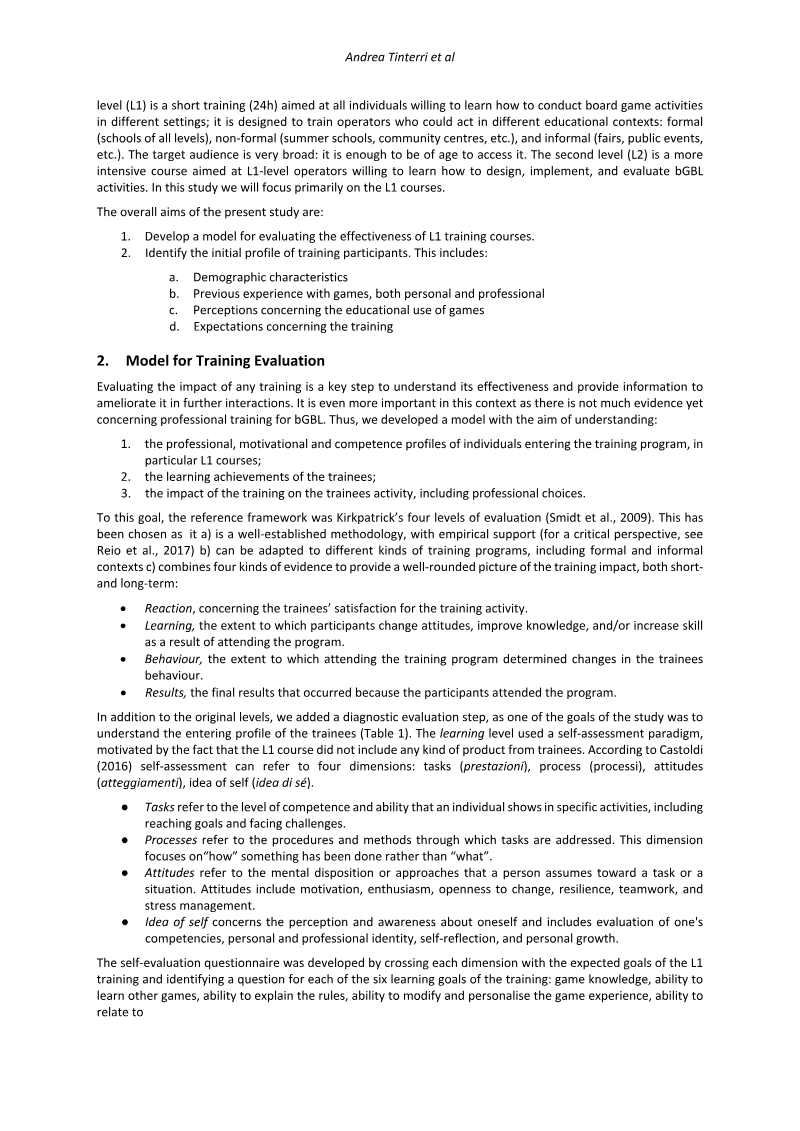
Training for Board Game-Based Learning: Evaluation Model and Preliminary Results From a National Program in Italy
This study presents an evaluation model for the first national board game-based learning (bGBL) training course in Italy, organized by the National Sport Association (CSI) and the Game Science Research Center, together with preliminary profiling results from participants entering the introductory Level 1 (L1) course.
- The paper proposes an evaluation model for Italy's first national board game-based learning training course, adapting Kirkpatrick's four levels (reaction, learning, behaviour, results) and adding a diagnostic stage that uses ex ante and ex post self-assessments across four dimensions: tasks, processes, attitudes, and idea of self.
- The study is a baseline snapshot rather than evidence of training effectiveness: ex post data were not yet available, so no pre-post comparison of outcomes is possible.
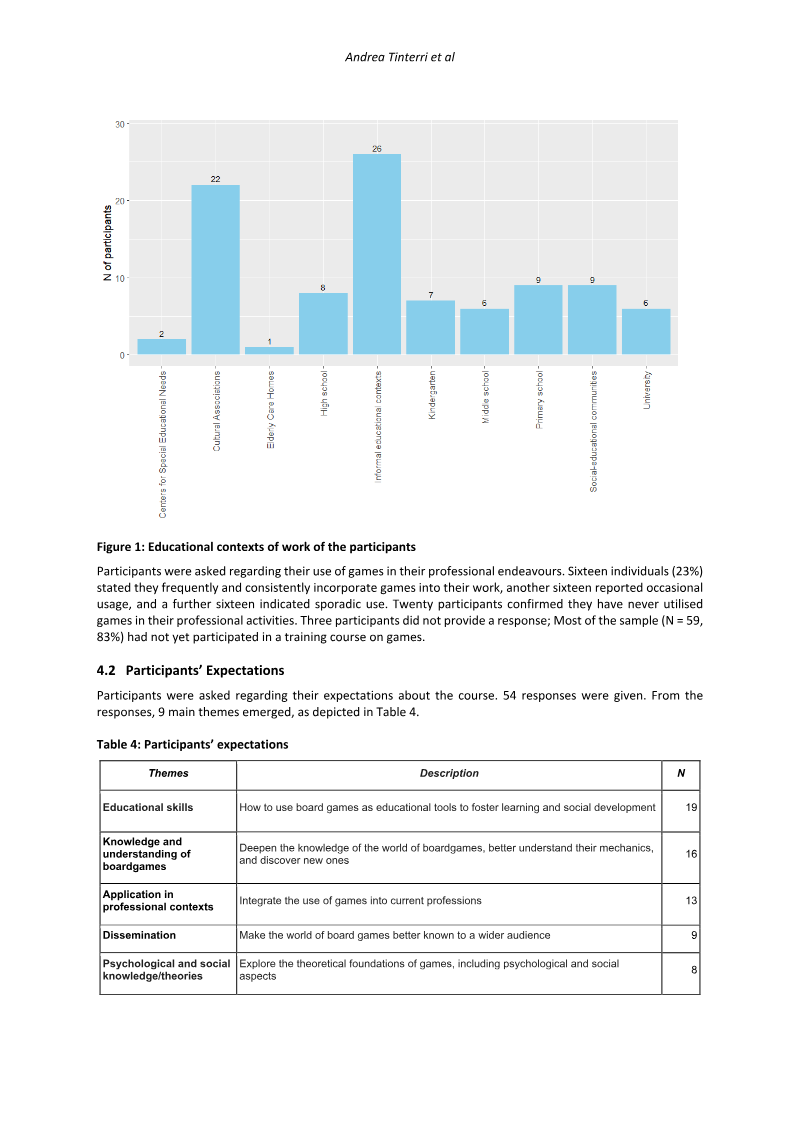
- The initial sample of 69 participants had a mean age of 41, drawn mostly from educators, teachers, employees, and creative professionals, and most held a high school diploma or higher.

