Engine
Company
Documents about Engine
The Path to the Game Recommender Engine
The development of a personalized game recommendation engine serves to bridge the gap between gamer motivation profiles and actionable game discovery.
- Quantic Foundry developed a game recommender engine by leveraging data from over 140,000 Gamer Motivation Profile participants to identify and match similar player profiles.
- To prevent popular titles like World of Warcraft or GTA from dominating recommendations, the engine uses a 'QF score' that adjusts a game's local frequency against its baseline popularity.
- The team processed over 22,000 unique game title entries by using Mechanical Turk to standardize text inputs against Wikipedia entries, ensuring consistent data for analysis.

GuiltyGearXrd's Art Style : The X Factor Between 2D and 3D
The transition of the Guilty Gear franchise from traditional 2D sprites to a 3D framework represents a significant technical and aesthetic milestone in fighting game development.
- The Guilty Gear Xrd development team achieved a 2D aesthetic in 3D by rejecting standard rendering conventions like normal maps and global lighting, which they identified as causes of a generic digital appearance.
- The workflow prioritizes manual artist intervention over automated rendering, utilizing Unreal Engine 3 and Softimage to treat each frame as a hand-posed keyframe.
- Visual consistency is maintained by manipulating vertex-based data—specifically vertex colors, surface normals, and lighting vectors—rather than relying on resolution-dependent textures.

DICE and Massive founders on Nordic gaming scene
The Nordic gaming industry has evolved from a nascent collection of hobbyist projects into a robust, global epicenter of game development.
- The Nordic gaming industry evolved from a 1990s hobbyist demo scene into a global development hub, catalyzed by the mid-1990s success of titles like Battlefield.
- The industry has transitioned from a landscape of isolated studios to a diverse ecosystem anchored by major companies and a dense network of spin-off developers.
- The democratization of development tools, specifically Unity and Unreal Engine, has significantly lowered entry barriers and reduced reliance on traditional publisher-led models.

Some trends from GDC 2015
The 2015 Game Developers Conference (GDC) in San Francisco served as a primary venue for major engine providers to refine their market strategies and for industry leaders to re-evaluate player engagement terminology.
- Epic Games transitioned Unreal Engine 4 to a free-to-access model, shifting its monetization to a 5% royalty fee on live product revenue.
- Unity Technologies introduced a tiered pricing structure, offering a free Personal Edition alongside a professional subscription service priced at $75 per seat per month.
- Major engine providers are aggressively targeting mobile developers by lowering barriers to entry and increasing the accessibility of high-performance development tools.
Interactive XMF: File Format Specification
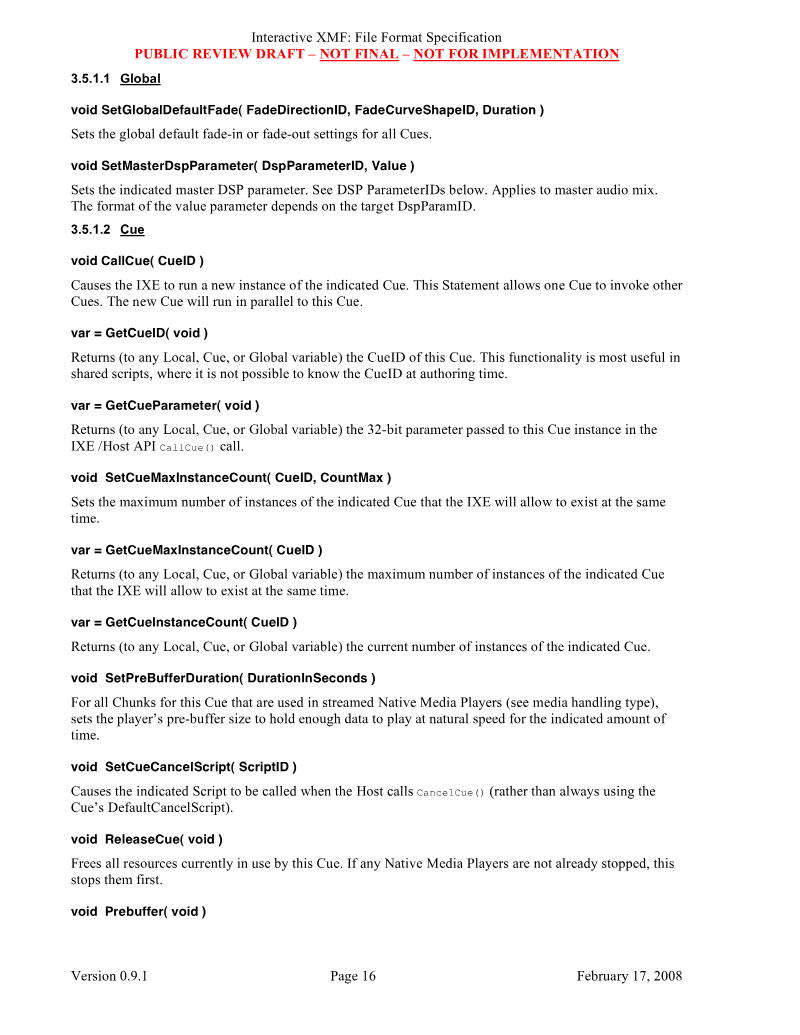
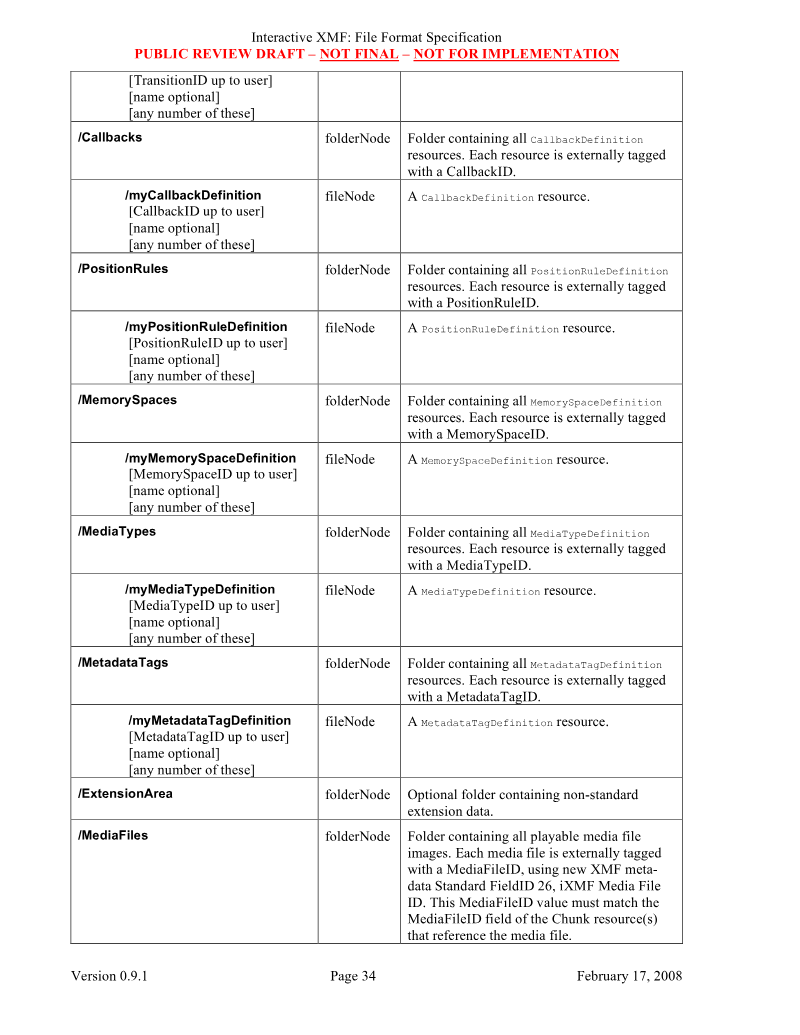
Interactive XMF (iXMF) serves as an open, interoperable standard for adaptive audio in gaming and interactive media.
- Interactive XMF (iXMF) is an open, interoperable file format that bundles MIDI, digital audio, and scripting into a unified structure for dynamic, event-driven game audio.
- The iXMF Engine utilizes a stack-based expression processor to manipulate 32-bit signed integer variables across global, cue-specific, and instance-specific scopes.
- Developers can implement complex, non-linear audio through a built-in scripting language that supports conditional logic, DSP parameter adjustments, and memory management.
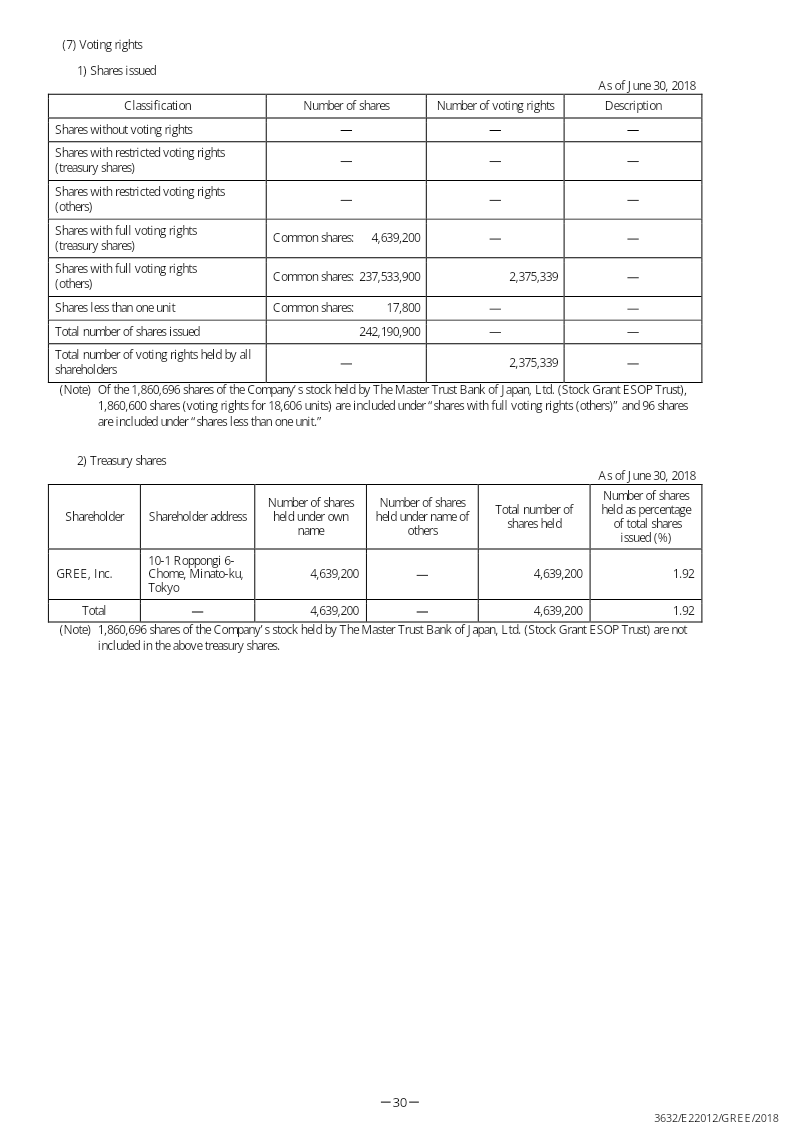
GREE FY2018 Annual Securities Report
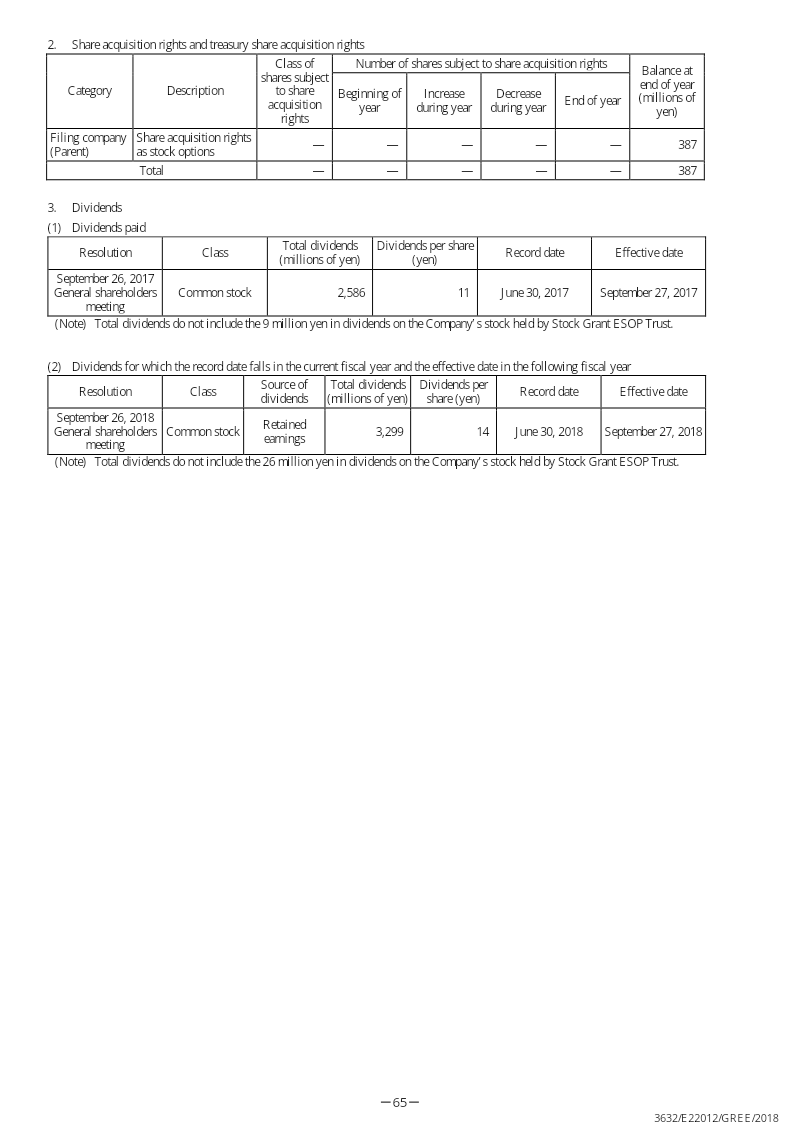
GREE, Inc.’s fiscal year 2018 annual report outlines a period of financial stabilization and strategic transition for the Japan-based mobile gaming and digital media company.
- GREE’s net sales grew 19.2% to 77,925 million yen in FY2018, driven primarily by increased mobile game coin consumption.
- Profit attributable to owners of the parent fell to 4,708 million yen from 12,116 million yen in the previous year, impacted by a 3,150 million yen impairment loss on goodwill and the absence of prior-year extraordinary income.
- The company maintains a strong financial position with an 89.9% equity ratio, 87,196 million yen in cash, and zero long-term interest-bearing debt.
GREE Annual Securities Report 2019
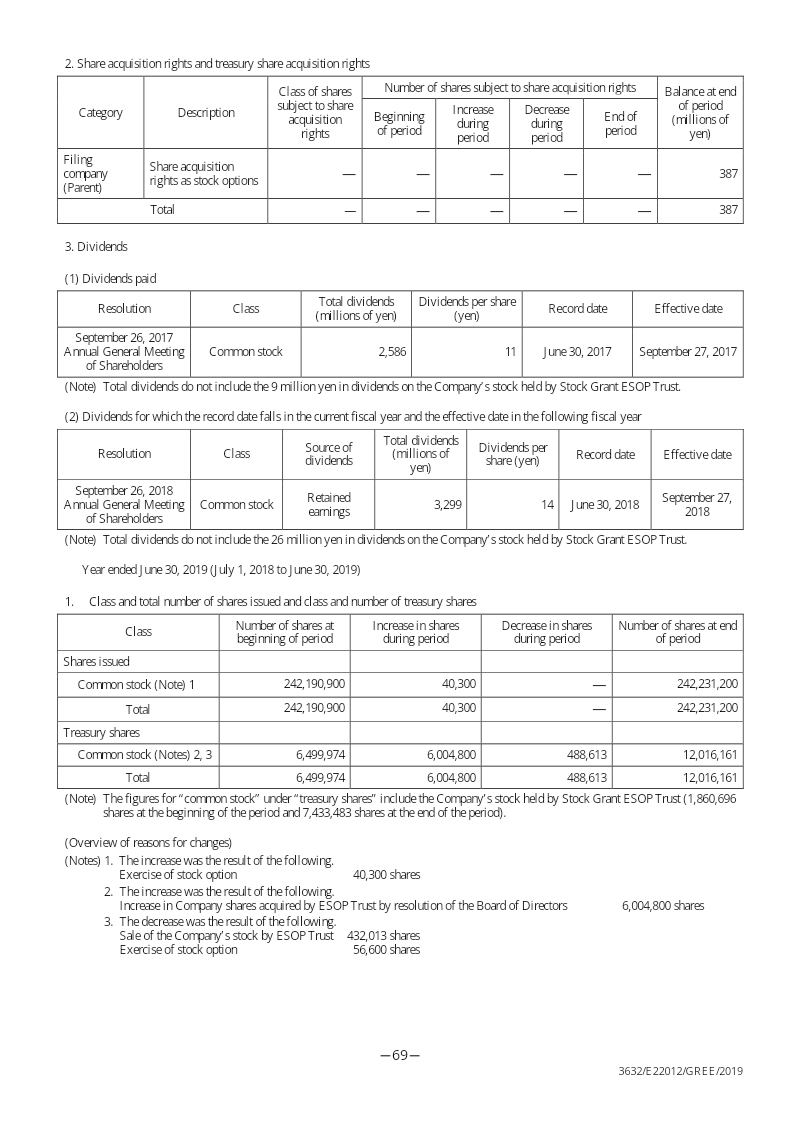
The 2019 Annual Securities Report for GREE, Inc. provides a comprehensive overview of the company’s financial performance, governance structure, and operational strategy for the fiscal year ending June 30, 2019.
- GREE experienced a significant financial downturn in fiscal year 2019, with consolidated net sales falling 9.0% to 70,936 million yen and operating profit declining 41.9% year-on-year.
- The company maintains a strong balance sheet with 84,472 million yen in cash and equivalents, an 89.9% equity ratio, and zero long-term interest-bearing debt.
- Financial performance was negatively impacted by increased investment activities, impairment losses related to the acquisition of ORATTA, Inc., and a broader decline in the mobile gaming sector.
GREE, Inc. Annual Securities Report: The 16th Fiscal Term
GREE, Inc.’s 16th fiscal term report, covering the period ending June 30, 2020, details a challenging financial year characterized by declining revenues and profits.
- GREE, Inc. experienced a decline in the fiscal year ending June 30, 2020, with consolidated net sales falling 11.7% to 62,665 million yen and profit attributable to owners of the parent dropping 22.3% to 2,709 million yen.
- The company maintains a strong financial position with an 89.3% equity ratio and 87,018 million yen in cash and cash equivalents, supporting ongoing share buybacks and dividend payments.
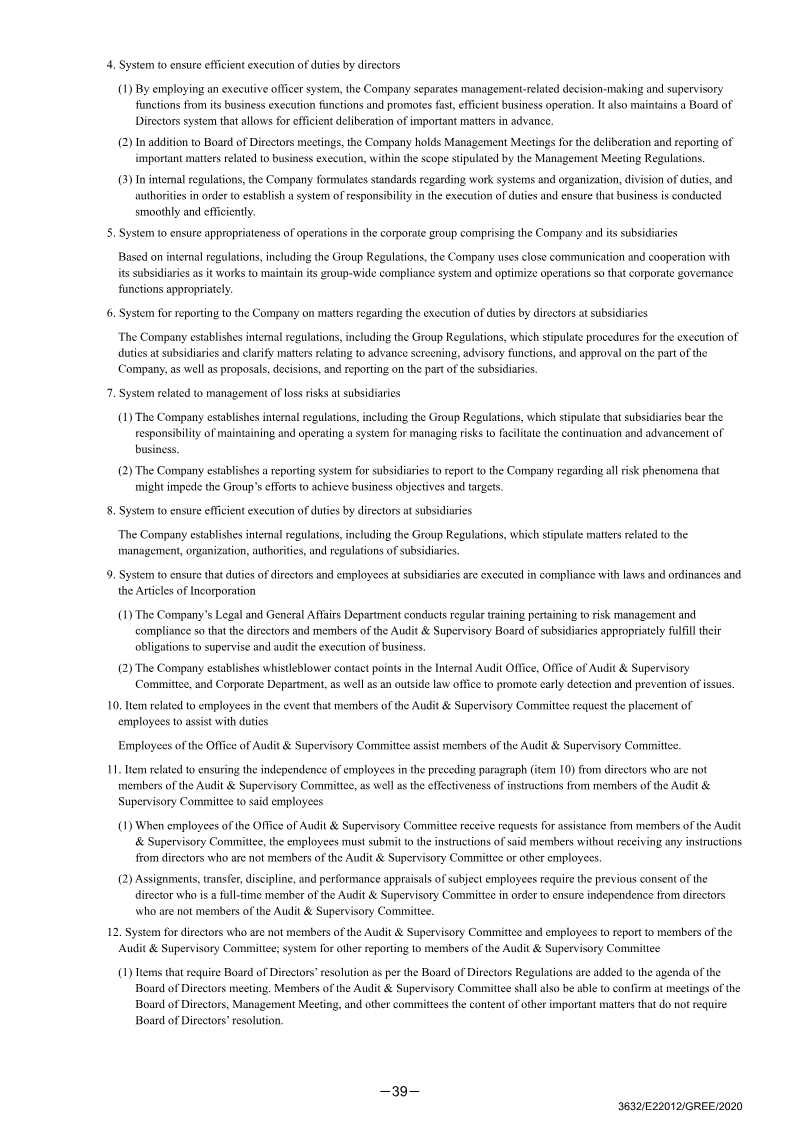
- Management is executing an 'Engine × IP × Global' strategy to counter intense competition and regulatory pressure on game monetization, while diversifying into advertising, media, and the VTuber sector.
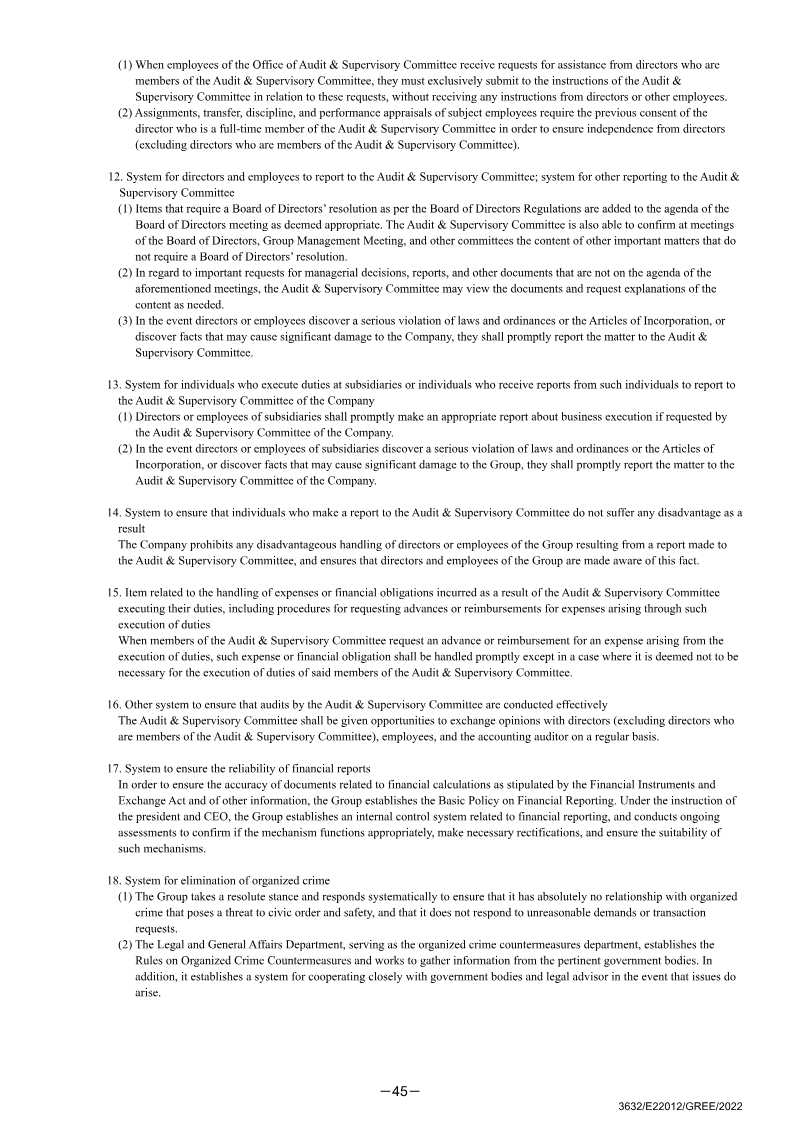
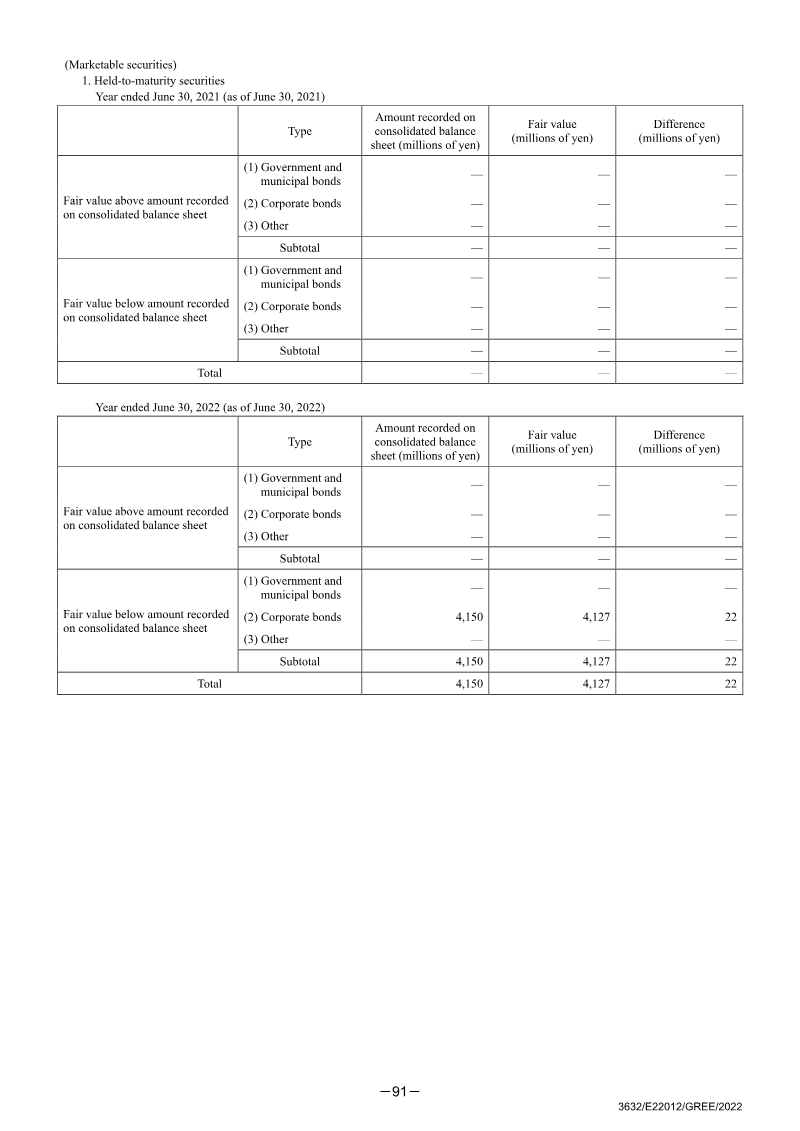
GREE Annual Securities Report: 18th Fiscal Term
The GREE, Inc. Annual Securities Report for the 18th fiscal term, covering July 2021 through June 2022, details a period of strategic reorganization and financial growth.
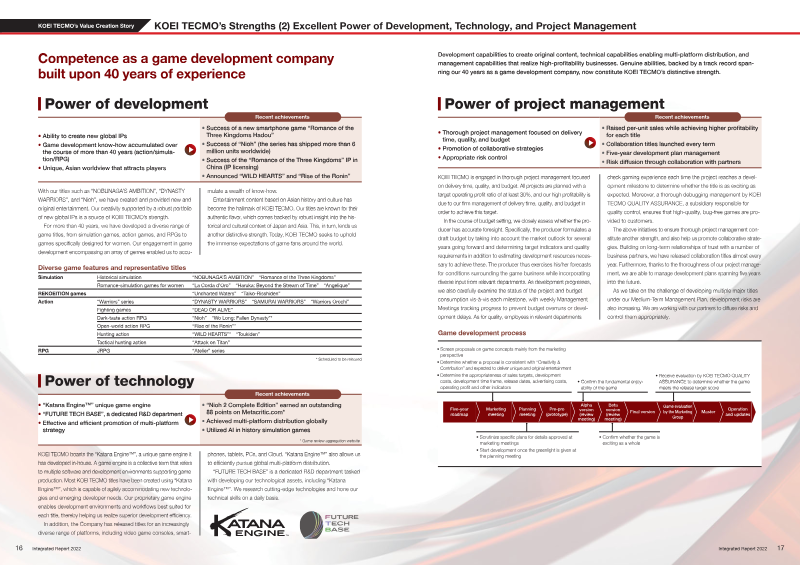
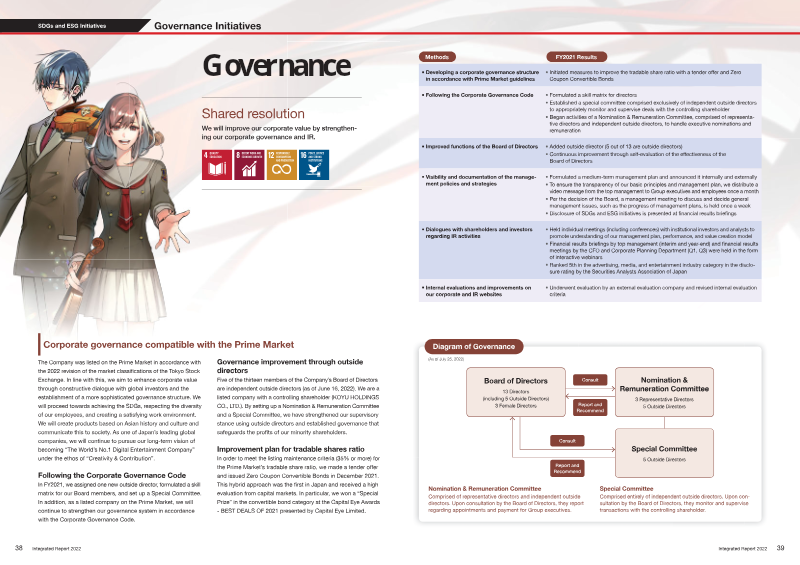
Koei Tecmo Holdings Integrated Report 2022
Koei Tecmo Holdings maintains a consistent trajectory of financial expansion, marked by twelve consecutive years of profit growth.
- Koei Tecmo has achieved twelve consecutive years of profit growth and is targeting 100 billion yen in net sales and 40 billion yen in operating profit by fiscal year 2024.
- Overseas sales accounted for nearly 50% of total revenue in fiscal year 2021, driven by a strategy of global expansion for Asian-themed historical intellectual properties.
- The company maintains a robust financial position with total assets exceeding 219 billion yen and a consistent shareholder distribution ratio of 50%.

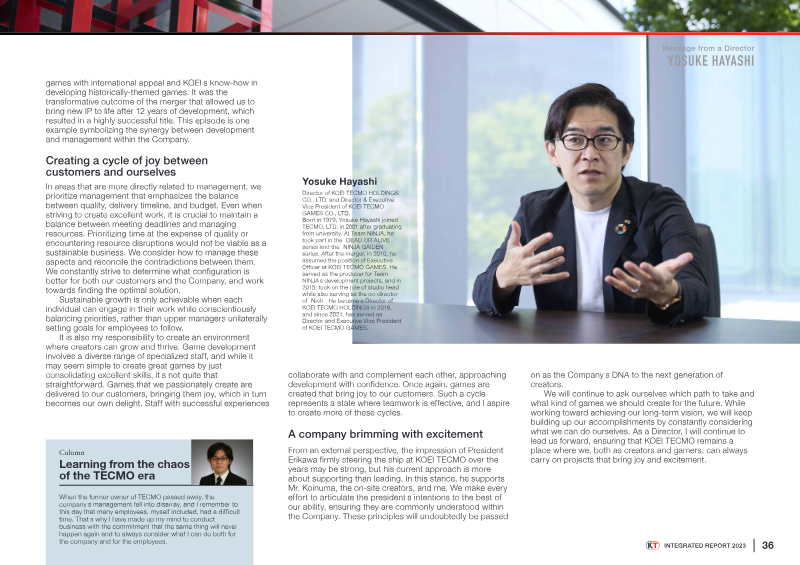
Koei Tecmo Holdings Integrated Report 2023
Koei Tecmo Holdings aims to establish itself as the world’s leading digital entertainment company by synthesizing creative innovation with disciplined financial management.
- Koei Tecmo achieved record-high sales of 78.4 billion yen in fiscal year 2022, more than doubling the 37.6 billion yen reported in 2013.
- The company maintains a 50% total distribution ratio for shareholders, supported by a conservative financial policy of expensing all development costs as they occur to avoid future impairment losses.
- Operational stability is bolstered by an industry-leading 4.6% employee turnover rate, attributed to competitive compensation and comprehensive training programs.
Online Application Open for Kreativ-Transfer: Hamburg
The Kreativ-Transfer initiative provides financial support to independent game studios and developers based in Germany, facilitating their participation in key industry networking events and exhibitions.
- The Kreativ-Transfer initiative provides grants covering up to 70 percent of travel, accommodation, and exhibition costs for independent German game studios.
- Applicants can receive a maximum grant of 1,000 to 2,000 euros to attend industry events and networking opportunities.
- To qualify, studios must be based in Germany, employ no more than 20 permanent staff, and demonstrate an inability to fund attendance independently.