Engine
Company
Documents about Engine

Your Indie Game on Console: A Practical Guide to Porting
Bringing an indie game to console platforms is a complex, multi-month undertaking that demands rigorous technical planning and administrative foresight.
- Porting an indie game to console is a complex process typically requiring three to six months, with projects involving intricate online networking often needing extended timelines.
- Success depends on early integration of platform-specific requirements, including dev kit acquisition, age ratings, and backend configuration for achievements, well before the final submission phase.
- Developers must replace simplified local storage with robust, platform-compliant save systems to meet console-specific technical standards.

Photorealism Through the Eyes of a FOX: The Core of Metal Gear Solid Ground Zeroes (Sponsored)
Kojima Productions developed the proprietary Fox Engine to establish a new standard for photorealism in the Metal Gear Solid franchise, specifically targeting the transition to physically based rendering (PBR).
- Kojima Productions developed the proprietary Fox Engine to transition the Metal Gear Solid franchise to a physically based rendering (PBR) pipeline using a linear space workflow.
- The engine achieves photorealism by integrating raw photographic data and 3D scanning of physical sculptures and environmental objects to create accurate models.
- The deferred rendering pipeline utilizes a G-buffer to manage complex material properties, including subsurface scattering, anisotropic specular highlights, and view-dependent roughness.

Dear YoYo Games...
The current business model for GameMaker Studio 2 faces significant criticism for its restrictive free-tier limitations, which threaten the engine's long-term competitiveness against industry rivals like Unity and Unreal Engine.
- GameMaker Studio 2’s current business model, which imposes a $40 fee to remove object and sprite count limitations, creates significant friction that discourages new users.
- The engine’s restrictive free-tier model is causing beginners to migrate toward competitors like Unity and Unreal Engine, which offer more robust free versions for experimentation.
- By prioritizing short-term revenue over user acquisition, GameMaker risks alienating the youth demographic, which serves as the primary pipeline for future professional developers.
Creating the Art of ABZU
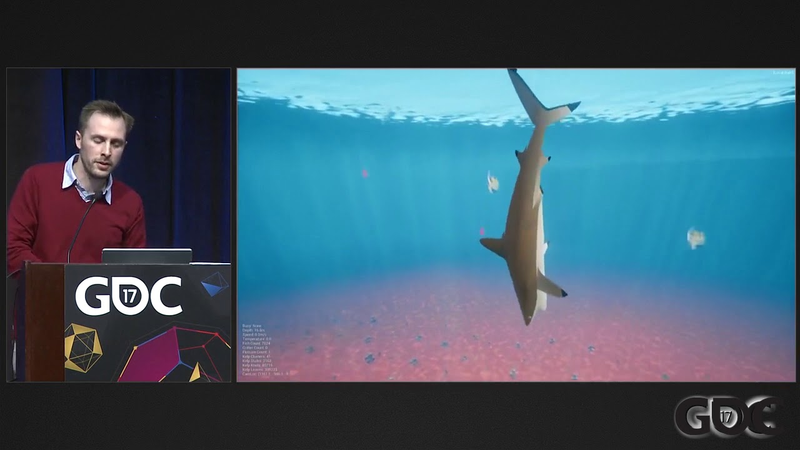
The development of the underwater adventure game Abzu by Giant Squid Studios highlights innovative technical solutions for rendering high-density environments with a small team.
- Giant Squid Studios utilized a custom static mesh instancing system in Unreal Engine 4 to render up to 10,000 interactive fish on-screen simultaneously.
- By replacing traditional skeletal rigging with vertex animation and material shaders, the team bypassed the performance limitations that would have restricted skeletal rigs to only a few dozen entities.
- The development team, consisting of only ten people, completed the project over a three-year cycle by prioritizing efficient, performance-friendly rendering techniques.

John Carmack on The Issues and Rewards of Bleeding Edge Engine Development
The evolution of computing power has brought graphical fidelity to the threshold of cinematic realism, shifting the industry’s primary challenge from rendering to the advancement of complex physics simulations and artificial intelligence.
- The primary challenge in game development has shifted from graphical rendering to the implementation of complex physics simulations and artificial intelligence.
- Studios are trapped in a 'mainframe-like' cycle where ballooning team sizes and legacy production pipelines stifle innovation and agility.
- To combat rising development costs and multi-year project inefficiencies, studios must prioritize strategic asset reuse, standardized workflows, and smaller, iterative releases.

Lessons Learned from Creating a Virtual Reality Engine
This presentation outlines the development process and technical lessons learned from building a custom virtual reality (VR) engine, known as the Horror Engine.
- The 'Horror Engine' project demonstrates that integrating a secondary 'social screen' allows non-VR users to manipulate environments, fostering collaborative and inclusive gameplay experiences.
- Building a custom engine from scratch using C++, DirectX 11, and Windows sockets provides a deeper understanding of rendering pipelines and hardware integration compared to relying on pre-built plugins.
- Successful engine development requires rigorous pre-planning, specifically the use of visual flowcharts to map data flow and class relationships before writing any code.

Designing with Physics: Bend the Physics Engine to Your Will
This presentation addresses the common challenge of achieving solid, responsive physics in indie games without requiring custom engine development.
- Combat 'floatiness' by increasing gravity beyond realistic levels, as the issue is a design-driven limitation of default engine settings rather than a purely technical failure.
- Improve simulation stability and perceived weight by implementing significant mass ratios between objects rather than using uniform mass defaults.
- Mitigate tunneling and jitter in fast-moving objects by reducing the fixed time step and enabling continuous collision detection.

Magical Realism: The Art of Creating Everest in Your Living Room with VR (presented by NVIDIA)
The development of Everest VR serves as a blueprint for achieving deep emotional immersion in virtual reality through the synthesis of photorealistic graphical fidelity and psychological sensory manipulation.
- Achieving photorealistic VR immersion requires processing over 1.5 trillion polygons using stereo photogrammetry and Unreal Engine.
- Performance optimization for high-fidelity VR is maintained through custom mesh patching, advanced texture streaming, and NVIDIA’s Multi-Res shading.
- Motion sickness is mitigated by utilizing black box framing techniques and prioritizing vertical movement over horizontal traversal to ground the user.



Square Enix Holdings 3Q FY2017/3 Financial Results Briefing
Square Enix Holdings reported financial results for the nine-month period ending December 31, 2016, reflecting a period of high-profile releases balanced by significant development cost amortization.
- Square Enix reported 1-3Q FY2017/3 net sales of ¥190.1 billion and operating income of ¥21.5 billion, with operating income declining year-over-year despite a sharp rise in Digital Entertainment sales.
- Final Fantasy XV reached 6 million units in shipments by early 4Q, with development costs fully amortized in 3Q, allowing future downloads and repeat sales to contribute directly to earnings.
- The Digital Entertainment segment experienced a ¥1.4 billion decline in operating income due to lower MMO expansion disk sales compared to the previous year and the heavy amortization of FFXV development costs.

Among Friends - An Uncharted 2: Among Thieves Post-Mortem
The development of Uncharted 2: Among Thieves centered on the ambition to create a playable summer blockbuster, prioritizing character-driven narratives integrated with high-stakes, cinematic set pieces.
- The development of Uncharted 2: Among Thieves relied on a six-month pre-production phase to prototype core innovations like the Dynamic Object Traversal system, which enabled combat on moving platforms.
- Naughty Dog Engine 2.0 leveraged the PlayStation 3's Cell processor to implement advanced graphical features like screen space ambient occlusion and physically correct depth-of-field while maintaining a consistent 30 frames per second.
- The project’s extreme ambition led to a grueling, extended crunch period, prompting the studio to conclude that future development must prioritize disciplined timelines, mandatory time-off policies, and dedicated post-production phases.
Multithreading the Entire Destiny Engine
The Destiny engine architecture achieves high-performance, cross-platform scalability by transitioning from traditional synchronization primitives to a sophisticated, job-based multithreading model.
- The Destiny engine utilizes a fiber-based, job-driven architecture to replace traditional synchronization primitives, enabling high-performance scalability across diverse hardware generations including PS3 and Xbox 360.
- Workloads are organized into discrete job sequences with explicit dependency management to prioritize simulation tasks and minimize latency.
- System integrity is maintained through a strict execution environment that uses resource handles, producer-consumer models, and whitelisting to prevent data races and unsafe memory access.

Why is Amazon getting into the game engine business?
Amazon Web Services has entered the game development market with the launch of Lumberyard, a free, open-source game engine.
- Amazon launched Lumberyard, a free, open-source game engine based on CryEngine, to integrate game development directly into its existing cloud and streaming infrastructure.
- The engine’s primary value proposition is its native integration with Amazon GameLift, which simplifies backend management for multiplayer session-based games.
- Lumberyard features deep Twitch integration, allowing developers to build mechanics that enable streamers to invite viewers directly into live gameplay sessions.