Engine
Company
Documents about Engine

Africa Games Week 2026 Returns to Cape Town: Building Africa’s Gaming Future
Africa Games Week 2026 is scheduled to take place in Cape Town from December 6 to 8, 2026.
- Africa Games Week 2026 will take place in Cape Town from December 6 to 8, 2026, serving as a central hub for connecting African game studios with international investors and publishers.
- The 2026 summit theme, 'Levelling the Foundation: Constructing Africa’s Gaming Engine,' shifts the focus from talent discovery toward building the infrastructure and systems required for a sustainable, long-term industry.
- The event program includes B2B meetings, industry exhibitions, a Pitch Lab, a Pitch Competition, and the Africa Games Week Awards to facilitate deal-making and partnerships.

This Sucks: Why We Think Disney Will Buy Epic Games | Extra Credits Gaming
The potential acquisition of Epic Games by Disney is driven by a strategic shift in the entertainment industry, where the primary objective is no longer just content production but the creation of persistent, immersive digital environments.
- Disney’s core business model is the creation of immersive environments that foster emotional attachment, making them a direct competitor to companies like Nintendo that build persistent digital worlds.
- Epic Games provides three strategic assets Disney lacks: a direct relationship with gamers via the Epic Games Store, the infrastructure of the Unreal Engine, and a massive, persistent social space in Fortnite.
- Acquiring Epic would allow Disney to bypass third-party platforms like Sony, Valve, or Microsoft, enabling them to control the entire ecosystem from content discovery to in-game transactions.

I Interviewed Todd Howard For The First Time In 15 Years
Bethesda Game Studios has officially announced a new strategic roadmap for the Fallout franchise following a significant organizational restructuring at Xbox.
- Bethesda Game Studios has officially announced Fallout 5, which is currently in pre-production and being developed alongside The Elder Scrolls 6 using the proprietary Creation Engine 3.
- Bethesda confirmed a collaboration with Obsidian Entertainment on a new, unannounced Fallout project, with Bethesda retaining management and supervisory control over the franchise.
- The company announced official remasters for Fallout 3 and Fallout New Vegas, alongside a new Fallout 76 expansion titled 'Raven Rock' scheduled for release next year.
Godot Makes the Right Call in Blocking AI Code in Their Engine
The Godot Foundation’s decision to prohibit the use of generative AI in code contributions and review processes represents a strategic effort to maintain software integrity and project sustainability.
- The Godot game engine has updated its contribution policy as of June 30th, 2026, to prohibit the use of AI-generated code submissions and will ban users who submit heavily AI-generated work.
- This decision by Godot stems from an escalation in AI-generated code submissions, which began to be a noticeable problem in February 2026, and has since intensified.
- The surge in AI code generation capabilities, particularly with tools like Anthropic's Claude Code, has transformed enterprise software development by enabling AI to write code, run tests, observe errors, and debug.

The Unreal 6 Reveal Is Epic's DLSS 5 Moment
The announcement of Unreal Engine 6 represents a significant strategic shift for Epic Games, prioritizing the integration of the Unreal Engine for Fortnite (UEFN) ecosystem over the traditional needs of the broader game development industry.
- Epic Games' Unreal Engine 6 (UE6) reveal is criticized for leadership decisions that are seen as out of touch with industry needs, similar to Nvidia's DLSS 5 announcement.
- Key changes in UE6 include a push for portable content, a new Scene Graph Framework replacing 'actors' and Blueprints, native Large Language Model (LLM) integration, and a transition from C++ to the Verse programming language.
- The shift from C++ to Verse, a proprietary language used in UEFN and described as 'the programming language of the Metaverse,' is a major concern for game studios and academic institutions due to its unfamiliarity and Epic's sole ownership.

Look, We Have to Talk About Meccha Chameleon
The recent emergence of the multiplayer title Meccha Chameleon serves as a primary case study for analyzing unpredictable viral success in the modern video game industry.
- Meccha Chameleon, a $6 multiplayer 'hide & seek x painting' game from two Japanese indie developers, sold over 10 million copies and grossed over $50 million since its Steam release on June 9th, becoming June's top new PC game.
- The success of Meccha Chameleon is attributed to its existing multiplayer framework (using Unreal Engine and free Epic Online Services for matchmaking), prior experience with 6 Steam games since late 2024, and its bitesized price and clear game concept.
- Meccha Chameleon's appeal to streamers, making it #3 on Twitch with 10.4 million hours watched in the last week, stems from its ability to create memorable, funny, and creative player interactions, acting as a framework for 'playacting'.
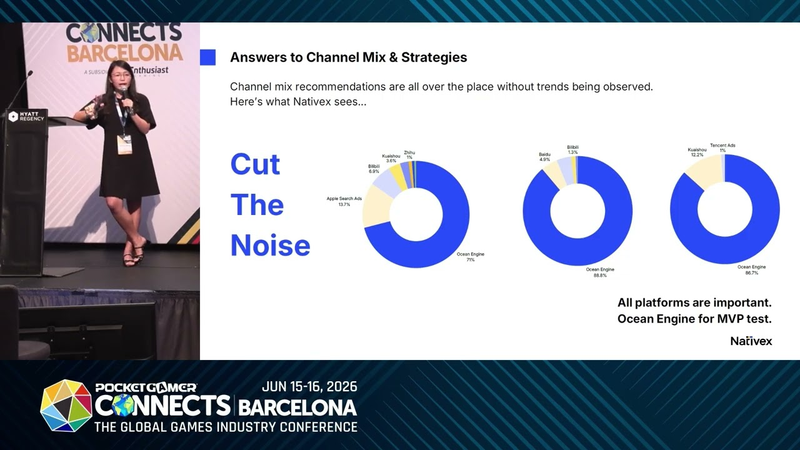
Session: Demystifying China UA: Reverse-Engineering AI Advice (Fact vs. Fiction) - Yolanda Huang.
The presentation evaluates the reliability of large language models (LLMs) in providing strategic guidance for user acquisition (UA) in the Chinese gaming market.
- Mainstream AI tools currently provide inconsistent, contradictory, and often inaccurate advice regarding China market entry, failing to serve as a reliable source of truth for UA strategies.
- Contrary to common industry misconceptions, a full ISBN license is not required for initial market testing; a software copyright license allows foreign entities to conduct paid media and influencer marketing tests.
- Ocean Engine, the ad platform powered by ByteDance, is the primary and most scalable channel for testing mobile game performance in the Chinese market.
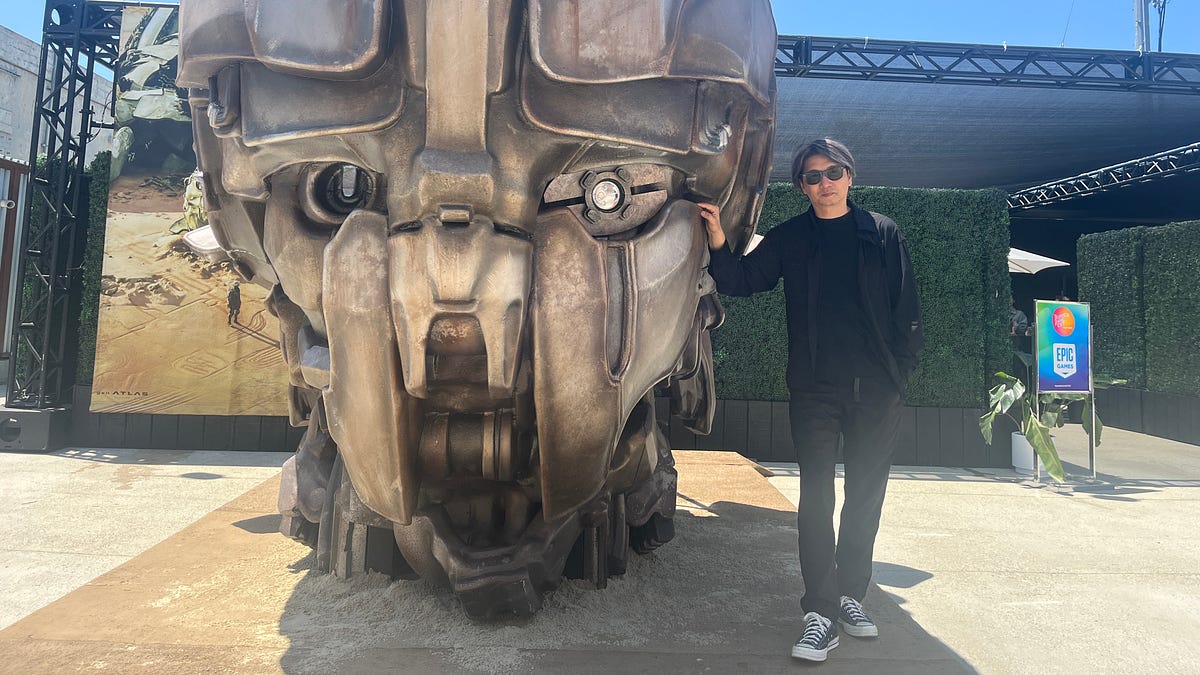
Fumito Ueda: An Interview on Design and Development
The interview reveals that Fumito Ueda, renowned for Ico, Shadow of the Colossus and The Last Guardian, is promoting his latest title, Gen Atlas, at Summer Game Fest in Los Angeles.
- Fumito Ueda's new game, "Gen Atlas," published by Epic Games, features a giant robot head that can fly and connect to a larger robot body, and, for the first time in an Ueda-directed game, includes shooting mechanics, though it is not primarily a shooting game.
- Ueda designed the robot head for "Gen Atlas" early in the game's conception, aiming for a neutral aesthetic that is neither heroic nor dilapidated, with hidden "gimmicks" like ears that flip out for flight.
- Despite the inclusion of guns, Ueda emphasizes that "Gen Atlas" maintains his signature design philosophy of realistic movement and pacing, where characters and robots move with believable limitations rather than superhuman speed, to create an immersive experience.

Is Summer Game Fest worth it for devs?
The current landscape of the video game industry is defined by a shift toward targeted digital marketing and strategic platform integration.
- Summer Game Fest has shifted from a broad industry trade show to an intimate, invite-only event focused on high-impact influencer and press relations, making it a more efficient alternative to the high-cost, high-volume spectacle of traditional E3 booths.
- Participation in major streaming showcases during June can drive significant wish-list growth, with top-tier events like the Xbox showcase generating approximately 46,000 wish lists, while smaller indie-focused showcases typically yield around 1,000.
- Epic Games is positioning Unreal Engine and Fortnite as an open-ecosystem alternative to Roblox, focusing on platform-level tech updates—such as persistent level counters—to bridge the feature gap between the two platforms.

Epic: “We’re Going to All Need to Change the Way We Build Things”
The State of Unreal address, delivered in June 2026, centers on the thesis that the video game industry must fundamentally restructure its development and economic models to remain competitive against centralized platforms like Roblox.
- Epic's CEO, Tim Sweeney, warned the game industry about the growth of centralized platforms like Roblox, which he claims commoditize content and take over 70% of revenue from 450 million users, urging a shift in game development.
- Epic announced Unreal Engine 6 (UE6), designed to allow developers to create games for various platforms, including Fortnite, and integrate assets like Fortnite skins into other UE6 games via 'Smart Assets'.
- Unreal Engine 6 will incorporate AI tools such as Claude and Gemini to enhance creativity and productivity, and will transition the gameplay programming model to Verse.

Only XBOX Can Kill Xbox, Unreal 6's AI Update & Pokémon Training Drones | Games For Breakfast
The gaming industry currently faces a period of profound instability characterized by corporate mismanagement, ethical controversies, and a shift toward aggressive, often alienating, monetization strategies.
- Microsoft has closed multiple game studios despite a five-year investment of over $20 billion in content and hardware, during which annual revenue declined by nearly half a billion dollars.
- Microsoft is facing internal pressure to improve efficiency, with the company reporting a 3% accountability margin and a need to pivot its strategy to address declining financial performance.
- The gaming industry is increasingly grappling with the integration of AI tools in development, raising concerns regarding the protection of intellectual property and the legal status of AI-generated assets.

🚨📢 BREAKING NEWS: GTA 6 pre-sale, EU regulations looming, Layoffs and Pokemon Champions launch
The current landscape of the gaming industry is defined by high-profile product launches, significant regulatory challenges, and a pervasive trend of studio restructuring and layoffs.
- Take-Two’s stock valuation has risen in anticipation of the upcoming Grand Theft Auto 6 pre-sale.
- Epic Games has set a 2027 target for Unreal Engine 6, focusing on AI-assisted development and live service interoperability.
- Fortnite’s creator ecosystem has surpassed $1 billion in total payouts since 2023, with community-made content now accounting for nearly 50% of total playtime.