Engine
Company
Documents about Engine

Adam Apicella Joins ESL FACEIT Group as SVP of Esports: North America
Adam Apicella has been appointed as the Senior Vice President of Esports for North America at the ESL FACEIT Group (EFG), effective October 2024.
- Adam Apicella has been appointed as the Senior Vice President of Esports for North America at ESL FACEIT Group (EFG), effective October 3, 2024.
- Apicella previously served as the co-founder and president of Esports Engine, a company he departed following its acquisition by EFG in March 2023.
- The appointment reunites Apicella with EFG leadership, including Craig Levine, Niccolo Maisto, and Sebastian Weishaar, after more than 20 years of professional association.



Financial Results for the First Half of the Fiscal Year Ending March 2025
Koei Tecmo experienced a transitional first half for the fiscal year ending March 2025, characterized by an 11.4% decline in sales to 35,197 million yen and a 23.1% drop in operating profit.
- Koei Tecmo reported an 11.4% decline in sales to 35,197 million yen and a 23.1% drop in operating profit for the first half of the fiscal year ending March 2025 due to a sparse release schedule.
- Despite the first-half downturn, the company remains on track to meet its full-year target of 90 billion yen in sales, representing a 6.4% annual increase driven by a dense second-half release schedule.
- The company’s long-term financial goals include achieving a 40 billion yen operating income and maintaining a 30% operating profit margin to secure a position among the top ten global gaming companies.

Unity Cancels Its Engine Runtime Fee
Unity has officially rescinded its controversial Runtime Fee, a policy originally introduced in September 2023 that sought to charge game developers based on installation thresholds.
- Unity officially canceled its controversial Runtime Fee for game customers, effective immediately as of September 16, 2024.
- The decision to scrap the fee follows extensive consultation with Unity's community, partners, and customers.
- The canceled Runtime Fee was originally announced by Unity in September 2023.

The Success of Black Myth: Wukong and What It Means for Media
The success of the video game Black Myth: Wukong serves as a primary case study for the shifting landscape of global media consumption, highlighting a transition toward domestically produced, culturally resonant content in major international markets.
- Black Myth: Wukong, a single-player game based on Chinese folklore, sold over 20 million copies since its August 20th release, grossing nearly $1 billion and setting a new Steam record for concurrent players, despite a 'generally favorable' Metacritic rating of 81.
- At least 75% of Black Myth: Wukong's sales are from within China, demonstrating a strong domestic preference for culturally relevant content, contrasting with Western single-player titles that typically achieve single-digit sales in China.
- China's film industry has seen a significant shift towards local content, with Hollywood films dropping from an average of 5.3 of the Top 10 releases between 2011-2013 to just 1.3 between 2021-2023.

Building a Creator-Focused 3D Engine with Hiber
Hiber aims to democratize 3D world creation by providing a lightweight, browser-based engine that removes the technical barriers associated with traditional game development.
- Hiber has scaled to 6.5 million user-generated worlds and 1.2 million creators by utilizing a lightweight, browser-based engine that removes the need for large downloads or complex coding.
- The platform enables a direct-to-consumer model by allowing brands to embed 3D experiences directly into their own websites, bypassing high revenue commissions typically charged by major app stores.
- Hiber’s user base is evenly split between the United States and emerging markets, with a primary demographic of users aged 13 to 18.

How Video Game Tech Is Powering a Revolution in Hollywood
The integration of video game technology into Hollywood production processes is fundamentally transforming visual effects and filmmaking workflows.
- Real-time game engines like Unreal Engine and Unity are revolutionizing Hollywood production by enabling live, in-camera visual effects adjustments that replace slow, traditional rendering processes.
- LED volume technology, used in productions like 'The Mandalorian' and 'Fallout,' allows directors to see and manipulate virtual environments in real-time, significantly reducing the need for green screens and post-production guesswork.
- The integration of game engine technology allows for synchronized lighting, where physical set lights and virtual environment lighting in Unreal Engine can be adjusted simultaneously from a single control interface.

Management Board Report on the Activities of the CD PROJEKT Group: H1 2024
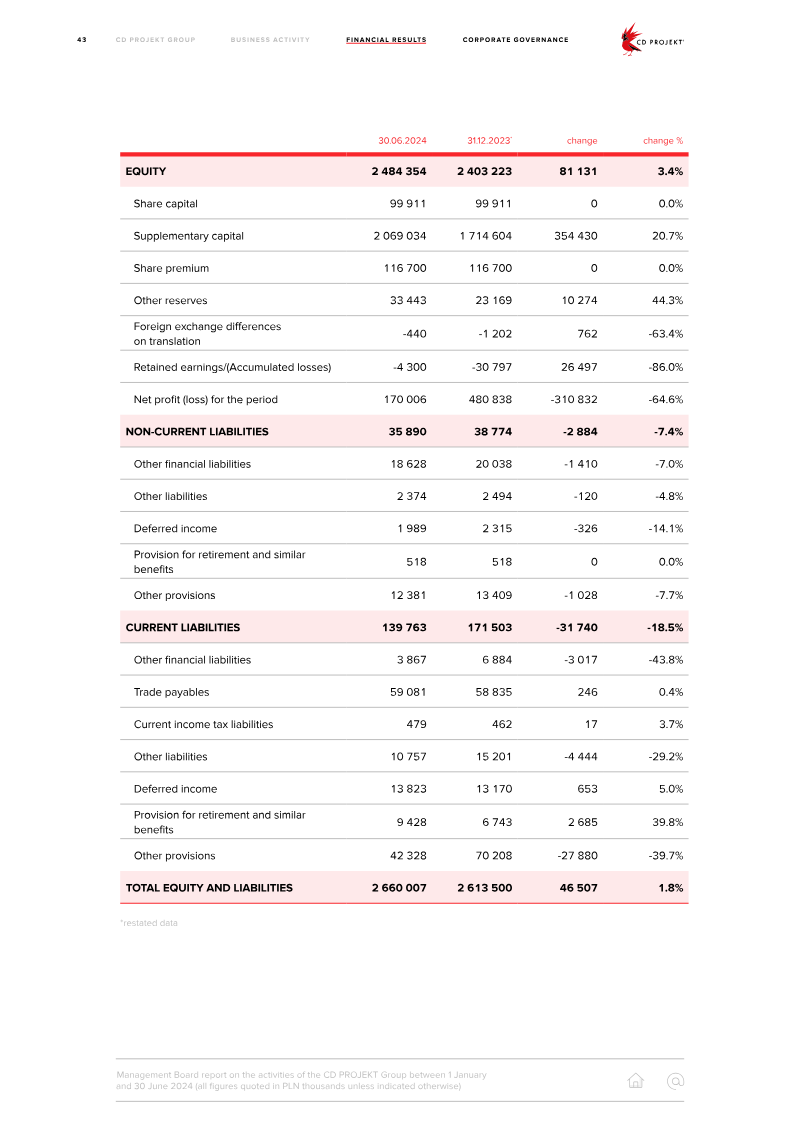
The CD PROJEKT Group demonstrated robust financial health and operational stability during the first half of 2024, characterized by an 88.4% increase in net profit to PLN 170 million.
- CD PROJEKT Group reported a net profit of PLN 170 million in H1 2024, representing an 88.4% increase compared to the previous period.
- The company maintains a strong financial position with a debt-free balance sheet and liquid assets totaling PLN 1.37 billion.
- Growth was driven by the sustained performance of the Cyberpunk 2077 franchise, including the Phantom Liberty expansion, and The Witcher 3: Wild Hunt, with 96.8% of revenue coming from international exports.
Starbreeze H1 2024 Financial Results
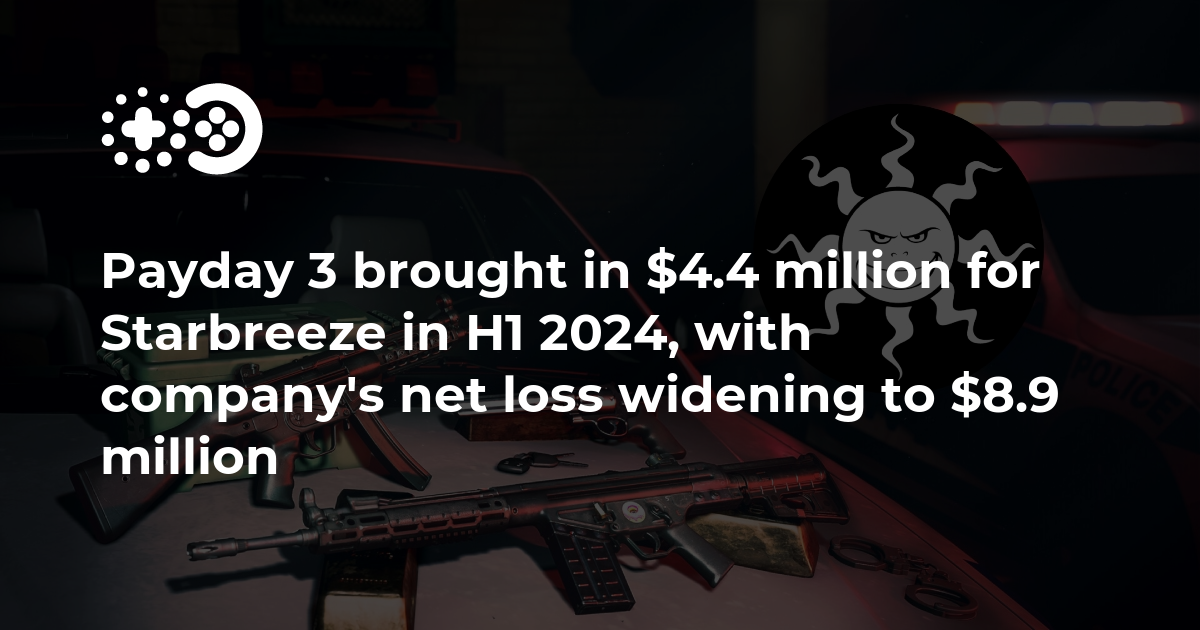
Starbreeze’s financial results for the first half of 2024 reveal a period of significant revenue growth coupled with a substantial increase in net losses.
- Starbreeze reported a net loss of $8.95 million for H1 2024, a significant increase from the $18.9k net loss recorded in the same period of 2023.
- Total revenue for H1 2024 reached $9.46 million, representing a 38.5% year-over-year increase, while EBITDA grew by 211% to $5.5 million.
- Payday 3 generated $4.4 million in revenue during the first six months of 2024 and maintained approximately 300,000 monthly active users as of June 30.
GameSquare Holdings 10-Q: Q2 FY2024
GameSquare Holdings is currently navigating a period of aggressive corporate restructuring and expansion, highlighted by the March 2024 merger with FaZe Holdings.
- GameSquare Holdings completed its acquisition of FaZe on March 7, 2024, integrating the company as a wholly-owned subsidiary and expanding its board of directors from six to nine members.
- Operating expenses rose significantly for the six months ended June 30, 2024, with general and administrative expenses reaching $12.1 million (up from $6.9 million) and selling and marketing expenses hitting $4.7 million (up from $2.5 million), largely driven by the FaZe and Engine acquisitions.
- On June 21, 2024, the company received a notice of default from King Street Partners LLC regarding a $5.8 million 12.75% convertible senior secured note dated December 29, 2023.
Inside Stormgate with Tim Morten: In-Depth Live Review & Gameplay with Insights
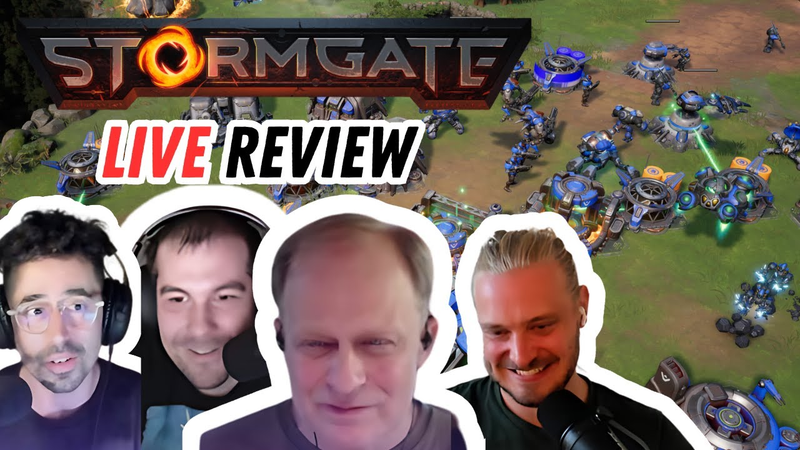
Frost Giant Studios is positioning Stormgate as a modern successor to the classic real-time strategy genre, specifically targeting the legacy of Blizzard titles like StarCraft and Warcraft.
- Frost Giant Studios is developing Stormgate as a free-to-play real-time strategy game using Unreal Engine and proprietary SnowPlay technology to manage high unit counts and network complexity.
- The monetization model rejects pay-to-win mechanics in favor of à la carte purchases for campaign expansions, cooperative commanders, and cosmetic items.
- The studio maintains creative independence through a combination of private investment and crowdfunding, bypassing traditional publishing deals to avoid KPI-heavy mobile gaming metrics.

Infinite Reality Partners With Global Esports Federation
Infinite Reality, the parent company of Rogue and the Carolina Royal Ravens, has entered into a five-year strategic partnership with the Global Esports Federation (GEF).
- Infinite Reality has entered a five-year strategic partnership with the Global Esports Federation (GEF) to develop multilingual, interactive digital twins of GEF’s worldwide events.
- The partnership will provide fans with remote access to GEF events via iOS, Android, and web platforms, allowing for real-time interaction.
- Infinite Reality will support the GEF’s Global Social Impact Initiative, which utilizes gaming to promote the United Nations Sustainable Development Goals.
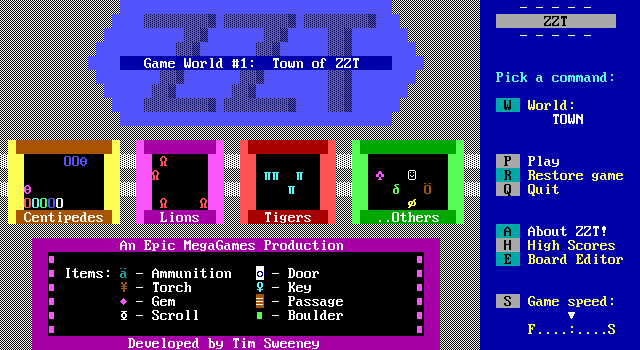
The Founding of Epic Games and the Quest to Build the Metaverse
The evolution of Epic Games from a small 2D developer to a central architect of the metaverse is rooted in a consistent philosophy of empowering user-generated content and accessible game-creation tools.
- Epic Games, founded by Tim Sweeney in 1991, initially focused on 2D games like ZZT before shifting to 3D with the 1998 hit "Unreal," which sold 1.5 million units by its fourth anniversary.
- The "Unreal Engine," which powered the game "Unreal," was Epic's primary investment, costing about $3 million ($6 million in 2024 dollars) to produce, rather than the game itself.
- Epic Games successfully built a business around licensing the Unreal Engine starting in 1996, generating $250,000–$350,000 in upfront payments and 5%–7% royalties from licensees.