Digital Games
Company
Documents about Digital Games
Habit and Perception Towards Games and Game-Based Learning in India: A Survey Study of Awareness and Experience with Digital Games
This study investigates the habits and perceptions of the Indian population regarding digital games and game-based learning.
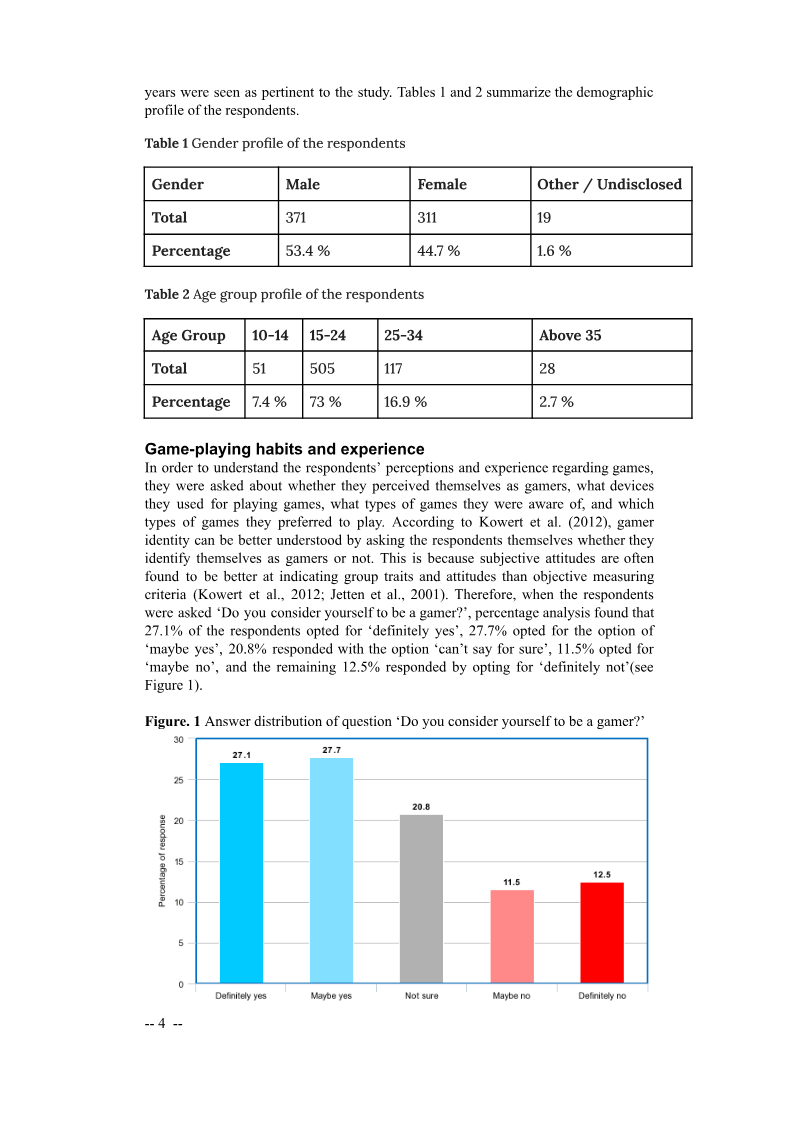
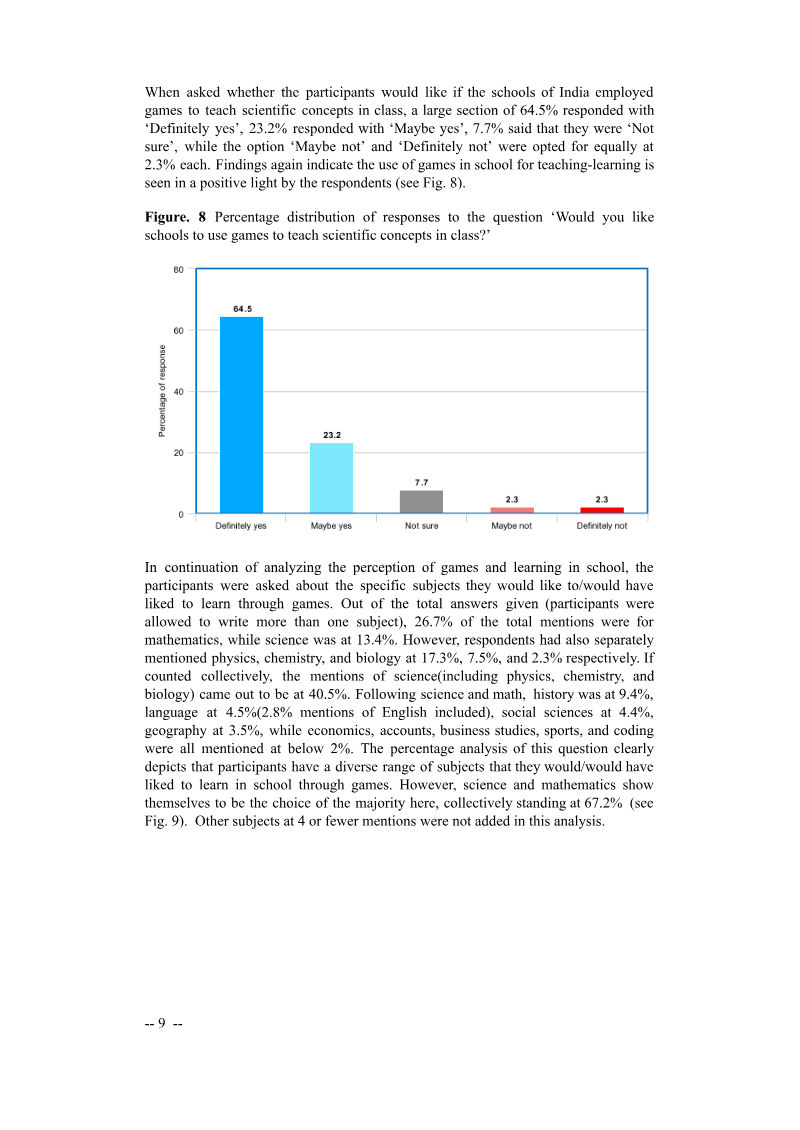
- Survey of 701 Indian respondents, mostly students and teachers at seven schools and 73% aged 15–24, found 79% considered games a learning tool at least maybe, and about 88% supported schools using games to teach scientific concepts.
- Mathematics and science were the most requested subjects for game-based instruction, together accounting for 67.2% of mentions, with history, languages, and geography also cited.
- Mobile phones were the dominant gaming platform at 83.3%, and action-adventure (46.7%) and puzzle games (46.6%) were the most preferred genres, while puzzle games were the most widely recognized at 63.9%.


It All Starts with a Name: Mapping the Terms Used by Researchers to Describe Gambling-Like Elements in Digital Games
This document outlines a research project aimed at mapping the terminology used by scholars to describe gambling-like elements in digital games.
- Naming gambling-like elements in digital games is never neutral: the chosen term signals whether a design practice is seen as socially acceptable and what regulatory treatment it warrants.
- The literature review identified 313 candidate terms, which were narrowed to 32 relevant expressions by grouping similar terms and dropping overly narrow designations.
- The authors argue that the lack of consistent terminology hinders the research field, motivating a mapping of how researchers currently name and define these elements.


VAPBr: Values in Digital Games for Public Service in Brazil
The authors present VAPBr (Values at Play Brazil), a 24-card deck intended as a brainstorming tool to help game designers identify human values for digital games that depict Brazilian public service processes.
- The authors report that 12 of 14 participants answered the questionnaire, and that every usefulness statement drew at least 75% agreement at 4 or 5. Participants found the deck clear and easy to use.
- One of the most important statements was that 58.3% of participants totally agreed the deck was useful for setting values for a game project in its context.
- Participants wanted more than value names to complete the design, and agreement that the card descriptions were sufficient fell to 58.3%.

Mental Health in 3D: A Dimensional Model of Mental Illness Representation in Digital Games
This paper, by Kelli Dunlap and Rachel Kowert and published in the Journal of the Canadian Game Studies Association (Loading..., Vol 14(24), pp.
- Shapiro and Rotter (2016) found that in top-selling games from 2011 to 2013, 24% depicted one or more mentally ill characters, and that of the 42 individual characters identified as portraying mental illness, 29 (69%) acted violently and in line with the homicidal maniac trope.
- The authors argue that adopting television and film frames for games has yielded a near-universal finding of negative and stereotyped portrayals.
- The proposed model classifies representations on a three-level spectrum: one-dimensional decorative references, two-dimensional defining but shallow portrayals, and three-dimensional fully realized portrayals.
‘Thinking Through’ Games in the Classroom: Using Discursive Game Design to Play and Engage with Historical Datasets
The article by René Glas, Jasper van Vught, and Stefan Werning was published in Transactions of the Digital Games Research Association, November 2021, Vol. 5 No 3.
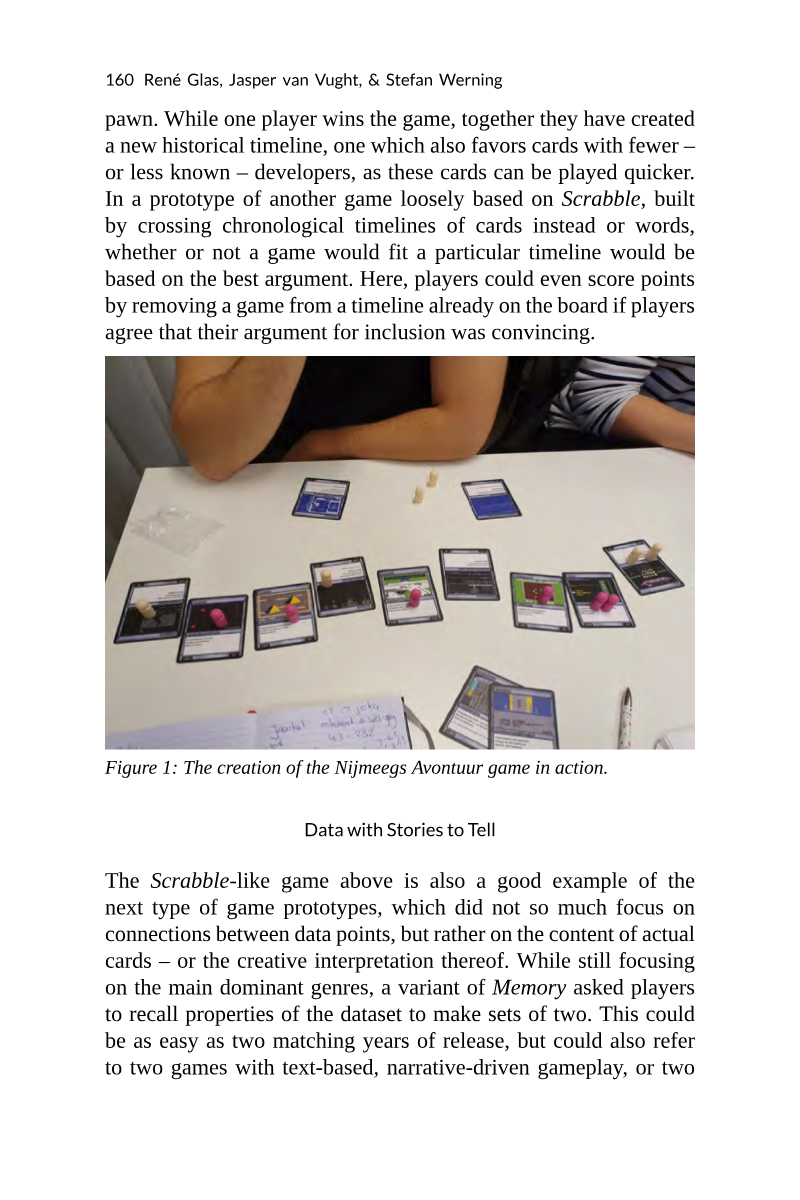
- The Gamebase64 database lists 177 genre categories, which students found were based on 13 main genres. Some genres such as adventure and arcade were noticeably dominant, while simulation and sports were rare.
- The authors observed that matching-based card games tended to favour games with shared parameters, so games without obvious connections became worthless for scoring. They argue that the gameplay mechanics themselves favour histories of winners.
- Some student groups used outlier cards as rewards rather than treating them as worthless. One Crazy Eights variant gave bonuses or punishments when such cards were drawn.
Educating Interactive Narrative Designers: Cornerstones of a Program
The paper by Hartmut Koenitz, Christian Roth, and Teun Dubbelman, published in Transactions of the Digital Games Research Association (November 2021), reports on the first iteration of a minor in interactive narrative design at the University of the Arts Utrecht.
- The authors argue that interactive narrative aspects have not been the focus of video game education, which indicates that many narrative designers are self-trained, and that many designers use private vocabulary and conceptualizations that are not directly transferable.
- The minor's first run in fall 2019 was in high demand, and 20 students were accepted after a selection process.
- The authors state that most game design degree programs feature only a single course on narrative, and they know of fewer than ten specific game writing programs worldwide.
A Research-Based Approach to Game Writing Pedagogy
Seth Andrew Hudson, PhD, published this paper in the Transactions of the Digital Games Research Association (November 2021, Vol. 5 No 3, pp. 91-116).
- The study identified five areas of competence required for game writing, rather than finite skills, abilities, and knowledge.
- Three essential roles of the game writer were identified: wordsmith, sensemaker, and advocate, which the author proposes as a structure for the course.
- The research relied on semi-structured interviews with seven individuals who met the study's criteria, collected over two years.
The Paradigm of Game System Building
Hartmut Koenitz and Mirjam Palosaari Eladhari's article, published in the Transactions of the Digital Games Research Association (November 2021, Vol. 5 No 3, pp.
- The authors argue that game system building should replace a purely mechanistic view of game design, in which the result is treated as the sum of its parts.
- The authors propose that game system building comprises three connected layers that all need consideration: architecture, generation, and participation.
- The authors argue that unpredictability is a fundamental element of building non-zero-sum game systems, since designers cannot know how players will use what they build.

Towards a “Filipino” Video Game: Teaching Filipino Culture and Identity for Video Game Development
Christoffer Mitch C. Cerda, writing in the Transactions of the Digital Games Research Association (November 2021), reflects on teaching the Filipino module of CS179.15A, an interdisciplinary game design course at his university, during the first semesters of AY 2015-2016 and AY 2017-2018.
- Filipino players mostly play foreign-made games, which the author links partly to limited market access, since video games are expensive and accessible mainly to middle and upper classes.
- Filipinos reportedly spent $572 million on video games in 2019, citing Newzoo, with mobile free-to-play games growing in popularity due to low cost.
- The author reports that a Filipino player may read the paring pugot in Nightfall: Escape as representing the Spanish friars, while a non-Filipino player may wrongly conclude it represents the Gomburza.
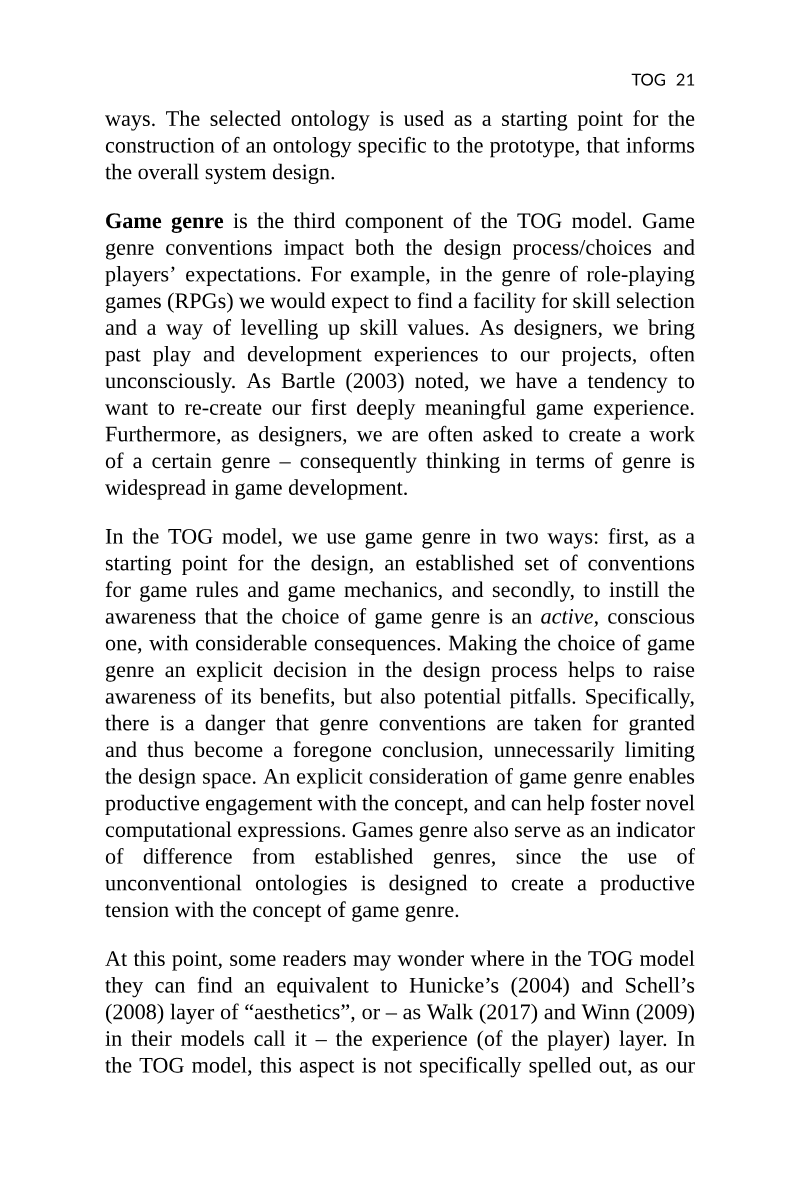
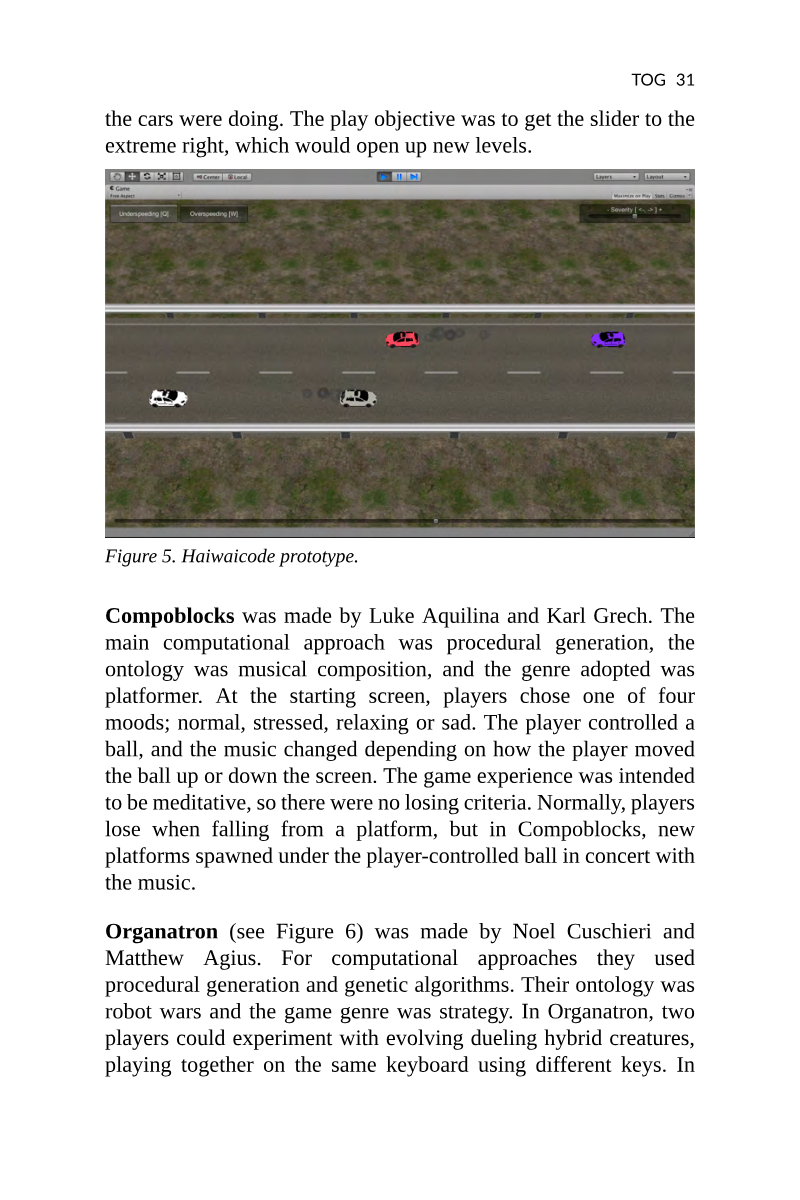
TOG: A Model for Innovation-Centric Design in Games and Expressive Interactive Media
The paper by Mirjam Palosaari Eladhari and Hartmut Koenitz, published in Transactions of the Digital Games Research Association (November 2021, Vol. 5 No 3, pp.
- The TOG model is built on three components: Technology, Ontology, and Game Genre. The authors present it as a way to spur conceptual innovation and experimentation with computational expression.
- The authors define the techno-artistic minimum as the threshold an artifact must reach to be a viable video game prototype, where technology and artistry form a minimal alliance.
- In the reflection phase, expressive effect is placed on a scale from overestimation of a system's capabilities to underestimation, with the match between perception and ability called the 'techno-experiential balance'.


Generating Lode Runner Levels by Learning Player Paths with LSTMs
This arXiv paper, presented at the 16th International Conference on the Foundations of Digital Games (FDG'21), by researchers at the University of Alberta, proposes a procedural content generation method for Lode Runner levels.
- The authors extracted player paths from gameplay video of 66 Lode Runner levels, drawn from a 4.5-hour video containing 150 completed levels.
- Their method averaged 7.65±2.98 gold pieces per level, compared with 18.76±15.07 for the Snodgrass and Ontanón levels.
- Nodes explored per gold piece averaged 116.44±264.82 for the authors' levels versus 220.62±477.89 for the Snodgrass and Ontanón levels.


Design-Driven Requirements for Computationally Co-Creative Game AI Design Tools
This paper reports a participatory design study by Partlan, Kleinman, Howe, Ahmad, Marsella, and Seif El-Nasr, published at the 2021 Foundations of Digital Games conference.
- The analysis organized designer requirements into 13 categories, each with 2-3 subcategories, spanning designer-facing and player-facing concerns.
- Designers stated that player experience, rather than perfect AI, is the final arbiter of success, and that players should be able to find AI behavior satisfying even when it is flawed.
- Designers wanted assurance that they keep final control, with the ability to lock in behavior they liked so that it is not iterated on further.