1 free read left. Create a free account for unlimited reading + AI research.
Create free accountWhitepaper Northeastern University
1 free read left. Create a free account for unlimited reading + AI research.
Create free accountWhitepaperNortheastern University
Computationally co-creative game AI tools must prioritize the alignment of technical capabilities with the nuanced workflows of professional designers. The primary objective of this research is to bridge the persistent gap between advanced AI development and practical game production by establishing a framework of thirteen essential design requirements. These requirements emphasize that successful tools must function as collaborative partners, allowing designers to maintain creative oversight while leveraging machine intelligence to manage complexity. By focusing on human-in-the-loop workflows, the industry can transition toward systems that treat designers as editors rather than mere operators, ensuring that AI-generated behaviors remain consistent with specific creative intent and player experience goals.
Key findings indicate that designers value intuitive, iterative workflows that provide granular control, visual debugging, and clear interpretability. Effective tools should offer "thought-bubble" style feedback to explain AI reasoning, alongside robust fallback mechanisms that ensure reliability during gameplay. Furthermore, the research highlights that technical perfection is secondary to the generation of characterful, varied behaviors that enhance the player experience. These findings suggest that future development should move beyond simple automation to provide multi-directional communication between the tool, the designer, and the end user, facilitating a more transparent and manageable design process.
The scope of this research encompasses the professional game development industry, focusing on the intersection of human creativity and algorithmic assistance. Beyond technical specifications, the findings advocate for an ethical and critical research framework that empowers creators and considers the needs of diverse groups within the development community. By codifying these requirements into actionable design heuristics, the industry can foster more reliable, inspectable, and collaborative AI systems that respect the designer’s role while addressing the ethical implications of human-machine co-creation.
University of California Santa Cruz · 2025
Northeastern University · 2025
Northeastern University · 2025
Northeastern University · 2025
University of California Santa Cruz · 2024
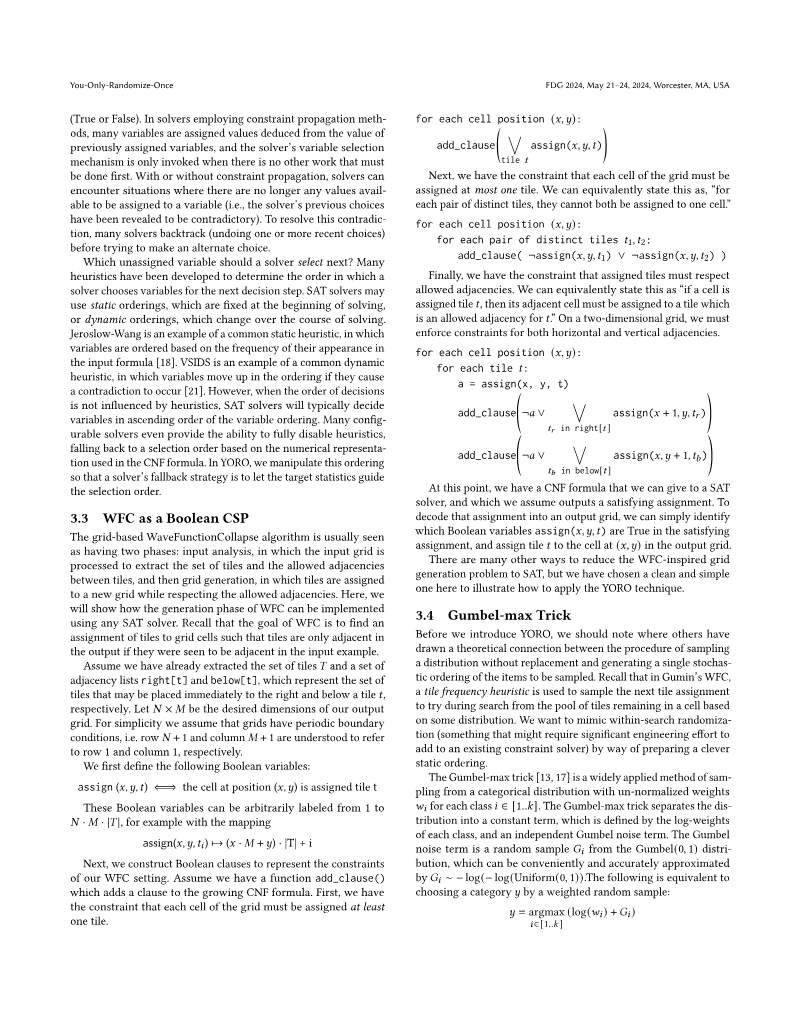
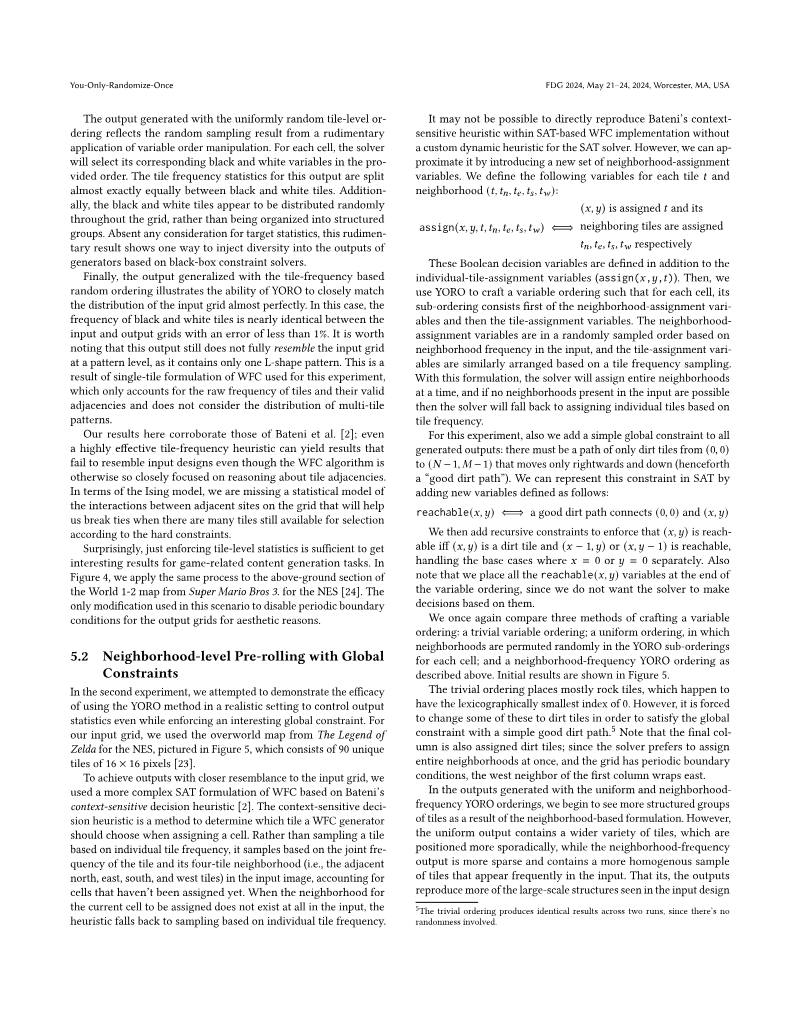
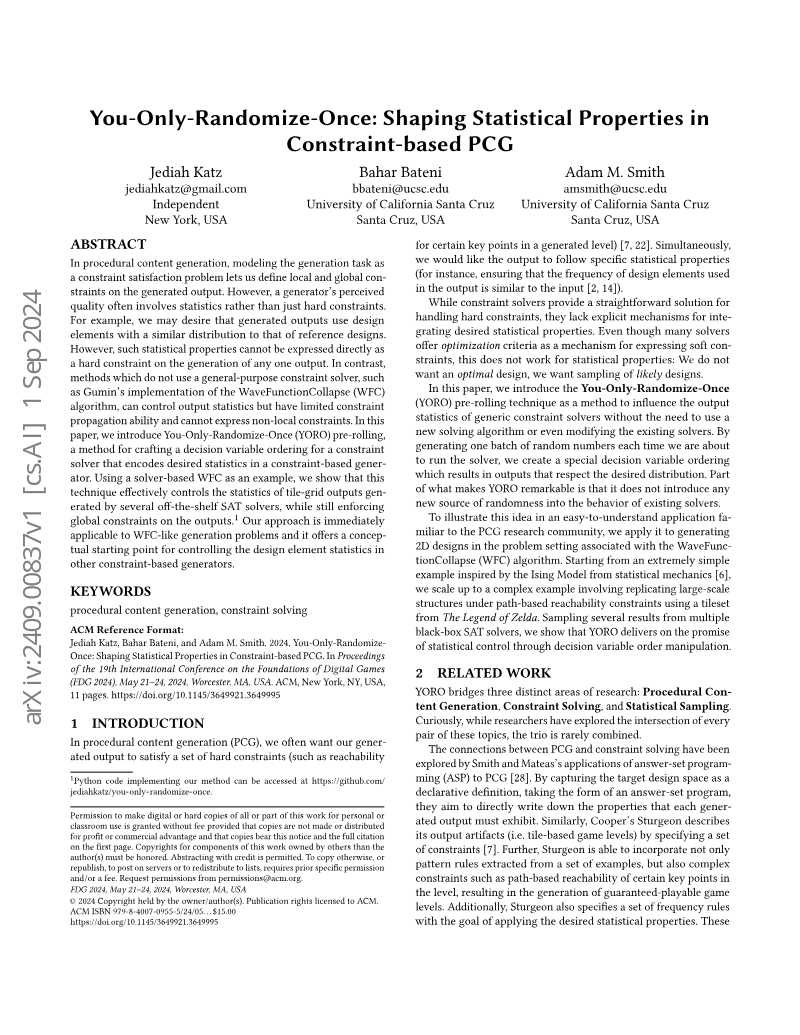
University of California Santa Cruz · 2024
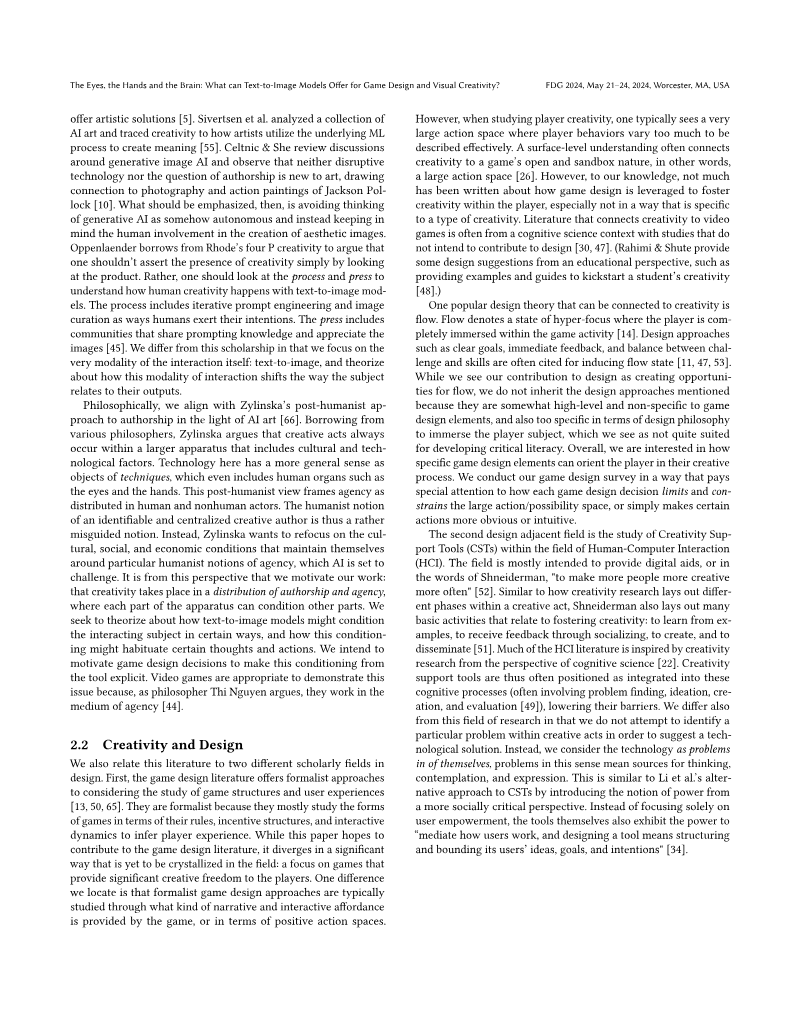
University of California Santa Cruz · 2024
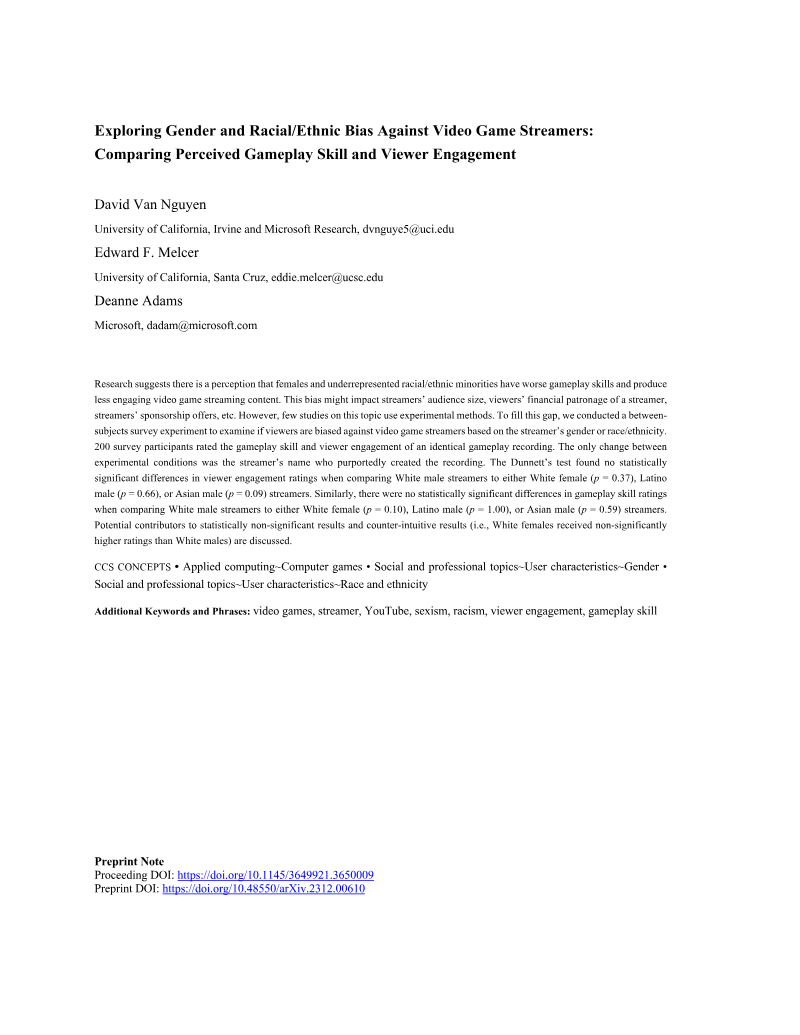
University of California · 2024
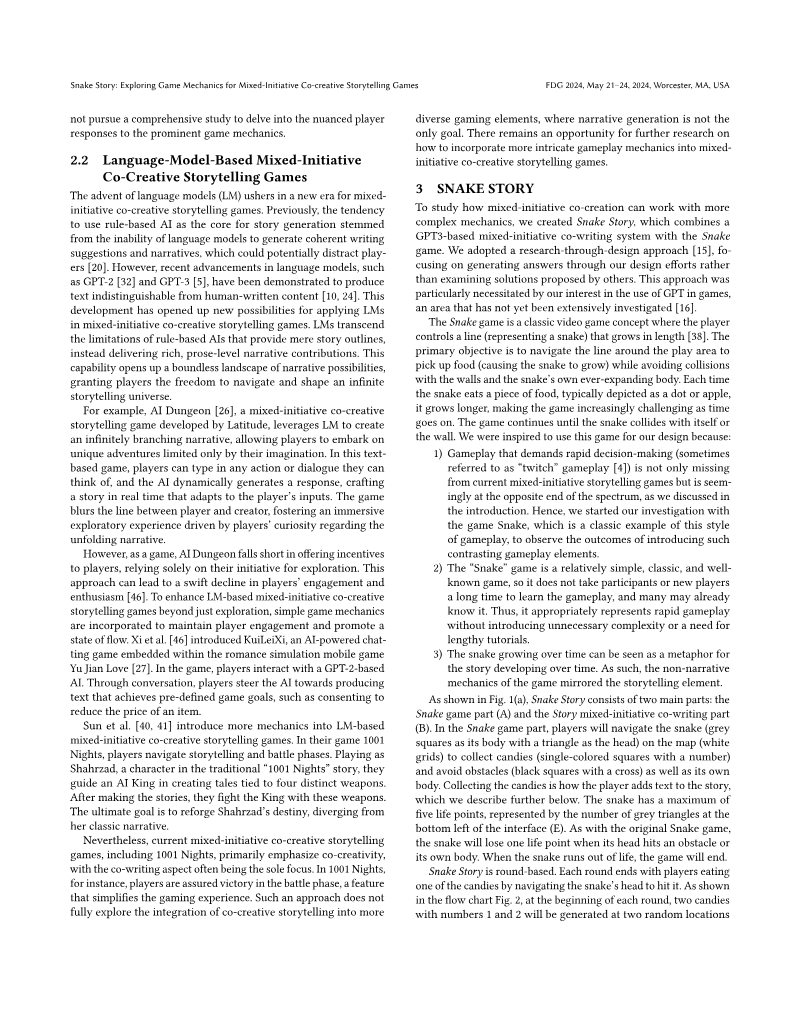
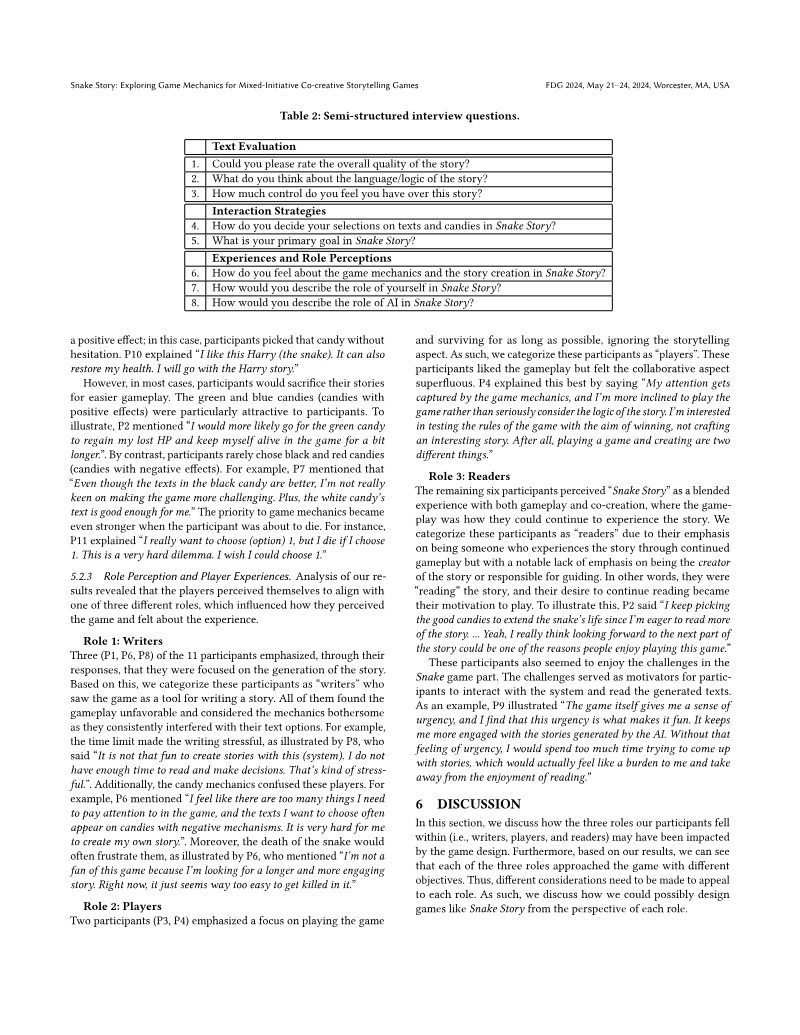
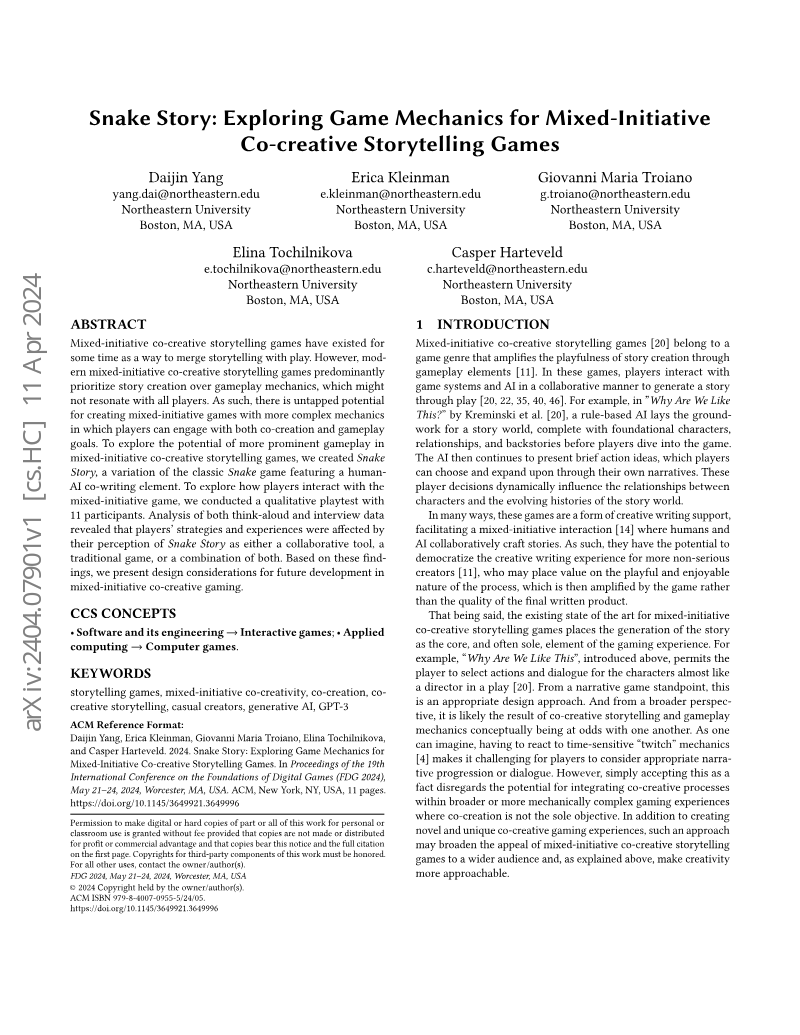
Northeastern University · 2024
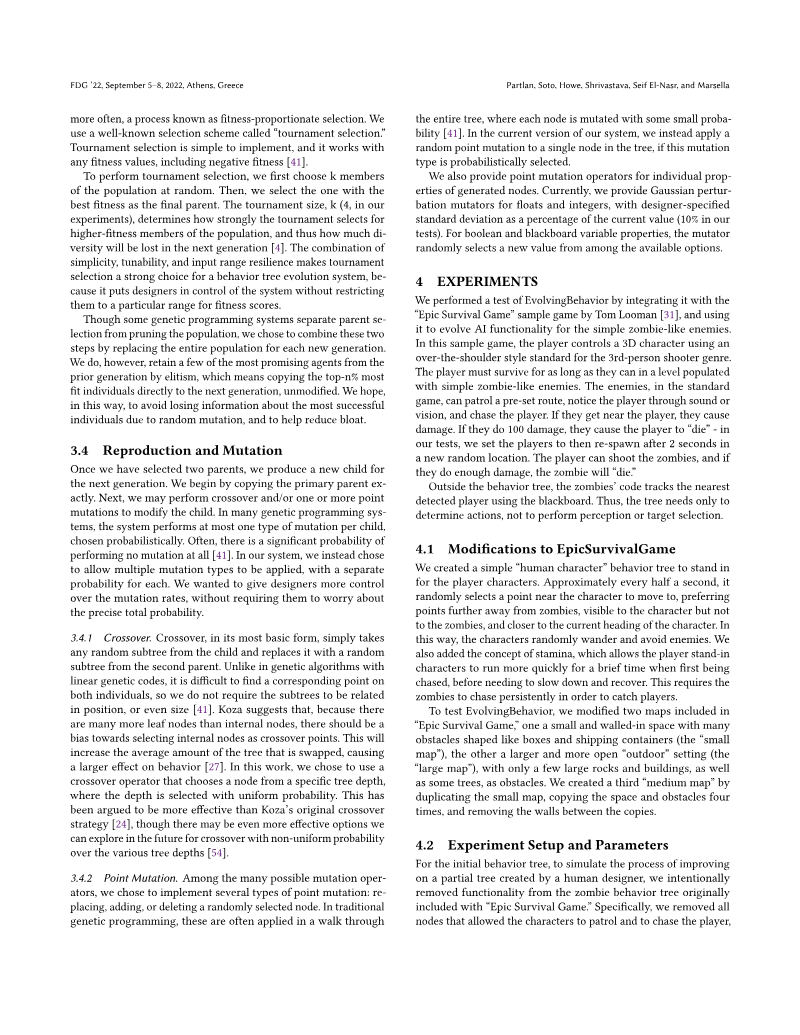
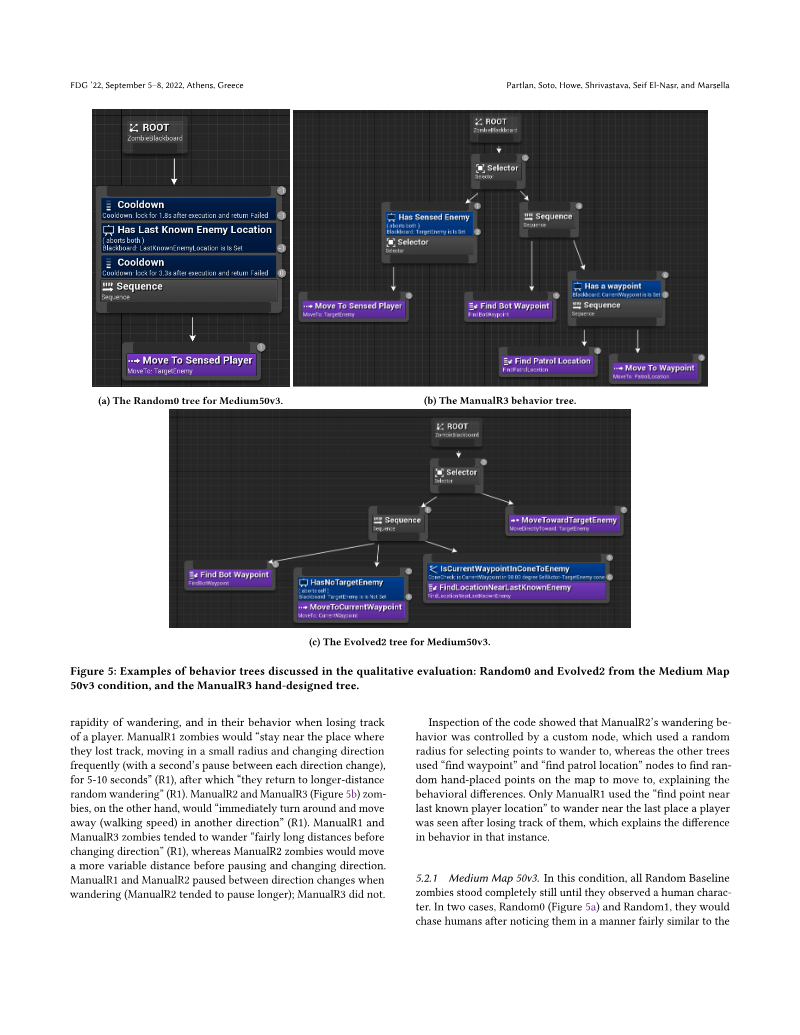
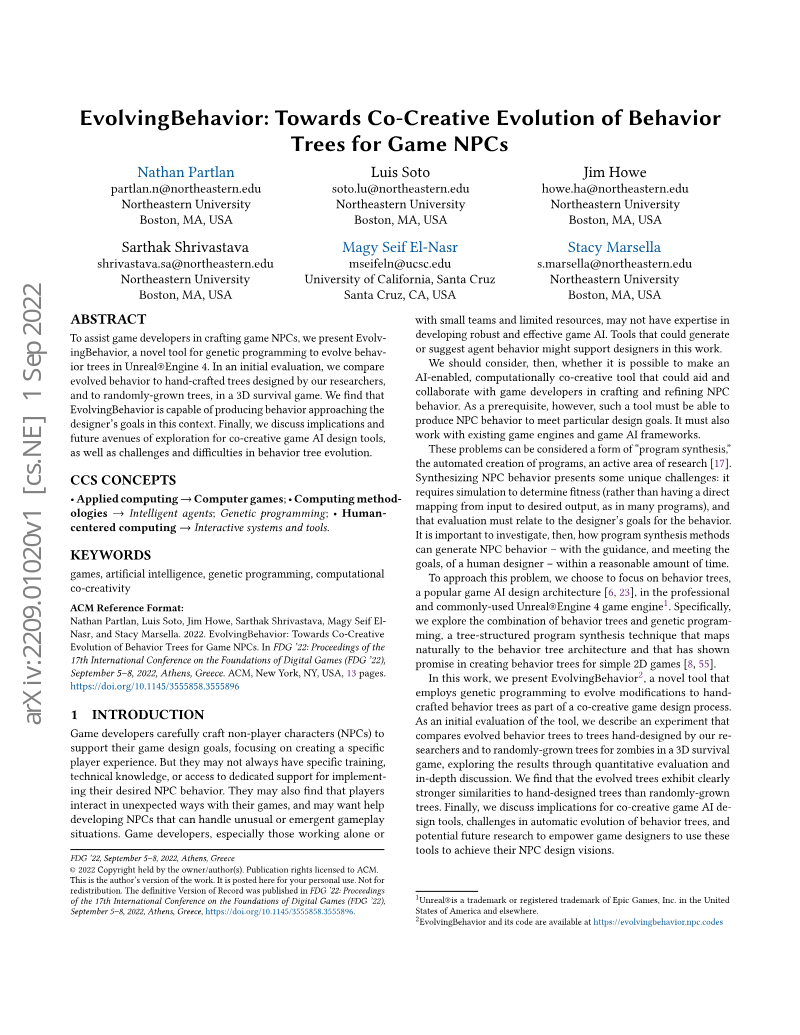
Northeastern University · 2022
Northeastern University · 2021
modl.ai · 2020

PocketGamer.biz · 2026