Creative
Company
Documents about Creative

Creative Future with Artificial Intelligence
The game industry is currently undergoing a fundamental shift where the traditional reliance on technical tool proficiency is being challenged by the rise of generative artificial intelligence.
- The game industry is shifting from technical tool proficiency to high-level creative intent, as generative AI automates baseline production tasks.
- Developers should pivot toward storytelling, composition, and unique problem-solving to differentiate their work from commoditized AI-generated output.
- AI acts as a force multiplier by automating administrative burdens like code refactoring, meeting documentation, and asset indexing to accelerate iteration cycles.

MAU live 2023 - Growths Gems, Creative testing processes, UA for apps vs games!
The digital landscape for user acquisition and monetization is defined by a convergence of strategies between gaming and subscription-based applications.
- Creative strategy is the primary driver of sustainable user acquisition, with visual elements consistently outperforming text-based copy in engagement.
- Subscription-based apps should integrate ad revenue only after reaching a daily active user base of 30,000 to 50,000 and ensuring core subscription funnels are fully optimized.
- To mitigate creative fatigue, teams should monitor performance over 14-day cycles and introduce new assets once a frequency threshold of five is reached.

Creadit's Luis Leon On Generating Impressive Creatives Without Breaking The Bank
Creative production in the gaming industry has shifted from high-budget, traditional studio output to a performance-driven model that prioritizes strategic iteration and audience engagement.
- Creative production has shifted from high-budget studio output to a performance-driven model where partners act as strategic advisors to align assets with specific platform requirements.
- Efficiency is maximized through a modular strategy that repurposes a single master asset into multiple variations, allowing for high-volume A/B testing without increasing production costs.
- Raw, mobile-shot, ephemeral content often outperforms highly polished traditional advertisements because it appears more authentic to users on platforms like TikTok.

Understanding the important events in your app | Neasa Bannon from Meta
Optimizing user acquisition and advertising performance in the mobile gaming sector requires a strategic shift toward automation, privacy-compliant measurement, and creative innovation.
- Advertisers must shift from granular, user-level tracking to aggregate measurement solutions like conversion lift testing and marketing mix modeling to maintain efficacy in a privacy-centric landscape.
- Developers should refine conversion schemas to prioritize high-value in-app events and analyze customer lifetime value rather than focusing solely on bottom-funnel acquisition metrics.
- Integrating AI and automation tools is essential for achieving liquidity and efficient campaign scaling across Meta’s Facebook and Instagram platforms, which serve several billion monthly active users.
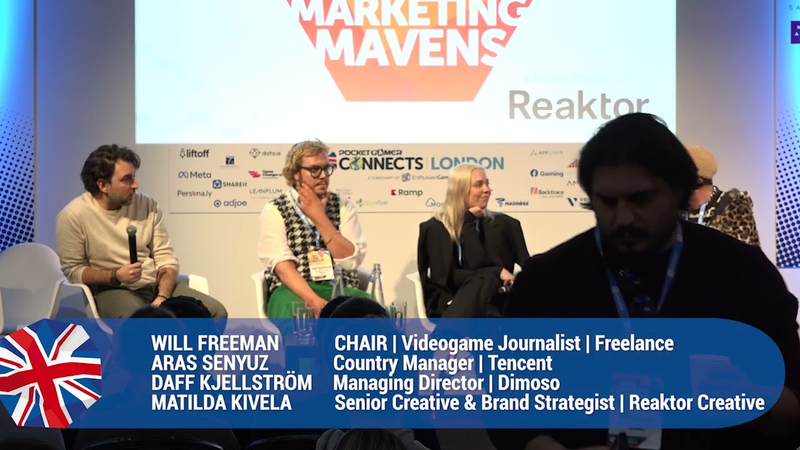
Panel: Accessible Marketing: How to Promote Growth With any Budget
This panel discussion explores strategies for effective game marketing within constrained budgets, emphasizing that financial limitations can be overcome through creativity, authenticity, and strategic planning.
- Integrate marketing into the game development process from the outset to establish a clear brand identity and prevent expensive strategic pivots later.
- Prioritize community engagement as a primary, low-cost growth driver by building platforms that allow players to contribute ideas and feel like stakeholders.
- Leverage the agility of smaller studios to rapidly test multiple creative concepts and use data to identify niche audiences that larger competitors often overlook.
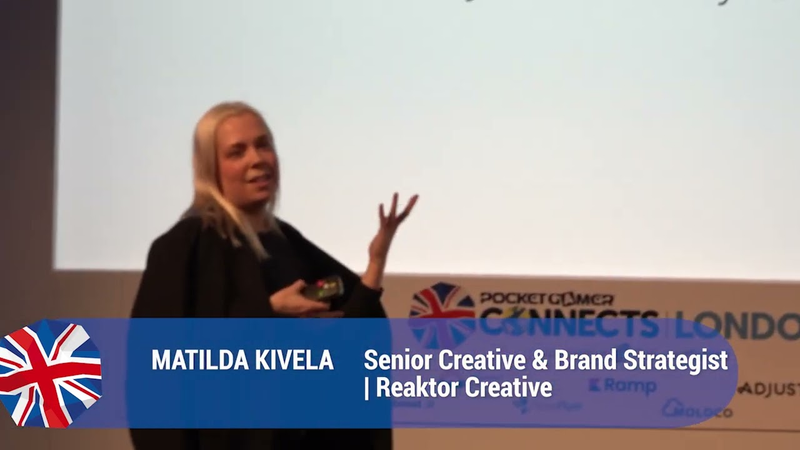
Keynote: Gen Z Thinks Your Brand Is Cringe - Matilda Kivela of Reaktor Creative.
The gaming and marketing industries face a significant challenge in engaging Generation Z, a demographic that currently possesses $340 billion in purchasing power and exhibits high levels of mobile game consumption.
- Gen Z possesses $340 billion in purchasing power, yet only 8% of this demographic feels that current advertising resonates with them.
- A significant 78% of Gen Z consumers believe that brands fail to align their actual business practices with their stated corporate values.
- Brands must abandon top-down communication models in favor of a collaborative framework that treats Gen Z as equal partners in the creative process.
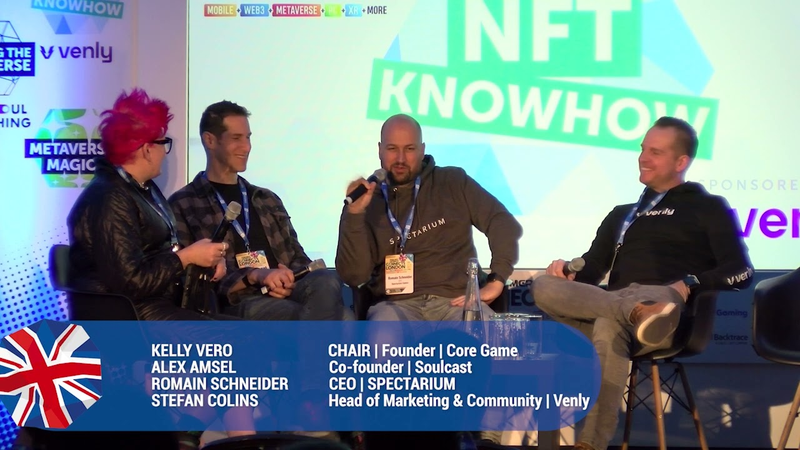
Panel: Shifting the Balance Will NFTs Disrupt How Games, Brands & Creative Media Interact?
The gaming industry is undergoing a fundamental transition, moving away from the speculative, profit-driven models that characterized early blockchain integration toward a focus on functional, experience-oriented utility.
- The gaming industry is shifting from speculative, profit-driven blockchain models toward a focus on functional, experience-oriented utility where gameplay quality takes precedence over financial mechanics.
- Developers are increasingly positioning blockchain as invisible infrastructure rather than a central marketing hook to foster sustainable communities and avoid negative mainstream sentiment.
- Technological advancements are enabling the creation of remixable, portable assets that allow players to evolve game content, transforming static digital items into dynamic, long-term investments.
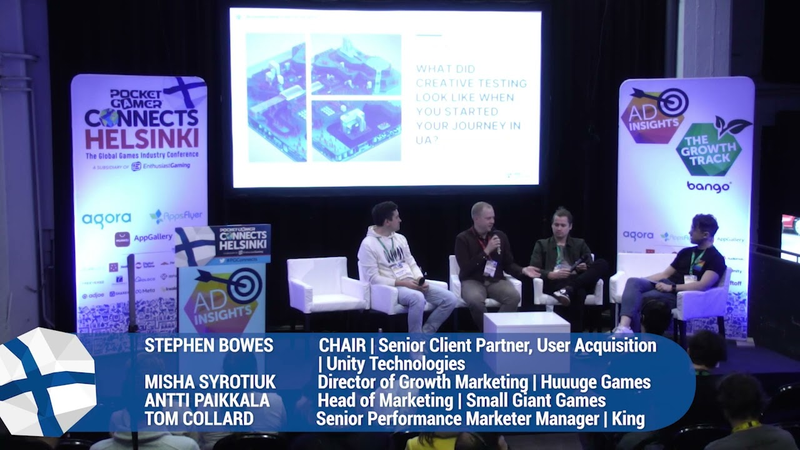
Panel: Ad Creative Testing for UA – A Look Into the Future
The evolution of user acquisition strategy centers on a transition from speculative creative production to a rigorous, data-driven methodology.
- Authentic content, such as genuine gameplay footage, failed-level scenarios, and voiceovers, consistently outperforms traditional tactics like exaggerated claims or human reaction shots.
- Privacy constraints on iOS have shifted the industry standard toward using Android-based campaigns as the primary foundation for cross-platform user acquisition strategies.
- Teams must move away from manual, fragmented tracking by adopting automated A/B testing tools and standardized data reporting across mobile measurement partners and ad networks.

The Snowball Changing the Games We Develop - The Metacast by Naavik
The global gaming industry is currently undergoing a structural transformation driven by shifting distribution models, aggressive sovereign investment, and restrictive platform policies.
- The gaming industry is shifting toward subscription-based ecosystems, exemplified by Riot Games' integration into Xbox Game Pass, to maximize player lifetime value through cosmetic-heavy economies.
- Apple’s privacy-focused restrictions on ad-tech fingerprinting are forcing developers to pivot away from traditional user acquisition toward internal data optimization and in-game personalization.
- Saudi Arabia’s Public Investment Fund, via the Savvy Gaming Group, is aggressively acquiring stakes in major publishers like Nintendo, EA, and Embracer Group as part of a national economic diversification strategy.
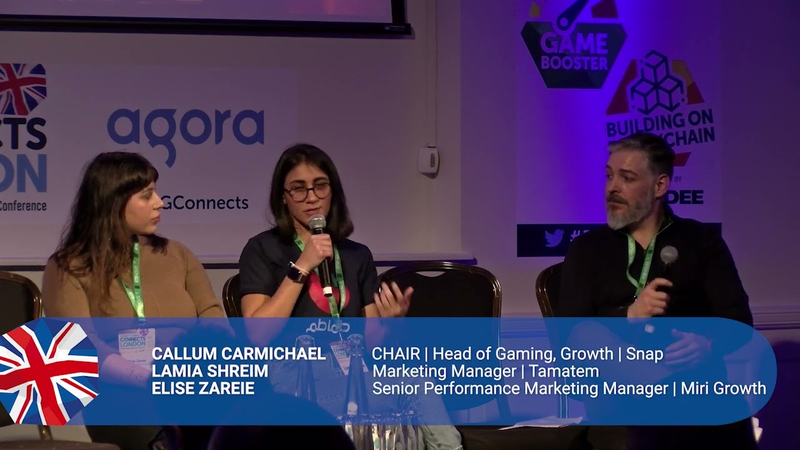
Superstar Panel: The Art of Making Data Driven Creative Decisions in Gaming
The current landscape of mobile game user acquisition has undergone a fundamental shift, moving away from granular, cohort-level tracking toward a creative-first strategy.
- The mobile gaming industry has shifted from granular, cohort-level tracking to a creative-first acquisition strategy following the implementation of App Tracking Transparency.
- Growth now relies on internal predictive modeling and structured testing cycles to compensate for the loss of traditional user targeting capabilities.
- Effective acquisition requires platform-specific content, such as human-centric aesthetics for TikTok, rather than one-size-fits-all messaging.
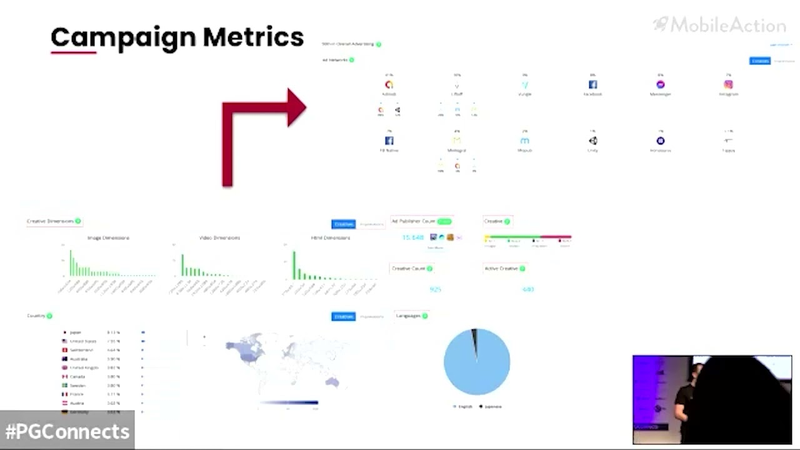
Building a Winning Creative Strategy for Games in 2022
Building a winning creative strategy in the mobile gaming industry requires a data-driven approach to competitor analysis, specifically focusing on user acquisition (UA) and creative performance.
- Competitive intelligence platforms now track over 44 million mobile gaming creatives, with approximately 2 million new assets added to the database each month.
- Developers can optimize ad spend and reduce waste by benchmarking their creative performance and messaging strategies against top-performing industry competitors.
- Effective creative strategy requires tracking specific metrics including impression share, creative longevity, and the distribution of ad formats across various networks.

Creative Director Fired over Pro Russian Comments | Games ReCAP
Wargaming, the developer behind the prominent military-themed franchise World of Tanks, terminated its creative director, Sergey Burkatovskiy, following his public endorsement of the Russian invasion of Ukraine.
- Wargaming terminated its creative director, Sergey Burkatovskiy, after he publicly endorsed the Russian invasion of Ukraine on social media.
- The company prioritized the safety of its 550 Ukraine-based employees by providing relocation assistance, early salary payments, and alternative housing.
- Wargaming committed a $1 million donation to the Ukrainian Red Cross to support humanitarian aid and medical needs for displaced citizens.