Bungie
Documents about Bungie
Destiny vs. Warframe - $500 Million in Free Marketing - Extra Credits
The core thesis posits that a lack of cohesive vision and tonal consistency in game development can lead to significant market failure, effectively allowing competitors to capture a dissatisfied player base.
- A lack of cohesive vision and tonal consistency in game development creates market vulnerabilities that allow competitors to capture dissatisfied player bases.
- Destiny’s failure to define its identity, oscillating between a standard console release and a service-based MMO, resulted in a disconnect between marketing promises and actual player experience.
- Warframe successfully captured the looter-shooter market by maintaining a consistent, communicable core identity as a fast-paced, dark sci-fi action game.
Epic Sync: Wrangling the Work of Highly Interdependent Dev Teams at Bungie
To scale the development of Destiny 2, Bungie transitioned from a traditional, discipline-siloed waterfall model to a structure comprising over 40 semi-autonomous, cross-disciplinary agile teams.
- Bungie scaled Destiny 2 development by transitioning from a siloed waterfall model to a structure of over 40 semi-autonomous, cross-disciplinary agile teams.
- The studio manages interdependencies through a quarterly Planning Day that brings approximately 300 developers together to align on 12 weeks of work.
- Physical artifacts, including dependency and risk boards, are used alongside digital tools like JIRA and TFS to visualize bottlenecks and secure formal commitments.

CES 2019 Consumer Electronics Show Report
The 2019 Consumer Electronics Show (CES) serves as a primary focal point for evaluating the current state of the technology and gaming sectors, characterized by a transitional "in-between" period lacking major consumer breakthroughs.
- The gaming industry is shifting toward platform ownership and service-based revenue models, with major media and telecom firms like Verizon, Amazon, and NBC aggressively pursuing game streaming and ad-supported services.
- Apple is strategically pivoting toward its services division, which currently accounts for only 15% of its total revenue, to mitigate vulnerabilities in its hardware-dependent ecosystem.
- Bungie’s separation from Activision underscores the financial and marketing risks of independent publishing for aging franchises like Destiny within an increasingly saturated shooter market.
The Missing Link - Bungie's Technical Designers in Animation
The role of the Technical Designer in Animation (TDIA) serves as a critical cross-disciplinary bridge within Bungie’s development structure, specifically designed to facilitate communication and workflow between animation, design, and engineering teams.
- Bungie established the Technical Designer in Animation (TDIA) role to act as a cross-disciplinary bridge, eliminating production silos between animation, design, and engineering teams.
- The TDIA role focuses on liberating creative talent by managing complex technical tasks such as vehicle interaction, AI state machine setup, and runtime debugging.
- By providing real-time debugging tools and simplifying the transition from Maya to the game engine, TDIA professionals reduce production costs and prevent technical bottlenecks.
Tools-Based Rigging in Bungie's Destiny
Bungie’s approach to character rigging for the Destiny franchise centers on a modular, Python-based architecture designed to overcome the limitations of traditional, static animation pipelines.
- Bungie developed a modular rigging system for Destiny using Python and Pymel in Autodesk Maya, utilizing object-oriented programming to manage thousands of animation files efficiently.
- The rigging architecture relies on 'rig components'—independent, reusable Python classes that can be added or removed from a character's rig dynamically without breaking existing animation data.
- To maintain agility during engine development, the team implemented a 'rig template' system that assembles these modular components into complete control rigs for characters, vehicles, and props.
A UX toolkit – The player’s perspective
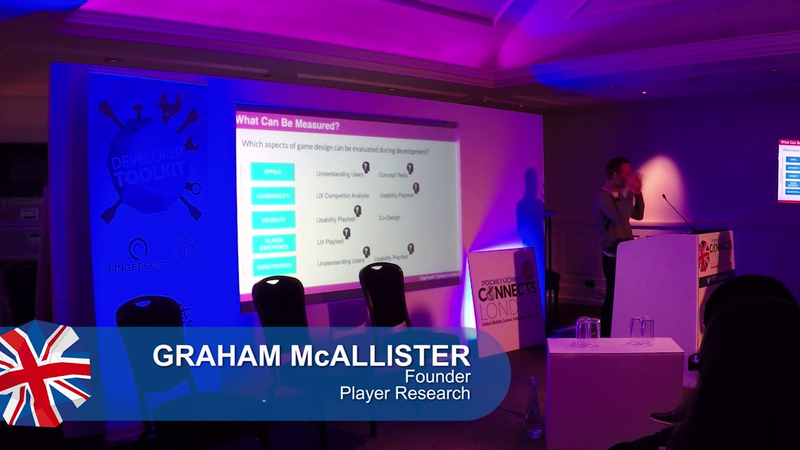
The provided text outlines a framework for improving game design through a structured, user-centric approach to development.
- Developers must shift from subjective design assumptions to a rigorous, objective framework that measures player behavior to mitigate market risk.
- UX failures are categorized into five critical, interconnected layers: appeal, learnability, usability, player experience, and monetization.
- Top-tier studios like Bungie integrate user research during the earliest conceptual stages, testing mechanics and UI long before final assets are produced.
Localizing Bungie's Destiny for the World
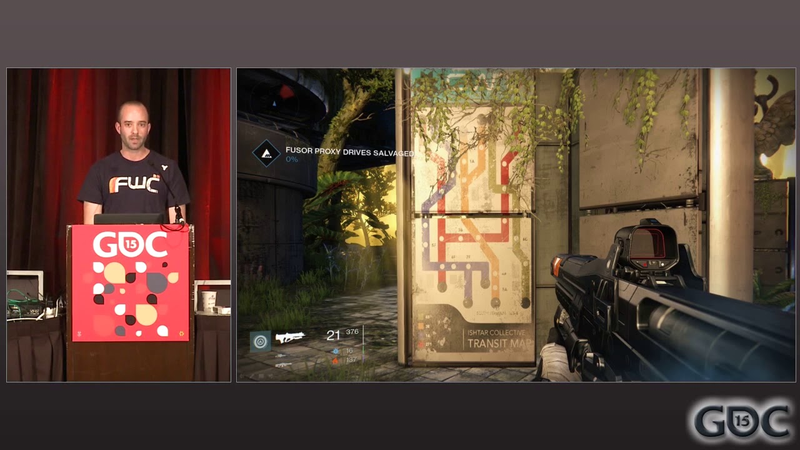
The global expansion of the Destiny franchise relies on a strategic commitment to cultural inclusivity and technical scalability, moving away from traditional industry practices that treat localization as a late-stage afterthought.
- Bungie transitioned from treating localization as a late-stage task to establishing an internal department that integrates linguistic experts directly into the early design process.
- To minimize the need for region-specific art assets, the team utilized iconography and fictionalized signage instead of English text, ensuring a consistent visual experience across seven platforms.
- The studio employs a hybrid operational model that combines internal editors with external in-country translators to maintain the rapid release cycles required for a live service environment.
Building Customizable Characters for Bungie's Destiny
The transition from the singular hero archetype of the Halo franchise to the player-centric design of Destiny necessitated a fundamental shift in character development.
- Bungie developed a modular character customization system for Destiny that broke character designs into base elements called 'bits,' allowing artists to swap gear pieces without needing to re-skin or re-animate models.
- The system enabled artists to create complex new character assets, such as a helmet, in approximately 20 minutes by assembling pre-defined modular bits.
- To maintain performance across four platforms, the toolset provided real-time memory profiling for both textures and geometry, allowing artists to adjust resolution or swap bits to stay within strict hardware budgets.
Take-Two Interactive Form 10-Q: Q2 Fiscal Year 2000
Take-Two Interactive demonstrated substantial financial growth during the first nine months of fiscal year 2000, characterized by a 43.7 percent increase in net sales to $264.4 million and a return to profitability with $11.6 million in net income.
- Take-Two Interactive reported net sales of $71.5 million for the three months ended July 31, 2000, up from $63.6 million in the same period of 1999, with nine-month net sales reaching $264.4 million.
- Gross profit for the three months ended July 31, 2000, rose significantly to $31.4 million compared to $19.6 million in the prior-year period.
- The company experienced a net cash outflow from operating activities of $29.2 million for the nine months ended July 31, 2000, compared to an outflow of $10.4 million in the same period of 1999.