Activision
CompanyUnited States
Documents about Activision
Why Did EA Really Sell for $55B? The Truth Wall Street Missed (ft. Zynga's Former M&A Chief)
The acquisition of Electronic Arts by Saudi Arabia’s Public Investment Fund for $55 billion represents a strategic shift toward private ownership, designed to insulate the publisher from the volatility and short-term performance pressures of public markets.
- Saudi Arabia’s Public Investment Fund (PIF) acquired Electronic Arts for $55 billion to transition the company into a private entity, insulating it from the short-term performance pressures of public markets.
- The acquisition is a long-term strategic investment rather than a leveraged buyout, prioritizing transmedia expansion of EA’s sports intellectual property and growth in Asian markets over immediate operational restructuring.
- The deal aims to provide the capital stability necessary for long-term innovation and riskier development cycles that are typically stifled by quarterly earnings expectations.

The Economics of the EA Acquisition: Lessons in M&A for Game Executives
The acquisition of Electronic Arts by a Saudi Arabia-led consortium for $55 billion represents a landmark shift in the global gaming industry, marking the largest leveraged buyout in the sector's history.
- Electronic Arts was acquired for $55 billion by a consortium including Saudi Arabia’s Public Investment Fund, Silver Lake, and Affinity Partners, in the largest leveraged buyout ever, taking EA private with $20 billion in debt financing.
- The acquisition was driven by the buyer's interest in EA's IP, its potential for live services growth (especially in Asia where EA generates less than 15% of its revenue), and opportunities in transmedia and AI.
- EA's board sold due to stalled growth (-1% top-line in fiscal '25, 1% live services growth), franchise fatigue (e.g., Dragon Age: The Veilguard missing sales targets), and concentration risk, with over 50% of revenue from four franchises, including Ultimate Team's reliance on loot box mechanics facing regulatory risk.

Candy Crush Revenue & Statistics
Candy Crush Saga remains a dominant force in the global mobile gaming market, demonstrating exceptional longevity and consistent financial performance more than a decade after its 2012 launch.
- Candy Crush Saga has generated $7.8 billion in total revenue from in-app purchases since its 2012 launch.
- The game achieved $1 billion in annual revenue during 2024, maintaining a daily earnings rate of $2–3 million.
- With over 1.4 billion all-time downloads, the game continues to acquire approximately 9 million new users every month.
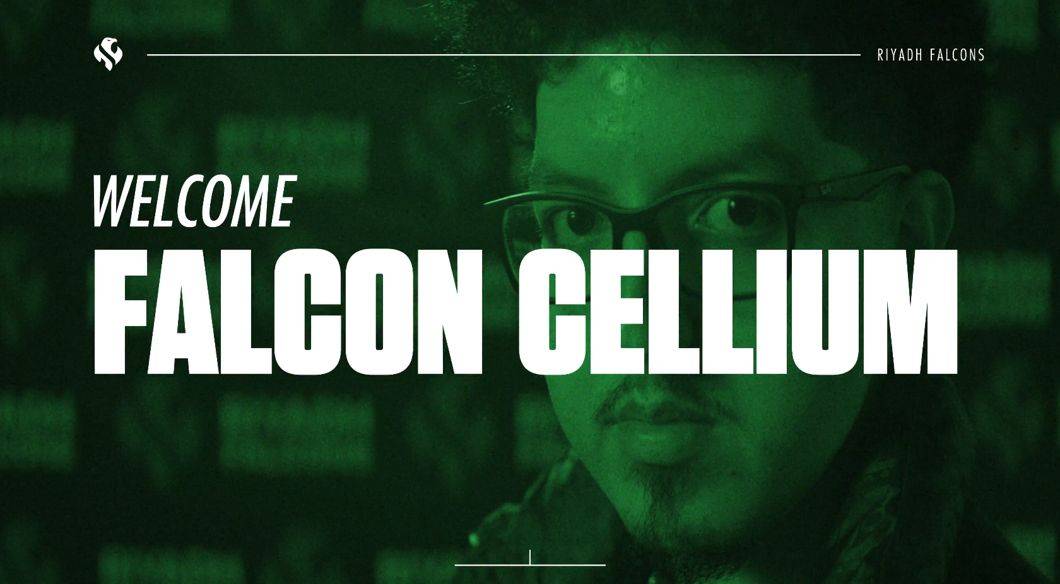
Call of Duty League Team Vegas Falcons Relocate to Riyadh, Rebrand as Riyadh Falcons
The Call of Duty League (CDL) franchise formerly known as the Vegas Falcons has officially relocated to Riyadh, Saudi Arabia, and rebranded as the Riyadh Falcons.
- The Call of Duty League (CDL) franchise formerly known as Vegas Legion has officially relocated to Riyadh, Saudi Arabia, and rebranded as the Riyadh Falcons.
- The franchise slot was acquired by the Saudi Arabian organization Team Falcons in late 2024, ahead of the 2025 season.
- Star player McArthur “Cellium” Jovel, a 2021 Call of Duty World Champion, has joined the Riyadh Falcons following his departure from Atlanta FaZe.
World of Warcraft Mythic Dungeon International and Arena World Championship Season Three Details
Blizzard Entertainment has announced the structure, scheduling, and prize pools for Season Three of its competitive World of Warcraft esports circuit, focusing on the Mythic Dungeon International (MDI) and the Arena World Championship (AWC).
- Blizzard Entertainment has announced the Season 3 format and prize pools for its World of Warcraft: The War Within esports competitions, the Mythic Dungeon International (MDI) and the Arena World Championship (AWC).
- The MDI Season 3 Global Finals will feature a $300,000 prize pool, with top teams advancing from four group stages that each carry a $30,000 prize pool.
- MDI Season 3 Time Trials begin on October 1, 2025, with the top 18 global teams moving into the group stage and eight teams ultimately advancing to the late-November Global Finals.
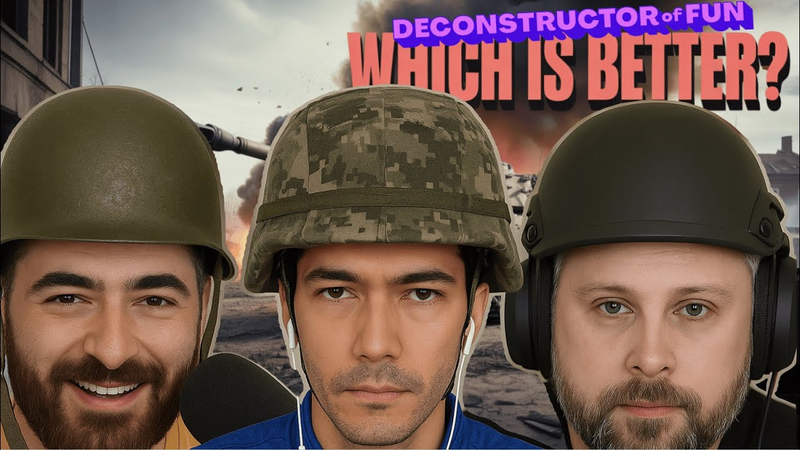
Call of Duty vs Battlefield: Ex-DICE, Bungie & Activision Unpack It All
The rivalry between the Call of Duty and Battlefield franchises represents a fundamental clash between a dominant market juggernaut and a tactical challenger attempting to modernize its identity.
- Call of Duty maintains market dominance through a massive studio infrastructure and a relentless content treadmill that ensures high-frequency player engagement.
- Battlefield is attempting to close its player retention gap by pivoting toward faster, arcade-like movement and individualistic hero-based gameplay elements.
- To compete with Call of Duty’s unified ecosystem, Battlefield is transitioning toward a consolidated model that streamlines monetization and player management.
Ohad Finkelstein and Jonathan Epstein Join WaveClear Board of Directors
WaveClear Ltd., an Israel-based developer, has expanded its leadership team by appointing Ohad Finkelstein and Jonathan Epstein to its board of directors.
- WaveClear Ltd. has appointed Ohad Finkelstein as board chairman and Jonathan Epstein as a member of the board of directors.
- Bruce Hack, founder and CEO of BLH Venture, has joined the company as a board observer.
- The new board appointments are intended to support WaveClear's strategic expansion from its current focus on gaming into other high-impact verticals.
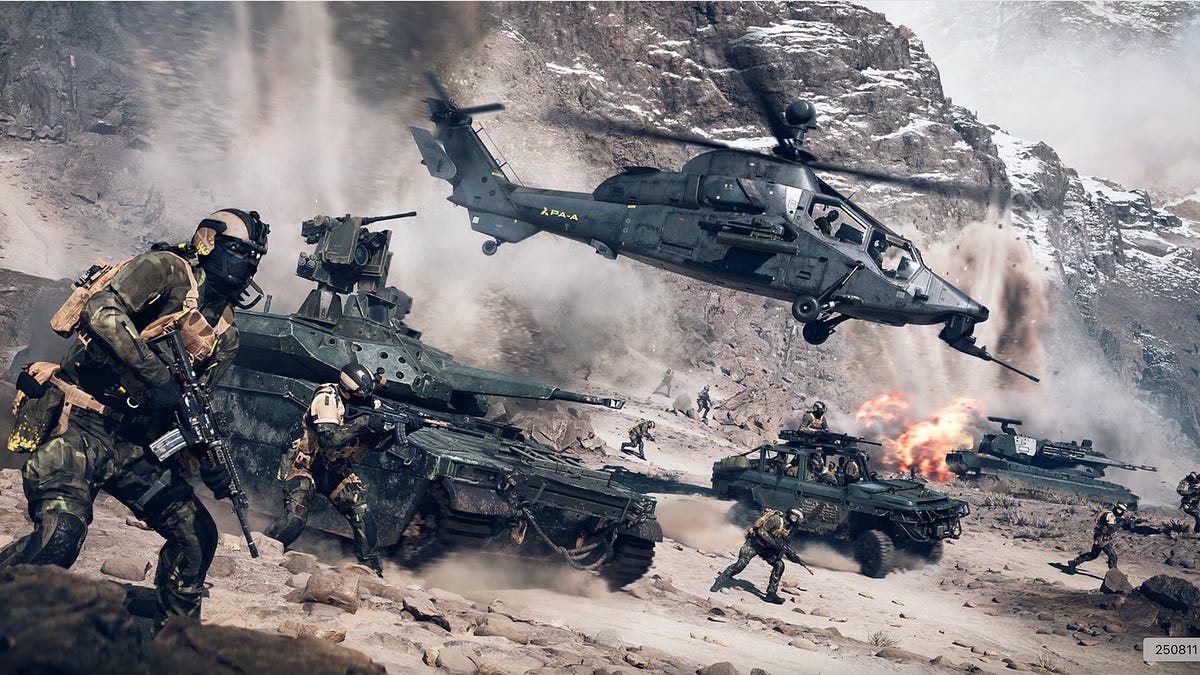
Here's The Dring: Battlefield 6's Challenges
The competitive landscape between the Battlefield and Call of Duty franchises remains a central point of tension within the first-person shooter market.
- Battlefield 6 has demonstrated a strong market entry with a peak player count of over 520,000 on Steam, surpassing the 490,000 peak achieved by Call of Duty.
- While Battlefield 6 has seen high pre-order and wishlist figures, the primary challenge for EA remains long-term player retention in a market where users are deeply entrenched in existing live-service ecosystems.
- The historical failure of Ubisoft’s XDefiant serves as a cautionary tale; despite an initial launch month of 7.58 million players, the game’s monthly user base collapsed to under 50,000 before its closure in June 2025.
Mike Morhaime on Blizzard's Iteration Culture that Built Starcraft, Warcraft, and Diablo
The core philosophy driving long-term success in the gaming industry centers on an iterative development process that prioritizes execution and gameplay quality over rigid adherence to initial concepts.
- Blizzard’s success was driven by an iterative development culture where few games followed their original plan, proving that 90% of success relies on execution rather than initial concepts.
- The transition from Warcraft I to Warcraft II resulted in an order-of-magnitude increase in success, achieved by adding features like fog of war, naval units, and higher resolution graphics.
- Blizzard’s early growth was fueled by a $25,000 initial investment—$15,000 borrowed from a grandmother and $10,000 from a graduation gift—before the company was eventually acquired by Davidson and Associates.
3 Years Later... They Won
After a three-year negotiation process, 19 quality assurance testers at the Raven Software studio have successfully ratified their first union contract with Microsoft.
- Nineteen quality assurance testers at Microsoft’s Raven Software studio ratified their first union contract, concluding a three-year negotiation process that began in 2021.
- The contract mandates a 10 percent wage increase for the unit over a two-year period.
- New labor protections include the elimination of many mandatory overtime instances and a requirement for seven days’ notice for any remaining required overtime.
Gaming Industry Report: Q2 2025
The Q2 2023 Gaming Industry Report provides a comprehensive analysis of the global gaming market, focusing on venture capital activity, public market performance, and emerging industry trends.
- The global gaming market is projected to reach a total valuation of $201 billion in 2023.
- Venture capital funding in the gaming sector fell to $472 million in Q2 2023, representing a 38% decline quarter-over-quarter.
- Gaming venture capital deal volume dropped to 85 completed deals in Q2 2023, a 22% decrease from the previous quarter.
Why Did Microsoft Cut 9,000 Jobs This Year?
Microsoft’s recent workforce reductions, totaling approximately 15,000 positions across 2024, signal a period of significant instability within its gaming division.
- Microsoft cut approximately 15,000 positions across its gaming division in 2024, representing roughly 4% of the company's total workforce.
- The layoffs are attributed to a systemic management failure and a strategic pivot away from hardware toward a reliance on Game Pass and third-party partnerships.
- The acquisition of Activision Blizzard is identified as a primary catalyst for the current crisis, as the company struggles to generate sufficient returns by forcing high-value intellectual properties into a subscription-based model.