Access
Company
Documents about Access
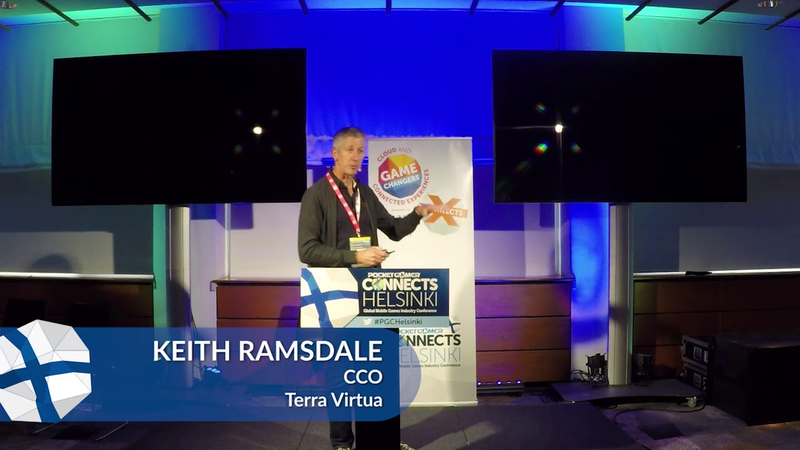
Terra Virtua – The consumer VR platform
Terra Virtua is a consumer-facing virtual reality entertainment platform designed to serve as a centralized hub for immersive gaming, live events, and social interaction.
- Terra Virtua functions as a centralized VR ecosystem that uses a proprietary blockchain-based token to unify fragmented gaming experiences, currencies, and digital asset trading.
- The platform offers developers an 80/20 revenue split in favor of the creator and utilizes blockchain technology to bypass traditional 60-day payment cycles with immediate settlements.
- The 'Terraformer' toolset, built on the Unreal Engine, enables users to develop, host, and monetize their own VR experiences within the platform.

Sheryl Sandberg Is Right: Metered Access Doesn't Scale
The core thesis of this analysis is that metered access models for consumer mobile applications are inherently inferior to ad-supported, free-to-use models when the objective is achieving massive, global scale.
- In the context of the $19 billion acquisition of WhatsApp, Facebook rejected a metered-user monetization model because it lacked the necessary scale to justify the investment.
- Sheryl Sandberg argued that metered access, which charges users after a certain threshold of usage, fails to scale compared to free, ad-supported models in the mobile ecosystem.
- Facebook’s primary strategy for WhatsApp involved leveraging the app's access to user contact lists and phone numbers to anchor and improve the precision of its existing advertising infrastructure.

Overwatch League Finals Report
The Overwatch League (OWL) Grand Finals at the Barclays Center serve as a primary case study for the current state of the esports industry, demonstrating that high-budget, publisher-led competitive gaming can successfully cultivate a dedicated fanbase and diversify revenue streams.
- The esports sector is seeing significant capital investment, highlighted by Meg Whitman’s $100 million infusion into Immortals and Douyu’s pursuit of a $600 million to $700 million US listing.
- Publisher-led esports events like the Overwatch League Grand Finals demonstrate that high-budget production can successfully drive fan engagement, though traditional sports marketing formulas often fail to resonate with gaming audiences.
- Hasbro achieved a return to profitability by leveraging digital growth in Magic: The Gathering and Dungeons & Dragons, while Mattel faced revenue declines and workforce reductions.
Move or Die: Why It's Worth It to Chase Your Tail
The success of the multiplayer title Move or Die demonstrates that long-term viability in the independent games market relies on a symbiotic relationship between developers and their community.
- Success for 'Move or Die' was not driven by a single event, but by a continuous stream of updates, community engagement, and strategic marketing over a two-year period that resulted in over 500,000 players.
- Early Access was used as a financial necessity rather than a design choice, with the developer maintaining transparency by explicitly instructing players not to buy the game until it was polished.
- Strategic collaborations, such as integrating Rick and Morty characters, were timed to coincide with external events like the Steam Summer Sale to maximize visibility and press coverage.
A Long Dark Road: Blending Player and Authored Story in a Sandbox Survival Game
The development of The Long Dark illustrates the complex tension between authored narrative and emergent, player-driven gameplay within the sandbox survival genre.
- Hinterland Games separated 'The Long Dark' into distinct sandbox and story modes to allow for an Early Access launch without spoiling narrative content, a strategy that resulted in 250,000 players in the first three months and 500,000 within the first year.
- The long-term separation of sandbox and story modes created a dissonance in player expectations, as the sandbox community became accustomed to a non-narrative experience and resisted the shift toward a more linear, authored story.
- Development of a narrative mode in a sandbox game should ideally integrate with existing systems rather than creating a split experience, as seen in titles like 'Subnautica' and 'The Forest' which successfully blended both approaches.
PlayerUnknown's Battlegrounds: From Pre-Alpha to 20 Million and Counting
PlayerUnknown’s Battlegrounds achieved unprecedented global success by eschewing traditional marketing budgets in favor of a grassroots community-building strategy.
- PUBG achieved massive scale by replacing traditional marketing budgets with a grassroots strategy that prioritized direct, transparent communication with players and content creators.
- The studio leveraged a small team of 25 people to foster organic momentum on Twitch, effectively bypassing the need for paid advertising or external PR agencies.
- Early development relied on a community snowballing model, using Discord for distribution and iterative feedback loops to ensure the player base directly influenced the game's evolution during Early Access.
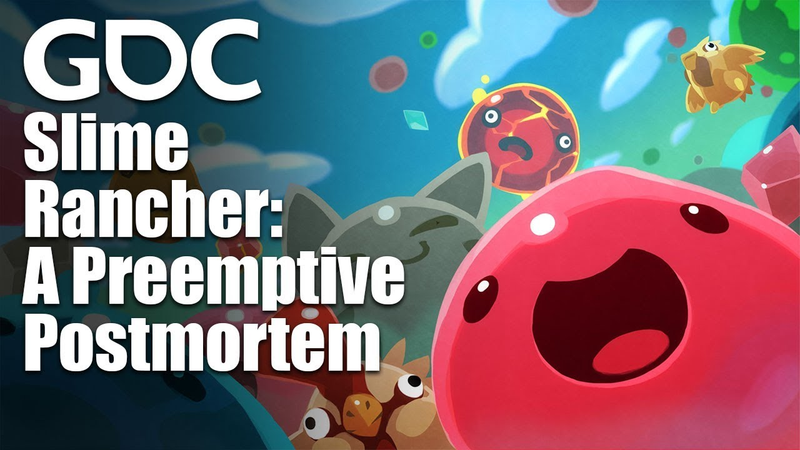
Slime Rancher: A Preemptive Postmortem
The success of Slime Rancher stems from a development philosophy that prioritizes a highly polished, satisfying core gameplay loop over speculative features or complex systems.
- Treat Early Access as a live service product rather than a development phase, focusing on major, feature-based content updates that generate hype rather than minor patch notes.
- Design games to be 'YouTube-friendly' by prioritizing emergent, unpredictable character behaviors and satisfying core gameplay loops that are visually engaging for spectators.
- Leverage organic growth on YouTube by distributing keys to smaller creators first, allowing the game to naturally climb the 'food chain' to larger influencers like Markiplier and Jacksepticeye without direct outreach.
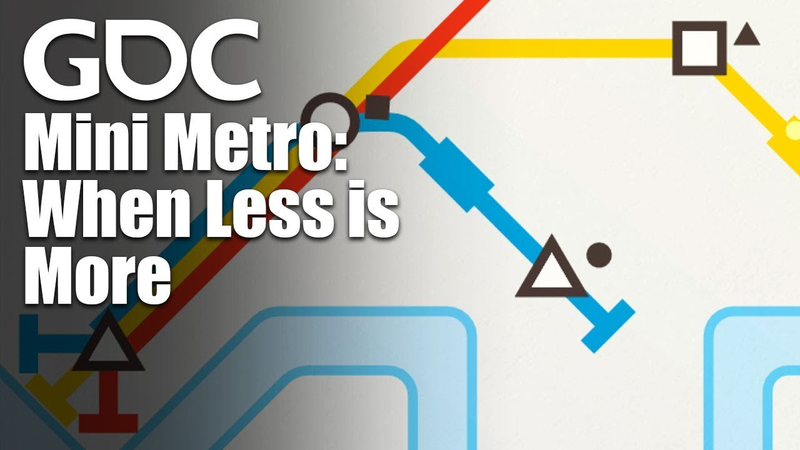
Mini Metro: When Less is More
The development of the user interface for the strategy game Mini Metro serves as a case study in how minimalist design choices can foster player discovery and engagement.
- Mini Metro achieved commercial success with 800,000 units sold and over three million dollars in gross revenue, maintaining a 96% positive rating on Steam.
- The design team prioritized minimalist UI by omitting complex HUDs, leaderboards, and meta-progression systems to focus entirely on the core gameplay loop of network optimization.
- Development spanned two years and involved extensive visual iteration, resulting in the creation of over 4,000 images and 112 preview videos.
Understanding Media Rights in Esports
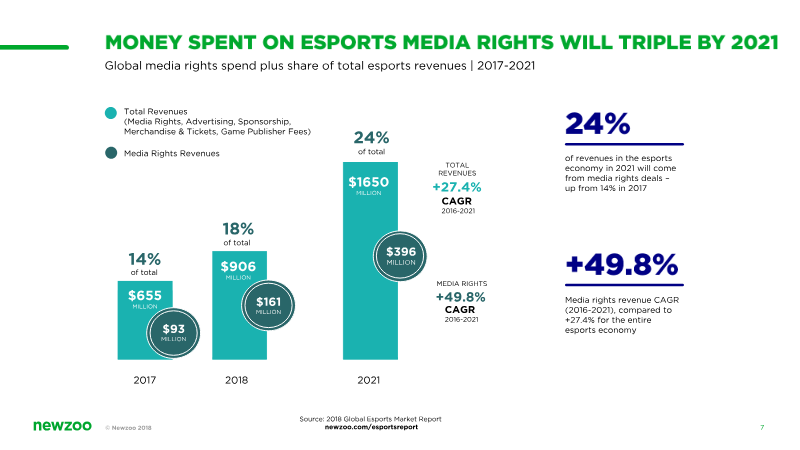
The esports media rights landscape is undergoing rapid expansion, positioning itself as the fastest-growing revenue stream within the global esports economy.
- Esports media rights revenue is projected to grow from 14% of total industry revenue in 2017 to 24% by 2021, with market value expected to rise from nearly $100 million to $400 million in the same period.
- North America dominates the global market with a 44% share of media rights revenues, bolstered by an established sports culture and the influence of major media conglomerates.
- The industry is increasingly adopting traditional sports business models, such as those used by the UFC, to maximize the value of esports properties.
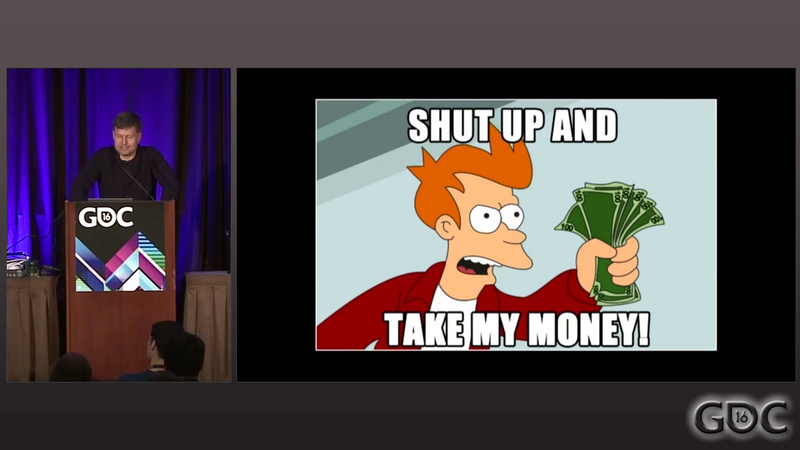
Open Production With Sunless Sea: Kickstarter, Early Access and After
Open production serves as a transformative strategy for independent game developers, enabling studios to transition from financial instability to long-term sustainability.
- Open production models like Kickstarter and Early Access provide financial stability and a diagnostic feedback loop that allows developers to refine design and marketing before full release.
- Developers must maintain final authority over creative vision, as relying too heavily on veteran player feedback can skew development toward niche preferences and alienate broader audiences.
- Sustainable financial planning requires that crowdfunding stretch goals remain low-cost and high-engagement to ensure early capital builds a foundation for future projects rather than serving as a temporary fix.
Taking Desktop Dungeons from Prototype to Pre-Order to Steam
The development of the roguelike game Desktop Dungeons serves as a case study for the efficacy of open development, a methodology defined by the continuous release of prototypes to a player community to gather feedback and iterate on design.
- QCF Design utilized open development to identify thousands of bugs and edge-case strategies by releasing continuous, iterative prototypes to a community-based testing network.
- Open development should be conducted through independent channels before transitioning to Steam Early Access to avoid the risks associated with the platform's high user volume during early, unrefined stages.
- The iterative feedback loop serves as a marketing strategy by cultivating a base of 'superfans' who act as organic advocates for press outreach and community management.

In Tenth Year of the iPhone, Game App Market Grows by 26 Per Cent: Germany
The German games industry experienced significant growth in the first half of 2017, driven largely by the continued expansion of the mobile gaming market.
- In the first half of 2017, the German game app market grew by 26% year-on-year, reaching 262 million euros in total sales revenue.
- In-app purchases for virtual goods and additional content accounted for 254 million euros of the total game app revenue, representing a growth of approximately 28%.
- The purchase of game apps themselves accounted for only 8 million euros, or 3%, of total game app sales revenue in the first half of 2017.