Access
Company
Documents about Access


Wyniki Finansowe 3Q25
This financial analysis details the third-quarter 2025 performance of PCF Group S.A. (People Can Fly), a global game development studio.
- PCF Group S.A. reported a net loss of 117 million PLN for the first nine months of 2025, a significant increase from the 33.3 million PLN loss recorded in the same period of 2024.
- A 92 million PLN write-down for the project 'Lost Rift' (Victoria) following its September 25, 2025, Early Access launch was the primary driver of the group's financial deficit.
- Despite the net loss, total revenue grew to 152.1 million PLN in the first nine months of 2025, up from 131.9 million PLN in 2024, driven by work-for-hire projects including Delta, Zulu, and Echo.
2025 Global Games Market Report
The global games market is entering a period of moderate maturation, with total revenue projected to reach $188.8 billion in 2025, a 3.4% increase over the previous year.
- The global games market is projected to reach $188.8 billion in 2025, a 3.4% year-over-year increase, driven by a player base that has expanded to 3.6 billion people.
- Mobile gaming remains the industry leader with $103.0 billion in revenue (55% of the total), while console gaming is expected to see the highest growth rate at 5.5%, reaching $45.9 billion.
- Average spend per player is declining, forcing a strategic shift toward long-tail engagement and retention rather than aggressive monetization in saturated markets.

Ukie Access to Finance Guide: 2025
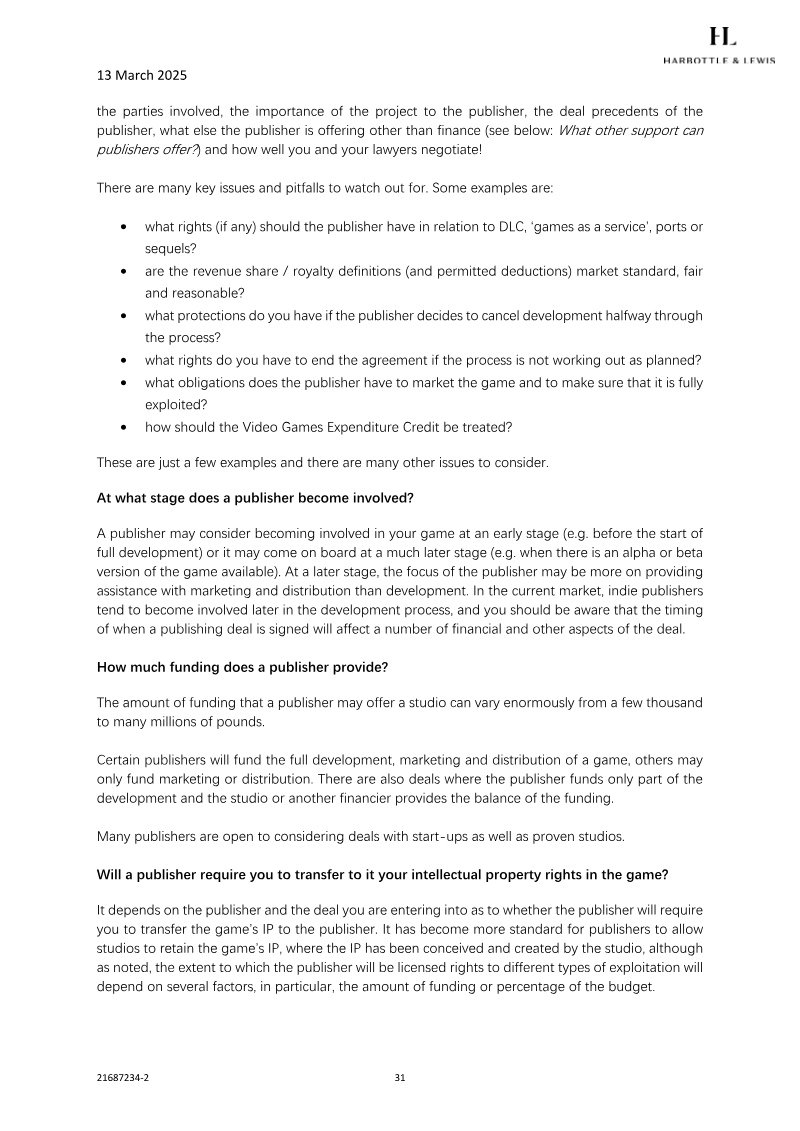
The UK games industry maintains a multifaceted financial landscape designed to support studios through various stages of growth, from initial prototyping to mature commercial expansion.
- The Video Games Expenditure Credit (VGEC) provides a 20.4% effective tax relief on qualifying production costs, serving as a primary fiscal incentive for UK studios.
- Early-stage equity funding is supported by the Seed Enterprise Investment Scheme (SEIS) and Enterprise Investment Scheme (EIS), which incentivize individual investors through significant tax advantages.
- Studios must maintain investment readiness by ensuring organized legal documentation, clear intellectual property ownership, and a proven track record of market interest.



Access for All: Expanding Opportunities for Players and Publishers Worldwide
This analysis explores the strategic shift toward out-of-app monetization in the global gaming industry, with a specific focus on Southeast Asia and China.
- Out-of-app monetization is a dominant force in Asia, accounting for 53% of the mobile gaming market in China and 21% in Southeast Asia.
- In the SEA-6 region, 40-50% of the adult population is unbanked, rendering traditional credit card-centric app store models ineffective for a large segment of potential players.
- Publishers are increasingly bypassing primary app stores to avoid high take rates and to implement localized payment methods like e-wallets, carrier billing, and physical vouchers.


Llibre Blanc d’Accessibilitat per al Desenvolupament de Videojocs
The central thesis is that video-game accessibility must be embedded from the earliest design stages, using a standardized, non-subjective evaluation framework, to achieve universal inclusion while avoiding the steep costs of retro-fitting.
- Accessibility must be integrated during early design phases to avoid the high costs of retrofitting, utilizing the European EN 301 549 ICT-accessibility standard as a foundational framework.
- The global gaming market includes over three billion players, with approximately 400 million individuals living with a disability and 18 million regular players in Spain.
- The Ga11y portal, launched in July 2022, provides a catalogue of 28 star-rated accessibility guidelines that map specific technical solutions to visual, auditory, motor, speech, and cognitive impairments.

Libro Blanco de Accesibilidad para Desarrolladores
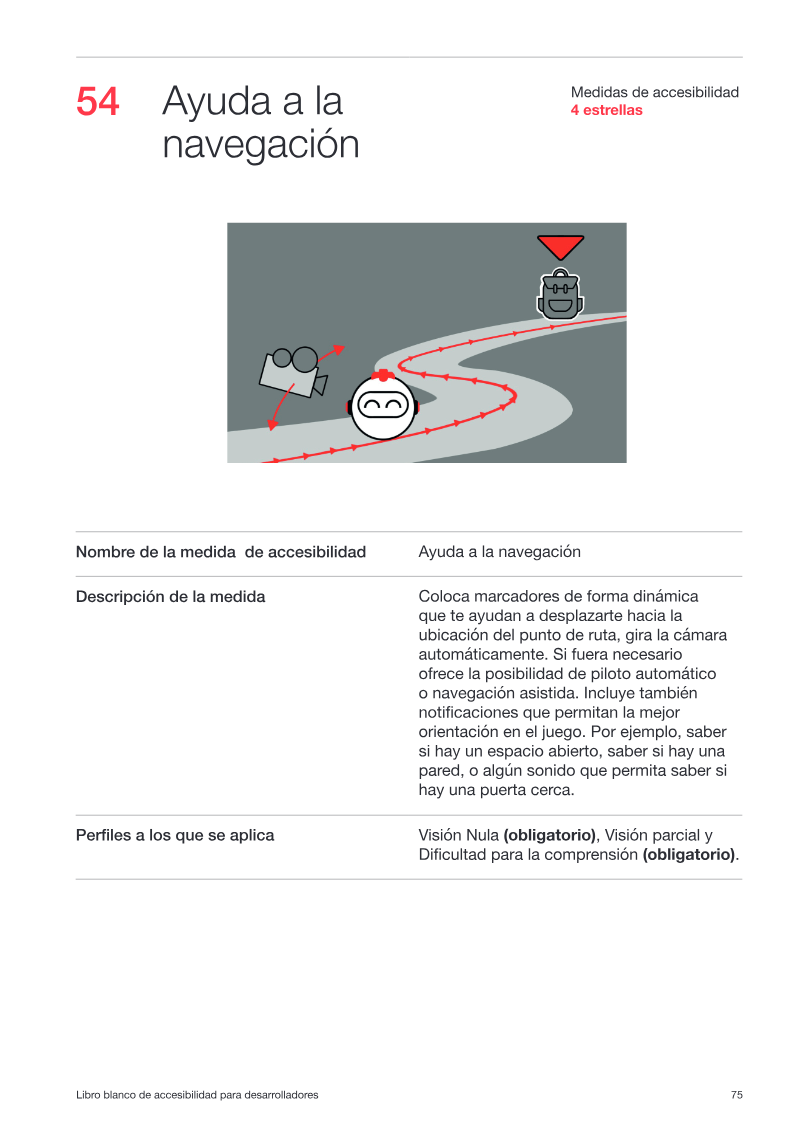
The core thesis emphasizes that video-game accessibility must be embedded from the earliest design stages, rather than added later, because retro-fitting dramatically inflates development time and cost.
- Accessibility must be integrated during the earliest design stages to avoid the significant cost and time inflation associated with retrofitting features.
- Approximately 400 million of the 3 billion global gamers live with some form of disability, making inclusive design a critical market consideration.
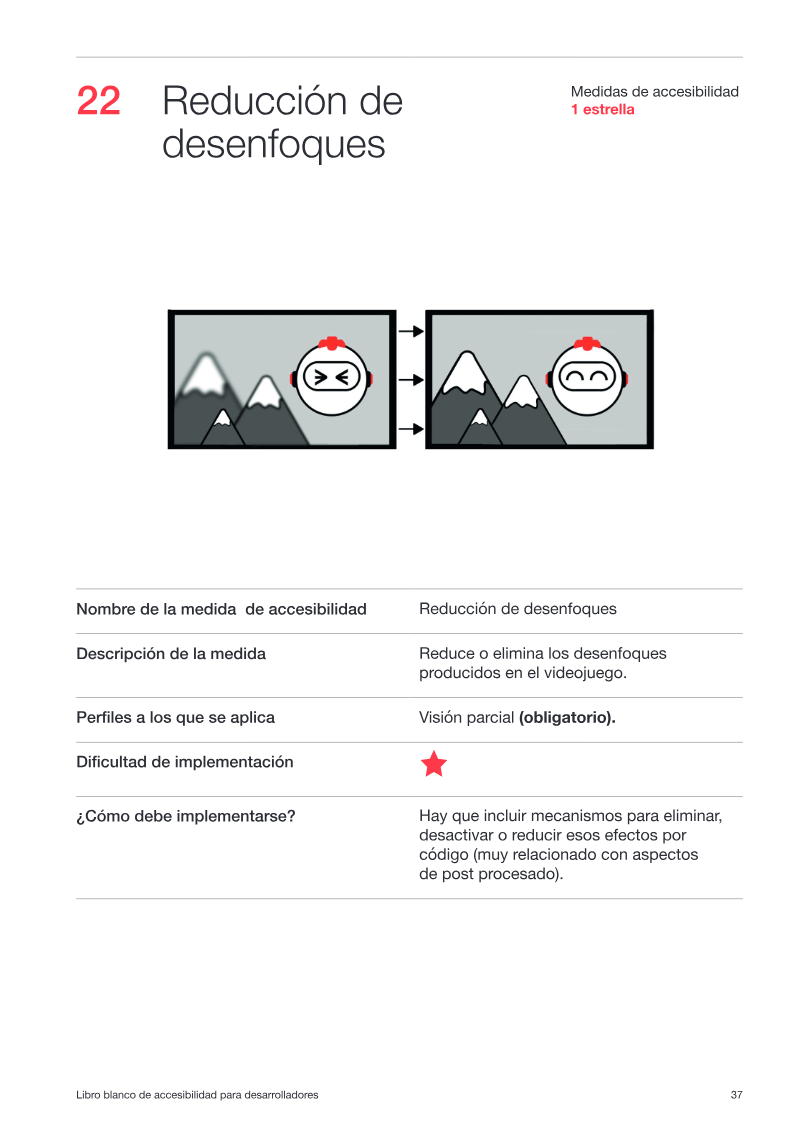
- The framework categorizes over 30 accessibility measures into a 5-star system, ranging from basic joystick swapping and puzzle-skipping to advanced sign-language interpretation and text-to-voice features.


Accessibility for Developers: Spain
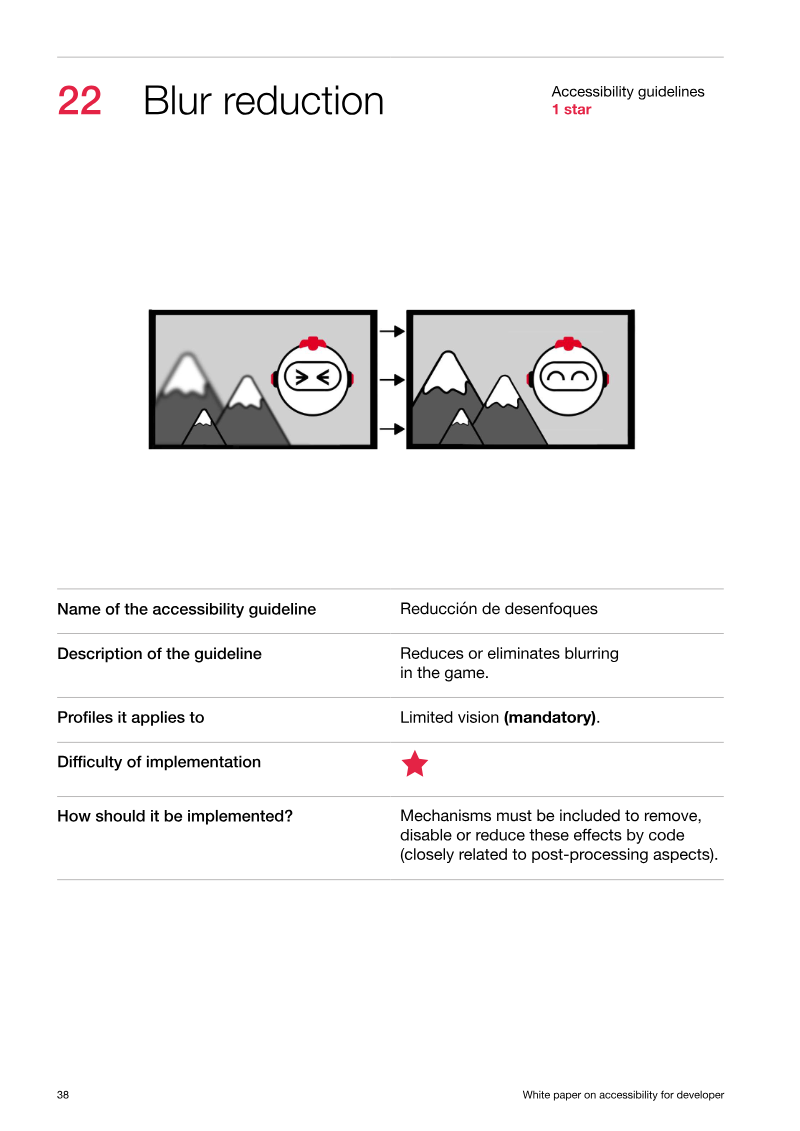
The Spanish video game industry is undergoing a strategic shift toward universal design, prioritizing the integration of accessibility features from the earliest stages of development to ensure inclusivity for players with motor, sensory, and cognitive disabilities.
- Video games are a significant recreational option in Spain, with over 18 million regular users, and globally, nearly 400 million of the three billion players have some form of disability.
- The Spanish Video Game Association (AEVI) and the ONCE Foundation's Ga11y project are collaborating to establish clear accessibility guidelines for game developers, aiming for universal accessibility for players and professionals with disabilities.
- A primary barrier to video game accessibility is often the controller hardware, not just the software, highlighting the need for games to be compatible with various adapted peripherals.

Embracer Group Acquires Pow Wow Entertainment
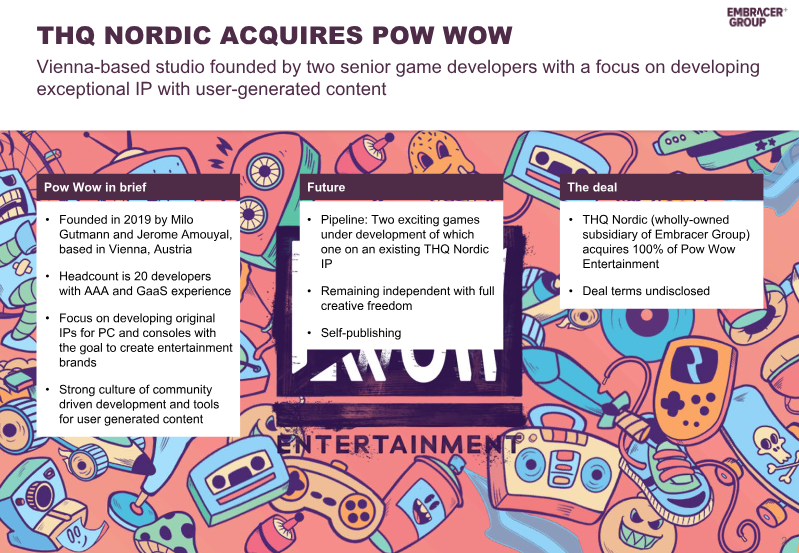
Embracer Group has finalized the acquisition of Vienna-based Pow Wow Entertainment, integrating the studio into its THQ Nordic subsidiary.
- Embracer Group has acquired Vienna-based Pow Wow Entertainment, integrating the 20-person studio into its THQ Nordic subsidiary.
- Pow Wow Entertainment will retain operational independence and creative autonomy while continuing to self-publish its titles.
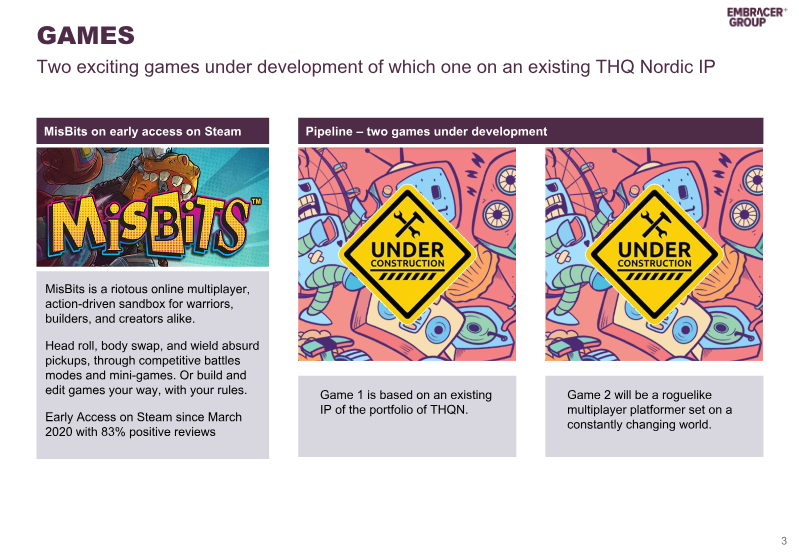
- The studio’s current development pipeline includes an original roguelike multiplayer platformer and a project utilizing an existing THQ Nordic intellectual property.
Understanding Media Rights in Esports
The esports media rights landscape is undergoing rapid expansion, positioning itself as the fastest-growing revenue stream within the global esports economy.
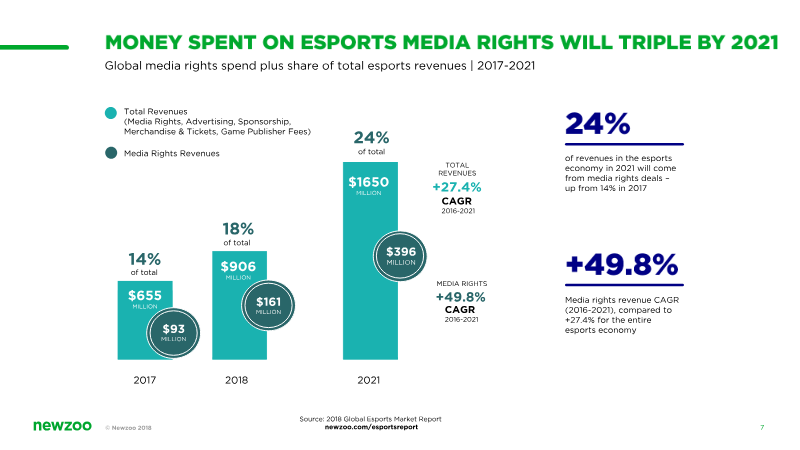
- Esports media rights revenue is projected to grow from 14% of total industry revenue in 2017 to 24% by 2021, with market value expected to rise from nearly $100 million to $400 million in the same period.
- North America dominates the global market with a 44% share of media rights revenues, bolstered by an established sports culture and the influence of major media conglomerates.
- The industry is increasingly adopting traditional sports business models, such as those used by the UFC, to maximize the value of esports properties.
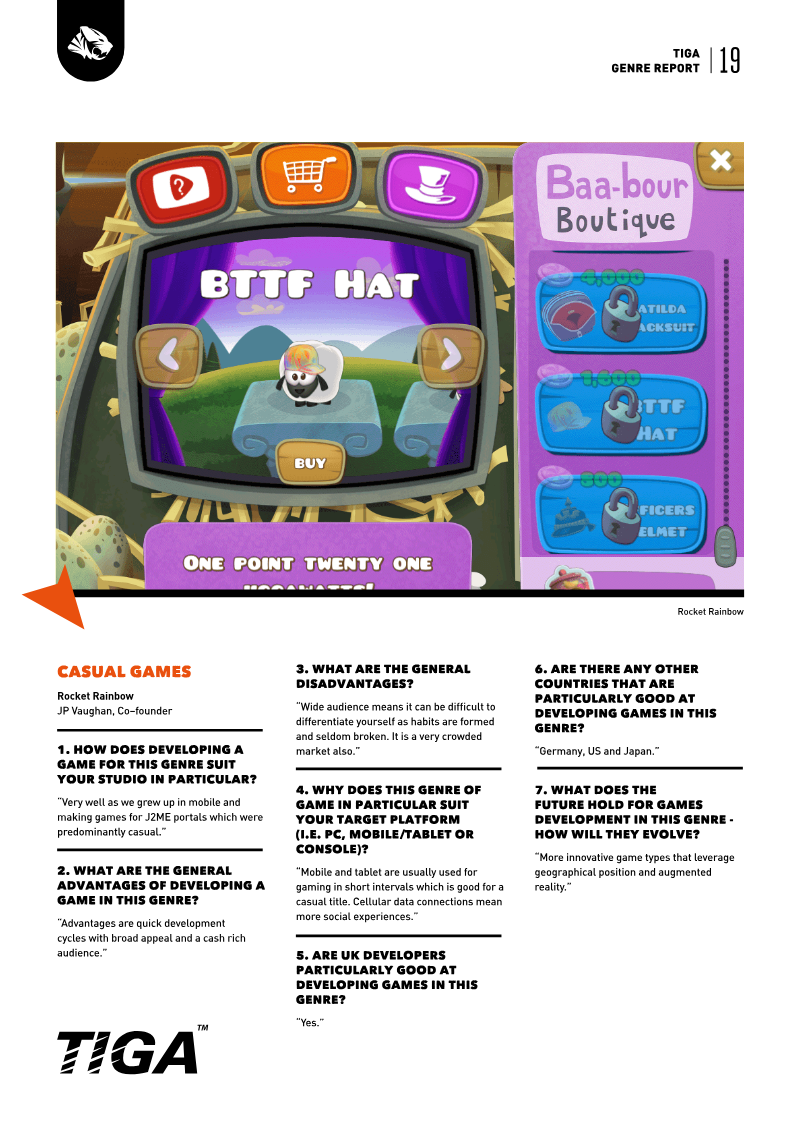

TIGA Genre Report 2016
The UK game development landscape in 2015 was defined by a strong preference for action and adventure titles, which accounted for 24.21 percent of all releases.
- Action/Adventure is the most common game genre, with over 45 releases, followed by Arcade and Puzzle/Trivia, each with over 30 releases.
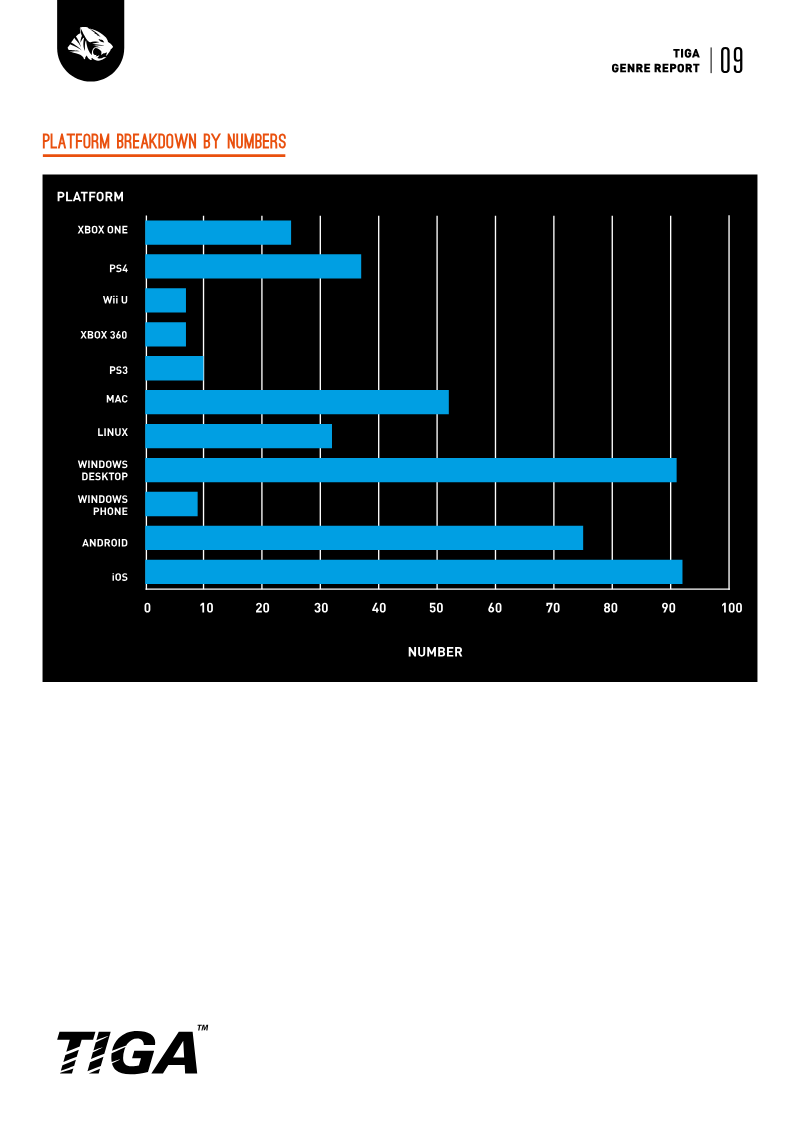
- Mobile platforms (iOS, Android, Windows Phone) show a higher number of releases in Casual, Puzzle/Trivia, and Action/Adventure genres compared to other genres.
- Desktop platforms (PC, Mac, Linux) have a significantly higher number of releases in Action/Adventure and RPG genres, with over 70 and 60 releases respectively.

Game Developer Index 2014: Sweden
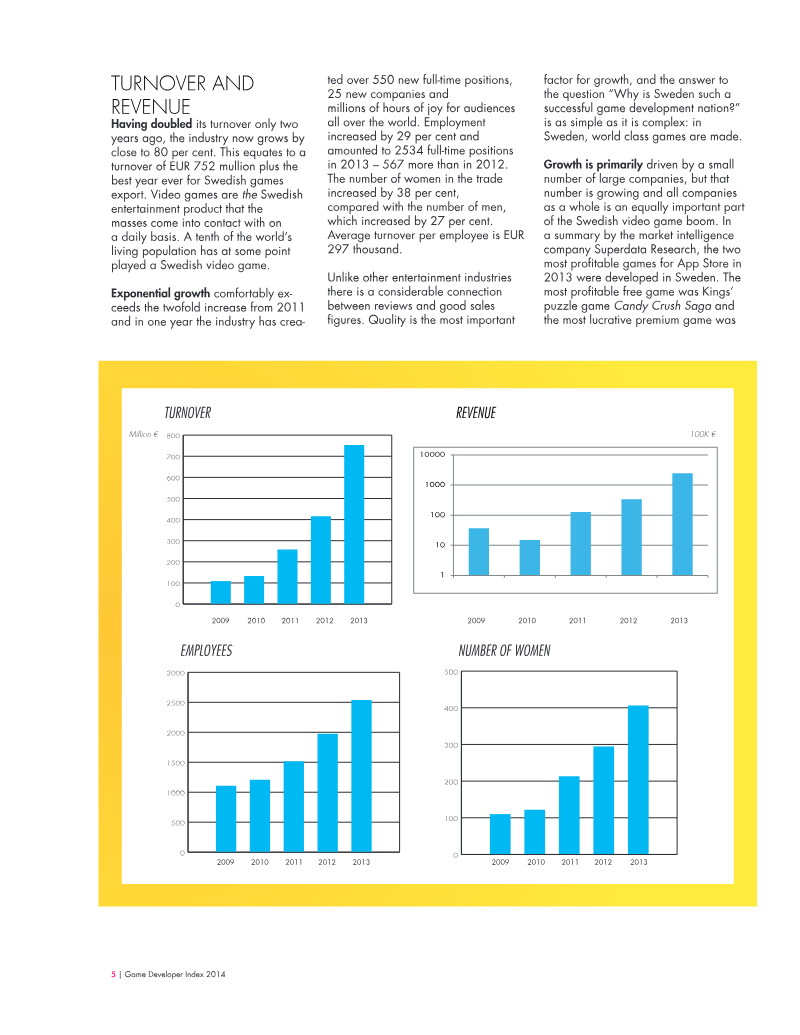
The Swedish gaming industry demonstrated exceptional vitality during the 2013–2014 period, cementing its status as a global powerhouse through rapid revenue expansion and significant job creation.
- The Swedish gaming industry experienced rapid growth between 2013 and 2014, with total revenues surging 76 percent to reach EUR 752 million.
- Industry expansion was driven by a 29 percent increase in full-time employment and a 17 percent rise in the number of active companies, anchored by the international success of King, Mojang, and DICE.
- Swedish firms are increasingly adopting self-publishing and digital-first business models to capture global market share via mobile and digital distribution platforms.
Game Developer Index: Sweden 2012
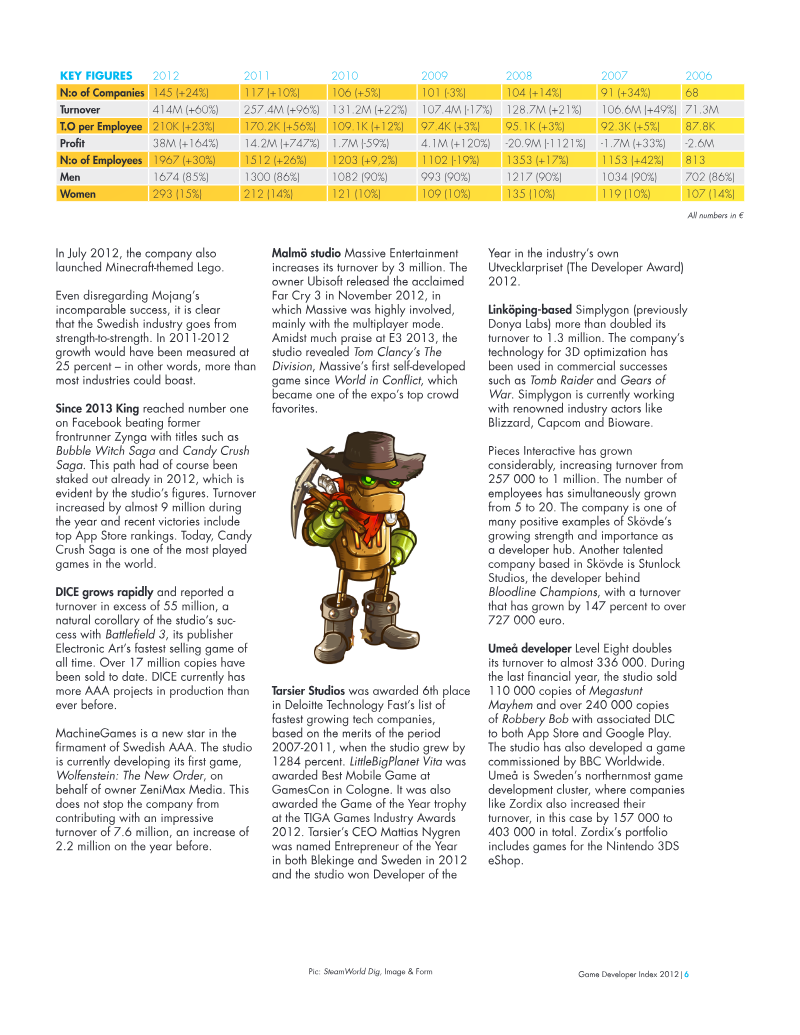
The Swedish video game industry underwent a period of unprecedented expansion in 2012, characterized by a 60 percent increase in total turnover to 414 million euros and a 163 percent surge in profits to 38 million euros.
- In 2012, the Swedish video game industry experienced rapid growth, with total turnover rising 60% to 414 million euros and profits surging 163% to 38 million euros.
- The industry workforce expanded by 30% to 1,967 full-time professionals, supported by the launch of 37 new companies.
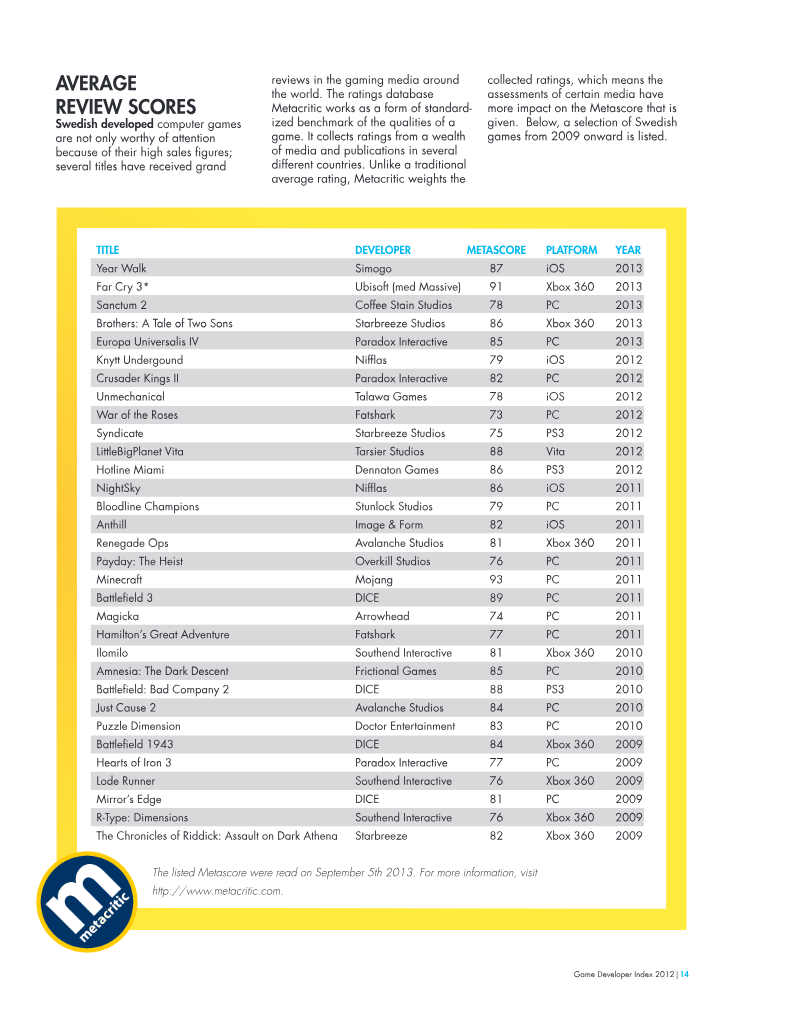
- Market success was driven by global hits like Minecraft and Candy Crush Saga, alongside established AAA output from studios such as DICE and Starbreeze.