Access
Company
Documents about Access
'Advance Access' games - why should you pay more?
Publishers are increasingly monetizing early entry to highly anticipated titles through formal advance access programs, typically charging a premium of ten to fifteen dollars.
- GDC 2027 has restructured its format to a Monday–Friday schedule, moving the festival hall to Tuesday–Thursday and introducing a new Business Hall at Moscone West to centralize networking and mitigate the logistical challenges of the San Francisco venue.
- Advance Access for games like 'Mortal Shell II'—which achieved 23,000 concurrent users—is increasingly being monetized through premium editions that charge a $10–$15 surcharge for early play, effectively creating a market for artificial scarcity and FOMO.
- PlayStation has begun de-listing publishers associated with 'shovelware' or low-effort games designed primarily for easy Platinum trophy farming, though the platform's enforcement remains inconsistent and subject to reversal.
Live Q&A: Steam Next Fest, AI Slop, Getitng wishlists
The independent game development landscape currently offers a unique window of opportunity, characterized by a high demand for quality titles that prioritize gameplay depth over excessive production values.
- The most critical marketing decision for Steam success is genre selection, as Steam's PC-centric player base generally under-indexes on fast-twitch, arcade-style shooters in favor of deep, slow-paced, or management-heavy titles.
- Steam players prioritize original visual experiences; using store-bought assets is a significant deterrent in genres like Metroidvanias, RPGs, or Souls-likes where exploration of a unique world is a core expectation.
- Avoid launching immediately after Steam Next Fest, as the high volume of developers attempting this strategy creates excessive competition that diminishes individual visibility.

Slay the Spire II Early Access Review Bombing | Design Club
The recent backlash against Slay the Spire II highlights a growing friction between iterative development practices and consumer expectations within the modern Early Access model.
- Slay the Spire 2 is currently experiencing review bombing in Early Access, primarily driven by player frustration over balance changes—specifically the removal of 'infinite' deck loops—introduced in the game's opt-in beta branch.
- MegaCrit provides an in-game feedback tool accessible via the F2 key, which was recently expanded to allow up to 8,000 characters per report to facilitate direct communication between players and developers.
- The developers have implemented a voluntary, opt-in beta branch for the Early Access title to test major balance adjustments, including character card changes and complete reworks of end-game bosses, separate from the live build.
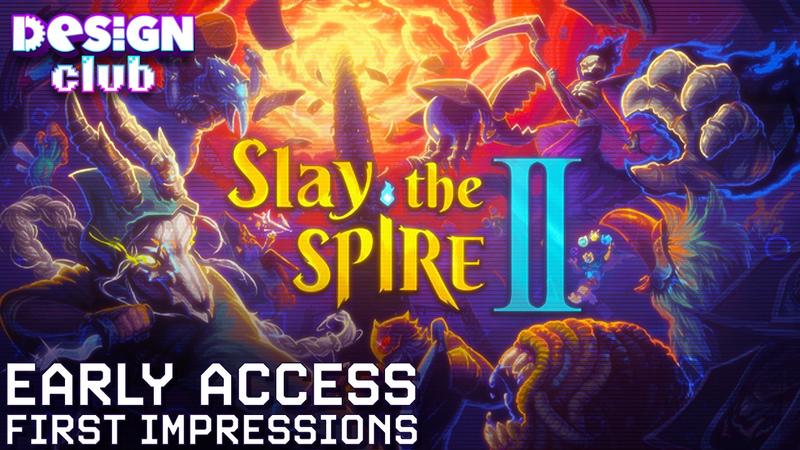
Slay the Spire II Early Access First Impressions! | Design Club
Slay the Spire II has entered early access with significant market momentum, evidenced by a peak of over 119,000 concurrent players on Steam.
- Slay the Spire 2 maintains the core gameplay loop of its predecessor, utilizing familiar mechanics such as three-potion slots, gold counters, and identical starting card values and upgrades.
- The sequel introduces refined visual fidelity, including an isometric perspective that adds depth to character assets like shields and swords, alongside new UI elements like a floor timer.
- New gameplay mechanics include 'enchantable' cards that grant innate and retain properties, and status effects like 'slippery,' which limits damage taken to one HP per instance for a set number of stacks.

How Sub $200K Games Win Discovery and the Steam Algorithm
The micro-indie publishing model prioritizes a high-volume, portfolio-based strategy to navigate the competitive landscape of Steam.
- Micro-indie publisher Polden Publishing operates on a high-volume portfolio model, scaling from 8 releases in 2025 to a target of 20 titles in 2026 with budgets under $200K per game.
- Steam discovery is driven by maintaining consistent daily wishlist velocity, which triggers visibility in key surfaces like the Discovery Queue, Popular Upcoming, and demo trending sections.
- Influencer outreach is managed through a CRM of 20,000 creators, using automated, personalized email chains to target specific cohorts based on their previous engagement with the developer's demos or games.

Peter Molyneux and friends tell us how it feels to reunite for one final game
The development of Masters of Albion marks a significant creative reunion for Peter Molyneux and his core team of industry veterans, including Mark Healey, Kareem Ettouney, Ian Wright, and Russell Shaw.
- Peter Molyneux has reunited with core industry veterans from the Bullfrog and Lionhead eras—including Mark Healey, Kareem Ettouney, Ian Wright, and Russell Shaw—at 22Cans to develop a new god game titled Masters of Albion.
- The gameplay of Masters of Albion synthesizes mechanics from the team's legacy titles, specifically Dungeon Keeper, Black & White, and Fable, by featuring a cycle of daytime city-building and nighttime survival.
- The project is structured as the first of three planned chapters, though the team has not committed to the full series due to the intense resource demands of independent development.

Steam Demos Are the New Early Access
Modern indie game development prioritizes a marketing-first philosophy where high-quality, polished demos serve as the primary vehicle for market validation and wishlist acquisition.
- Game developers should prioritize the 'ugabooga' solution—the lowest-investment, simplest implementation—to test core mechanics before building complex systems.
- Steam's 'New and Trending' tab remains a critical discovery metric, with an estimated threshold of approximately $8,000 in sales required to gain visibility.
- The quality of a game is validated when playtesters continue playing for hours after a scheduled session ends, indicating the presence of 'secret sauce' beyond just a compelling trailer.
PLAYERUNKNOWN’s Comeback… So Why Did They Do This?
PlayerUnknown Productions, a fully remote AAA studio led by Brendan Greene and CEO Kim Nordstrom, serves as the focal point for an analysis of studio strategy and the risks associated with high-profile game development.
- PlayerUnknown Productions, backed by a $70 million investment from Krafton in 2021, released the survival title Prologue as a technical proof-of-concept rather than a flagship product.
- Prologue failed to gain market traction, peaking at only 182 concurrent players on Steam.
- The studio’s decision to launch Prologue in Early Access invited negative public scrutiny, as the release lacked the controlled environment typically used for technical testing.
TWIG #360 The Story of Two Steam Games, Where Winds Meet & The 4X Shake-Up
The modern gaming landscape is defined by a widening gap between vanity metrics and sustainable revenue, as developers struggle to balance high user acquisition costs with long-term retention.
- The 4X strategy genre currently generates approximately $700 million in monthly revenue, with growth driven by gender-neutral themes and casualized art styles rather than traditional hardcore aesthetics.
- The gaming industry is shifting away from complex, gear-heavy progression systems toward accessible, cross-platform experiences that utilize seasonal resets to improve retention.
- Rising user acquisition costs and high install prices are forcing studios to abandon traditional squad RPG models in favor of high-fidelity, broad-appeal titles.

Making a Cozy Game Hit in 5 Months
The cozy game market is defined by low-stakes escapism, accessible mechanics, and hobby-based fantasies that prioritize player-driven creative expression over rigid optimization or punitive lose states.
- Cozy games are defined by low-stakes gameplay, the absence of severe failure states, and a focus on relaxing, non-apocalyptic themes like managing shops or bakeries.
- Marketing a game is significantly easier when the core concept is immediately understandable, as evidenced by the fact that games with similar marketing efforts can yield vastly different outcomes based on their inherent appeal.
- Early community engagement via platforms like TikTok allows developers to validate game concepts and gather feedback in real-time, even during the initial three-week prototyping phase.
Friday Steam Next Fest Q&A
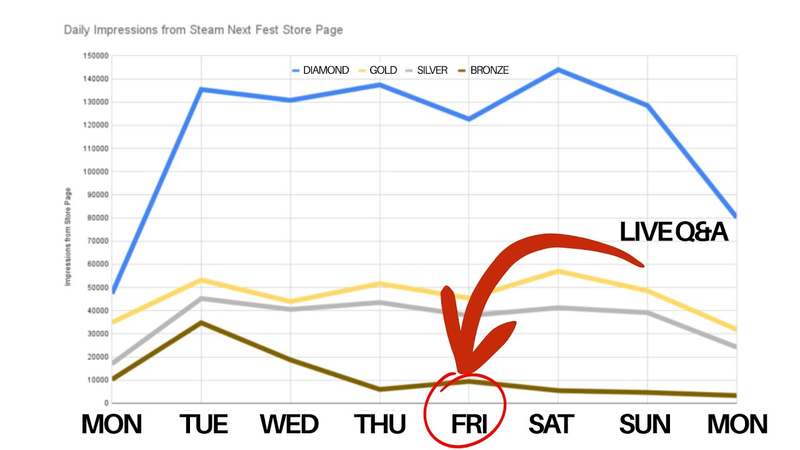
Steam Next Fest functions as a critical barometer for game performance, where success is primarily determined by pre-event marketing and the accumulation of wishlists rather than mid-event adjustments.
- Once a game is available for purchase on Steam, the algorithm shifts its primary focus from wishlists to pure revenue, as sales figures are the most reliable metric for Valve to evaluate performance.
- Steam Next Fest performance is largely determined by the quality of the game and the preparation done beforehand; once the event begins, the outcome is effectively locked and cannot be significantly altered by mid-event adjustments.
- Developers should avoid over-analyzing granular data or creating complex performance theories during Next Fest, as these behaviors often lead to misinterpreting random fluctuations as meaningful trends.
Why Demos are so critical with Tomas Sala
The evolving demo strategy serves as a cornerstone for independent game development, offering a transparent and iterative approach to product validation.
- Maintaining a long-term, iterative demo allows developers to validate product mechanics and gather player behavior data, such as median playtime, to accurately forecast commercial potential.
- Using a controlled demo environment mitigates the risk of permanent reputational damage from negative reviews often associated with premature Early Access releases.
- Consistent updates to a demo create a predictable cadence of interest on platforms like Steam, which is more sustainable for long-term growth than relying on ephemeral viral marketing spikes.