2015
Company
Documents about 2015
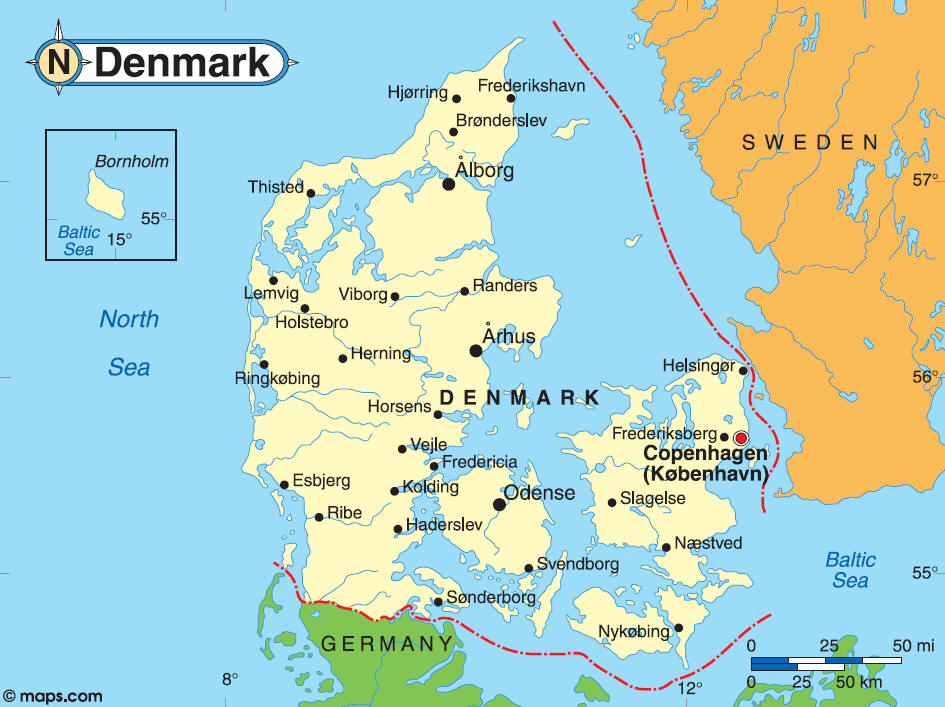
Facts and Figures about Games Industry in Denmark
The Danish games industry experienced significant growth between 2009 and 2013, establishing itself as the 27th largest market globally.
- Denmark is the 27th largest games industry in the world, with developer turnover growing 119% between 2009 and 2013.
- The country's video game export share increased by 80% during the 2009–2013 period, driving increased government investment in the sector.
- Interactive Denmark projects annual cultural support of €1.16 million and dedicated innovation funding of €2.67 million for the industry between 2015 and 2018.
Zynga's CEO rebound, Amazon's CryEngine move and Apple Watch gaming
This analysis covers three significant developments in the gaming industry during the second week of April 2015: Amazon’s strategic investment in Crytek, the sudden leadership transition at Zynga, and the initial market reception of the Apple Watch.
- Mark Pincus has returned as CEO of Zynga following the departure of Don Mattrick, who failed to improve the company's stagnant share price and quarterly losses despite a $500 million acquisition of Natural Motion.
- Amazon has secured a licensing deal for Crytek’s CryEngine, with estimated investments between $50 million and $70 million, signaling a strategic effort to strengthen its internal gaming infrastructure.
- Amazon’s investment in Crytek follows its $940 million acquisition of Twitch, reinforcing the company's aggressive, capital-intensive expansion into the gaming sector.
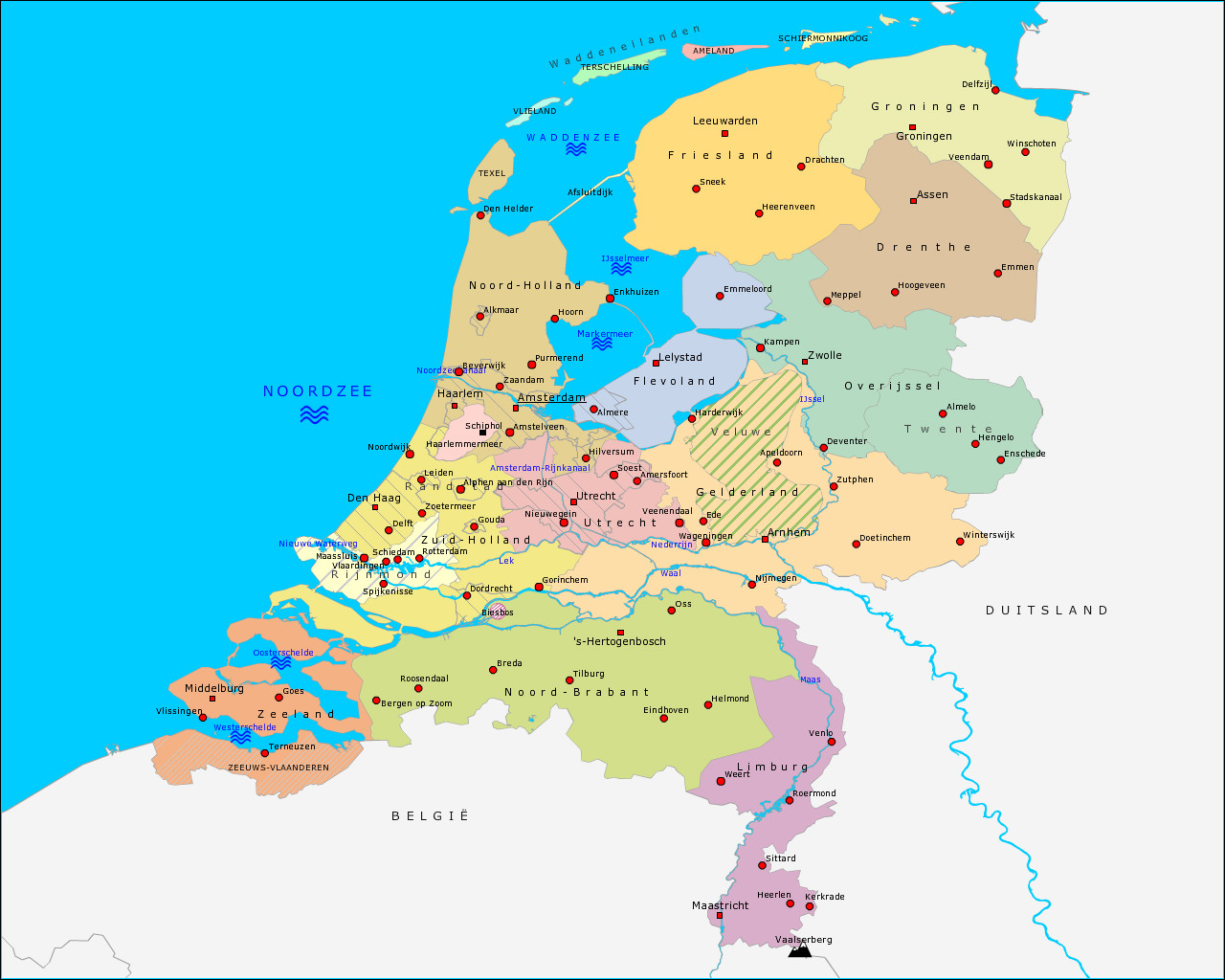
Facts and Figures About Games Industry in the Netherlands
The Dutch games industry represents a significant global market, ranking as the 16th largest in the world.
- The Dutch games industry is the 16th largest globally, generating $433.2 million (€394.27 million) in annual revenue as of 2015.
- The market is primarily driven by 'serious' games, which include training, educational, and simulation titles.
- Social gaming is the most frequent engagement method, with 43% of gamers playing these titles on a daily basis.

The Future of Match 3: What You Need to Know, Part II
This analysis examines the commercial landscape of casual, single-dimensional match 3 (SD3) mobile games as of April 2015.
- Top-grossing casual match-3 games frequently utilize more than three distinct 'destroyer' pieces, which are special items created by matching more than three basic pieces to increase player engagement and level complexity.
- Successful match-3 titles differentiate themselves by incorporating more than four unique level goals and more than four special 'block' board pieces to combat repetitiveness and provide varied tactical challenges.
- Integrating free samples of paid boosters directly into the game's tutorial familiarizes players with premium mechanics and increases the likelihood of future in-app purchases by lowering the first-purchase threshold.
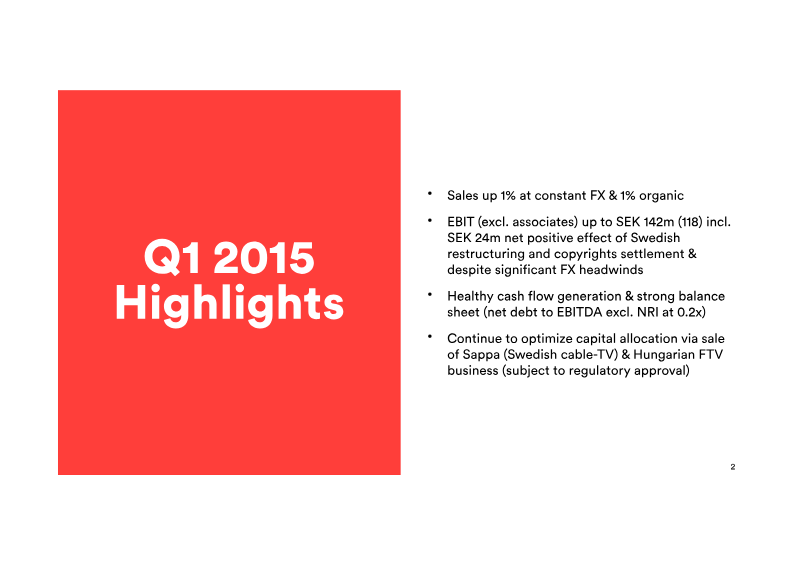
Modern Times Group Q1 2015 Financial Results
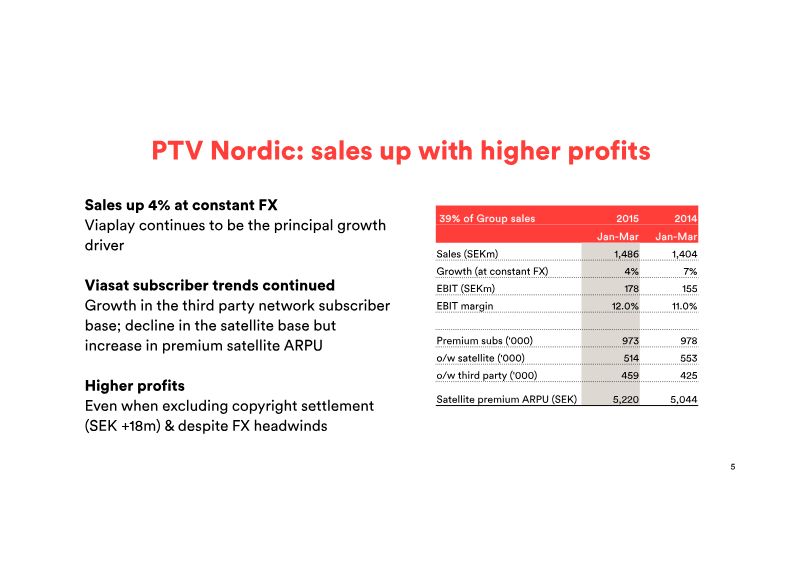
Modern Times Group’s financial results for the first quarter of 2015 demonstrate a period of strategic transformation characterized by stable organic growth and disciplined capital allocation.
- MTG achieved 1% organic sales growth and an EBIT of SEK 142 million in Q1 2015, supported by restructuring and copyright settlements despite foreign exchange headwinds.
- Digital sales grew by 33% during the quarter, reflecting the company's strategic transition toward digital-first consumption models.
- Nordic Pay-TV revenue increased by 4%, driven by the expansion of the Viaplay streaming service and higher premium satellite ARPU.
GameStop Form 10-K: Fiscal Year 2015
GameStop’s 2015 Form 10-K outlines a strategic pivot designed to maintain its position as the world’s largest multichannel video game retailer while mitigating the inherent volatility of the gaming industry.
- GameStop is aggressively diversifying away from its core video game business by expanding its 'Technology Brands' segment, which includes 361 AT&T-branded stores and 63 Cricket Wireless stores as of early 2015.
- The Technology Brands segment is a key profit driver, with gross margins significantly higher than the Video Game Brands segment and a notable increase in gross profit percentage from 21.4% in 2013 to 36.0% in 2014.
- Game Informer remains a massive asset for the company, serving as the world's largest digital magazine with 2.7 million paid digital subscribers and 7 million total paid subscribers as of December 2014.
Turtle Beach Annual Report: Fiscal Year 2014
The 2014 fiscal year marked a transformative period for Turtle Beach Corporation, defined by its reverse merger with Parametric Sound Corporation.
- Turtle Beach entered a $60 million asset-based revolving credit facility with Bank of America on March 31, 2014, which expires on March 31, 2019.
- The company incurred $3.7 million in acquisition-related costs during 2014 associated with the merger between Turtle Beach and the HyperSound business.
- The HyperSound business has a history of operating losses since its 2010 spin-off from LRAD Corporation and requires continued investment in R&D and marketing to achieve profitability.



Aiming Annual Securities Report: 4th Term
Aiming’s fourth fiscal year, ending December 2014, represents a pivotal period of financial turnaround and corporate maturation, characterized by the successful public listing on the Tokyo Stock Exchange Mothers market in March 2015.
- Aiming achieved a financial turnaround in its fourth fiscal year ending December 2014, reporting 6.52 billion yen in annual sales—a 148.6% increase—and a net income of 550 million yen.
- The company’s growth was primarily driven by the strong performance of its flagship mobile title, 'Sword and Magic of Logres: Ancient Goddess'.
- Aiming successfully completed its public listing on the Tokyo Stock Exchange Mothers market in March 2015 to support future investment and development.
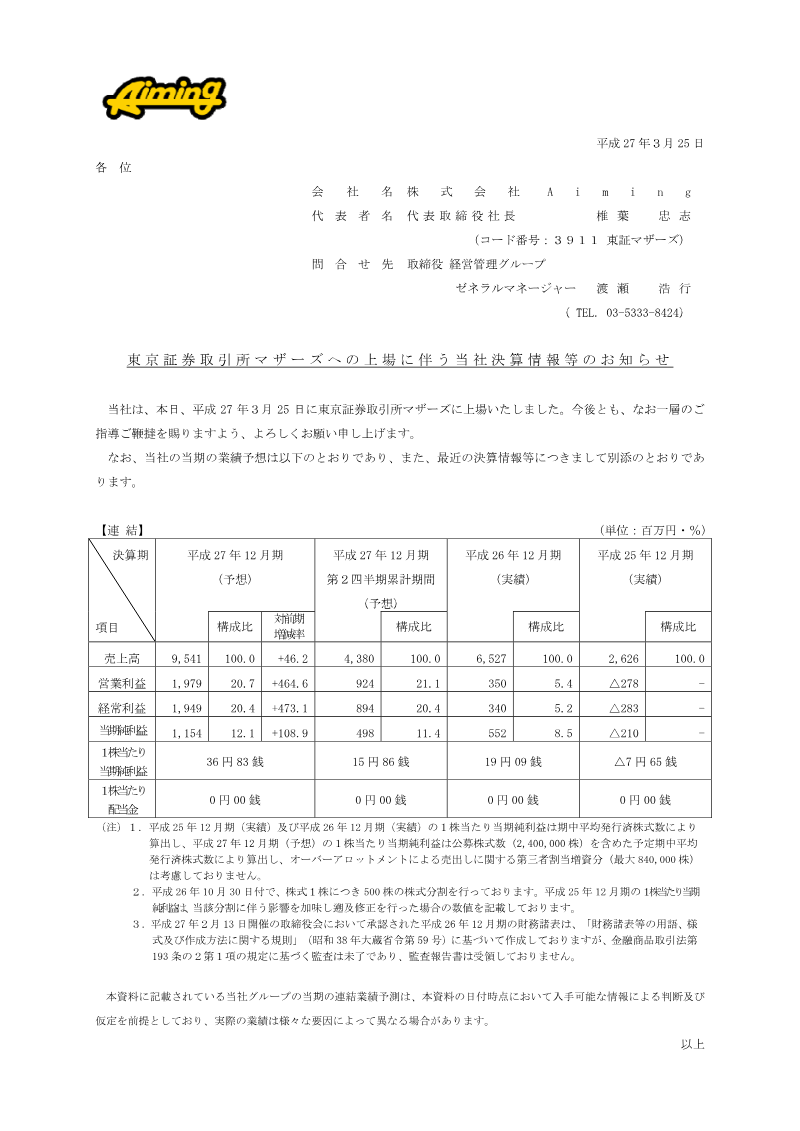
Aiming: Announcement Regarding Earnings Information Following Listing on Tokyo Stock Exchange Mothers
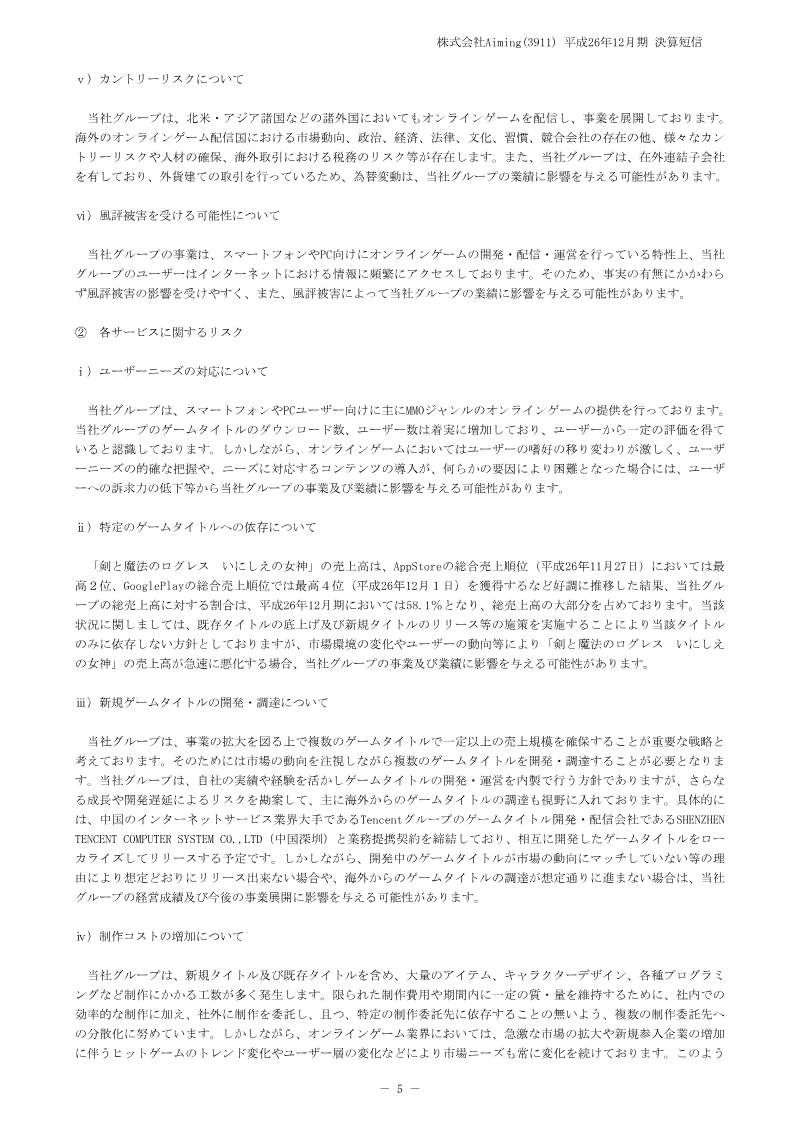
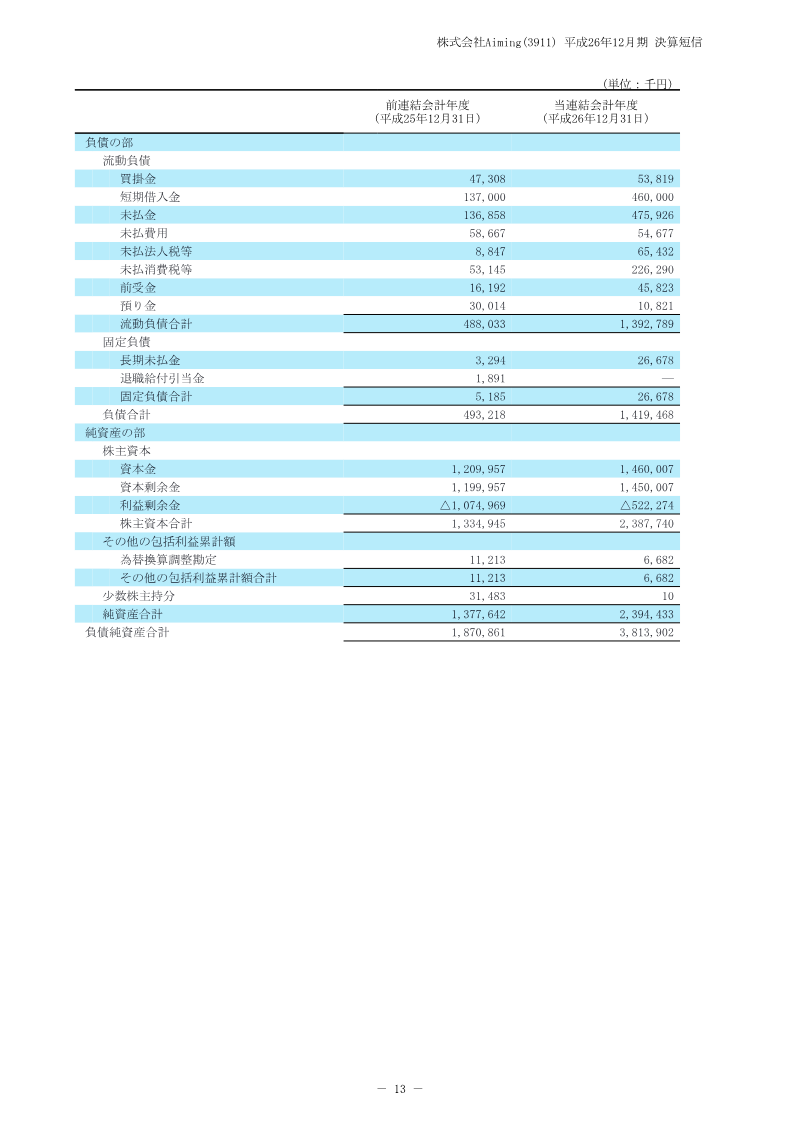
Aiming Inc. successfully transitioned to a profitable enterprise during the fiscal year ending December 2014, achieving sales exceeding 6.5 billion yen.
- Aiming Inc. achieved profitability in fiscal year ending December 2014 with over 6.5 billion yen in sales, driven primarily by the mobile title Logres of Swords and Sorcery, which accounted for 58.1% of total sales.
- The company's earnings per share shifted from a net loss of 7.65 yen to a net profit of 19.09 yen in the fiscal year ending December 2014.
- Following its March 2015 listing on the Tokyo Stock Exchange Mothers, Aiming Inc. raised approximately 2.2 billion yen from a public offering and 772.8 million yen from a third-party allotment.
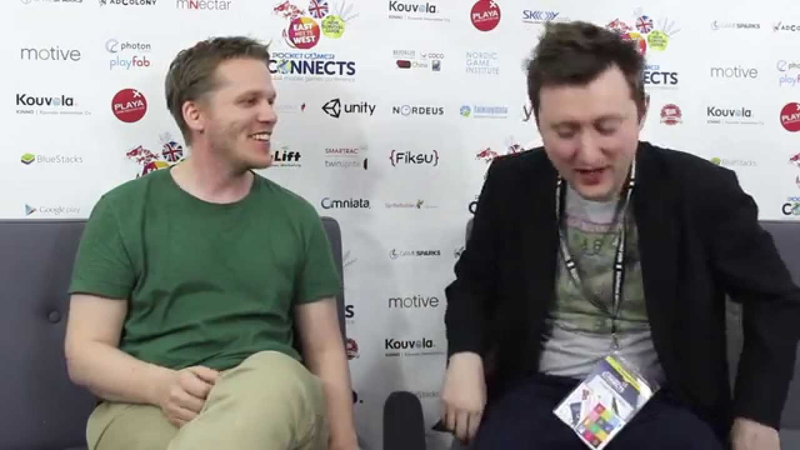
Very Big Indie Pitch 2015 winner - Joel Nystrom from Ludosity
The Swedish developer Ludosity, established in 2008, emphasizes the growing importance of physical, social, and unconventional gameplay in the current indie market.
- Ludosity, established in 2008, identifies a market shift toward physical and social gameplay, exemplified by their collaborative title 'Progress' which uses shared physical discomfort as a core mechanic.
- Success in the volatile mobile gaming market requires developers to maintain strict product focus and avoid the common pitfall of over-committing to excessive feature sets.
- The mobile industry is currently defined by a 'gold rush' mentality, characterized by high competition and the prevalence of low-effort app flipping and re-skinning.
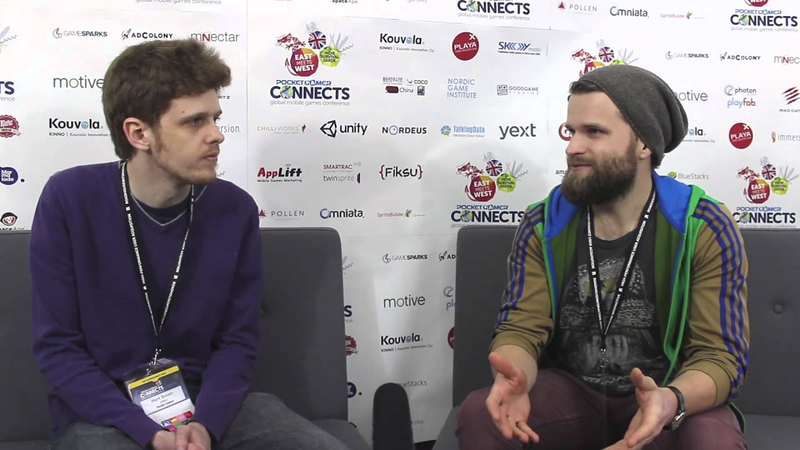
LabLike's Olaf Morelewski on making a game based on Mozart's Magic Flute
Magic Flute by Mozart represents a unique intersection between traditional performing arts and mobile gaming.
- LabLike, a Warsaw-based studio, developed the mobile game 'Magic Flute' by translating their professional expertise in theatrical video set design into a cubic, sliding-puzzle format.
- The development process prioritized iterative gameplay mechanics over purely aesthetic fidelity to ensure the title functioned as an engaging game rather than just a visual showcase.
- The studio utilized industry networking events, such as the Big Indie Pitch, to gather critical peer and judge feedback that directly informed the final product's refinement.

Top 50 Developers of 2015: #2 GungHo Online
GungHo Online Entertainment secured the number two position on the 2015 Top Developers list, primarily driven by the sustained dominance of its flagship title, Puzzle & Dragons.
- GungHo Online Entertainment’s 2015 market position was anchored by Puzzle & Dragons, which at its peak accounted for 50% of all consumer spending in the Japanese mobile gaming sector.
- The company is actively diversifying its revenue streams by using cash flow from Puzzle & Dragons to acquire console developers, including Grasshopper Manufacture, and investing in brand extensions like theme parks.
- GungHo is expanding its global footprint through strategic partnerships with Tencent and equity stakes in Chinese developers such as Chukong to penetrate the Chinese market.