2015
Company
Documents about 2015
Rovio and ZeptoLab talk at PG Connects Bangalore 2015
The mobile gaming industry has reached a scale where top titles generate revenue surpassing traditional entertainment sectors like the Hollywood box office.
- To achieve long-term viability in a competitive market with hundreds of daily releases, developers must transition from simple mechanics to building enduring, character-driven franchises that prioritize brand recognition.
- High brand awareness is the primary strategy for driving organic downloads and reducing dependency on expensive user acquisition costs.
- Leading studios utilize a high-volume prototyping process, filtering hundreds of concepts through iterative soft launches to identify potential hits before global release.
Guided tour around Nordic Game 2015
Nordic Game 2015 serves as a premier showcase for the Nordic region’s influential game development sector, highlighting the area’s status as a global hub for major titles and studios such as Minecraft, Rovio, and Supercell.
- Nordic Game 2015 highlights the Nordic region as a global gaming hub, anchored by major industry players including Minecraft, Rovio, and Supercell.
- The three-day conference features 60 industry speakers across three distinct tracks focused on professional development and market trajectory.
- The event functions as a primary networking and exhibition nexus for developers, industry professionals, and hardware manufacturers to facilitate international collaboration.
Nordic Game 2015 Diary: Day 2
The Nordic Game 2015 conference served as a focal point for the international mobile gaming industry, highlighting the maturity of the Nordic region as a global leader in game development.
- Journalists receive an average of 50 pitches daily, totaling 13,000 per year, necessitating highly concise outreach strategies to secure media coverage.
- Developers can improve media engagement by embedding visual assets directly into emails, providing immediate access to playable builds, and including gameplay trailers.
- Blending three-lane auto-runner mechanics with RPG elements offers a strategic opportunity to bridge the gap between casual players and dedicated RPG audiences in a saturated market.
Nordic Game 2015 Diary: Day 1
Nordic Game 2015 serves as a primary venue for industry professionals to discuss emerging trends in game development, marketing strategies, and the evolving landscape of multi-platform distribution.
- Developers are shifting away from platform-exclusive strategies toward unified, cross-platform experiences that integrate mobile, PC, console, and virtual reality hardware.
- Crowdfunding success, as evidenced by Square Enix Collective, relies on synchronized launch strategies and professional support rather than independent, uncoordinated efforts.
- Market saturation necessitates that developers clearly define and communicate their unique selling points to remain competitive in indie publishing and ad network sectors.
King vs Zynga
This analysis examines the financial performance of major mobile gaming companies as of the first quarter of 2015, specifically contrasting the profitability of King and Tencent against the ongoing losses at Zynga.
- As of Q1 2015, King maintains strong profitability with $164 million in profit on $570 million in revenue, while Zynga reports a $47 million loss on $183 million in revenue.
- King is prioritizing shareholder value to combat a stagnant share price, utilizing $303 million in cash reserves for dividends and share buybacks.
- Zynga is undergoing a 18% workforce reduction, cutting 364 employees as it attempts to pivot from a legacy social-gaming model to mobile-centric operations.
The mobile F2P social casino market explained in 15 minutes
The social casino industry, defined as free-to-play games rather than real-money gambling, represents a significant and maturing sector of the global gaming market.
- The social casino market is highly consolidated, with the top five companies—including Caesars, IGT, and Big Fish—controlling over 50% of total industry revenue.
- Entering the market requires significant capital, with successful titles now demanding at least $2 million in production budgets and over $10 million in marketing spend.
- The industry is experiencing a major structural shift from Facebook canvas to mobile and tablet platforms, as Facebook revenue growth has plateaued.
Glu Mobile vs Gameloft
The mobile gaming industry is currently defined by a stark divide between legacy publishers struggling to adapt to the free-to-play (F2P) model and agile developers achieving rapid growth through breakout hits.
- Glu Mobile achieved 56% year-over-year revenue growth in Q1 2015, reaching $69.5 million, by successfully pivoting to a high-monetization free-to-play model.
- Gameloft reported $71 million in Q1 2015 revenue, representing a 17% year-over-year increase, but continues to struggle with sustaining long-term hits in Western markets.
- Glu Mobile’s revenue is heavily concentrated, with the 'Kim Kardashian: Hollywood' title accounting for one-third of the company's total quarterly earnings.
Does Jon have space on his wrist for Apple Watch?
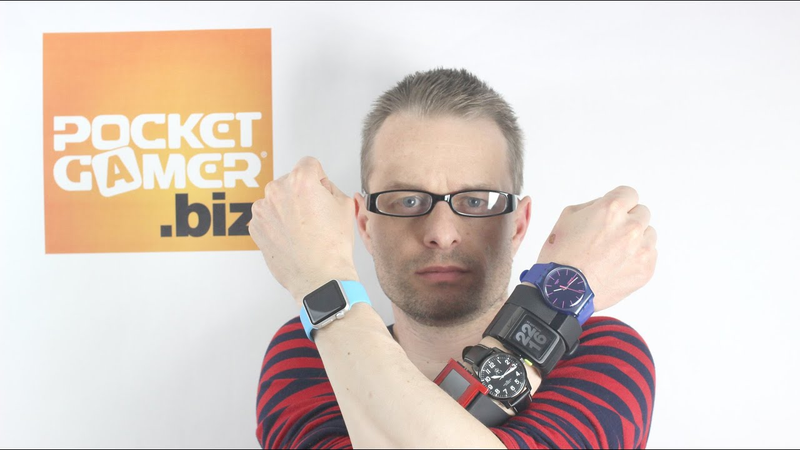
The Apple Watch launch in April 2015 marks a significant shift in the wearable technology landscape, transitioning from niche fitness trackers to a broader consumer product.
- The Apple Watch, launched in April 2015 in 38mm and 42mm sizes, currently functions as an iPhone-dependent extension rather than a standalone platform.
- Gaming on the device is in an experimental phase, characterized by a split between mobile companion apps from companies like Gameloft and native wearable-first titles like Runeblade.
- Practical utility is currently limited to real-time notifications and health monitoring, which prevents the device from being viewed as a mass-market essential.
Zynga's CEO rebound, Amazon's CryEngine move and Apple Watch gaming
This analysis covers three significant developments in the gaming industry during the second week of April 2015: Amazon’s strategic investment in Crytek, the sudden leadership transition at Zynga, and the initial market reception of the Apple Watch.
- Mark Pincus has returned as CEO of Zynga following the departure of Don Mattrick, who failed to improve the company's stagnant share price and quarterly losses despite a $500 million acquisition of Natural Motion.
- Amazon has secured a licensing deal for Crytek’s CryEngine, with estimated investments between $50 million and $70 million, signaling a strategic effort to strengthen its internal gaming infrastructure.
- Amazon’s investment in Crytek follows its $940 million acquisition of Twitch, reinforcing the company's aggressive, capital-intensive expansion into the gaming sector.
Very Big Indie Pitch 2015 winner - Joel Nystrom from Ludosity
The Swedish developer Ludosity, established in 2008, emphasizes the growing importance of physical, social, and unconventional gameplay in the current indie market.
- Ludosity, established in 2008, identifies a market shift toward physical and social gameplay, exemplified by their collaborative title 'Progress' which uses shared physical discomfort as a core mechanic.
- Success in the volatile mobile gaming market requires developers to maintain strict product focus and avoid the common pitfall of over-committing to excessive feature sets.
- The mobile industry is currently defined by a 'gold rush' mentality, characterized by high competition and the prevalence of low-effort app flipping and re-skinning.
LabLike's Olaf Morelewski on making a game based on Mozart's Magic Flute
Magic Flute by Mozart represents a unique intersection between traditional performing arts and mobile gaming.
- LabLike, a Warsaw-based studio, developed the mobile game 'Magic Flute' by translating their professional expertise in theatrical video set design into a cubic, sliding-puzzle format.
- The development process prioritized iterative gameplay mechanics over purely aesthetic fidelity to ensure the title functioned as an engaging game rather than just a visual showcase.
- The studio utilized industry networking events, such as the Big Indie Pitch, to gather critical peer and judge feedback that directly informed the final product's refinement.
Top 50 Developers of 2015: #2 GungHo Online
GungHo Online Entertainment secured the number two position on the 2015 Top Developers list, primarily driven by the sustained dominance of its flagship title, Puzzle & Dragons.
- GungHo Online Entertainment’s 2015 market position was anchored by Puzzle & Dragons, which at its peak accounted for 50% of all consumer spending in the Japanese mobile gaming sector.
- The company is actively diversifying its revenue streams by using cash flow from Puzzle & Dragons to acquire console developers, including Grasshopper Manufacture, and investing in brand extensions like theme parks.
- GungHo is expanding its global footprint through strategic partnerships with Tencent and equity stakes in Chinese developers such as Chukong to penetrate the Chinese market.