
Game Studio Unlocked
Studio-building, leadership, and indie operations, by Sebastian Cardoso.
Documents
AI in Game Development Today
Generative artificial intelligence is fundamentally reshaping the global game development landscape by transitioning from speculative hype to a core component of production pipelines.
- AI adoption is a significant factor in the industry's recent workforce contraction, with approximately 45,000 layoffs since 2022 occurring as studios restructure around projected productivity gains rather than realized ones.
- While 52% of developers view AI negatively, 36% report using it personally, indicating a widespread trend of developers utilizing tools they simultaneously believe are harmful to the industry.
- Current generative AI for 3D assets is limited to concepting and blockouts, with production-readiness reviews suggesting that roughly 90% of generated assets require significant rework or are unusable for hero-level quality.
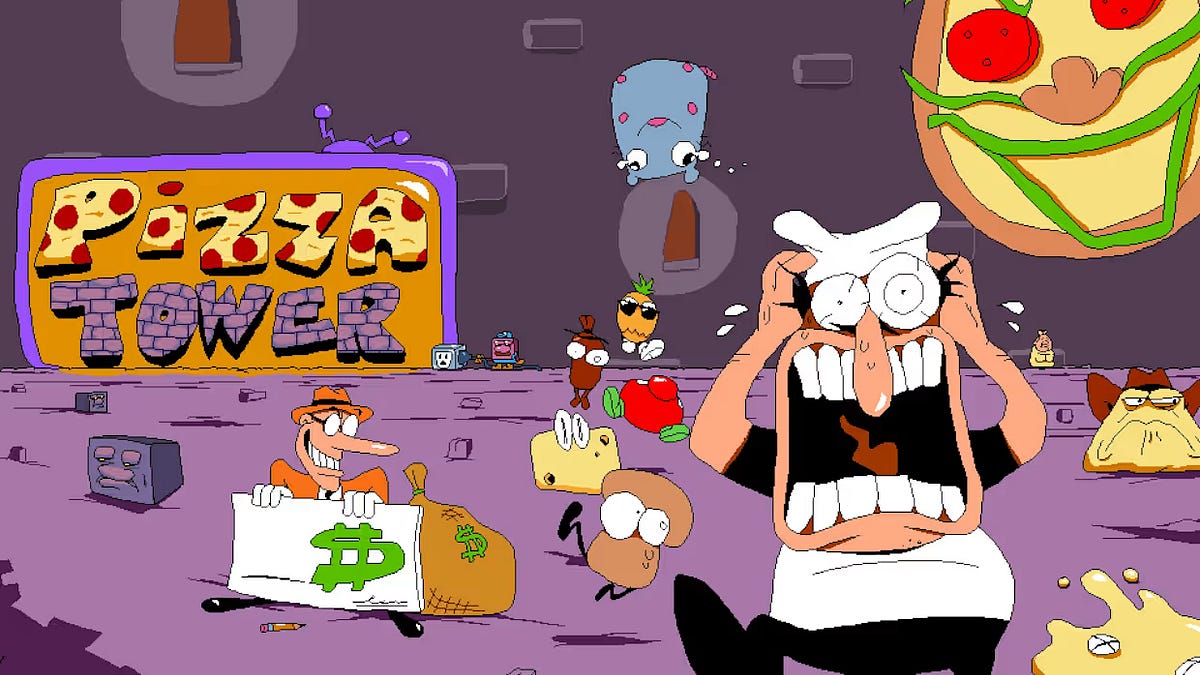
Early Marketing Is Game Development
The commercial triumph of Pizza Tower serves as a definitive case study for the necessity of integrating marketing directly into the game development lifecycle.
- The success of Pizza Tower, which sold 100,000 copies in its first month and generated over $50 million in gross revenue, was driven by years of community building and iterative development rather than a traditional launch-day marketing push.
- The developers utilized a continuous feedback loop by releasing 18 public demos and monthly builds to roughly 500 Patreon backers, allowing them to pivot the game's core design from puzzle-based to speed-focused based on player response.
- Strategic positioning at niche events like the Sonic Amateur Games Expo (SAGE) allowed the game to be discovered by influential creators like Vinesauce Vinny, who provided consistent visibility to the target audience for four years.
The NUMMI Story: Building Teams That Actually Work
The historical transformation of the New United Motor Manufacturing, Inc. (NUMMI) plant serves as a critical case study for modern game studio leadership.
- The 1984 NUMMI joint venture demonstrated that a workforce previously labeled the worst in the automotive industry could match Toyota’s quality standards within one year by shifting from a command-and-control management style to one based on trust and partnership.
- Toyota’s success at the Fremont plant was driven by a philosophy that treated workers as the primary source of operational knowledge, rather than interchangeable inputs to be exploited for maximum output.
- The transformation of the Fremont plant was achieved without replacing the existing workforce or union contract, proving that systemic cultural change can unlock latent potential in teams previously demoralized by adversarial management.
An HR and Payroll Primer for Indie Game Studios
Indie game studios face significant operational hurdles when scaling, particularly regarding the complex intersection of payroll management, tax compliance, and human resources.
- Indie game studios often fail due to poor studio management, not lack of talent, highlighting the need for strong HR and payroll practices.
- For US-based studios with W-2 employees, payroll software like Gusto (starting at $49/month plus $6 per employee) is essential for automated tax filings and compliance.
- Hiring international workers is complex; Employer of Record (EOR) services (e.g., Remofirst, Deel, Remote) are the most practical solution for legal compliance in different countries, avoiding the need to establish local entities.
The Game Developer's Career Ikigai
The game development industry is characterized by high levels of fragmentation and volatility, necessitating a proactive approach to professional trajectory management.
- Career fulfillment in game development requires balancing four distinct variables: the craft you practice, the creative context of the projects, the market viability of your skills, and your personal contribution goals.
- Distinguish between generalist paths (common in small indie studios) and specialist paths (typical in large AAA studios), as these choices fundamentally dictate your future career mobility and the types of roles you will be qualified for.
- Evaluate studio health before joining, as working for unstable companies—those with high layoff frequency, reliance on unconfirmed publishing deals, or poor financial runways—can result in lost portfolio work and stunted professional growth.
How to Price Your Indie Game
Establishing a successful indie game pricing strategy requires moving beyond intuition toward a data-driven framework that accounts for market polarization and long-term revenue cycles.
- Pricing your indie game requires a methodical, data-informed approach, not a guess, and should be considered midway through or nearing the end of production due to its impact on Early Access, discounting, and public positioning.
- To determine a price range, analyze at least 10-12 comparable games in your primary genre released in the last three years using tools like SteamDB and VG Insights, noting their launch price, current price, quality, community reception (price complaints), and content length.
- Your launch price should incorporate a discount buffer, as Steam's algorithm favors discounts of 20% or more to trigger wishlist notification emails, a primary re-engagement mechanism; games that don't discount, like Factorio, are exceptions with large existing audiences.
Chartering Game Development Teams
Effective game development requires more than technical talent; it demands a robust human infrastructure to manage the complex, high-pressure creative environment of studio production.
- Team charters explicitly define team commitments, interaction norms, ownership, decision-making processes, and acceptable behaviors, addressing unspoken assumptions that can lead to significant costs in game development.
- Game development's unique blend of creative and technical work, strong opinions, sustained pressure, and long production cycles makes team chartering particularly crucial for managing interpersonal dynamics and resolving disagreements.
- A team charter aids onboarding by providing new members with a clear understanding of specific team operations, communication styles, values, decision-making, and norms around feedback and conflict, reducing the time spent figuring out implicit social rules.
A Financial Primer for Game Studios
Game studio longevity depends less on creative output and more on the rigorous application of financial discipline.
- Maintain at least 12 months of runway to begin seeking new funding or revenue, as 6 months is considered a danger zone and 3 months constitutes a crisis.
- Use professional accounting software like QuickBooks or Xero rather than spreadsheets to automate transaction categorization, financial reporting, and bank reconciliation.
- Outsource bookkeeping to a professional once the studio has regular transactions, which typically costs between $300 and $800 per month for early-stage studios.
How to Close a Video Game: A Practical Game Development Guide
The closing phase of video game development is a distinct, critical period that begins after a game is functionally complete and ends upon submission for platform certification.
- Many indie studios fail not due to lack of talent, but because managing a studio and closing a game requires different skills than game development itself.
- The transition from 'creation mode' to 'closing mode' is psychologically challenging for developers who are passionate about building, as closing requires stopping new features and content to focus on checklists, bug tracking, and certification.
- Games often get stuck in a 'quagmire' near completion because teams maintain a production mindset instead of switching to a focused closing mindset, leading to prolonged development and potential crunch.

What Experience Is Actually For
The games industry faces a significant structural failure in its inability to effectively transfer institutional knowledge and professional judgment from experienced veterans to newer talent.
- Mentorship significantly improves employee retention, with data showing 72% retention for mentees compared to 49% for non-participants.
- The games industry suffers from a structural failure to pass on institutional knowledge, resulting in high opportunity costs as experienced veterans' judgment remains isolated.
- Effective mentorship is best achieved by seeking partners one or two career stages ahead, ensuring the mentor has relevant, specific experience for the mentee's current challenges.
The Producer Path
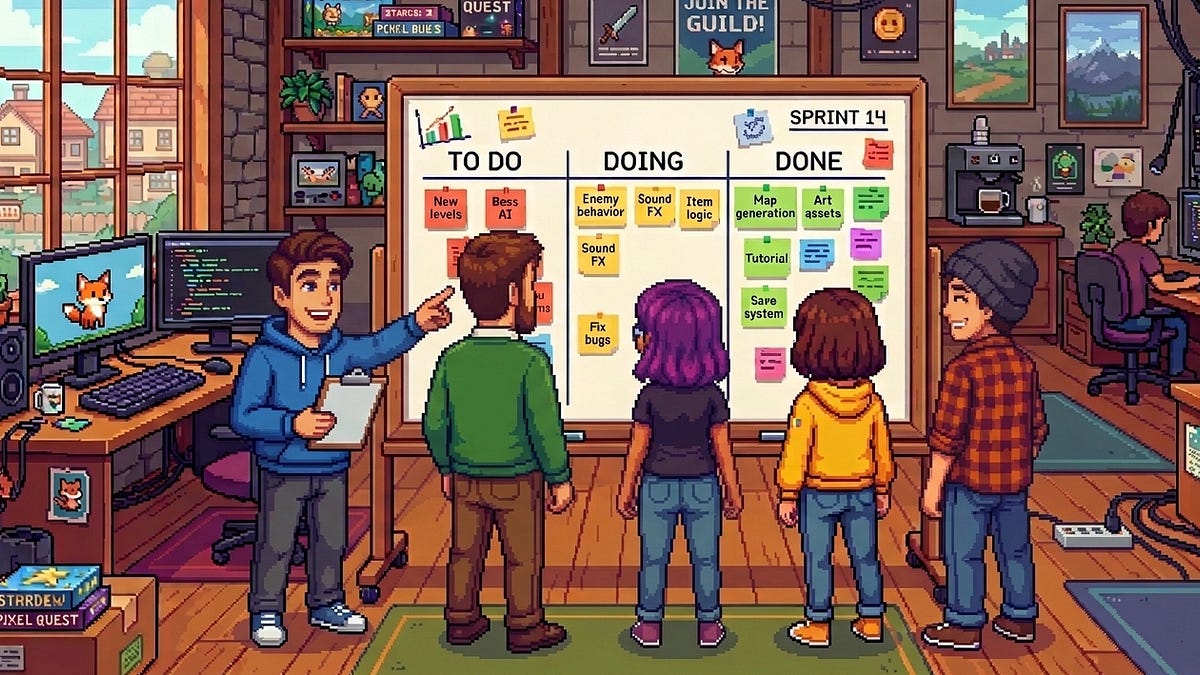
The role of a game producer centers on the orchestration of human capital, communication, and team health rather than the mere execution of administrative workflows.
- A producer's core function is to create the conditions for a team to succeed by managing forward-looking risks, communication gaps, and team dynamics, rather than merely tracking tasks or meetings.
- Effective production career progression involves a shift from managing systems and processes at the associate level (0–3 years) to leading people and organizational strategy at the executive level (10+ years).
- At the senior producer level (6–10 years), professionals must distinguish between management, which focuses on work and systems, and leadership, which focuses on people, direction, and building trust.
People Management in Game Development
Effective people management serves as a foundational pillar for the success and longevity of game development studios, functioning as a critical discipline that is frequently undervalued by founders.
- Effective management requires distinguishing between leadership, which sets vision and purpose, and management, which builds the structures and habits necessary to execute that vision reliably.
- The most critical behavior of high-rated managers, as identified by Google’s internal research, is coaching rather than providing technical direction or focusing solely on results.
- One-on-one meetings should be treated as the employee's time rather than a status update, utilizing a shared agenda and ending with a direct request for feedback on the manager's own performance.