
Game Studio Unlocked
Studio-building, leadership, and indie operations, by Sebastian Cardoso.
Documents
Game Development Prioritization: The Good, the Bad and the Overengineered
Effective game development requires a structured approach to feature prioritization to avoid the common pitfall of treating every task as equally urgent.
- Indie studios often fail to ship on time because they lack a structured prioritization process, leading to a backlog where every task is incorrectly labeled as high priority.
- The most effective prioritization strategy for small teams is a three-layer framework: using the Kano Model for feature classification, the ROI matrix for ordering tasks by value versus effort, and the Eisenhower Matrix for managing weekly urgency.
- The Eisenhower Matrix is essential for preventing 'urgency traps,' where teams over-prioritize immediate crises at the expense of important but non-urgent work like documentation, pipelines, and team cohesion.
The Kano Model for Games
The Kano Model serves as a strategic framework for game developers to prioritize features by analyzing how they influence player satisfaction.
- The Kano Model categorizes game features into four types—Basic, Performance, Excitement, and Indifferent—to help studios prioritize development based on how each feature impacts player satisfaction.
- Excitement features, which generate disproportionate positive reactions and word-of-mouth, provide no dissatisfaction when absent, whereas Basic features only cause dissatisfaction when they are missing or poorly executed.
- Feature categories are not static; what begins as an Excitement feature often migrates to a Basic expectation over time, requiring studios to account for this shift during long development cycles.
What Makes a Great Game Producer?: Clarity, Momentum and the Work Nobody Sees
Effective game production is fundamentally a discipline of human dynamics rather than mere administrative task management.
- A producer's primary role is to create the conditions for team success—managing interpersonal dynamics, clarity, and risk—rather than acting as an administrator or project manager.
- Great producers prioritize individuals and interactions over process, as high-performing teams at large-scale studios like Crytek and Riot Games rely on self-regulation rather than constant coordination overhead.
- Effective production requires the ability to remain even-keeled during project volatility, as a producer's visible anxiety or panic can cause a team to stop reporting critical problems.
The Team Is Everything: Assembling, Nurturing and Retaining a World-Class Creative Team
The success of independent game studios relies fundamentally on the deliberate construction of cohesive teams rather than the mere aggregation of individual talent.
- Psychological safety is the most critical factor for team performance, as it enables members to take interpersonal risks, admit uncertainty, and surface problems before they escalate into systemic failures.
- Effective indie studio hiring should prioritize 'range'—the ability to operate outside one's primary discipline—and 'collaborative instinct' over prestigious employment history, which is often a weak signal for indie success.
- Leaders must actively build psychological safety by modeling vulnerability, such as admitting mistakes, and by responding to bad news with collaborative problem-solving rather than frustration.
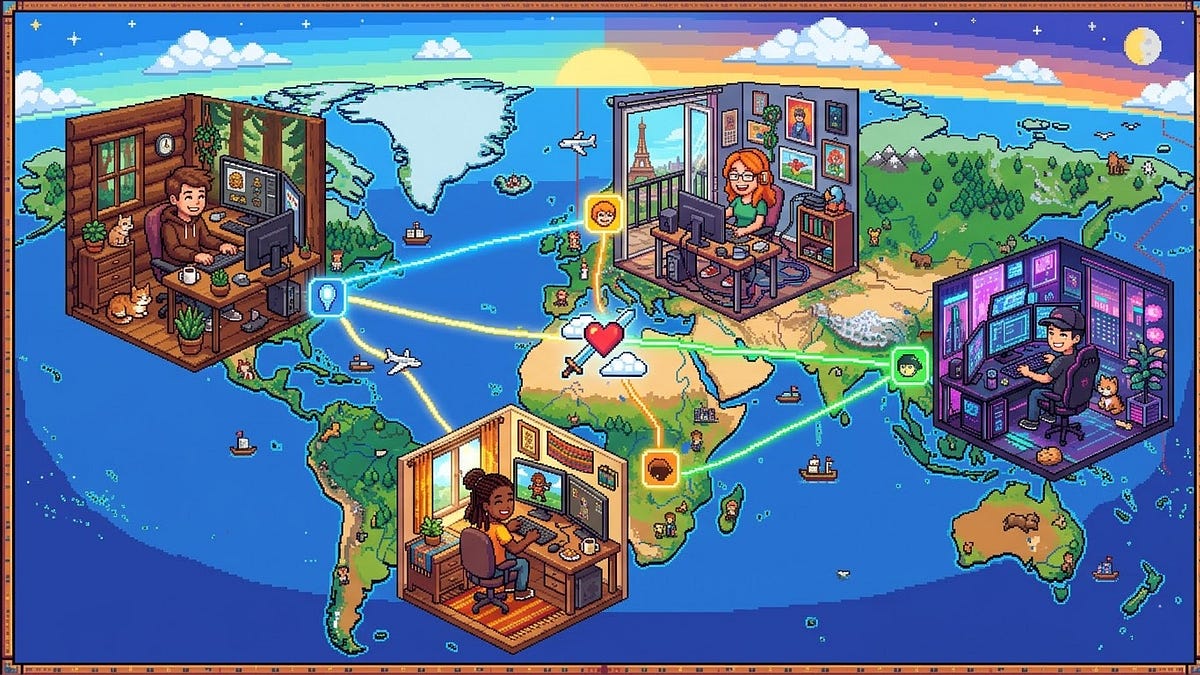
How to Build Distributed Teams That Succeed
Remote work has become the standard operating model for the modern game industry, with over 70% of indie studios utilizing remote work for core development and more than half operating on a fully remote basis.
- Over 70% of indie game studios now utilize remote work for core development, with fully on-site studios representing only the low teens according to the 2025 GDC State of the Game Industry survey.
- Remote work must be treated as an organizational design problem rather than a logistics one, requiring deliberate scheduling of interactions that would otherwise occur spontaneously in a physical office.
- Effective remote onboarding requires providing deep context on the game’s creative pillars and development phase before assigning tasks, as well as explicit documentation on decision-making processes and definitions of 'done'.
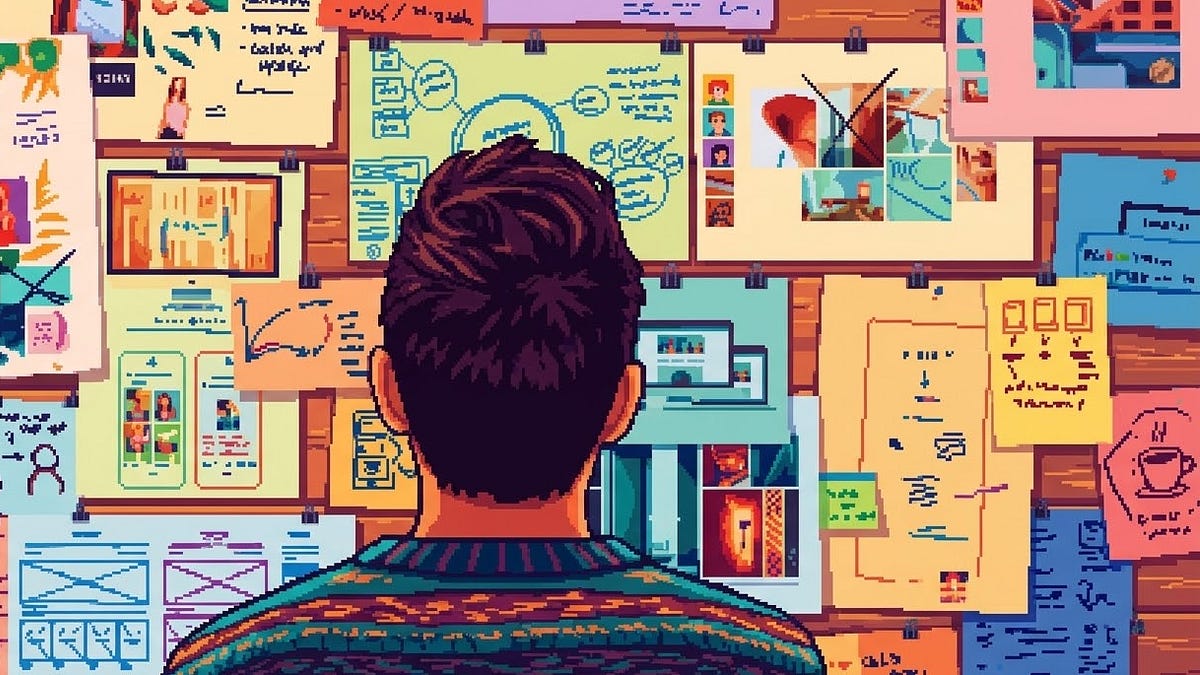
PMP Best Practices for Game Development
The provided text argues that indie game studios often mistakenly reject formal project management methodologies, such as those promoted by the Project Management Institute (PMI), due to a perceived incompatibility between rigid corporate processes and the creative, iterative nature of game development.
- Game studios should adopt project management principles selectively, focusing on the underlying logic of risk, scope, and communication rather than the rigid, bureaucratic documentation associated with the full PMBOK framework.
- Risk management should move from reactive worrying to a proactive habit where teams identify, rate, and document risks—specifically product, scope, funding, people, and technical risks—at the start of every project phase.
- To prevent scope creep, studios should utilize a Work Breakdown Structure (WBS) to map out all necessary deliverables, ensuring that every proposed addition is evaluated against its impact on the project's cost and schedule.
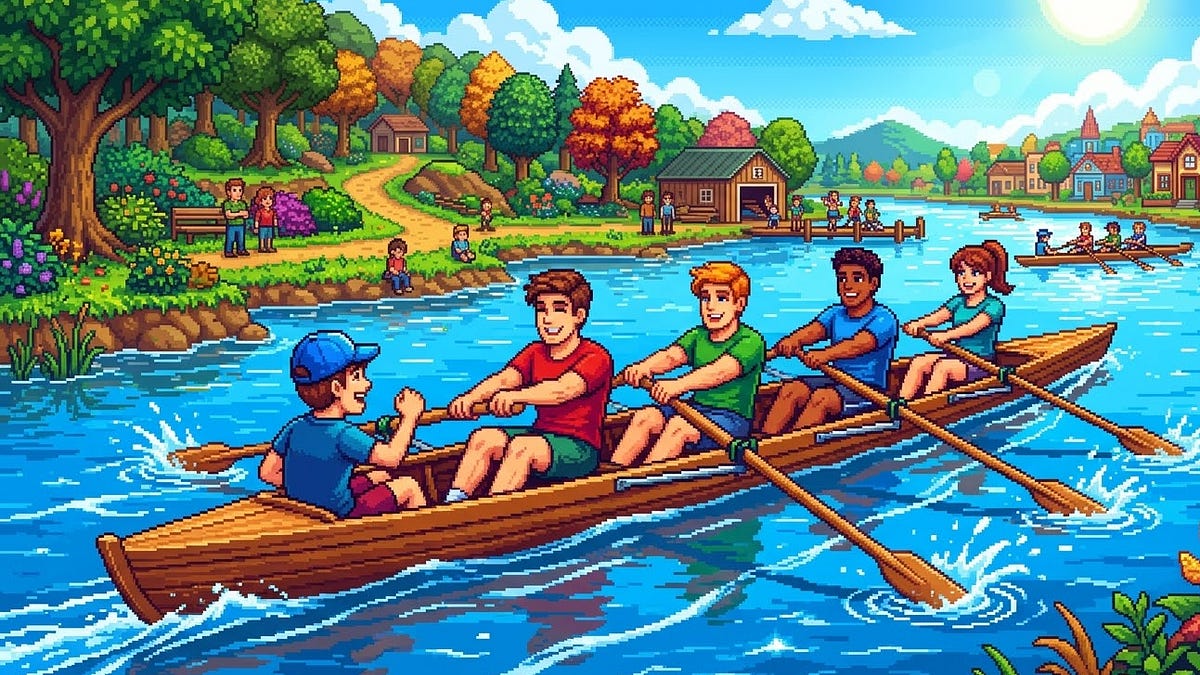
Production Methodologies in Game Development: Agile, Scrum, Waterfall and What Actually Works
Game development success is fundamentally constrained by the iron triangle of time, scope, and cost, rather than the rigid application of any single management framework.
- Game development is a process of creative discovery where core mechanics cannot be fully validated until partially built, making rigid upfront planning like Waterfall inherently risky for core design.
- Waterfall remains prevalent in AAA development because it provides the predictable phase gates and milestones required by publishers, investors, and platform holders to secure funding and marketing alignment.
- Successful studios often adopt a hybrid approach, utilizing Waterfall for external coordination and fixed pipelines while employing iterative, agile methods for internal creative development.
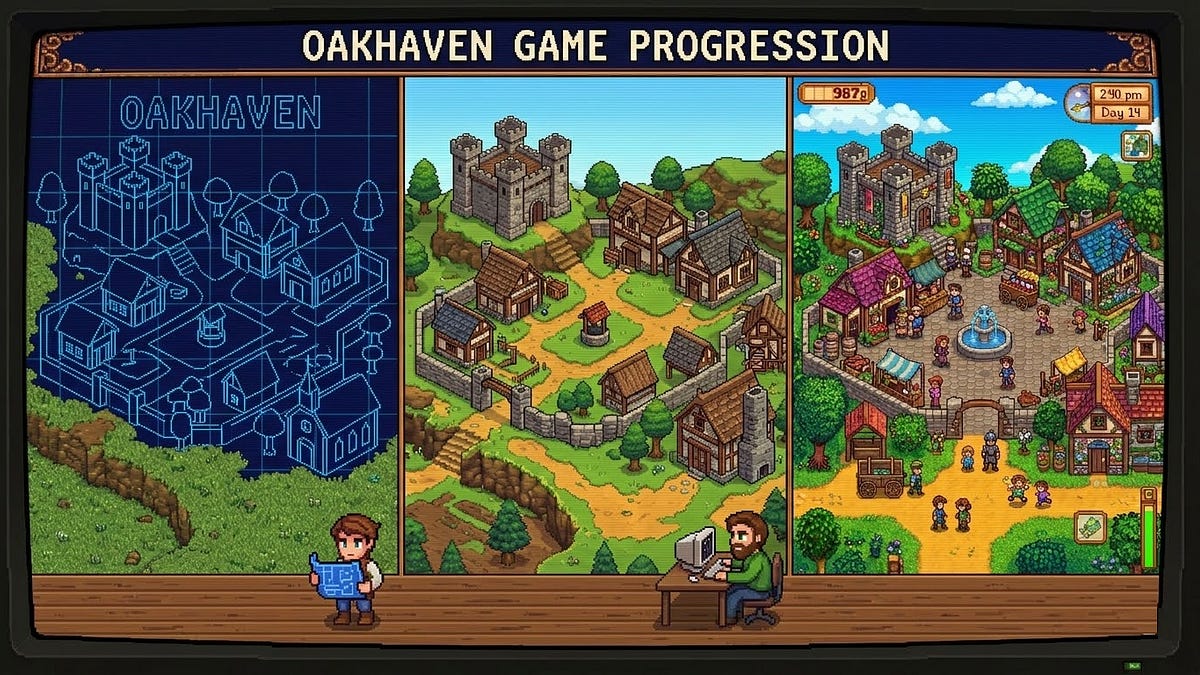
The 7 Phases of Game Development
Game development functions most effectively when structured as a seven-phase lifecycle designed to mitigate financial risk and prevent premature commitment to unproven ideas.
- The primary goal of development phases is to minimize the cost of being wrong by ensuring that uncertainty is addressed before over-committing resources.
- Saying 'no' to unviable ideas during the initial brainstorming and feasibility phase is the highest return on investment decision in the entire development lifecycle.
- Rapid prototyping should be strictly time-boxed to one week per idea, using throwaway code and assets to test core loops and technical feasibility without over-investing.
Build Your Game's Audience Before Launch
Indie game studios often face launch failure due to a lack of pre-existing audience engagement, a critical oversight in an industry where 15,000 to 20,000 new titles are released on Steam annually.
- Steam's algorithm prioritizes games with high sales velocity in the first 48 hours, which is primarily driven by a pre-built community that converts wishlists into day-one purchases.
- Studios should begin community building 12 to 18 months before launch, starting as soon as they have a prototype or vertical slice that communicates the game's feel.
- The most effective content for building a community is 'process material'—such as scrapped prototypes, art iterations, and design reversals—shared on a consistent weekly cadence.
Leadership in Game Development: What It Is and What Its Absence Costs
Effective leadership is a critical, often overlooked component of successful game development, particularly within indie studios.
- Leadership is a discipline of creating conditions for others to succeed, rather than a personality trait or a title-based role, and it must be treated as essential infrastructure for creative work.
- The absence of leadership causes four primary costs: reduced velocity due to poor coordination, lower quality from lack of shared standards, declining morale, and the erosion of team trust.
- Indie studios often suffer because founders view operational structure as a threat to creative independence, leading to a lack of the cadences and behaviors required to sustain high-quality output.
Staffing Strategy for Game Studios: Full-Time vs. Contractors
Effective staffing strategy for independent game studios requires aligning team composition with specific development phases to manage burn rate and maintain creative agility.
- Founders should treat team composition as a strategic risk factor, as over-hiring full-time staff early can double burn rates and erode creative independence by forcing payroll to drive product decisions.
- Core leadership and discipline leads should remain internal for cultural and decision-making continuity, while asset-heavy and specialized tasks—such as environment art, QA bursts, or technical audits—are better suited for contractors or outsourcing.
- To extend runway, studios should leverage global talent in lower-cost regions rather than exclusively hiring in high-cost hubs like San Francisco or London, provided the focus remains on value per dollar rather than just the lowest rate.
Indie Game Funding: What You're Actually Signing Up For
The primary purpose of this guide is to educate indie game studio founders on the long-term implications of various funding models.
- Funding is not neutral; every source carries specific trade-offs, such as bootstrapping trading speed, grants trading administrative overhead, and equity-based funding trading control.
- Founders must align their studio's ambition—whether boutique, creative, or venture-scale—with the appropriate capital source to avoid long-term conflicts regarding return expectations and time horizons.
- Publisher deals often require recouping the full advance before profit sharing begins, creating significant cash flow risks if the game underperforms.