User Acquisition reports and market data
Documents

Opportunities in China's hyper-casual market
The Chinese hyper-casual mobile gaming market represents a significant growth opportunity for Western developers, provided they can navigate a complex, fragmented ecosystem.
- Entering the Chinese market requires deep localization of creative assets, including the integration of Chinese music, cultural themes, and localized video content to resonate with local player expectations.
- The Chinese Android market is highly fragmented, requiring developers to navigate numerous third-party app stores rather than relying on a single global storefront like the Google Play Store.
- Hyper-casual games in China are increasingly adopting engagement mechanics and depth similar to mid-core titles, moving beyond simple loops to include features like asynchronous multiplayer and tournament systems.

Hyper-casual in China: Games, players and lessons learned
The hyper-casual gaming market in China represents a significant, albeit distinct, opportunity for international developers.
- China represents a massive market opportunity with 242 million iOS devices, a figure comparable to the entire U.S. smartphone market across both iOS and Android platforms.
- While Day 1 retention should serve as a baseline metric of at least 40% to validate core gameplay, increasing Day 7 retention by just 1% yields 10 times the impact on long-term lifetime value.
- The Chinese hyper-casual market is distinct from the West, as it evolved from a core-gaming-first culture; consequently, games require more than simple mechanics to succeed and must incorporate socially-minded, competitive, or culturally relatable elements.

Tips on how to make creative ads for the Asian market
Successful entry into the Chinese mobile gaming market requires a sophisticated approach to creative advertising that prioritizes deep localization, high-quality video production, and interactive formats.
- Localization in China requires more than translation; it necessitates adapting font designs, layout, and character aesthetics to match local preferences, such as the strong demand for fine art styles among female users.
- Cultural nuances significantly impact conversion rates; for example, adjusting game visuals to align with local preferences for cleanliness and specific character aesthetics in Japan resulted in a 70% increase in click-through rates.
- Standard gameplay recordings are no longer sufficient to capture attention in China's information-overloaded market; advertisers should instead use creative storytelling, real-life integration, and local trends like popular BGM and memes.
How to Market Your Indie Game!
Successful indie game marketing relies on a foundational strategy centered on product design, audience engagement, and strategic distribution.
- Marketing success is primarily determined by product design; developers should prioritize creating unique, watchable concepts that offer a clear, relatable fantasy to ensure organic interest from content creators.
- Establishing a Steam store page as early as possible is essential for accumulating wishlists, which serve as the primary driver for platform visibility and algorithm placement.
- High-quality trailers and store thumbnails are the most critical assets for maximizing click-through rates and should be the focus of visual marketing efforts.

Game Discoverability Day: Building a Community for Your Game from Scratch
Community building has emerged as the primary driver for game sales, effectively superseding traditional reliance on press coverage and influencer marketing.
- Community building has replaced traditional press and influencer marketing as the primary driver for game sales, making it the most reliable method for ensuring launch momentum.
- Developers should aim to accumulate 8,000 to 10,000 Steam wishlists by initiating community efforts four to six months before the official game release.
- Establishing a dedicated, game-specific Discord server is more effective than using a centralized company hub, as players form stronger attachments to individual titles.

How to get 40M installs? Mobile Games Marketing | Brian Sapp VP User Acquisition at Jam City
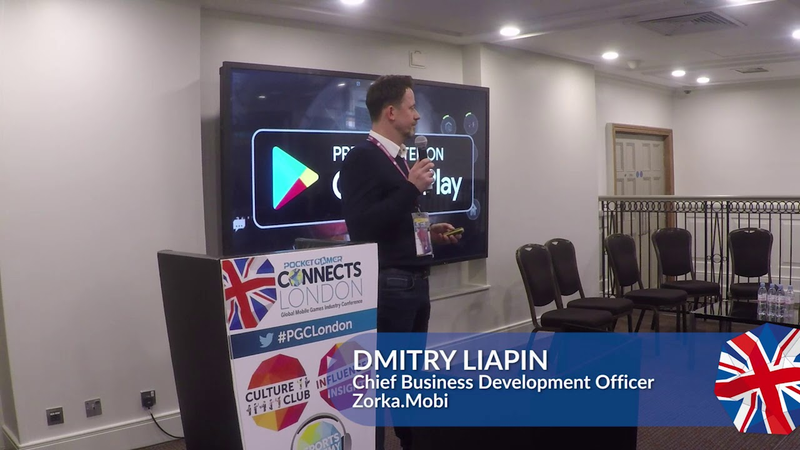
User acquisition (UA) in the mobile gaming industry functions as a data-driven performance marketing discipline, distinct from brand marketing in its reliance on measurable key performance indicators (KPIs) such as cost per user and return on investment.
- User acquisition (UA) at Jam City is a performance-based discipline where marketing budgets are strictly allocated based on projected payback periods and the specific lifecycle phase of each game title.
- The UA process follows a structured R&D path: starting with technical stability in soft launches, moving to retention metrics in secondary markets, and concluding with predictive lifetime value (LTV) modeling in primary territories.
- UA departments should be organized into cross-functional 'supercells' consisting of media buyers, analysts, and creative strategists to ensure ownership and alignment between marketing and game production.
Case study: Pre-release influencer marketing campaign for Azur Games' Infinity Ops
This case study examines the efficacy of pre-release influencer marketing for mobile games, specifically focusing on the launch of the first-person shooter Infinity Ops by Azur Games.
- Azur Games' influencer campaign for Infinity Ops exceeded its one-million pre-registration goal by 30% over a 22-day period.
- Influencer marketing accounted for nearly 30% of the total pre-registration volume, demonstrating a significant long-tail effect that persisted after traditional social advertising ended.
- Approximately 32.5% of the pre-registrations generated by the campaign converted into active users following the game's official release.
8 mistakes made in influencer marketing
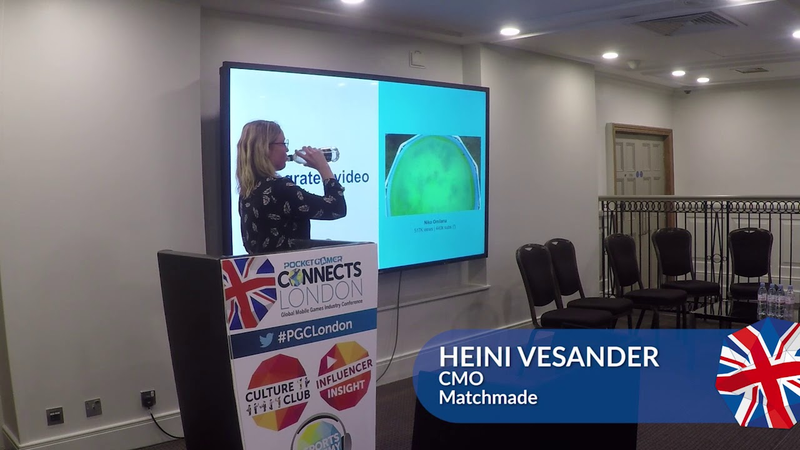
Influencer marketing in the gaming industry requires a data-driven, strategic approach to avoid common pitfalls that undermine campaign effectiveness.
- Prioritize audience relevance and demographic alignment over superficial metrics like total subscriber counts to ensure the target market is reached.
- Establish clear, measurable business objectives—such as installs, brand awareness, or community growth—and implement rigorous tracking to evaluate campaign performance against these goals.
- Treat influencer relationships as long-term partnerships by involving creators early in the development cycle to foster genuine advocacy and higher-quality content.
Snapchat influencers case studies for a games industry audience
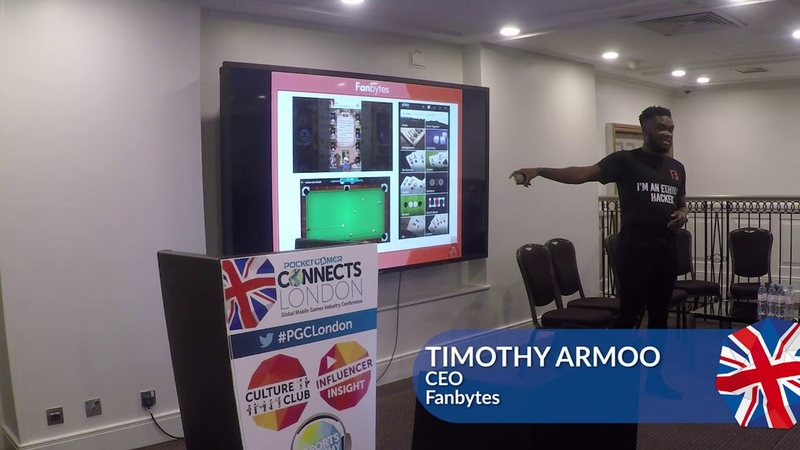
Effective influencer marketing for the gaming industry relies on shifting the focus from traditional product-centric advertising to culturally resonant, user-focused content.
- Shifting influencer creative from traditional gameplay trailers to culturally resonant, meme-style content significantly reduces cost-per-install (CPI) metrics.
- Marketing campaigns should prioritize social connection and shared fun by positioning games as tools for interaction rather than focusing on technical game mechanics.
- Content that mimics organic social media communication—utilizing memes and cultural touchpoints—is more effective at capturing younger demographics who are resistant to traditional advertising.

Synative's Cynthia Du on making fun and engaging playable ads for games
The evolution of mobile advertising has shifted from intrusive pop-ups and banners toward interactive, programmatic playable ads designed to enhance user engagement.
- Users who engage with Google Play Instant playable ads demonstrate a 6% higher retention and registration rate compared to organic users.
- Synative’s toolkit enables developers to build interactive, gesture-based playable ads in approximately 30 minutes by repurposing existing CG media and video assets.
- The platform abstracts technical ad network integration, allowing developers to create cross-platform compatible ads without writing custom code for each network.
User acquisition megatrends for 2019
The mobile app economy is undergoing a structural shift characterized by market saturation, evolving monetization strategies, and a transition toward algorithmic advertising.
- The mobile advertising landscape is now a duopoly dominated by Google and Facebook, requiring marketing teams to shift from passive growth to algorithmic bidding and programmatic creative management.
- Developers must pivot from cost-per-install (CPI) metrics to return on ad spend (ROAS) to account for the rise of hyper-casual games and high-fidelity advertising formats.
- Subscription-based revenue models are replacing traditional in-app purchases to improve user lifetime value and capitalize on reduced platform revenue-share fees after the first year.
Why you must focus on ad whales for your UA strategy
The primary objective of modern user acquisition (UA) strategy is to shift focus toward identifying and targeting "ad whales"—users who generate significant revenue through in-app advertising by frequently engaging with and converting on advertised content.
- Ad whales follow a power-law distribution where approximately 10% of users generate 60% to 70% of total ad revenue, making them six times more valuable than the average user.
- Integrating user-level ad revenue data into ROI models is essential for accurate campaign profitability assessment and preventing the misallocation of UA budgets.
- Targeting look-alike audiences based on high-value ad consumers on platforms like Facebook and Snapchat often results in lower cost-per-install (CPI) rates compared to traditional IAP-focused targeting.